

Writer-director Francis Ford Coppola is a legend of the film industry, that’s no question. The filmmaker established himself as one of the most prominent voices of the “New Hollywood” film movement of the 1960s and 1970s with a historic back-to-back run that includes The Godfather, The Conversation, The Godfather Part II, and Apocalypse Now. Of course, Bram Stoker’s Dracula is another one of his works that has aged like fine wine. But with his last feature film, Twixt, premiering roughly thirteen years ago, the prolific Oscar-winning director is supremely rusty as he returns with what has been teased for decades as his most epic story to date in Megalopolis.
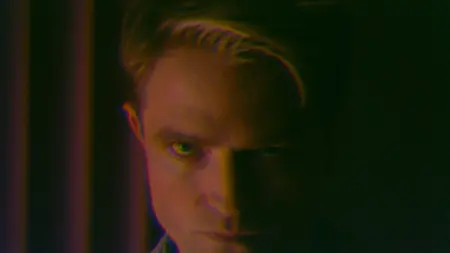
Megalopolis kicks off in an alternate version of New York City that is known as “New Rome.” Architect Cesar Catilina (Adam Driver) takes down buildings with his special ability to freeze time to make way for a new metropolis born out of the ashes of the Big Apple. Catilina’s new city in the works, Megalopolis, is a vibrant, futuristic utopia that’s inspired by ancient Rome, echoing much of its culture as Cesar tries to sell the project to New Rome’s elite class. He intends to use a substance known as “Megalon,” which he won the Nobel prize for discovering, that has incredible properties but faces strong opposition for its use by New Rome’s elected Mayor Franklyn Cicero (Giancarlo Esposito). As Cesar’s Megalopolis project rises, the common folk whose houses have been torn down protest in disdain on what remains of the untouched, subjugated streets of New Rome.
It doesn’t take long to see why no Hollywood studio is reportedly interested in picking up Francis Ford Coppola’s Megalopolis for distribution. It’s said that Coppola birthed the concept for Megalopolis in the late ’70s but didn’t actually try to start developing it until the early ’80s. Now, after various failed attempts, Coppola makes his return to cinema with a final version of Megalopolis that is a pure, incoherent mess. It’s a movie that tries to say so much but ends up saying very little. The philosophical themes of Coppola’s script are undercooked and over-emphasized through Shakespeare-like dialogue that’s awkwardly rammed down your throat. From sentence to sentence, it’s hard to understand the meaning of what one character says to the other, making the viewing experience insufferable already in the first act alone. It’s a boring, overlong hodge podge of a film that loses itself from the very beginning.

Courtesy of American Zoetrope
Francis Ford Coppola is obsessed with history, especially Ancient Rome, and is using Megalopolis as a channel to say something vital about the future. The plot tries to tackle the consequences and repercussions of societies collapsing to make way for new empires. Even if such themes are interesting to some, there are gaping cracks in Coppola’s approach as his writing fails to capture the essence of these topics. Certain line deliveries are so incredibly staged and unbelievable that they just completely take the audience out of the movie. In other instances, Coppola quotes snippets from great philosophers and integrates their words into the script, which feels like contradictory nonsense given the modern look of the film. Such moments include Adam Driver’s hilariously named Cesar getting high, partying in a nightclub, and kissing everyone in his path, all while philosophizing internally.
What Francis Ford Coppola tries to convey through his characters’ words comes across as speaking down to the audience, as if they are children, because he never once tries to understand how the public would perceive Megalopolis. This goes back to why distributors are hesitant to touch the passion project — they know it’s a big-budget flop in the waiting. Coppola himself describes Megalopolis as a “Roman Epic,” and it’s subtitled as a “fable” in the opening credits too. This is true in a sense, as Megalopolis uses its large ensemble and grand ideas to express its obsession with Roman culture. The fable subtitle emphasizes Coppola’s allegorical warning that the dissolution of Ancient Rome could easily happen again but in metropolises like New York. On the surface, all of this certainly adds up to a big-name feature that would have Hollywood’s prestigious buyers fighting for.
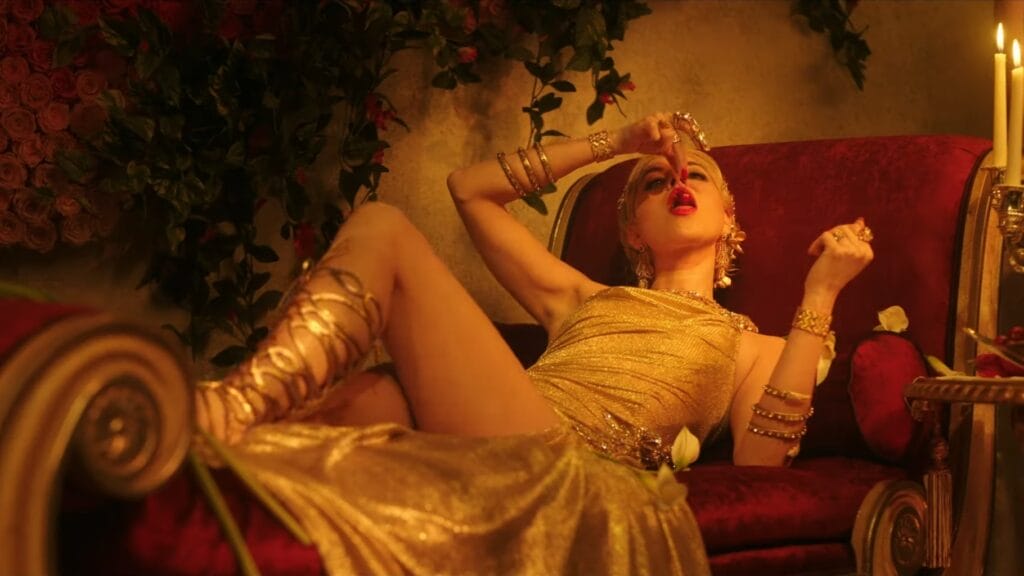
In another world, it would be possible to see a distributor like Apple partner up with Francis Ford Coppola to help release Megalopolis, just like they did with Martin Scorsese’s Killers of the Flower Moon and Ridley Scott’s Napoleon. Coppola’s enlarged $120 million budget, which he self-financed by selling his famous winery, could be somewhat recuperated through such a partnership, in theory. But unlike those aforementioned films, there is nothing epic in the way that Megalopolis is captured or told. It feels shot like any Netflix production and the huge sets don’t evoke the gravitas Coppola is going for. Instead, everything looks clumsily staged, clearly using CGI and studio locations. This is all obscene given the excessive budget Megalopolis was produced for.
Courtesy of American Zoetrope
In truth, Megalopolis probably should have stayed as an unrealized project. Coppola’s fans would have been left wondering about the greatness that could have been rather than receiving this atomic misfire. But would Coppola ever listen to reason? Probably not. The passion is evident, yet so misguided. Also, Coppola attempts to be radical with the boundaries of traditional cinema. There is a strange, fourth-wall-breaking gimmick that Coppola pulled off at the film’s Cannes Premiere with an actor from the audience coming on stage and acting out a scene in response to the dialogue from Adam Driver’s Cesar on-screen. It’s admirable, especially for a world premiere, proving that Coppola is still willing to innovate even this late in his career. However, the randomness of having someone come on stage for a quick scene and never return just makes it feel like a one-note gimmick.
Finally, Megalopolis‘ screenplay does no service to its female characters. Echoes of Mayor Cicero’s daughter Julia (Nathalie Emmanuel) constantly saying “Daddy” will endlessly haunt you. Julia Cicero is one of the protagonists, and yet we know nothing about her aside from her inexplicable romantic love for Cesar, her father being the mayor, and her being smart enough to recount some poignant readings of famous writers. On the other hand, Aubrey Plaza is her reliably humorous self as the journalist Wow Platinum. She’s knee-deep in every scandal and is entertaining to watch, but, again, Wow lacks any depth beyond the gloss on the surface. It also can’t be ignored that Shia LaBeouf’s role as Cesar’s scheming cousin, Clodio Pulcher, is seemingly tailor-made for him. The part is knowingly reflective of the way the controversial actor is viewed in Hollywood, which comes off in poor taste given his recorded cases of abuse.
Francis Ford Coppola’s journey to make Megalopolis, which started over forty years ago, has now come to an abysmal end. Many people will praise Megalopolis for its big ideas and for being a valiant effort on Coppola’s part. You can’t take away the movie’s noble achievement of simply existing against all odds; that’s true. However, this famed filmmaker has lost his magic touch. The thought of the actors being asked to perform the words of this script on set is sure to give you a good chuckle because it’s obvious that no one knew what they were doing on screen. The mega-city of Megalopolis itself never feels real, but more of a figment of our imagination brought to life with poor visual effects. Perhaps Megalopolis works in Coppola’s mind, though when translated into film, it’s a grand failure of huge proportions.
Megalopolis premiered at the 2024 Cannes Film Festival. The film will release in theaters on September 27!
Release Date: September 27, 2024.
Directed by Francis Ford Coppola.
Written by Francis Ford Coppola
Produced by Francis Ford Coppola, Michael Bederman, Barry Hirsch, & Fred Roos.
Main Cast: Adam Driver, Giancarlo Esposito, Nathalie Emmanuel, Aubrey Plaza, Shia LaBeouf, Jon Voight, Jason Schwartzman, Talia Shire, Grace VanderWaal, Laurence Fishburne, Kathryn Hunter, Dustin Hoffman, Sonia Ammar, Chloe Fineman, Madeleine Gardella, Balthazar Getty, Bailey Ives, Isabelle Kusman, Romy Mars, James Remar, Haley Sims, & D.B. Sweeney.
Cinematographer: Mihai Mălaimare Jr.
Composer: Osvaldo Golijov.
Production Company: American Zoetrope.
Distributor: Lionsgate.
Runtime: 138 minutes.