

The Marvel Cinematic Universe is in uncharted waters. The runaway success of basically everything from Iron Man to Avengers: Endgame, give or take a couple of flubs like The Incredible Hulk in between, established the MCU as a cultural juggernaut. A combination of the onset of the COVID-19 pandemic, discussions over superhero fatigue, an overload of Disney+ streaming shows, and a lack of overall direction have led to serious questions about the franchise’s long-term viability in recent years. The so-called “Multiverse Saga” is not nearly as well regarded as the MCU’s previous “Infinity Saga” was. There’s a very real feeling among casual and diehard fans that this is the end of an era. Some think that either audiences have changed or the quality of these films has depleted, or maybe both. Regardless, esteemed Marvel Studios President Kevin Feige had one last Hail Mary in his pocket: Deadpool & Wolverine.
Before the Disney-Fox merger, 2016’s Deadpool shook the comic book movie landscape. The passion project of star Ryan Reynolds, the inaugural film centered on a kind of hero not seen in these types of movies: a foul-mouthed, fourth-wall-breaking mercenary that wreaked havoc in the X-Men sandbox. Irreverent and endearing, the franchise continued with a successful sequel in the David Leitch-directed Deadpool 2. With Fox’s Marvel universe put on ice afterward, it seemed like fans would never see any of these characters again. Bringing back not only Ryan Reynolds but also Hugh Jackman as James “Logan” Howlett, aka Wolverine, Deadpool & Wolverine initially seems like it would be a disastrous attempt to remind people of the good old days. Due to a go-for-broke attitude, tons of commitment from all involved, and deep reverence, Deadpool & Wolverine could single-handedly reassure audiences of the MCU’s viability.
Talking about Deadpool & Wolverine at all is a tricky matter. The marketing has gone to great lengths to avoid spoiling many of the film’s great surprises. For fear of the elusive Marvel snipers (for legal reasons, this is a joke), we will keep it vague. The big fear around Deadpool & Wolverine, directed by Shawn Levy (Free Guy, The Adam Project), is for it to be a cynical cameo-fest whose sole purpose is to get Deadpool into the main MCU franchise. In all fairness, expect a lot of familiar faces to show up. Pyro (Aaron Stanford) from the X-Men trilogy, Laura/X-23 (Dafne Keen) from James Mangold’s Logan, and Tyler Mane as Sabretooth from X-Men (2000) are just the tip of the iceberg.
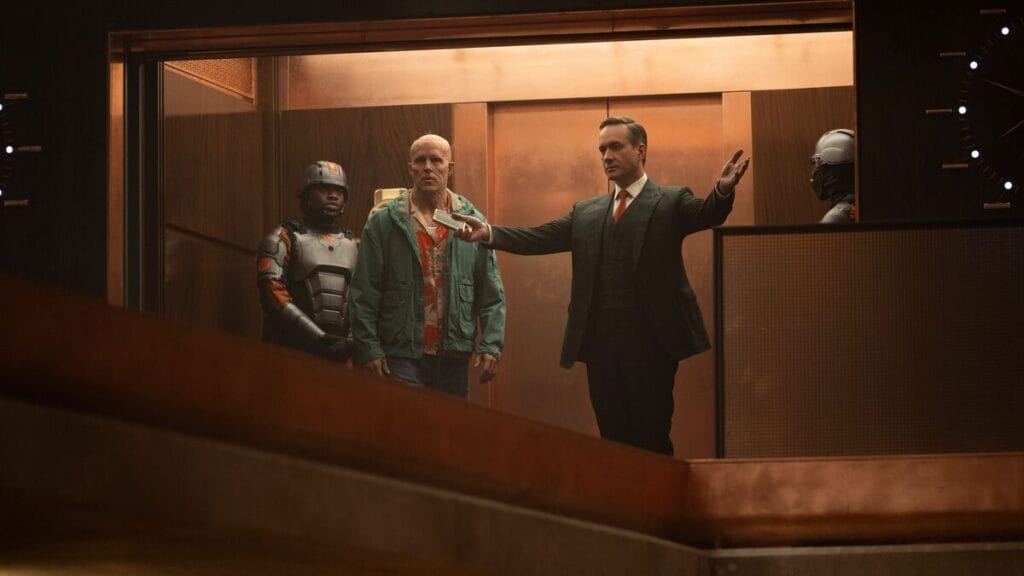
So, what makes Deadpool & Wolverine not the “remember this?” nightmare that some audiences expected? Most of the returning characters get significant screen time, a place in the story, and continuity with their previous films. Moreover, they are all really committed, unlike the nostalgic appearances seen in other multiverse-related superhero films like Marvel’s own Spider-Man: No Way Home and DC’s The Flash. All that can be said is what’s in the marketing: Wade Wilson/Deadpool (Ryan Reynolds) teams up with Wolverine (Hugh Jackman) to save his timeline from deletion. Deadpool is separated from his loved ones, such as his ex-girlfriend Vanessa (Morena Baccarin). The Time Variance Authority (TVA), specifically a team under the command of Mr. Paradox (Matthew MacFayden), is tasked with overseeing Deadpool’s adventure. The villain is Cassandra Nova (Emma Corrin), the twin sister of one universe’s Charles Xavier. That’s all anyone needs to know before walking into the movie.
Deadpool & Wolverine has so much to love that it’s best to first talk about what doesn’t work. Ryan Reynolds is as charming as ever as Wade Wilson/Deadpool. In each Deadpool film, though, it’s hard not to notice how stale the comedy can get. One can only take so many meta references and crass sexual jokes being fired out at a rapid rate. Deadpool & Wolverine never gets quite as exhausting as Deadpool 2 — for every gag that falls flat, there’s something around the corner to get an easy laugh. This is a way of saying that if you found Reynolds’ Deadpool annoying before, there’s no reason to check this one out. It’s still a Deadpool movie through and through.
Writer-director Shawn Levy has made much ado about how much of Deadpool & Wolverine was shot on practical sets. That aspect is definitely noticeable; there’s a real tactility in the main wasteland environment that Deadpool and Wolverine find themselves in for a good chunk of the film. Furthermore, the color grading, when compared to the trailers, is much more vibrant and complaints about the “over-designed” costumes are rendered essentially null when seeing them in action. Unfortunately, on a shot-to-shot basis, Deadpool & Wolverine has the requisite summer blockbuster visual bloat.
Cinematographer George Richmond (Argylle, Kingsman: The Secret Service) forms compositions that aren’t particularly interesting on their own. The blue-screen CGI is often out-of-place and noticeable, instantly breaking the immersion, and there’s no avoiding the influx of sparking portals and other MCU mainstays. There is some seriously rough CGI that gets very close to breaking the immersion of Deadpool & Wolverine’s wild ride. Nothing on the level of The Flash, fortunately, yet that’s beside the point. It’s clear that in the visual effects department, Marvel Studios still has much to learn and adapt to.
That being said, Deadpool & Wolverine puts the motion in motion picture. The fight choreography finally reaches the potential that Deadpool on the silver screen has always had. The requisite dismemberment people have come to expect is supplemented by a flow in combat that has never been seen before in the MCU. The big match-ups of unexpected characters have a “smashing action figures together” quality that is infectious rather than grating. At times, it is honestly hard to believe what your eyes are seeing, both in terms of the fanboy wish fulfillment and how great it looks on a big screen. A bravura one-take sequence and an early fight between Deadpool and Wolverine recalling the movement of the Marvel vs. Capcom games are just two of a non-stop barrage of great action.

Simply put, the right energy is there. Despite there being many writers on the project — Shawn Levy, Ryan Reynolds, comic book writer Zeb Wells, and original Deadpool series writers Rhett Reese and Paul Wernick are all credited — Deadpool & Wolverine moves with a purpose. Part of this is because of its radiant emotional core. It’s clear that Shawn Levy injects a lot of enthusiasm into the direction, but Deadpool himself is Ryan Reynolds’ baby. Reynolds makes a clear attempt to make Deadpool a character struggling with his own demons and anxieties. The demons in question this time around are wanting to matter, rectifying the screw-ups of the past, and creating a legacy. This aspect makes all the gratuitous fanservice worth it.
Cassandra Nova is wonderfully creepy and playful, as portrayed by Emma Corrin (The Crown, A Murder at the End of the World). The film utilizes Nova’s telepathic powers in a visually interesting way, while Matthew MacFayden (Succession, 2005’s Pride & Prejudice) does the corporate tight-ass schtick perfectly. These two are only a small piece, though, of a story that is concerned with exploring the concept of having a purpose. For starters, what is Wolverine’s purpose in this movie? Other than getting Hugh Jackman back for the role, great as ever, we are introduced to a very different version of Wolverine. One who is more comic book accurate in many ways, distinct from previous versions, and carries a bad attitude and deep regret. In other words, it’s like being introduced to the Wolverine all over again.
At this point, it seems like Hugh Jackman might be playing Wolverine for a very long time to come. That’s not a bad thing; his decades-spanning take on the beloved Marvel hero is so iconic that he’s made himself rightfully irreplaceable. His chemistry with Ryan Reynolds is the lynchpin on which Deadpool & Wolverine rests. They have the banter you expect while also growing a begrudging respect for each other. Seeing them physically tear each other apart will bring you thrills, seeing them verbally tear into each other will make you squirm, and their ultimate arc of becoming bickering brothers-in-arms will touch your heart. It’s a dynamic we’ve waited to see onscreen forever that comes together better than anyone could have hoped.
Realistically, Deadpool & Wolverine was always going to be the movie some feared it would be. A cameo-laden, meta explosion of comic book IP forced to reckon with the landscape. On these bones, Shawn Levy, Ryan Reynolds, and all involved use it as an opportunity. This was their chance to show people that these sorts of franchise films can have heart, throw in unexpected surprises, and take us places we haven’t been before. This is not a lackluster mess like Ant-Man and the Wasp: Quantumania, Thor: Love and Thunder, or The Marvels, yet the studio still has a long way to go in certain departments. That much is apparent.
With the exception of a few rough edges, Deadpool & Wolverine rises to the occasion as a summer blockbuster spark that could reignite the fervor around the Marvel Cinematic Universe. And you know what? If future projects keep this up, that could be a great thing. Who would have guessed that the Merc with the Mouth would be the one to not only finally bring the MCU into rated-R territory but also give the franchise the Hail Mary pass it desperately needs right now?
Deadpool & Wolverine hits theaters on July 26!
Release Date: July 26, 2024.
Directed by Shawn Levy.
Written by Ryan Reynolds, Rhett Reese, Paul Wernick, Zeb Wells, & Shawn Levy.
Based on Marvel Comics.
Produced by Kevin Feige, Ryan Reynolds, Shawn Levy, & Lauren Shuler Donner.
Executive Producers: Louis D’Esposito, George Dewey, Wendy Jacobson, Simon Kinberg, Jonathon Komack Martin, Josh Mcaglen, Mary McLaglen, Rhett Reese, & Paul Wernick.
Main Cast: Ryan Reynolds, Hugh Jackman, Emma Corrin, Matthew Macfadyen, Morena Baccarin, Rob Delaney, Leslie Uggams, Karan Soni, Brianna Hildebrand, Stefan Kapičić, Shioli Kutsuna, Randal Reeder, Lewis Tan, Aaron Stanford, Dafne Keen, Wunmi Mosaku, & dog actor Peggy.
Cinematographer: George Richmond.
Composer: Rob Simonsen.
Production Companies: Marvel Studios, Maximum Effort, & 21 Laps Entertainment.
Distributor: Walt Disney Studios Motion Pictures.
Runtime: 128 minutes.
Rated R.