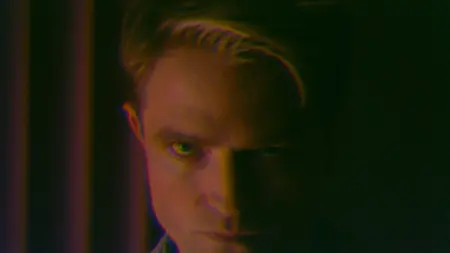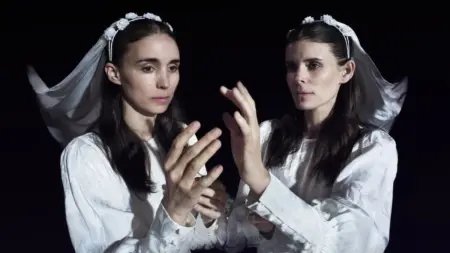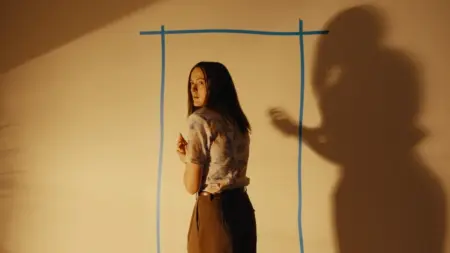


In the world of pop musicians, Abel Tesfaye, better known by his stage alter ego The Weeknd, is as huge as they come. Hurry Up Tomorrow not only marks the title of his latest, and perhaps final, album under The Weeknd moniker, but Tesfaye’s first big foray into the world of cinema. If the HBO miniseries The Idol (2023), co-created by controversial filmmaker Sam Levinson (Euphoria), was a compromised project despite the singer’s involvement as star and co-writer, then Hurry Up Tomorrow (2025) is a much purer expression of what The Weeknd is all about.
Spearheaded by co-writer/director Trey Edward Shults (Waves, It Comes at Night), Hurry Up Tomorrow (2025) is a deeply vulnerable project filled to the brim with heavily stylized imagery. Moreover, it’s loaded with psychological introspection, resulting in an unapologetic look at its main subject. At the start of the semi-autobiographical film, Abel Tesfaye (played by himself) seemingly has it all. The Weeknd is kicking off a new tour, and legions of eager fans always greet him. This is all surface-level noise, though. Underneath his celebrity exterior, Abel is reeling from a recent heartbreak (voiced by an off-screen Riley Keough). Yet, his best friend and manager, Lee (Barry Keoghan), only further pressures him to keep the hype train moving along.
“By its nature, Hurry Up Tomorrow is bound to be polarizing.”
This immense stress culminates in a harrowing moment when The Weeknd loses his voice on stage. Wanting a momentary escape, he spends a night with a hardcore fan named Anima (Jenna Ortega). But the next morning, Anima refuses to leave, restraining Abel. What starts as a typical case of overstepping fan boundaries turns into something else entirely when Anima forces Abel to confront his greatest enemy: himself. So, what exactly is Hurry Up Tomorrow? Is this a musical? A visual album? The answer is all and none of the above.

Music courses through the veins of Hurry Up Tomorrow, both in the form of original songs by The Weeknd that are on the album of the same name and a supplementary score by composer Daniel Lopatin (Uncut Gems, Good Time). While there are big musical sequences, such as two integral performances of “Wake Me Up” that showcase Abel’s physical and mental state at different moments, the ever-present songs act as the engine that propels the narrative forward. A good comparable would be Pink Floyd’s The Wall (1982) or Streets of Fire (1984), where the music is simply another method for storytelling.
A Bold Visual Identity
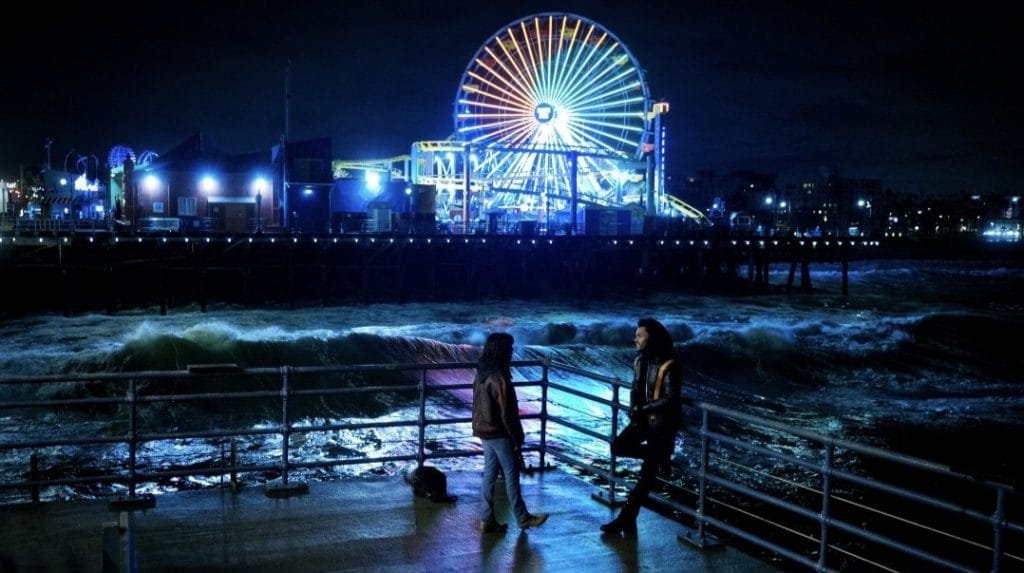
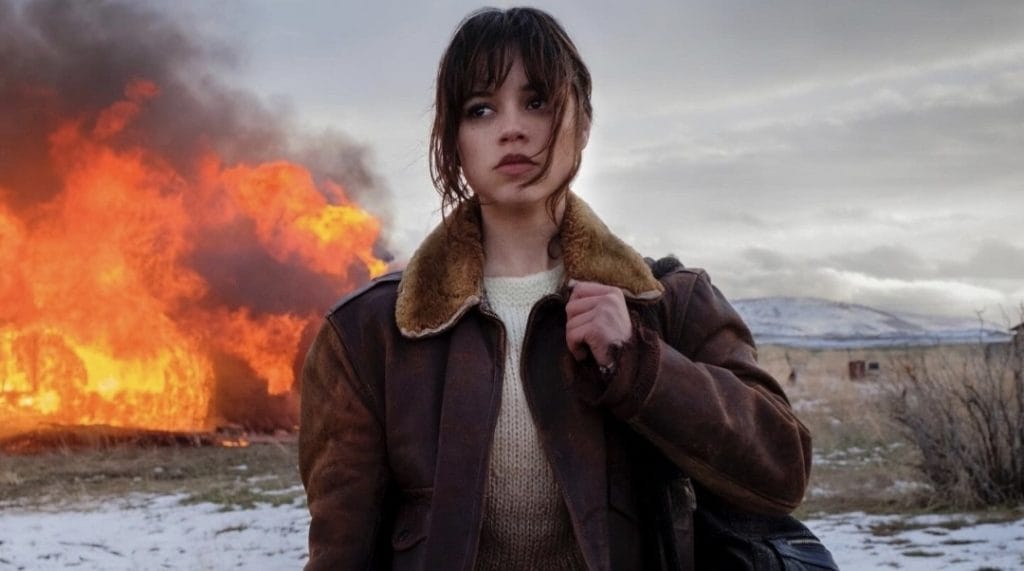
As Abel parties earlier in the film, cinematographer Chayse Irvin (Blonde, BlacKkKlansman) employs spellbinding neons and low lights as Trey Edward Shults’ editing helps solidify the feeling of being in an erratic haze, almost to a numbing degree. When Abel goes to perform onstage, the audience is nothing but a faceless sea of phone lights, like a beast that he has to appease. It’s commendable just how much Hurry Up Tomorrow is willing to redefine its own visual aesthetics, going from the snowy areas where Anima resides to the disorienting midsts of fame to the far-away intimacy of a hotel room.
Courtesy of Andrew Cooper/Lionsgate
Visually, there’s nothing else like Hurry Up Tomorrow out there right now, save for maybe Trey Edward Shults’ Waves. Cinematography is untethered by reality, gliding from moment to moment with an eerie omnipotence. The aspect ratio constantly morphs and switches to indicate the larger the life euphoria of being onstage via a wide-open ratio or the claustrophobia of confronting yourself as represented by a boxed-in 4:3. If anything can be said about Hurry Up Tomorrow, it’s that it’s one of the most visually impressive genre productions of 2025, especially considering its budget of $15 million.
Cheap Vanity Project, or Genuine Artistic Expression?
There’s no question that The Weeknd is at the center of Hurry Up Tomorrow. The word “vanity project” will inevitably come to mind. By definition, yes, this is a movie made to explore a real-life figure’s inner psyche. Additionally, the plot is littered with references to Abel’s personal history and artistic journey, which will make it a far richer viewing experience for fans of the singer than casual audiences. Whether this makes for an altogether compelling feature film is in the eye of the beholder. However, the deep dive into the personal life of a pop star at an exposed moment is dramatically irresistible.
Trey Edward Shults has discussed how this movie fits into the framework of famed Swiss psychologist Carl Jung, with Lee representing the shadow of Abel Tesfaye’s personality and Anima representing the sensitive, feminine part of the mind. Of course, Abel represents the Jungian archetype of “The self” at the center of the story. The three make for a dynamite trio. Barry Keoghan (Saltburn) plays heavily into his dirtbag image. Meanwhile, Jenna Ortega (Wednesday) delivers a thrilling, off-kilter performance.
Jenna Ortega portrays Anime as a lost part of Abel, trying to goad him into finally acknowledging her. A scene where she dances to some of The Weeknd’s greatest hits as he’s tied up lets her channel her inner Patrick Bateman from American Psycho (2000). Yet, there’s a desperation to her character boiling underneath, as if she’s fighting for Abel’s soul, flanked by the more insidious Lee.
The Weeknd Puts Himself on the Line for the Audience
Compared to his performance in The Idol, Abel Tesfaye’s acting work here is night and day. He allows himself to be ugly in nature; a scene where he leaves a particularly nasty voicemail to an ex is a prime example. He also portrays deep-seated fears and insecurities — a man in shambles who has lost so much of himself trying to return to a place of stability. It’s a truly fragile performance that comes from a genuine place. Putting yourself on the line like this, bringing out the raw emotions that stem from past trauma, will inevitably turn some people away. To some, you’ll flat-out look silly for the attempt, and Hurry Up Tomorrow will certainly receive that scrutiny.
However, when Abel, through his pain, sings the title track into the camera, it’s a bold, even brave play directly to the audience. By its nature, Hurry Up Tomorrow is bound to be polarizing. That’s what happens when you get a filmmaker, Trey Edward Shults, and a musician, Abel “The Weeknd” Tesfaye, who work very idiosyncratically to make a psychological thriller together. Backed by an overwhelming audiovisual aesthetic, meaningful supporting turns by Jenna Ortega and Barry Keoghan, and a vulnerable authenticity, Hurry Up Tomorrow is a one-of-a-kind exploration into the psyche of a star. Whether one recoils or leans forward, there’s simply nothing like it.
Hurry Up Tomorrow hits theaters on May 16!

Release Date: May 16, 2025.
Directed by Trey Edward Shults.
Written by Trey Edward Shults, Abel Tesfaye, & Reza Fahim.
Based on Hurry Up Tomorrow by The Weeknd.
Produced by Abel Tesfaye, Reza Fahim, Kevin Turen, & Harrison Kreiss.
Executive Producers: Trey Edward Shults, Jenna Ortega, Michael Rapino, Harrison Huffman, Ryan Kroft, & Wassim Sal Slaiby.
Main Cast: Abel Tesfaye, Jenna Ortega, & Barry Keoghan.
Cinematographer: Chayse Irvin.
Composer: Abel Tesfaye & Daniel Lopatin (Oneohtrix Point Never).
Production Companies: Live Nation Productions & Manic Phase.
Distributor: Lionsgate.
Runtime: 105 minutes.
Rated R.