

May 15th, 2025, marks ten years since mastermind George Miller unleashed Mad Max: Fury Road on theater screens. Branching from the niche, yet prolific Mad Max franchise after a thirty-year-long hiatus, Fury Road came with a vengeance, grossing double the box-office returns of all the prior films put together and becoming as mythic as its titular character. It swept the 88th Academy Awards in 2016 with six wins out of ten nominations and has remained a mainstay of action cinema’s Mount Rushmore for the past decade. A genre-defining juggernaut that changed the landscape of blockbuster filmmaking, Mad Max: Fury Road unequivocally remains, to this day, one of the greatest action movies of all time.
Like Fury Road, the first three Mad Max movies were lauded for their show-stopping vehicular stuntwork, confusing almost every viewer as to how nobody died during production. Between the top-speed POV motorcycle shots in the first Mad Max (1979), the insane tanker chase in Mad Max 2: The Road Warrior (1981), and writer-director George Miller going full-gonzo with Beyond Thunderdome (1985), high-octane automotive carnage was the selling point of the franchise, if not the only draw. Aspects like plot and performance generally came second to the electric bombast of exploding cars. What set Fury Road apart from its predecessors, however, was the focus on character and emotional weight that the series had notably lacked.
Riding to Valhalla
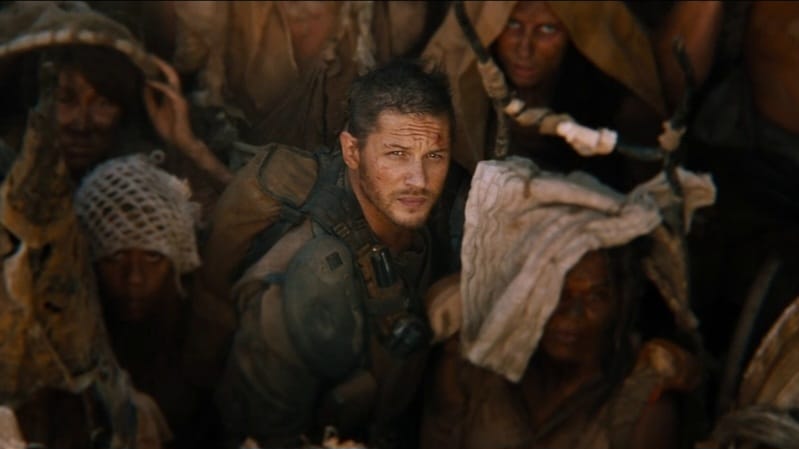
From the first sun-soaked frame of Max Rockatansky (Tom Hardy) overlooking the gorgeous Namibian desert, Fury Road is a near-out-of-body experience that rivals any drug on the FDA database. Between the visual gnarl and the brain-flossing sound design, George Miller’s worldbuilding transports you into the worst possible timeline, in which inbred “War Boys” spray silver paint on their teeth and terrorize a post-apocalyptic wasteland under the command of the ruthless warlord Immortan Joe (Hugh Keays-Byrne). Miller’s opening set piece, wherein Max’s famed V8 Interceptor (a tricked-out 1973 Ford Falcon XB GT Coupe) does five barrel rolls before he’s abducted and made into a human blood bag, sets the stage perfectly for the impending cacophony of fire, metal, and sand.

Courtesy of Warner Bros.
Coupled with Tom Holkenborg’s (Junkie XL) frenzied score and cinematographer John Seale’s gritty camerawork, George Miller’s idiosyncratic genius is on full display throughout Fury Road’s ultra-economic two-hour runtime. One instance of a wide frame slowly working its way up a war rig of drummers to reveal the instantly iconic “Doof Warrior” rocking out on a flamethrower-guitar in front of a massive speaker system never fails to deliver goosebumps. This shot encapsulates the unapologetically brash, heavy-metal aesthetic of Mad Max: Fury Road. It’s the type of over-the-top action bonanza that makes you feel like you’ve unwittingly taken steroids, and, outside of the other Mad Max films, that adrenaline rush is irreplicable.
Taking a Detour
While they are cool as all hell, there’s no dancing around the fact that the first three Mad Max movies are mostly meat-headed genre pieces. As gruff and rugged as Mel Gibson was as Max Rockatansky, he wasn’t really offering the Braveheart (1995) bravado he eventually became famous for. There wasn’t much emotion to these earlier works, with operatic drama usually taking a backseat to George Miller’s muscular machismo. The broad strokes of Max’s heroic narrative are certainly present in the original films, but they aren’t felt as deeply as they are in Max’s arc in Fury Road. The storytelling boasts a fine balance between heart and action here, whereas its precursors typically opted for one over the other.
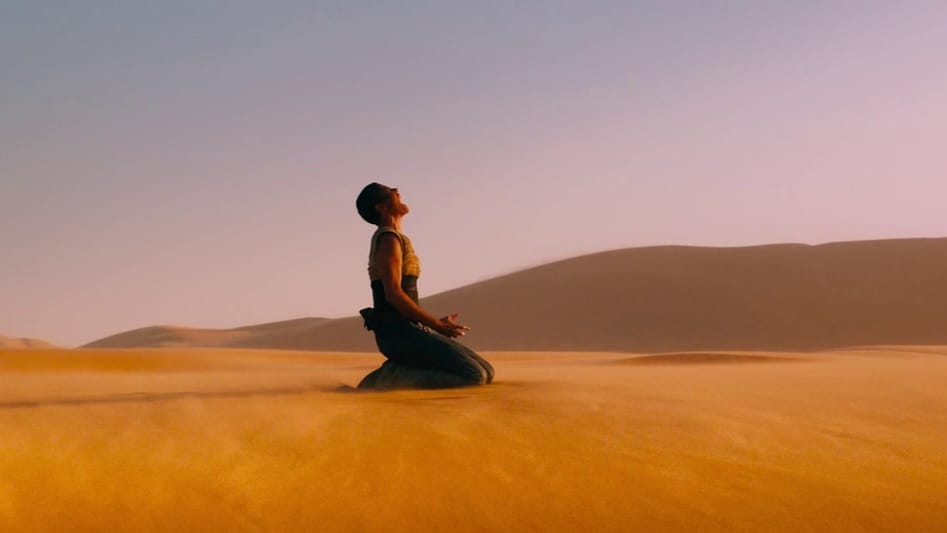
Aside from the audiovisual barrage that fills up most of Fury Road’s runtime, the moments between all the revving engines and gunfire make it endlessly rewatchable. You can’t have the thrilling chase back to the citadel in the third act without the scene of Furiosa (Oscar-winner Charlize Theron) screaming in anguish in the desert, realizing that her efforts to return home from Immortan Joe’s iron fist were in vain. The ultimate sacrifice of Nux (Nicholas Hoult) wouldn’t work without the deradicalization plotline in which he searches for meaning and honor. Miller previously focused on how larger-than-life marauders and scavengers survived the apocalypse. However, Fury Road is about these unrelenting survivors rising above the challenge and starting something new.
Stars Collide
When Tom Hardy took the mantle of “Mad” Max Rockatansky, he probably didn’t expect to share the spotlight as much with Charlize Theron’s Imperator Furiosa — an original character (and, frankly, needed feminist counterbalance) that George Miller had conjured during the franchise’s decades-long hiatus. On top of the extremely demanding shoot, Hardy and Theron infamously feuded during production (which had already gone through the nine circles of development hell). Their reported real-life disdain for one another only bolstered their on-screen dynamic. For better or worse, you can tell that these two are genuinely at odds with each other throughout Mad Max: Fury Road, making the emotional payoff even more impactful when they forge an alliance for the greater good.
Courtesy of Warner Bros.
Max had been the franchise’s figurative and literal driving force for nearly forty years, but the counterbalancing introduction of Furiosa might as well have upstaged Max in every department. Between the buzzcut, grease-painted forehead, and unforgettable metal arm, Charlize Theron’s portrayal of Furiosa is the skeleton key to unlocking Miller’s overarching thesis within the Mad Max saga. Her selfless near-sacrifice to save the brides from the tyrannical Immortan Joe exemplifies Miller’s notion of retaining humanity in the face of anarchy. This can be seen as the all-encompassing conflict within the series: “Where must we go, we who wander this wasteland, in search of our better selves?”
10 Years Later
In the ten years since Mad Max: Fury Road graced theater screens in May 2015, its influence has been felt immediately. In addition to Christopher Nolan crediting Fury Road for the action-heavy structure of Dunkirk (2017), it’s almost impossible to watch a modern car chase without feeling George Miller’s influence. The visceral tactility of the highway chase in Matt Reeves’ The Batman (2022) has Miller’s fingerprints all over it. The driving sequences in Edgar Wright’s Baby Driver (2017) and the moon rover chase from James Gray’s Ad Astra (2019) are chock-full of that same amped-up energy, too. As the first Mad Max did thirty-six years ago, Fury Road completely changed the vehicular language of action cinema for the better.

Besides its impressive Oscar sweep and global critical acclaim, Fury Road remains a mainstay on many ”Greatest of All Time” lists. IndieWire and Rolling Stone still have it ranked as number one on their greatest action film lists. New York Times columnist Kyle Buchanan wrote a 428-page book on the movie’s decades-long production, Blood, Sweat & Chrome: The Wild and True Story of Mad Max: Fury Road, and physical media forums use the 4K disc as a baseline test for their home theater setups. If you were to assemble a room full of action aficionados, odds are they would talk about Fury Road more than any other 21st-century picture save for Gareth Evans’ The Raid: Redemption (2011).
The Darkest of Angels
Furiosa: A Mad Max Saga, a prequel following the elite imperator (played by Anya Taylor-Joy) in her years as a young gearhead and co-starring Chris Hemsworth, was released by Warner Bros. in May 2024 to mass critical acclaim. A glorious five-act odyssey of epic proportions, Furiosa heightened the already dire stakes of Mad Max: Fury Road, giving its female lead an equally (if not more) emotionally resonant backstory that further contextualizes her motivations within the Wasteland. While Mad Max fans and critics alike welcomed Furiosa with open arms, the same can’t be said for its box office. Grossing $174 million (less than half of Fury Road’s returns) against a $168 million budget, Furiosa was a total box-office bomb.
Even if the government of Australia is willing to give George Miller boatloads of money again (they reportedly gave him a $133 million tax rebate to shoot Furiosa across New South Wales), the chances of another Mad Max film look grim right now. Furiosa lost Warner Bros. a reported $119 million in total revenue, cementing it as one of the biggest box office flops of 2024. Tom Hardy recently said in an interview that “things” are being “discussed” about another prequel, titled The Wasteland. Miller himself has confirmed that a script does exist for The Wasteland, which would follow the years that Max lost his mind before Fury Road, but all fans can do is wait with bated breath.
We Move Forward
Courtesy of Warner Bros.
With or without another Mad Max movie, Fury Road is rewatchable enough to keep all of our mouths shut whenever we need our action fix. Outside of the unmatchable face-melting experience of filmmaker George Miller’s mad genius being injected right into your corneas, the bleeding heart of this timeless story makes people constantly revisit Mad Max: Fury Road. Characters like Max and Furiosa are now both cinematic legends in their own right, with the latter becoming one of the most iconic action leads of this century. Despite the future of the Mad Max series being uncertain at the moment, it being home to this miraculous masterpiece is good enough for me.
Mad Max: Fury Road celebrates its 10th anniversary on May 15, 2025!
![Mad Max: Fury Road - Official Main Trailer [HD]](https://discussingfilm.net/wp-content/cache/flying-press/66a7e9441c72e62d5b3c00281b778f78.jpg)
Release Date: May 15, 2015.
Directed by George Miller.
Written by George Miller, Brendan McCarthy, & Nico Lathouris.
Based on characters created by George Miller & Byron Kennedy.
Produced by George Miller, Doug Mitchell, & PJ Voeten.
Executive Producers: Bruce Berman, Chris deFaria, Graham Burke, Steven Mnuchin, Iain Smith, & Courtenay Valenti.
Main Cast: Tom Hardy, Charlize Theron, Nicholas Hoult, Hugh Keays-Byrne, Josh Helman, Nathan Jones, Rosie Huntington-Whiteley, Zoë Kravitz, Riley Keough, Abbey Lee, Courtney Eaton, John Howard, Richard Carter, iOTA, Angus Sampson, Jennifer Hagan, Megan Gale, Melissa Jaffer, Melita Jurisic, Gillian Jones, Joy Smithers, Antoinette Kellerman, Christina Koch, Jon Iles, Quentin Kenihan, Coco Jack Gillies, Chris Patton, Stephen Dunlevy, & Richard Norton.
Cinematographer: John Seale.
Composer: Tom Holkenborg (aka Junkie XL).
Production Companies: Village Roadshow Pictures, RatPac-Dune Entertainment, & Kennedy Miller Mitchell.
Distributor: Warner Bros. Pictures & Roadshow Entertainment.
Runtime: 120 minutes.
Rated R.