

A new Iron Man run means a new era for the character and a new creative team. Following the end of Gerry Duggan and Juan Frigeri’s twenty-issue run on Invincible Iron Man, National Security Journalist Spencer Ackerman, paired with rising star artist Julius Ohta, would make his Marvel Comics debut with The Insurgent Iron Man, and what better character was there for him to start with? Ackerman’s journalistic background allows him to inject the character with complex themes of corporate espionage and warfare, the military-industrial complex, and geopolitics. At the same time, Ohta’s stunning artwork fills the book with plenty of action and spectacle from cover to cover (provided by artist Yasmine Putri).
Spencer Ackerman certainly isn’t the first writer to subvert complex political ideas in an Iron Man run, but he does it with blunt force. What initially reads with a near-grating lack of subtlety develops into charm, thanks to the grand and bombastic nature of the stakes. With the series’ ending announced this June after only ten issues, it’s worth taking a look at how Ackerman’s unique perspective developed the iconic hero and the mark that he was able to leave on Tony Stark in his far too brief run.
Plan A’s Turn Into B’s and C’s, But the Challenges Tony Stark Faces are Practically Insurmountable

The introduction of a newer, more dangerous Iron Monger, a magical virus that makes all of his armor completely unusable, and a company takeover orchestrated by supervillains all conflict with Tony’s attempts to remain an “ethical” head of a global corporation.
While Tony Stark has been putting all of his energy into being the hero that the Marvel universe needs him to be, it comes at the cost of acting as the leader of Stark Unlimited. His workers have unionized, unhappy with being seen as an afterthought in Tony’s machinations and wanting a real say in what they manufacture. This sets the stage for the Roxxon Corporation and A.I.M. to enter the fold, go to war, and bring Tony as low as they can get him.
A Tony Who is Both Physically and Emotionally Vulnerable.
Tony is stretched thin. He’s fresh off a divorce from the X-Men’s Emma Frost, desperate and anxious, but determined, with his usual quips in his back pocket when needed. Writer Spencer Ackerman puts Tony face-to-face with some of his deepest insecurities. The nagging thoughts in the back of his head rush to the surface, and readers are shown what makes the character tick.
Courtesy of Marvel Comics
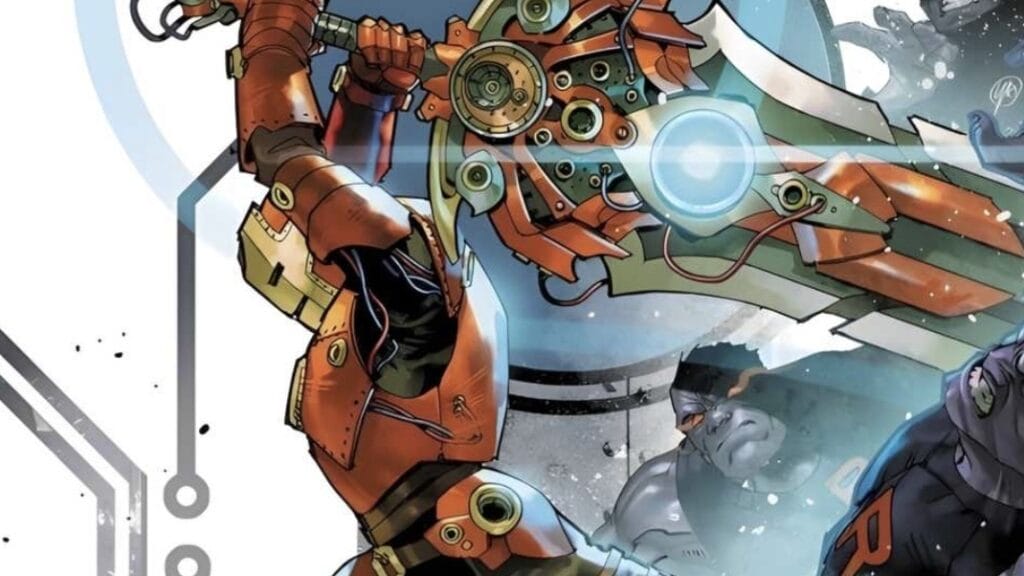
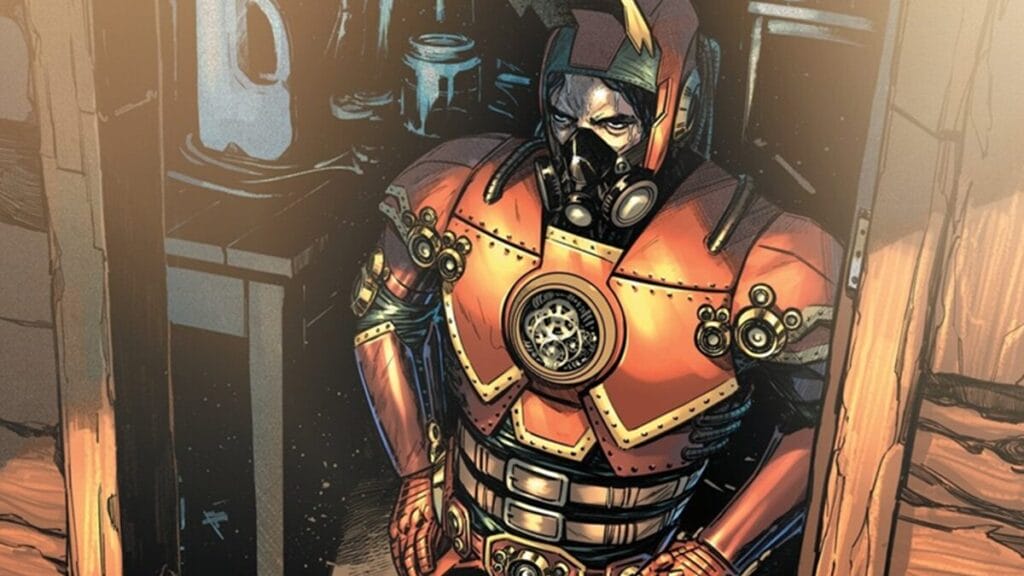
As is typical for the character, Tony must once again reconcile with his father’s legacy and the company’s past. Weapons aren’t the only questionable technology Stark has produced, and the consequences of Stark’s business practices, both inherited and created by Tony, still linger. He’s complicated, fractured, and hastily trying to piece himself and a new improvised suit of armor together. While Tony’s body is less protected, especially after his enemies’ multi-pronged attack at the run’s start, he evens his odds with a giant anime-style sword that Marvel would frankly be foolish to abandon after this run’s completion.
Aside from the new armor and weapon, the run celebrates suits from Iron Man’s past in a few fun moments throughout. Ackerman takes the time to show different sides of Tony. If the Insurgent Iron Man isn’t able to repulsor blast his way out of a tight spot, Tony can flex his business savvy instead, but as the stakes get higher and things are further complicated, Tony struggles to decide what the best approach is. He hopes to take on everything that life throws at him and tries his best, but not without making mistakes along the way. His hubris has a habit of coming back to bite him, but he learns he doesn’t have to face it alone.
Familiar Faces in Radically Different Spaces
Insurgent Iron Man is a globe-trotting adventure, featuring an exciting cast of heroes and villains, both prominent and underused, from Marvel’s long history. There’s an interesting history and evolution of the Iron Monger suit that feels personal and threatening. The journey that unfolds throughout the narrative is palpable and effective, as are the stakes involved, even if it somewhat undermines the complexity of certain character choices by the end.
Ironheart has a notable supporting role that culminates in a spectacular action beat to conclude the first arc. Agent Melinda May, a fan-favorite character initially created for Agents of S.H.I.E.L.D., is one of the few players capable of both supporting and challenging Iron Man.
Courtesy of Marvel Comics
The run places importance on realistic-feeling agency among its cast. Characters throughout the story are capable of aligning with Tony at one point and butting heads with him in reaction to his later moves. Spencer Ackerman effectively weaves key figures and locations into the narrative, serving the themes and plot, regardless of their significance. However, the sheer number of characters and corners of the universe they introduce can feel overwhelming at times.
Ackerman does his best to integrate Marvel’s One World Under Doom event into the story organically, but by the end, it feels rushed, and it becomes apparent that the story was forced to wrap things up more quickly than initially planned. Certain pages during this stretch may require a reread or two to fully process what’s happening, owing to the story’s breakneck pace.
Insurgent Iron Man Takes Many Big Swings, They Just Don’t Always Land
This run is filled to the brim with the ideas of an excited and ambitious writer thrown into the wildly interwoven world of Marvel Comics. It must confront the ever-changing status quo and the consequences of crossover events, as well as the characters and organizations that move in and out of the story. At first, it can be a bit headache-inducing for the reader to take in all of these elements, but in the run’s best moments, it miraculously comes together. There are just enough moments of exposition and context to get by in this incredible rush of nonstop action and intrigue.
The way Spencer Ackerman can fit all of these ideas into one ten-issue run with this level of execution is impressive in spite of its shortcomings, especially for a writer who’s relatively new to the comic writing scene. Ackerman spent the run mining as much as he could from Iron Man’s past to establish a multitude of distinct, exciting directions to take him in the future. You just can’t help but feel like it ended too soon.