


As we get older, the history with our various family members only grows more complex and fraught with emotion. These are people we have known literally for our entire lives, and we have shared so much with them. Yet, no two family members perceive that shared history in the same way, leading to wildly different interpretations of the past and its impact on the present. Added to that are all the myriad secrets we keep as private individuals, the things we never share with our family or anyone else. As the proverb goes, familiarity breeds contempt, even though it seems that it should logically bring understanding. Is there any hope of reconciliation when making a connection is nearly impossible?
These are some of the questions on the mind of co-writer/director Ronan Day-Lewis, as seen in his feature film debut, Anemone (2025). The movie is an emotionally volatile story of a small, fractured family whose pain has created ripples throughout multiple generations, and for whom time has never healed their deep wounds. It’s a weighty work that is given even more dimension thanks to Day-Lewis co-writing the project with star Daniel Day-Lewis, who also happens to be Ronan’s father. Anemone is far from any self-indulgent nepo baby lark, as that fact would suggest. Instead, it’s a haunting drama filled with powerhouse performances. Additionally, it’s one of the best debut features in recent years.
Anemone is not a “Twisty” Movie, but it Contains Many Mysteries
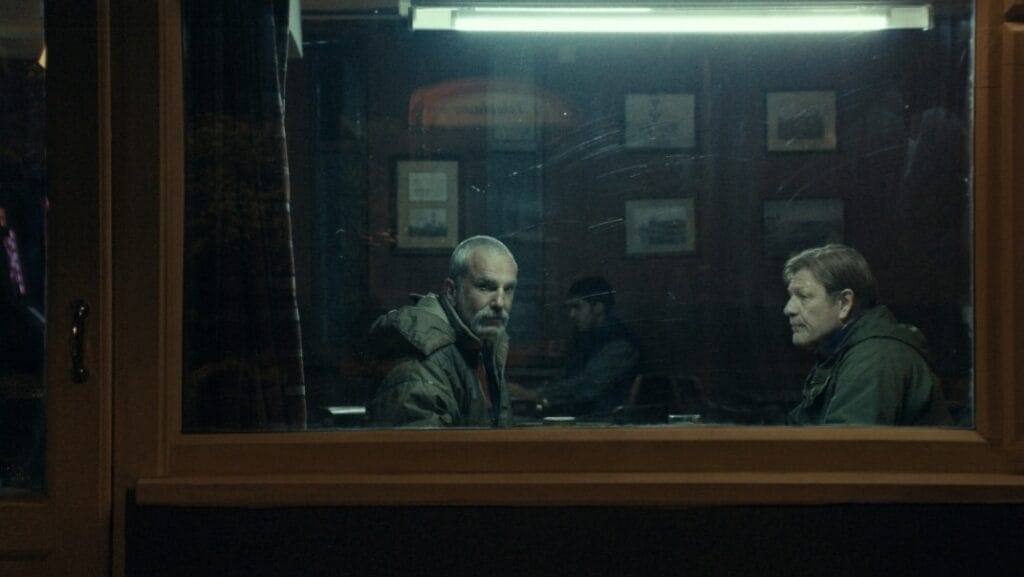
Part of the joy in watching Anemone is seeing just how Ronan Day-Lewis allows the narrative to unfold slowly. It requires patience on the audience’s part, to be sure. However, that patience is wholly rewarded if you give the film a chance. Anemone is not a “twisty” movie by any means, but some of its depth comes through the intricate weaving of its tale. To put it briefly, the story revolves around four members of a tortured family: Ray (Daniel Day-Lewis), Jem (Sean Bean), Nessa (Samantha Morton), and Brian (Samuel Bottomley).
Courtesy of Focus Features
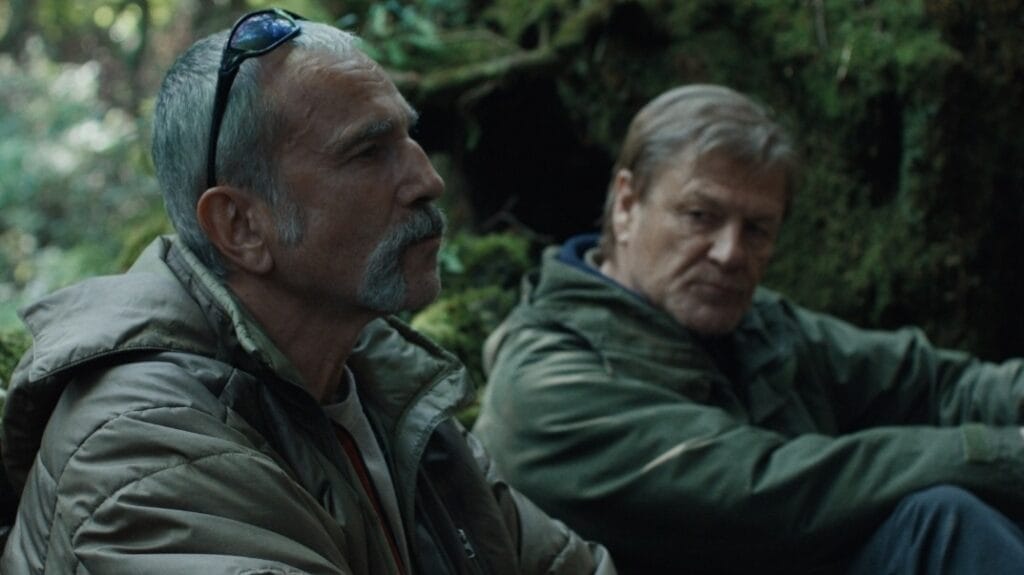
After the teenage Brian is involved in a violent altercation, his mother, Nessa, and stepfather, Jem, decide that Jem needs to seek out his estranged brother, Ray, who long ago chose to sequester himself in the deep woods of Northern England. It happens that all four people have fragile relationships with one another, thanks to mistakes made in their pasts. Ray, whose service in the British military in the mid-1970s during the Troubles in Ireland left him with unspeakable trauma, has drastically affected everyone else around him. Throughout Anemone, this broken family struggles to make peace with themselves, and the question of whether they can reconcile with each other looms over every decision they make.
A Fantastic Comeback for Daniel Day-Lewis
Something that gives Anemone a singular energy is the fact that, despite its narrative intimacy, it’s ironically kind of an event film. That event, of course, is the return of 3x Oscar-winning actor Daniel Day-Lewis, following his announcement of retirement after starring in 2017’s Phantom Thread. Sure, plenty of other actors have prematurely announced their retirement, but Day-Lewis has always carried an integrity that made it seem like he might stick to it. Perhaps, had his son Ronan not come along with Anemone, he would have. Thankfully, he did, and while it’s unfair to say that the movie belongs to his father, there’s no doubt that his presence is a large part of its appeal.
It feels trite to say that Daniel Day-Lewis is utterly magnetic in Anemone, but it’s true. It’s a pleasure to see him hold court on the big screen again, especially since Ray is a more enigmatic character than Daniel Plainview or Abraham Lincoln. For much of the 2-hour runtime, viewers are unsure what to make of him; early on, Ray delivers a monologue (one of several), which may be the truth or a total fabrication. Anemone doesn’t antagonize the audience, however, because we eventually see Ray stripped to his core. This scene, where the film reveals its dark secrets as Day-Lewis goes to a very vulnerable place, helps contribute to Ray becoming one of the actor’s most memorable characters.
Anemone Requires Your Patience
Anemone is a remarkably rich film, but it does require patience. This is especially true of the first two acts, which swirl around the mystery at the heart of the script in a way that mirrors the characters’ years-long avoidance. Patience might also be required for those who find monologues a chore, even when delivered by the likes of Daniel Day-Lewis. Anemone is not a cruel movie, though it is abrasive. There’s an early moment that suggests we may be watching a stealth ghost story, and while that’s not exactly the case, it could mislead viewers who are lost and unsure what to make of this plot.
Courtesy of Focus Features
These are mere nitpicks, of course. More serious is the way Anemone employs a degree of ambiguity that is perhaps excessive. It’s a tendency that will likely become beguiling upon a rewatch but can be frustrating on a first watch, when you’re still trying to figure everything out. Then, there’s the character of Hattie, played by relative newcomer Safia Oakley-Green. She’s great in the part and a welcome presence, so much so that the film’s tight focus on Ray, Jem, Nessa, and Brian leaves her woefully underserved. None of these issues diminishes the movie’s power. Rather, they are minor elements that keep Anemone from feeling like an instant classic right out the gate.
Ronan Day-Lewis Crafts a Gorgeous and Multi-Layered Film
That said, Anemone is so impressive that it will very likely grow in appreciation for those it speaks to. The film is one of the most gorgeous movies of 2025, too. Ronan Day-Lewis and cinematographer Ben Fordesman (Love Lies Bleeding) have captured numerous breathtaking shots of the dense English forest, images that editor Nathan Nugent occasionally weaponizes. On top of that, the score by Bobby Krlic (Eddington) may be the composer’s best one yet. Day-Lewis’ direction feels especially reminiscent of Bernard Rose’s early films, particularly Paperhouse (1988). In fact, Day-Lewis demonstrates such a knack for creating tension and surreal imagery that I wouldn’t be surprised if he has something like Rose’s Candyman in him.
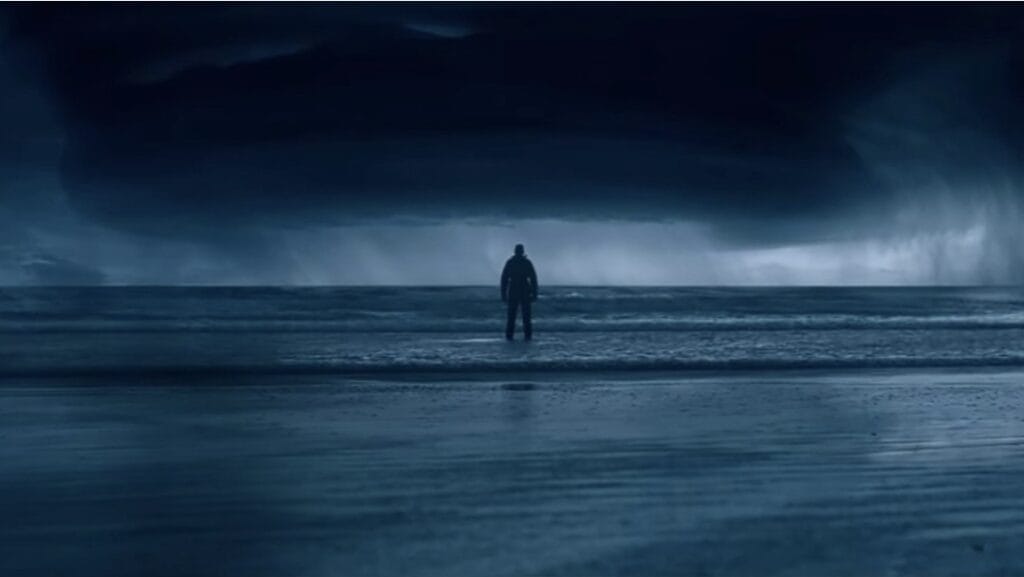
Whatever happens, it’s a minor miracle that Ronan Day-Lewis has made a movie that sidesteps the nepo baby stigma, as well as achieves the high bar of providing Daniel Day-Lewis a great comeback vehicle. In addition to Day-Lewis, the other principal cast members do some similarly incredible work, proving that Ronan isn’t only adept at directing his father. The title refers to the species of flower, one which has numerous connotations in the mythology of various cultures. In Ancient Greece, they stood for tragic love. In Victorian England, they told others your emotions. In Japan, they are used in funerals.
Anemone touches upon all these meanings and more, which is why you will be thinking about it long after the credits roll.
Anemone hits theaters on October 3!
![ANEMONE - Official Trailer [HD] - Only in Theaters October 3](https://discussingfilm.net/wp-content/cache/flying-press/d9ce0bda7030a658b10df1edf695b9b1.jpg)
Release Date: October 3, 2025.
Directed by Ronan Day-Lewis.
Written by Ronan Day-Lewis & Daniel Day-Lewis.
Produced by Dede Gardner & Jeremy Kleiner.
Executive Producers: Daniel Day-Lewis & Brad Pitt.
Main Cast: Daniel Day-Lewis, Sean Bean, Samantha Morton, Samuel Bottomley, & Safia Oakley-Green.
Cinematographer: Ben Fordesman.
Composer: Bobby Krlic.
Production Company: Plan B Entertainment.
Distributor: Focus Features (United States) & Universal Pictures (International).
Runtime: 121 minutes
Rated R.