

2021’s Mortal Kombat has a strange place in the world of video game adaptations. To start, it came out at a weird time: not all theaters had reopened yet in the wake of the COVID-19 pandemic, so it premiered simultaneously on HBO Max. The film’s reception was mixed at best, with even the most generous critics puzzled by its attention to detail in some areas and glaring omissions in others, such as the absence of the titular Mortal Kombat tournament. Its sequel, Mortal Kombat II (2026), aims to right these wrongs, or at least have the opportunity to make more box office revenue this time around.
Directed by returning filmmaker Simon McQuoid and written by Jeremy Slater (Godzilla x Kong: The New Empire, Marvel’s Moon Knight), Mortal Kombat II proudly wears its various inspirations from the source material on its sleeve. There’s a massive roster of fan-favorite characters, which finally introduces Dredd and The Boys star Karl Urban as Johnny Cage, and a decidedly bigger focus on the over-the-top locales and gnarly gore from the games. Superficially honoring the source material does not make a good movie, however. Mortal Kombat II sets live-action video game adaptations back years, with an inconsistent plot, paper-thin characters, rough visuals, and deeply unsatisfying fight sequences that snuff out any alleged fidelity to the classic Midway/NetherRealm video game franchise.
The Narrative Is Fatally Scatterbrained
Earthrealm has lost nine times in a row in a fighting tournament known as Mortal Kombat. If they lose once again to the villainous Shao Kahn (Martyn Ford) and the forces of recurring victor Outworld, Earthrealm will fall under his control. Lord Raiden (Tadanobu Asano) and his Earth champions Sonya Blade (Jessica McNamee), Jax (Mechad Brooks), Liu Kang (Ludi Lin), and Cole Young (Lewis Tan) must turn to desperate measures when they recruit washed-up action star Johnny Cage (Karl Urban) to join their cause.
Courtesy of Warner Bros.
Despite a prologue involving Shao Kahn’s conquest and subsequent “adoption” of Kitana (played by Sophia Xu as a child and Adeline Rudolph as an adult), suggesting a solid backbone, or at least some semblance of an emotional core, the story completely falls apart in record time. There are simply too many characters, too many rivalries, too many locations to get through, leading the script to haphazardly cram in as many “cool things” from the video game series as it can, without regard to order.
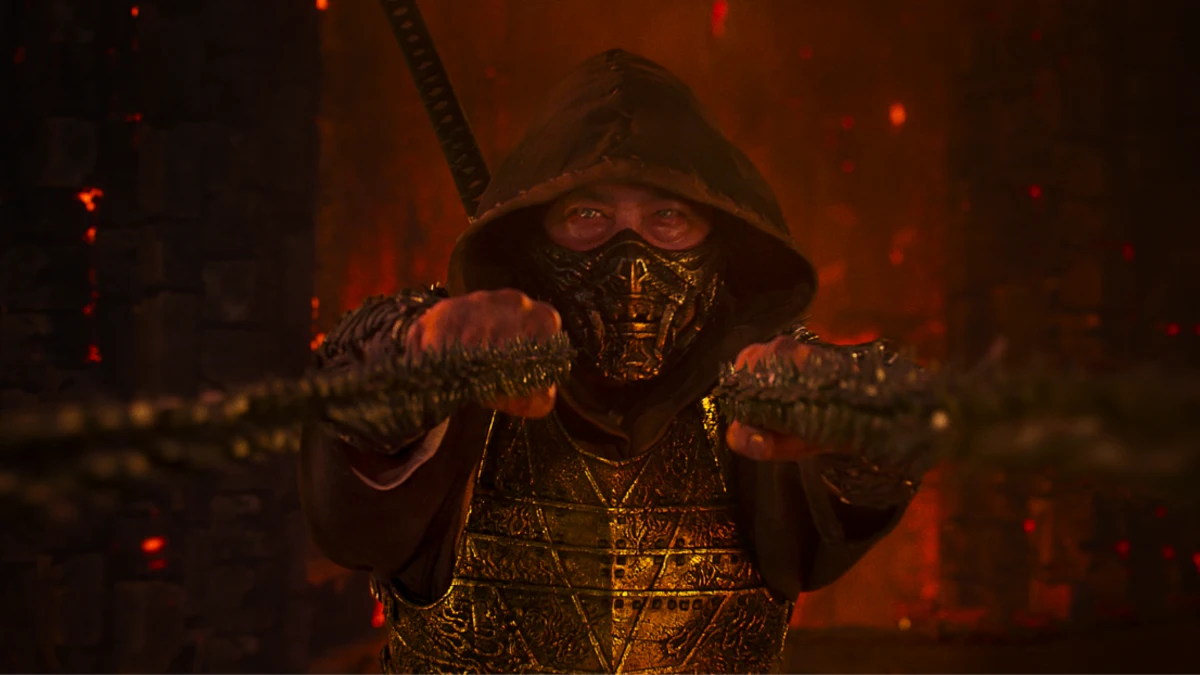
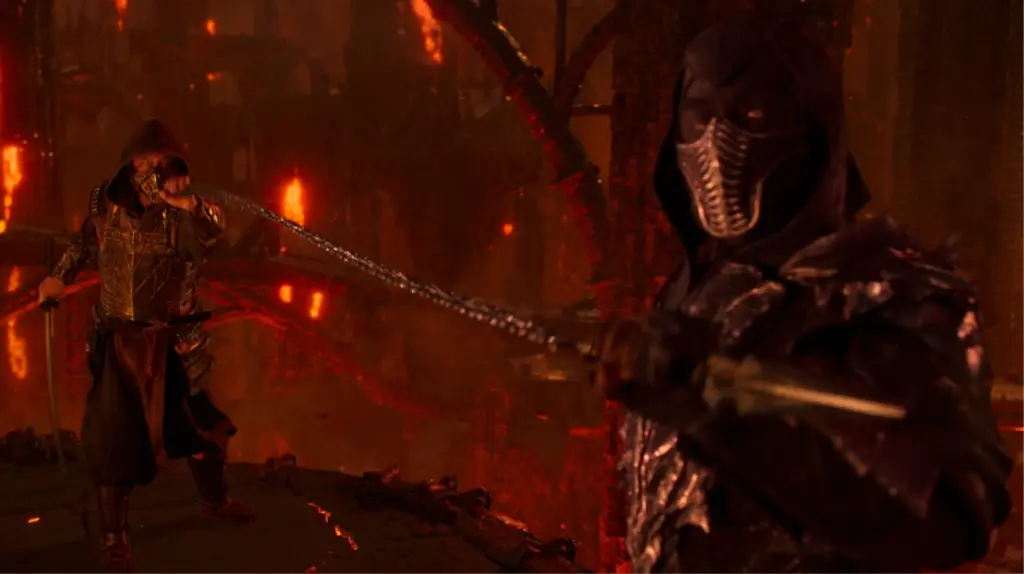
Subplots like the oppression of the Tarkatan race, a rivalry between Sub-Zero and Scorpion (played by the woefully underused Joe Taslim and Hiroyuki Sanada, respectively), the fracturing relationship between Kitana and her adoptive sister Jade (Tati Gabrielle), and the resurrection of heroic characters as “Revenants” all fight for screen time. This feels less like there was too much story to tell and more like squeezing in as many game references as possible to cheaply win over fans. A lot of the narrative failings of Mortal Kombat II would be easier to take if there were great fight sequences or likable characters, but, well, you can probably guess where this is going.
Karl Urban Tries His Best To Give Mortal Kombat II Some Heart
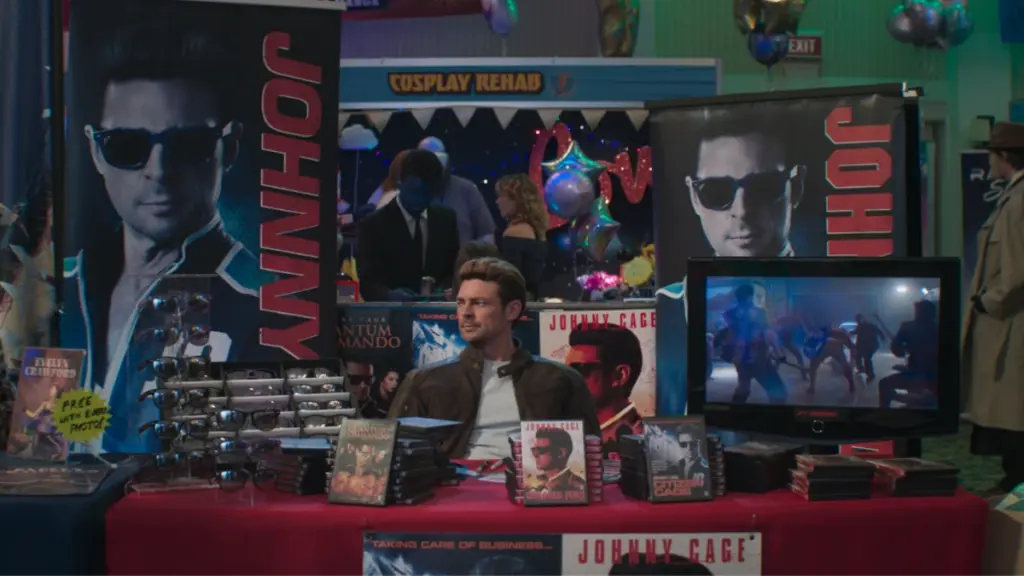
A veteran actor like Karl Urban playing Johnny Cage feels like a bit of a cheat code. For what it’s worth, he brings an affable, smartass energy that might have held Mortal Kombat II together if he were truly the protagonist. Strangely, there isn’t really a protagonist here. The film jumps around so much, trying to cram everything in, that it’s hard to even evaluate the performances. After all, the actors don’t seem like they are here to portray anyone so much as pose in so-so cosplay for the trailers. Despite being the apparent heart of the movie, Riverdale and Chilling Adventures of Sabrina star Adeline Rudolph seems like she has to fight to mine anything out of Kitana.
Courtesy of Warner Bros.
Joe Taslim and Hiroyuki Sanada have some fun in the very brief reprisals of their roles, while Josh Lawson, who was the best part of the last movie as the foul-mouthed Kano, chews the scenery up in a delicious manner. Martyn Ford’s Shao Kahn is a transparent Thanos knockoff in his presentation, and his underlings, Quan Chi (Damon Herriman) and Shang Tsung (Chin Han), barely get any dialogue. Characters like Jax and Sonya Blade, ostensibly among the few main characters in this franchise, hardly get any lines either! That’s to say nothing of the previous film’s protagonist, Cole Young, who is treated in a downright disrespectful manner here.
Mortal Kombat II Fails to Translate the Bone-Crunching Feel of the Gameplay
One of the only times Mortal Kombat II comes alive and Simon McQuoid seems to wake up in the director’s chair involves Liu Kang having to fight his resurrected/possessed best friend, Kung Lao (Max Huang), on a surreal wooden platform in front of a background of blue portals. There’s a palpable sense of history between these two, and heated emotions that feed a well-choreographed, imaginative fight sequence. It’s a near-perfect cinematic translation of the game’s aesthetics.
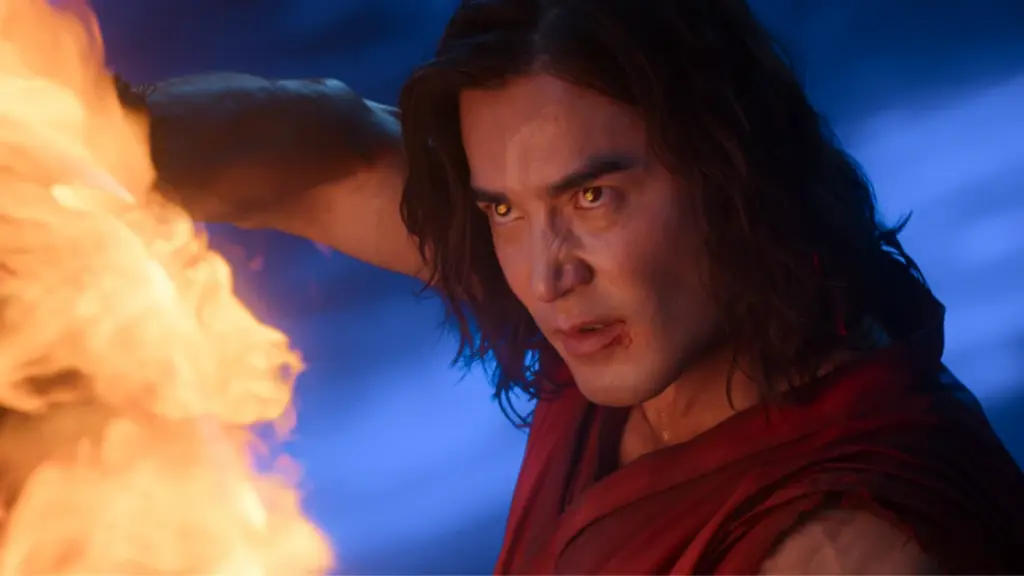
Never again does Mortal Kombat II ever approach this sweet spot. While the first film had its fair share of flaws, the fight choreography was top-notch, matching the game’s quick, bone-crunching physicality. The lumbering, ridiculous-in-all-the-wrong-ways, and weightless fight scenes in Mortal Kombat II make the eyes glaze over. Worse still is when the direction draws attention to this by adopting a 2D viewpoint. An effort to mirror the games only shows the audience how unsatisfying, silly, and slow these fights are in comparison. The “fatalities” are also unimaginatively constructed, offering no single creative way to dispatch the opponents. You’ll see a lot of shoddy CGI blood, though.
Both Gamers and Moviegoers Deserve Better
Shoddy is a great word to describe Mortal Kombat II. Director Simon McQuoid’s attempt to right the perceived wrongs of the first movie results in an outright mess that tries to hide behind fan service. There doesn’t seem to be a budget to fully realize visuals that match the games, either. The few neat-looking practical sets are overshadowed by visual effects that straight-up look unfinished and obvious green screens. Because there are things here that, yes, most people who played any of the games will recognize, you can already hear the preemptive defense of Mortal Kombat II as made “for the fans”.
Those who have put significant time into the Mortal Kombat games know their unique pleasures. A dense mythology, a cast of colorful characters, out-of-this-world visuals, and brutal fighting styles are a massive part of the series. Mortal Kombat II merely gestures toward the existence of these things rather than attempting to translate them in any significant way. Not only do fans of the games deserve far better, but so do moviegoers who, at the bare minimum, want a turn-your-brain-off kind of action movie.
★ ★ ☆ ☆ ☆
Mortal Kombat II hits theaters on May 8!
Directed by Simon McQuoid.
Screenplay by Jeremy Slater.
Based on the Mortal Kombat video game franchise created by Ed Boon & John Tobias.
Produced by Simon McQuoid, James Wan, Toby Emmerich, Todd Garner, & E. Bennett Walsh.
Executive Producers: Ed Boon, Michael Clear, Lawrence Kasanoff, Judson Scott, & Jeremy Slater.
Main Cast: Karl Urban, Adeline Rudolph, Jessica McNamee, Josh Lawson, Ludi Lin, Mehcad Brooks, Tati Gabrielle, Lewis Tan, Damon Herriman, Chin Han, Tadanobu Asano, Hiroyuki Sanada, Martyn Ford, Desmond Chiam, Ana Thu Nguyen, Max Huang, CJ Bloomfield, Joe Taslim, & Sophia Xu.
Cinematographer: Stephen F. Windon.
Composer: Benjamin Wallfisch.
Editor: Stuart Levy.
Production Companies: New Line Cinema, Atomic Monster, Broken Road Productions, & Fireside Films.
Distributor: Warner Bros. Pictures.
Runtime: 116 minutes.
Rated R.