
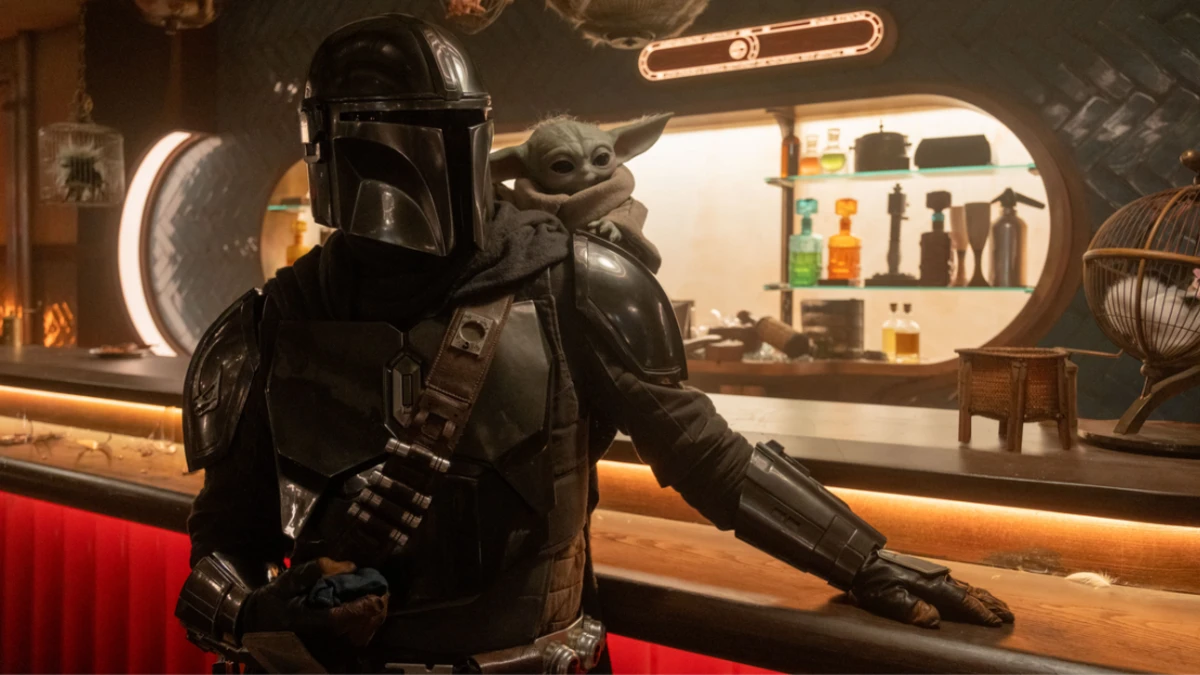

The first Star Wars film in 7 years is somehow fairly straightforward yet complex in the grand scheme of things. Following three seasons of The Mandalorian on Disney+, writer-director Jon Favreau and new Lucasfilm President/co-writer Dave Filoni have found their path to bringing the franchise back to theaters with The Mandalorian and Grogu (2026). Resting so much pressure on a blockbuster that continues the story of a streaming series was widely seen as a huge gamble. The odds, however, don’t look that bad when you’re betting on a huge moneymaker like Baby Yoda. But how do you successfully craft a theatrical experience that satisfies fans of the show while also reeling in a new generation of viewers?
As it turns out, Favreau and Filoni’s answer to that dire question is to go as simple as possible. Coming after the traumatic, franchise-degrading experience that was 2019’s The Rise of Skywalker, it’s evident that Lucasfilm and Disney are still recovering from the damage. The Mandalorian and Grogu is a very safe option for the brand to cultivate audiences in theaters again. To its credit, Favreau’s film is jam-packed with grand spectacle and thrilling set pieces. Furthermore, in the years since The Mandalorian launched on Disney+, Lucasfilm has continued to nurture expert VFX artists, stunt performers, puppeteers, costumers, production designers, and more. The Mandalorian and Grogu is visually up to par with previous Star Wars movies, there’s no debate.
An Impressive Technical Achievement
There is true Star Wars magic on display in The Mandalorian and Grogu. At times, it feels like Jon Favreau is putting even more of a spotlight on colorful aliens and creatures than some of the previous Star Wars movies under Disney. Along with the vibrant costumes, tactile makeup, and practical creature effects that blend seamlessly with CGI, there is also noteworthy use of stop-motion animation for some beasts and foes — provided by VFX pioneer Phil Tippett’s own studio. Not to mention that this production used far less of the Volume for its sets and backdrops, unlike the Disney+ show, which has drawn heavy scrutiny for making the technology look cheap.
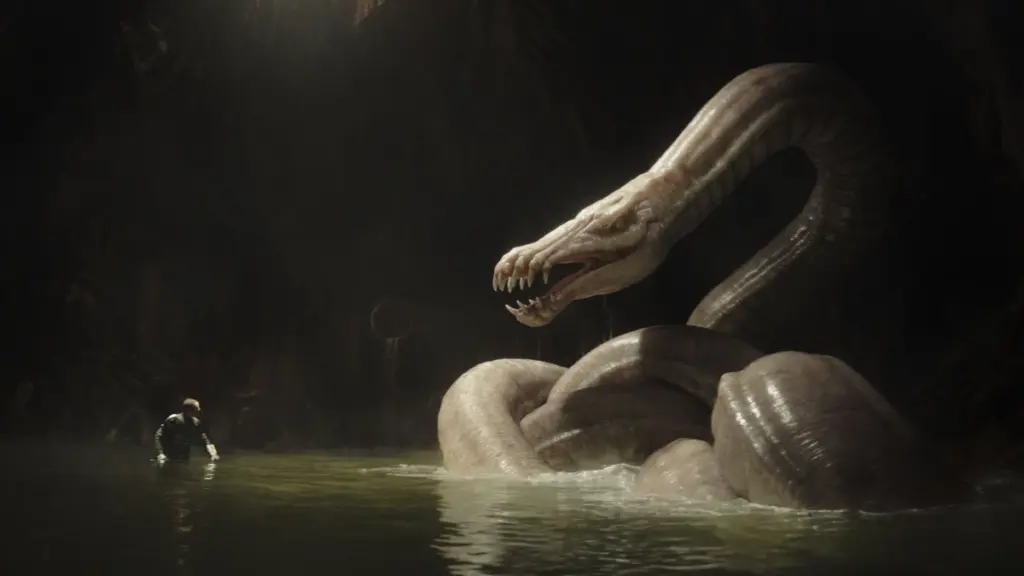
For being the first Star Wars film to be shot mainly in Los Angeles, fans wouldn’t be able to tell the difference. Admittedly, there is one action sequence that unfortunately looks like a Disney+ show because of washed-out lighting. Outside of this one scene in particular, the rest of The Mandalorian and Grogu utilizes large, lived-in practical sets, most of which tower over what’s been showcased in the Disney+ series. If anything, Jon Favreau reminds audiences why Star Wars will always belong on the big screen. Because it’s been 7 years since the franchise has been in theaters, these elements alone will be enough to satisfy some Star Wars fans. Everyone else, though? That’s where results will vary.
Spectacle Over Plot
If you’ve been wondering why I haven’t mentioned any plot points… well, that’s the thing: there aren’t many. In the years following Return of the Jedi (1983), the fledgling New Republic has been doing its best to wash out the Empire’s surviving remnants. The titular Mandalorian, Din Djarin (Pedro Pascal), and his adopted force-sensitive son Grogu have been working for Colonel Ward (Sigourney Weaver), taking out remaining Imperial warlords on her dime. The duo’s latest mission sees them doing a favor for the Twin Hutts of Nal Hutta in exchange for crucial information.
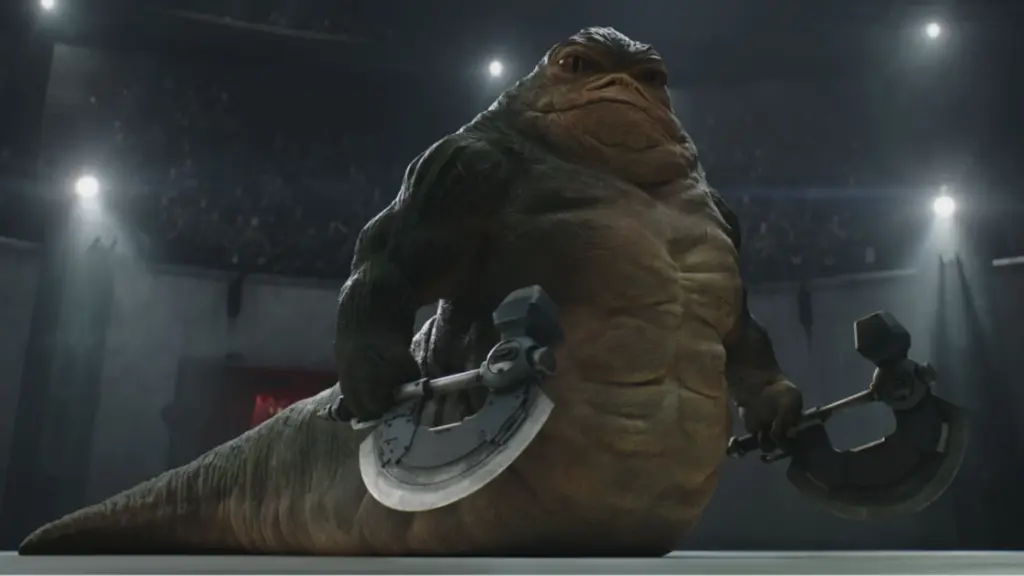
Despite his hesitation to once again align himself with the most dangerous gangsters in the galaxy, Din agrees to rescue their nephew Rotta the Hutt (voiced by Emmy-winner Jeremy Allen White) from a rival crime syndicate. Jon Favreau and Dave Filoni’s script clearly draws inspiration from the swashbuckling sci-fi serials that originally inspired George Lucas to make Star Wars (1977), Flash Gordon being the biggest example. Other influences here include the spaghetti Westerns of the ‘60s, sci-fi noirs like Blade Runner (1982), and even Jim Henson’s fantasy films of the ‘80s.
That last part may sound unexpected, but once the movie brings in the small gang of Anzellan engineers from the show, they and Grogu take center stage in whimsical, puppet-heavy segments that call back to childhood classics like Labyrinth (1986).
Paying Homage Without Building an Identity
Using all of the aforementioned examples as sources of inspiration sounds great. However, the problem is that these influences never mesh into a cohesive narrative. In fact, that’s partially why The Mandalorian and Grogu feels like multiple episodes of the Disney+ series stitched together as one film. You can essentially divide the movie into 3-4 chapters, each paying homage to a different cinematic source. The uneven pacing doesn’t help this disconnect either, with Favreau pressing hard on the brakes multiple times to segway into the next piece of the story. Most damning of all is the lack of unique themes or anything resembling the high stakes and emotions that Star Wars has famously brought to the big screen.
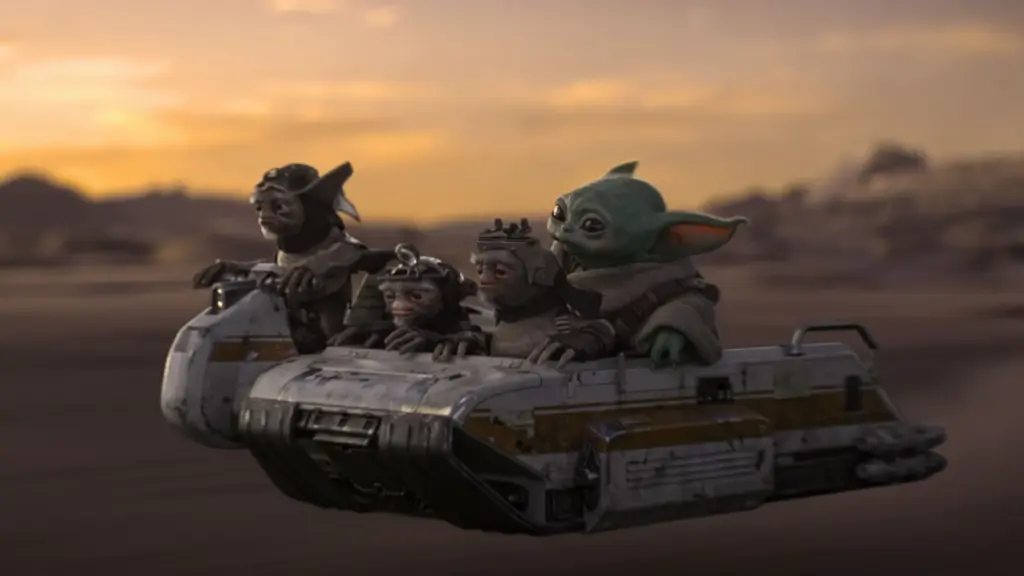
At its best, The Mandalorian and Grogu expands on the familial trust between the titular hero and his little green son. While he’s working for the New Republic and building alliances with characters like Colonel Ward and Zeb Orrelios (best known from Star Wars Rebels, voiced by Steve Blum), Din Djarin still likes to think of himself as an independent force. His closed-off nature and introversion often put him at a distance from Grogu, even though he’s trying his best to simultaneously act out his responsibilities as a father. At what point in their galactic escapades will Mando finally learn to trust Grogu to the fullest? It’s a somewhat interesting idea that, for some reason, isn’t explored nearly enough.
The Mandalorian and Grogu vs. Other Star Wars Spin-Offs
Aside from the spectacle and technical magic on display, there are moments in The Mandalorian and Gogu that, narrative-wise, help justify this adventure being in theaters rather than on streaming. Jeremy Allen White (The Bear, Springsteen: Deliver Me from Nowhere) surprisingly stands out as Jabba the Hutt’s nephew, Rotta. Fans last saw Rotta as a tiny comedic relief character in 2008’s Star Wars: The Clone Wars. Here, he’s the disgraced heir to a criminal empire who discovers his reformation by fighting in a gladiator pit. As ludicrous as that sounds, he does bring some oddly compelling emotion to the film, as Grogu makes him recall the innocence he once had as a child.
But like every other memorable thing in this movie, there is always something ready to undercut even a far-out character like Rotta the Hutt. From the stilted dialogue in the screenplay to the lack of depth, The Mandalorian and Grogu at times seems like its holding itself back from reaching new heights. Star Wars spin-offs like 2016’s Rogue One and 2018’s Solo were imperfect in their own ways, yet they at least had high aspirations.
Perhaps Disney just needed something to reignite people’s interest in Star Wars after years of recovering from disaster, and Baby Yoda was the safest bet. While that could be true, Jon Favreau, Dave Filoni, and company could have challenged themselves further. If nothing else, Star Wars fans have another incredible score from 3x Oscar-winner Ludwig Göransson to dive into.
★ ★ ★ ☆ ☆
Star Wars: The Mandalorian and Grogu hits theaters on May 22!
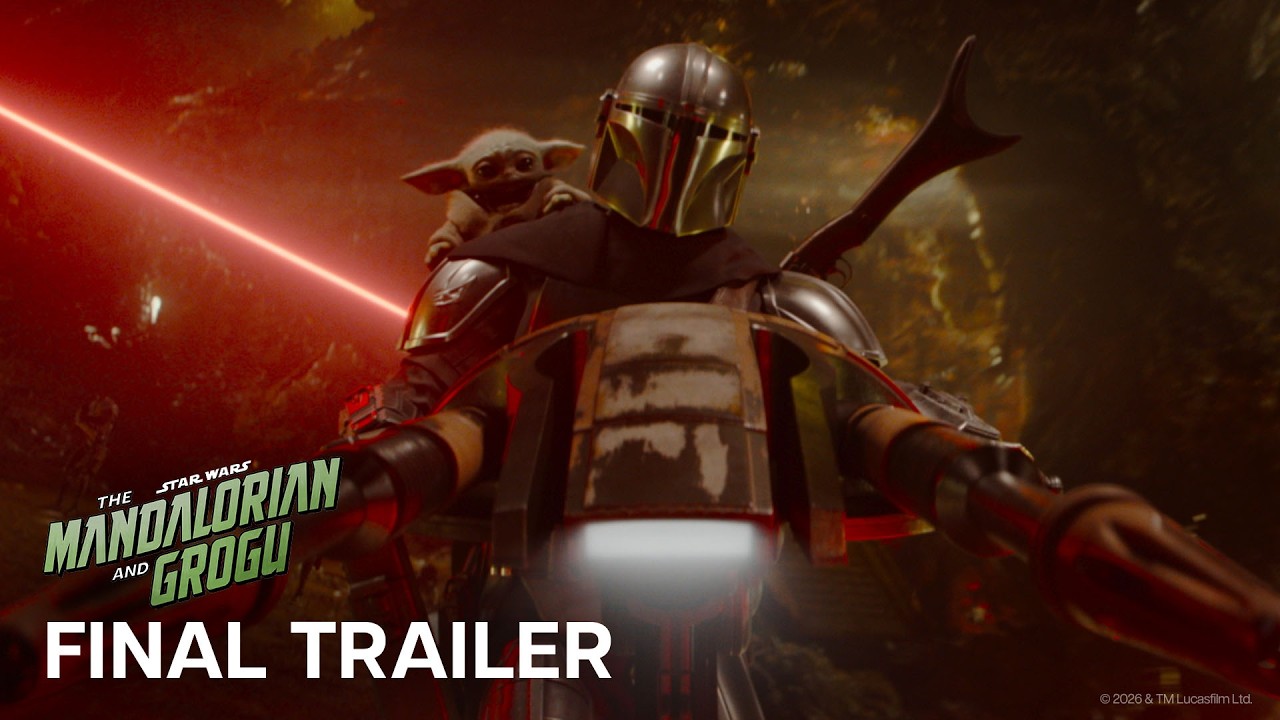
Release Date: May 22, 2026.
Directed by Jon Favreau.
Screenplay by Jon Favreau, Dave Filoni, & Noah Kloor.
Based on characters created by George Lucas.
Produced by Kathleen Kennedy, Ian Bryce, Jon Favreau, & Dave Filoni.
Main Cast: Pedro Pascal, Brendan Wayne, Lateef Crowder, Jeremy Allen White, Sigourney Weaver, Jonny Coyne, Steve Blum, Stephen McKinley Henderson, Hemky Madera, Martin Scorsese, & Matthew Willig.
Cinematographer: David Klein.
Composer: Ludwig Göransson.
Editors: Rachel Goodlett Katz & Dylan Firshein.
Production Companies: Lucasfilm Ltd. & Fairview Entertainment.
Distributor: Walt Disney Studios Motion Pictures.
Runtime: 132 minutes.
Rated PG-13.