

Stop me if you’ve heard this one before. A lone vigilante experiences some extreme trauma and embarks on a violent quest for vengeance, using guns, knives, and fists to deliver his own personal brand of justice to the ones who took everything from him. Yes, Silent Night (2023) is the kind of action movie and revenge thriller we’ve seen play out on the big screen dozens of times over, from Taken to John Wick and all of the knockoffs in between. But Silent Night also has three things going for it: It has a cheeky holiday-themed backdrop to its violence, there are zero lines of spoken dialogue, and last and most importantly, it’s directed by legendary filmmaker John Woo.
John Woo is a pioneering icon of Hong Kong action cinema, having created the “Gun-fu” style of onscreen combat through his various works. His career has included Hollywood blockbusters as well, most notably 1997’s Face/Off and 2000’s Mission: Impossible 2. Woo’s films revel in style and excess, so if anyone could take the overly familiar and basic premise of Silent Night (i.e. a ruthless killer plowing through swarms of nameless bad guys) and turn it into gold, it would be him. And when you consider that this is his first Hollywood production since 2003’s Paycheck, it makes things far more interesting.
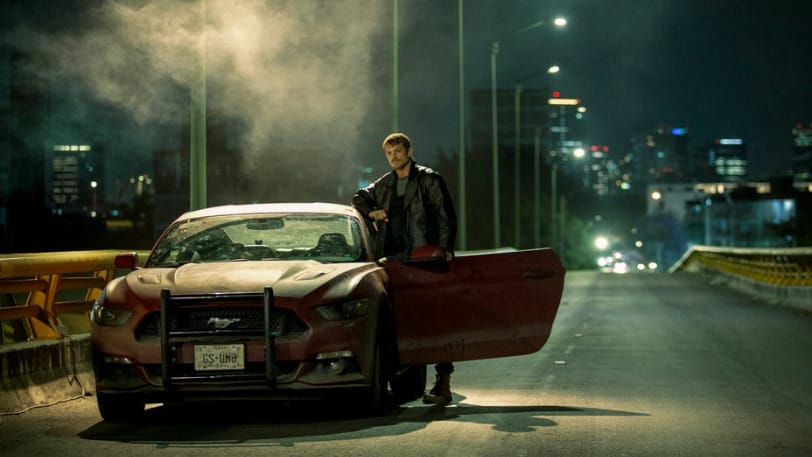
Written by Robert Archer Lynn, Silent Night follows Brian Godluck (Joel Kinnaman), a simple man whose life is shattered by a random act of gang violence. One fateful Christmas Eve morning, Brian’s young son Taylor catches a stray bullet while playing in the front yard. Instantly filled with rage, Brian chases after the assailants in a blood-soaked Christmas sweater – the beginning of a long and brutal journey of revenge.

Woo drops us into the action right away, opening the film with Brian in hot pursuit before he dishes out some beatings with a baseball bat. It’s a smart way to tease the wild bloodshed that’s yet to come, as Silent Night suddenly hits the brakes once our “average Joe” hero gets shot in the throat mid-rampage. Ouch. He survives but is faced with a long recovery and the complete loss of his voice.
Here’s another interesting aspect of this movie: John Woo takes his sweet time with the buildup. You can really appreciate the emphasis on Kinnaman’s Brian Godlock being a regular guy. We watch as he goes through the motions of grief and his own physical trauma before slowly dedicating his entire being to avenging his son’s death. He prepares and trains with the help of online guides and YouTube videos, giving himself an amateur crash course on everything from martial arts to knives and guns to extreme driving.
Brian’s transformation, thanks in large part to actor Joel Kinnaman’s excellent, dialogue-free performance, is one of the better parts of Silent Night. It’s a great way to get used to and understand this character despite him never uttering a single word, and it makes the later action sequences feel all the more real and impactful.
The action itself is, for lack of a better term, fucking awesome. It’s mean, hard-hitting stuff with some insanely inspired visuals, proving that John Woo has definitely still got it in that department. Moreover, this firmly places Joel Kinnaman as an action star more than capable of holding his own along with the best of them.
Unfortunately, that’s where the fun ends for Silent Night, as there’s not much else propping the film up besides its brutal fights and wild camera work. Not even Scott Mescudi (also known by his stage name Kid Cudi), who plays Brian’s only ally in Detective Dennis Vassel, can leave much of an impression despite getting some savory action beats. There may be just enough to get things to the finish line in an entertaining fashion, but many viewers will likely be left wanting something a little more out of this violent holiday throwdown.
The melodramatic elements of John Woo’s Silent Night don’t do it any favors. By the time you’re watching the dozenth slow-motion flashback of how much Brian and his wife Saya (played by Catalina Sandino Moreno in another silent yet expressive performance) loved their kid, the family drama somewhat loses whatever effect it might have had. The script’s simplicity is both a strength and a weakness, and the result lands somewhere in the middle.
Still, John Woo’s kinetic and intense action sequences should be noted as some of the very best of the year. The director’s first Hollywood film in twenty years makes it clear that he hasn’t lost his touch, but a stronger (or at least more interesting) foundation to launch his signature style on might have made for a more satisfying comeback.