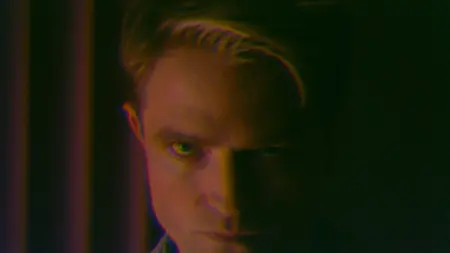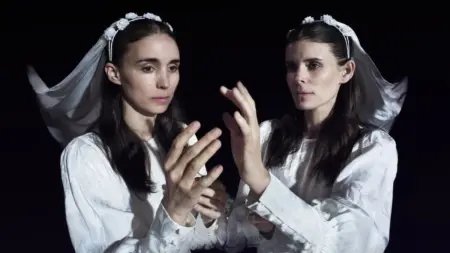


Following a puzzling trailer for Marielle Heller’s Nightbitch, audiences were unsure of what to expect. The actor-turned-director’s last 3 features, The Diary of a Teenage Girl, Can You Ever Forgive Me?, and A Wonderful Day in the Neighborhood, garnered critical acclaim as softer, more personal films. Based on the trailer alone, Nightbitch did not appear to be in the same vein. Starring 2x Golden Globe winner and 6x Oscar nominee Amy Adams (Arrival, Enchanted) as a mother who struggles to navigate awkward encounters with other women — eating raw meat and running alongside dogs to the tune of Stevie Nicks’ Edge of Seventeen along the way — Nightbitch is the kind of black comedy that is bound to stir discourse.
Now, Nightbitch does land considerably better than its confounding trailer, but that isn’t a very high bar to clear. Based on the satirical novel of the same name by Rachel Yoder, the movie follows a frustrated, stay-at-home mom of a toddler who believes she is turning into a dog. Hence, she jokingly refers to herself as “Nightbitch.” Writer-director Marielle Heller’s script straddles the line between satire, dark comedy, and magical realism. However, just like the book, it doesn’t merge those ideas quite as well as it wants to.
Nightbitch is at its strongest when it explores the crossroads between the highs and lows of motherhood. Being a mother is a mess of contradictions, a continual push and pull between the desire for autonomy and the reality that a mother’s life is no longer her own. Nightbitch‘s narrative is propelled forward by this emotional discrepancy. Our protagonist’s frustrations feel almost palpable, largely thanks to Amy Adams’ dedicated performance. Adams nails the comedic airiness of the film’s satirical aspects while completely digging in when it’s time for Nightbitch to bear her claws.
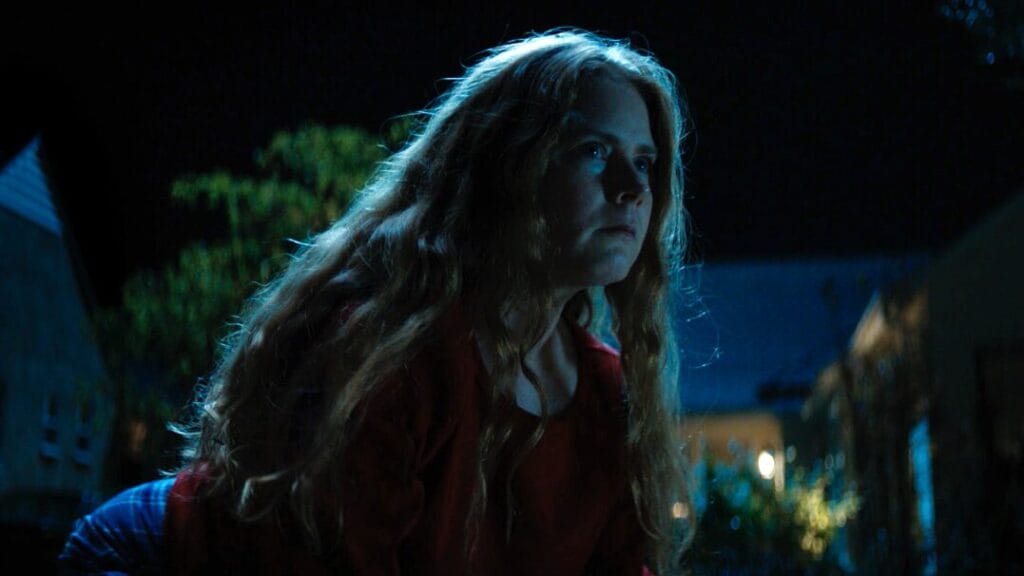
Amy Adams holds this movie together, elevating the material when it otherwise runs the risk of seeming trite. Most people will point to her commitment in surrendering herself to her Nightbitch moments, which include running with dogs, sniffing, and chowing down into a bowl without her hands. However, Adams’ ability to balance on the precipice of two conflicting emotions is what truly makes the performance impressive.
You would hope that the magical-realism elements of Nightbitch would be what sets it apart from other dark comedies, or even satires, about motherhood. Unfortunately, they feel far removed from the beating heart of the film. Amy Adams’ dog activities never lapse into the visceral or commit to exploring larger themes about motherhood. They are part of her character, sure, and are introduced into the plot as if they should carry a degree of gravitas, but there’s a tension there that never resolves. When Adams’ Nightbitch is doing nothing dog-like, it has little bearing over the rest of the movie. It’s a blanket over the narrative rather than an essential framework. It seems like, if anything else, a side plot.

The main plot is, then, Nightbitch’s relationship with her husband (Scoot McNairy). The screenplay is structured around the stages in their rocky journey as mother and father, which becomes the framework for the story rather than her slowly transforming into a dog, as you’ve been led to believe. Theoretically, Marielle Heller’s decision to deviate from the source material, centering more heavily on the troubled relationship between Nightbitch and her husband, could make sense. The film’s narrative revolves around its protagonist’s frustrations, many of which stem from the expectations placed on mothers by the patriarchy and, to a more immediate extent, their husbands. Thus, Heller chooses to structure her movie around the conflict and resolution of this marriage.
To begin with, the mother-husband conflict does not mesh well with the animalistic thematics of the story. Nightbitch, as the concept of a woman turning into a dog, is described as a connection to a primal self after becoming a mother. It’s about reflecting inward to discover who one is after motherhood. Juxtaposing this metaphor of self-discovery against a major plotline revolving around a marriage leads to a great disconnect. Too often, women’s narratives are defined by their relationship with men. Nightbitch already contains the perfect metaphor for divorcing Amy Adams’ story from her husband’s. While it is, admittedly, entrenched in its female perspective, the film’s framework still woefully relies on the relationship between Nightbitch and a man.
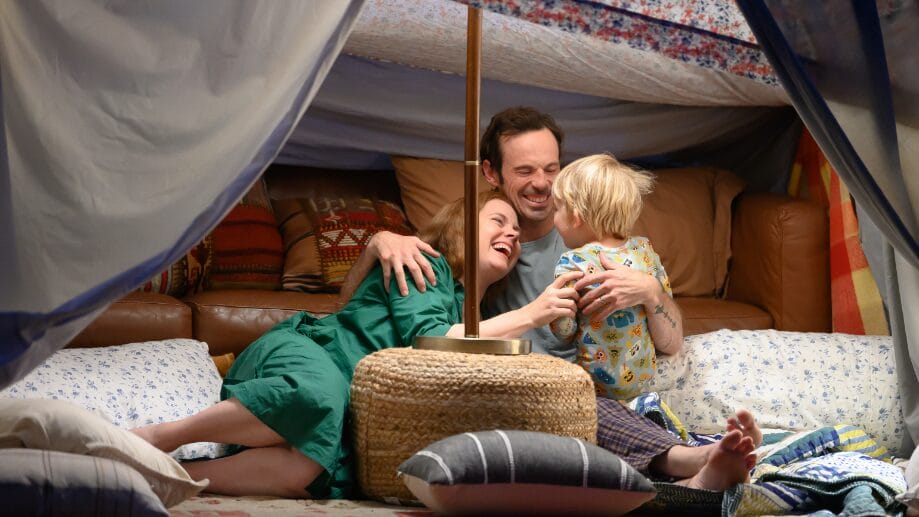
The resolution between Nightbitch and her husband may lend general audiences a sense of greater satisfaction. Still, it dilutes its elements of magical realism and causes the ending to feel derivative. Though Amy Adams commits to a fully realized and artfully executed performance of the titular Nightbitch, it is only enough to hold the film together. The rest of the story follows the typical beats of most other “frustrated mom” movies. So, despite its wacky elements, Marielle Heller’s Nightbitch remains underwhelming. As a satire, there are certainly compelling moments, hilarious scenes, and gems of insight buried in the screenplay. But, as a whole, it fails to smoothly flow together.
Nightbitch premiered at the 2024 Toronto International Film Festival and will hit theaters on December 6!
Release Date: December 6, 2024.
Directed by Marielle Heller.
Screenplay by Marielle Heller.
Based on Nightbitch by Rachel Yoder.
Produced by Marielle Heller, Amy Adams, Anne Carey, Sue Naegle, Christina Oh, & Stacy O’Neil.
Executive Producers: Adam Paulsen, Allison Rose Carter, Megan Ellison, Rachel Yoder, & Sammy Scher.
Main Cast: Amy Adams, Scoot McNairy, Arleigh Snowden, Emmett Snowden, Zoë Chao, Mary Holland, Ella Thomas, Archana Rajan, Jessica Harper, Adrienne Rose, Roslyn Gentle, Stacey Swift, & Darius De La Cruz.
Cinematographer: Brandon Trost.
Composer: Nate Heller.
Production Companies: Annapurna Pictures, Archer Gray, Defiant by Nature, & Bond Group Entertainment.
Distributor: Searchlight Pictures.
Runtime: 98 minutes.
Rated R.