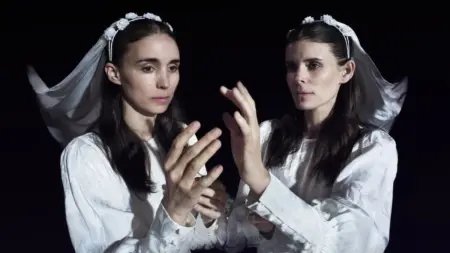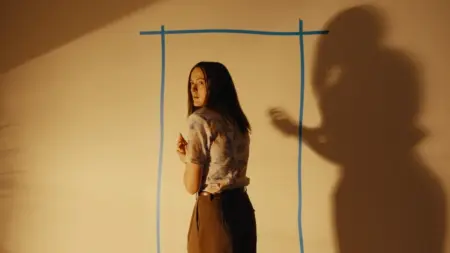


The relationship between an artist and their fans has been explored in countless ways across film, often portraying the dynamic as one of adoration, obsession, and, of course, danger. Lurker, the feature directorial debut of writer Alex Russell (The Bear, Beef), takes that familiar concept and twists it into something uniquely unsettling and unpredictable. Moreover, it’s deeply human. Lurker refuses to settle into one single interpretation of its themes, instead approaching its subject matter from multiple angles: love, power, manipulation, identity, and the blurred lines that separate them. Though its pacing occasionally hinders the experience, making the movie feel a bit longer than its 100-minute runtime, Lurker is a striking meditation on parasocial relationships and the insatiable desire for access.
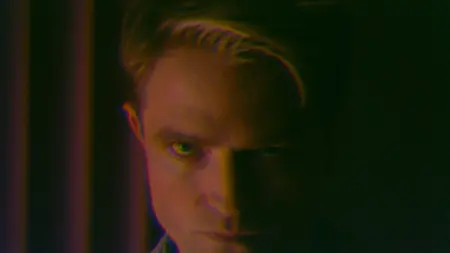
At the center of Lurker is Matthew (Théodore Pellerin), an average Los Angeles retail worker who manages to finesse his way into the inner circle of rising pop star Oliver (Archie Madekwe). Matthew isn’t your typical obsessed fan. In fact, he especially dislikes being called one. Instead, Matthew positions himself as something more — a trusted confidant, collaborator, and an indispensable part of Oliver’s life. He’s not just following Oliver’s career; he believes himself to be a significant reason for its success. Matthew is an artist in his own right, even if his actual talent remains ambiguous. His entire existence revolves around being within Oliver’s orbit, and as the plot progresses, the power dynamics between the two become increasingly complex.
What makes Lurker so fascinating is how thoroughly it examines the many facets of the artist-fan relationship, stretching beyond simple admiration or exploitation. Everyone around Oliver wants something from him — status, validation, close proximity to fame — and Matthew is no different. However, one of the film’s many striking aspects is its acknowledgment of Oliver’s unknowing complicity in this dynamic. He enjoys the devotion, even if he resents how it isolates him. Oliver’s crew, his so-called friends, are each playing their different games, feeding off his fame and vying for his attention. He may be the gravitational center, but he’s usually also the loneliest person in the room.
Alex Russell’s screenplay operates in shifting hierarchies, where power is constantly being exchanged, whether through emotional manipulation, strategic alliances, or outright sabotage. Matthew, in particular, learns to master this deception. He isn’t content with simply being close to Oliver; he needs to control the environment around him, ensuring he remains essential. Matthew takes a special kind of joy in setting people against each other, in positioning himself as the one person Oliver can really trust. It’s a brutal, fascinating depiction of how pursuing status can consume someone entirely, to the point where they are willing to throw all morals and boundaries out the window.
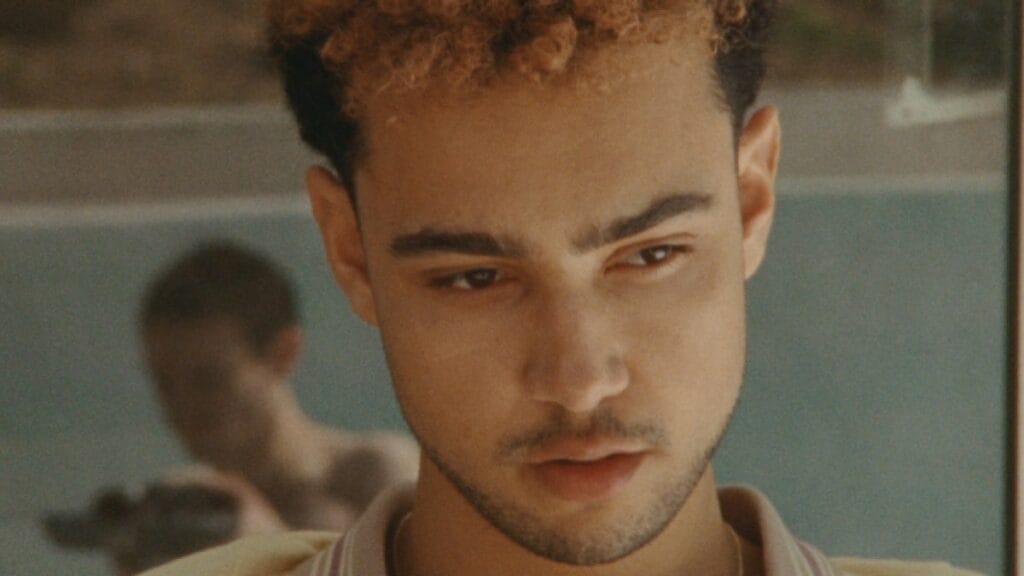
Writer-director Alex Russell and his cast ensure that none of these characters comes off as mere archetypes. Every character, from Oliver’s entourage (including internet personality and comedian Zack Fox and Bottoms’ Havana Rose Liu) to the various superfans circling them, feels distinct and fully realized. Archie Madekwe (Gran Turismo, Saltburn) delivers a particularly mesmerizing performance as Oliver, exuding effortless charisma while hinting at the exhaustion and paranoia that comes with his level of fame. Meanwhile, Théodore Pellerin (Becoming Karl Lagerfeld, Solo) is a revelation as Matthew. He is both pathetically desperate and terrifyingly calculating, often within the same scene. The chemistry between the two is electric, making their complex evolving relationship all the more unpredictable.
The film’s sonic landscape — courtesy of record producer, DJ, and songwriter Kenneth “Kenny Beats” Blume in his feature scoring debut — mirrors the script’s descent into obsession and chaos. The music evolves alongside the story, reflecting Oliver’s booming career and growing tensions with Matthew. Impressively, all of Oliver’s pop tunes are performed by Archie Madekwe himself. Evoking the sounds of alternative R&B singers like Frank Ocean, Khalid, and even The Weeknd, Madekwe’s singing chops genuinely hold up in their own right, adding another layer of authenticity to Lurker‘s portrayal of the music world.

If Lurker stumbles anywhere, it’s in its pacing. While the film thrives on unpredictability, at times, it’s difficult to discern exactly where the story is heading or what Matthew’s ultimate goal is. The shifts in tone can feel particularly jarring, but to be fair, this works tremendously in its favor once the second half rolls in, almost playing like a separate movie entirely. Yet, even in its more uneven moments, Lurker remains compelling. It resists easy categorization, avoiding the faults of other recent parasocial or psychological thrillers with similar premises, like Saltburn or HBO’s The Idol. Thankfully, filmmaker Alex Russell opts for something more unsettling and thought-provoking.
It’s rare to see a movie tackle such a well-worn concept in a way that feels this fresh. Writer-director Alex Russell takes some surprising inspiration from Martin Scorsese’s The King of Comedy and Joseph L. Mankiewicz’s All About Eve. However, by filtering those influences through a modern lens, Lurker becomes something distinct — a film that doesn’t just critique fame and fandom but also immerses itself in its psychology. It forces us to consider why certain people chase fame and what they are willing to do to keep it. Most of all, though, it forces us to consider what that social status even means in the first place. Because once we get there, the true horror begins.
A standout sequence in the recording studio perfectly encapsulates the narrative’s thesis: here, we see the unspoken battle for control play out in real time as Matthew and Oliver push and pull at each other, testing their power to their respective limits. Lurker isn’t without a few rough edges, but it is scenes like these that linger in the mind long after the credits roll. It’s a movie that understands just how intoxicating the pull of fame can be the closer you get to it. More importantly, it understands how truly dangerous it is when that kind of utterly magnetic attraction morphs into ownership.
Lurker premiered at the 2025 Sundance Film Festival and will be released in theaters later this year!
Release Date: TBD.
Directed by Alex Russell.
Written by Alex Russell.
Produced by Alex Orlovsky, Archie Madekwe, Duncan Montgomery, Galen Core, Jack Selby, Olmo Schnabel, Marc Marrie, Charlie McDowell, & Francesco Melzi D’Eril.
Executive Producers: Lee Sung Jin, Lily Collins, & Ben Shafer.
Main Cast: Théodore Pellerin, Archie Madekwe, Havana Rose Liu, Sunny Suljic, Daniel Zolghadri, & Zack Fox.
Cinematographer: Pat Scola.
Composer: Kenneth Blume.
Production Companies: MeMo Films, High Frequency Entertainment, Adler Entertainment, Arts & Sciences, TWIN, & Case Study Films.
Distributor: Mubi.
Runtime: 100 minutes.