

Spoiler Warning for The Last of Us Season 2 Episode 6!
Going on a soapbox to critique The Last of Us as a franchise is a difficult, though necessary, task. While it is a widely acclaimed video game series turned wildly successful HBO show, the brand is also associated with an intensely toxic fandom that has nurtured a culture of negativity for nearly a decade. Naughty Dog Studios head Neil Druckmann, as well as involved talent like voice actress Laura Bailey and HBO series star Bella Ramsey, have been the subject of targeted hate campaigns. Even so, the franchise has continued to thrive thanks to its deeply resonant, emotional story and characters.
An intense amount of passion from all directions is a natural endpoint for a story that takes as many risks as The Last of Us. Still, in online discourse where the “hot takes” are either rooted in hatred or uncritical glowing praise, it’s increasingly difficult for a good-faith critique to exist in the middle of the two extremes. But this has started to change over the last few weeks, as fans of both the game and HBO show have started to notice the flaws of The Last of Us Season 2.
Nuance has Been Lost in Translation from Game to Screen
The emotional potency of The Last of Us Part II is often undercut or defanged in the HBO adaptation, mainly because series creators/showrunners Craig Mazin and Neil Druckmann demonstrate a palpable fear of being misunderstood. In response to how the fanbase received the two games, The Last of Us Season 2 has so far delivered an oversimplified and frictionless version of a story that thrives on moral ambiguity and nuance. Episode by episode, numerous adaptational changes add up to the notion that the show’s creators have little faith in the viewer’s patience.
For example, instead of allowing it to be one of the season’s overarching mysteries, we are revealed Abby’s (Kaitlyn Dever) direct goals and identity as the firefly surgeon’s daughter. She delivers an expository monologue as she kills Joel Miller (Pedro Pascal) in the turning-point second episode of the season. Furthermore, when Dina (Isabela Merced) admits to Ellie (Bella Ramsey) that she is pregnant, Ellie reacts positively rather than lashing out. Characters constantly explain their motivations, how they feel, and the world around them.
Adaptational Changes Should be in the Service of Switching Artistic Mediums
Episode 6 of The Last of Us Season 2, titled “The Price,” is a microcosm of the HBO show’s worst adaptational instincts. Directed by Neil Druckmann and co-written by Halley Gross, both of whom co-wrote The Last of Us Part II, the penultimate episode is a strange mixture of passable to baffling adaptational choices that firmly keep the HBO original series from being as sophisticated and dynamic as the games. In The Last of Us Part II, Ellie’s three days in Seattle are bookended by key flashbacks from her time spent with Joel in between the events of the first and second game.
Now, instead of these crucial flashbacks being sprinkled throughout the season, they are all squeezed into one elongated episode, showing us Ellie’s numerous birthdays living with Joel in Jackson throughout the years. It’s important to emphasize that any adaptation is expected to have plot-altering changes. That shouldn’t be a problem so long as these differences are beneficial to the new medium. Admittedly, the choice to fit Joel’s flashbacks into one episode does, initially, make sense.
In a game, the player is strictly forced into one character’s perspective and experiences the story through their lens. In television, where there’s inherently more flexibility in perspective, a viewer wouldn’t feel the urgency of Joel’s loss if he were spiritually present during each episode of the series. It’s what Druckmann and Gross decide to add, include, and exclude from the game that highlights “The Price” as a disappointing episode.
Shot-for-shot Recreations Expose a Lack of Creative Vision
One unique obstacle HBO’s The Last of Us faces is that it is adapting one of the most cinematic video games that has existed in recent memory. The visual language of The Last of Us Part II, especially in its cutscenes, translates so perfectly that Craig Mazin and Neil Druckmann often choose just to recreate entire sequences shot-for-shot as an unambitious safety crutch, which is one of the incredibly frustrating creative impulses of the TV series. The big fanservice flashback scene in Season 2, Episode 6, where Joel takes Ellie to an abandoned science museum for her birthday is a prime example of this lazy storytelling.
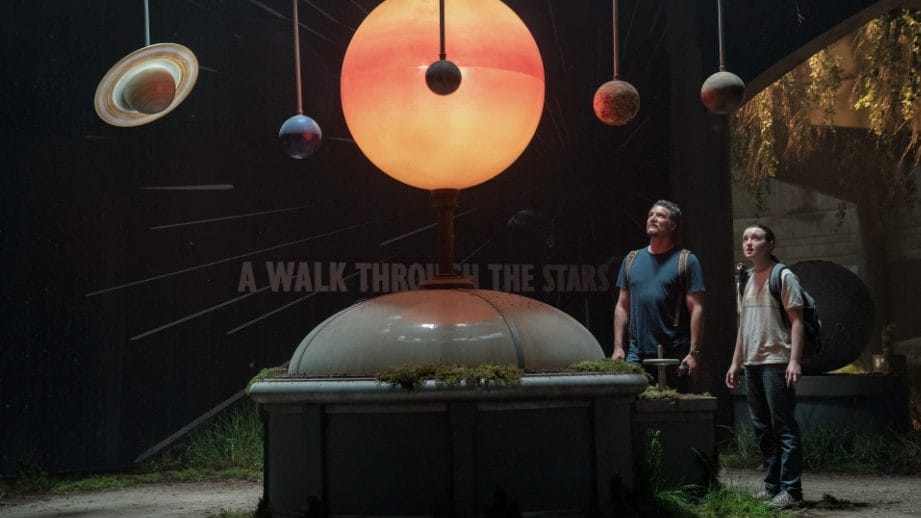
Sure, you don’t want to alter what already works, but how the show often fails to incorporate these scenes in between fresh material or at least find new ways to block/stage the moments creates a feeling of uncanniness. What’s the point of pouring valuable time and resources into remaking the game’s cutscenes in live action? Video games are inherently a visual medium, and any visual weaknesses the TV adaptation might have will stick out when a fan account posts the two scenes together in a side-by-side comparison to be digested by TikTok and Instagram reels. Tied too much to the legacy of the games, this is where the HBO series is the most creatively bankrupt.
The Original Scenes Added to the HBO Series are Often its Strongest Moments
To the show’s credit, there are a few original sequences throughout both seasons that are great and enhance the themes of the story. Season 1, Episode 3, “Long, Long Time,” which covered Bill (Nick Offerman) and Frank’s (Murray Bartlett) post-apocalyptic romance, took something from the game that was subtextual and made it into a poignant, standalone narrative that still set Joel and Ellie on their respective emotional paths. Similarly, there is an original plotline in The Last of Us Season 2 featuring the Jackson commune’s therapist, Gail (Catherine O’Hara), and her husband Eugene (Joe Pantoliano).
Earlier in the second season, it’s implied that Joel killed Eugene and that Gail is trying not to hold that grudge against him. In Episode 6, “The Price,” we finally get full context for that relationship. On Ellie’s first day on patrol with Joel, they run into a recently attacked and infected Eugene, who begs to be allowed to see Gail one last time before he turns. Ellie empathizes with Eugene and asks Joel to see his wish through, rushing back to Jackson on horseback to retrieve Gail in time.
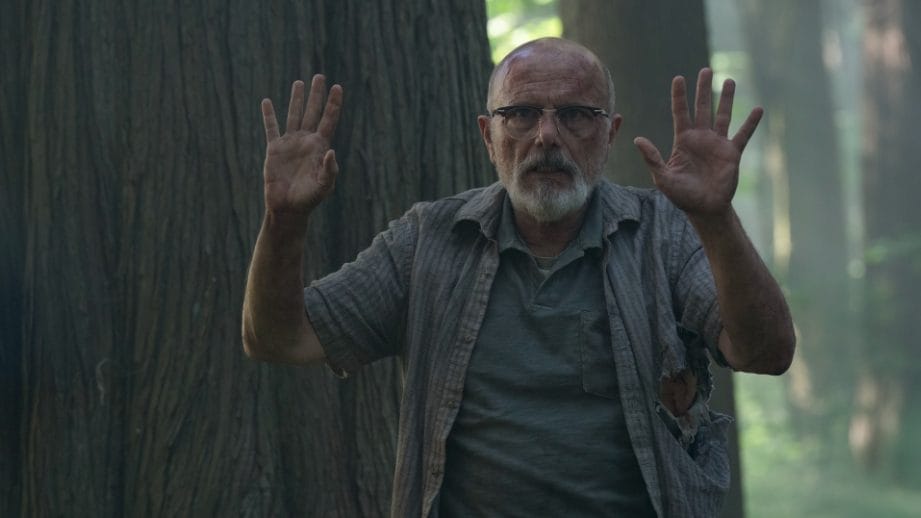
However, Joel only gives Ellie the illusion of choice — he takes Eugene to a pond clearing and shoots him anyway, against her wishes. When they take Eugene’s body back to Jackson for burial, Joel lies to Gail and says it was too late for him. But Ellie tells Gail the truth and confronts Joel for his cruelty.
Poor Changes Drastically Alter Joel and Ellie’s Porch Scene
This instance is one of the first times that Ellie sees Joel for the man he is rather than the man she idealizes. The Last of Us is about many things — the futility of revenge and the cyclical nature of violence, but more importantly, it’s about human nature. In the wake of Joel’s death, Ellie has to come to terms with the type of person her father figure was. This is what ties all of these flashbacks together. After each moment of obsessive bloodshed in The Last of Us Part II, Ellie is forced to contextualize her anger with Abby and her discontent with her relationship with Joel.
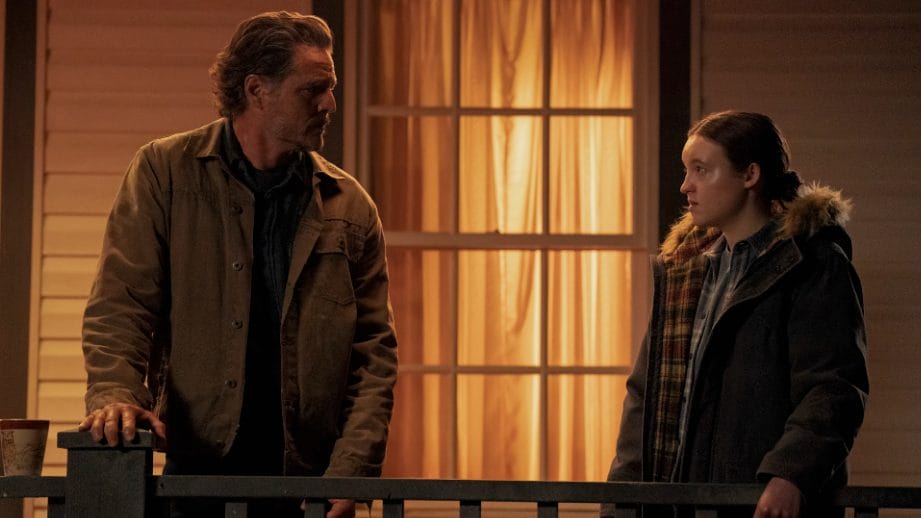
This Eugene plotline introduced in The Last of Us Season 2 Episode 6 shows us a conflict of interest between Joel’s protect-at-all-costs mentality and Ellie’s younger, maybe naive sense of empathy. Unfortunately, original additions with good creative instincts like these are almost always undercut by poorly motivated adaptational choices. One of the most bewildering decisions of this episode was prematurely showing fans the porch scene, the big dramatic confrontation between Joel and Ellie taking place the night before he is murdered by Abby.
In The Last of Us Part II, the porch scene with Ellie and Joel is placed as a flashback in one of the very last scenes of the story. Critically, this moment is placed there to contextualize Ellie’s choice to spare Abby after hunting her down in Santa Barbara in the last act of the game.
Prioritizing an Audience’s Comfort Over Quality Storytelling
The choice to strip the porch scene of its original context is highly evocative of the HBO adaptation’s over-obsession with clarity. That would be enough of an offense on its own, but infuriatingly, “The Price” also drastically removes emotional beats that are important to how this confrontation plays out. In the show’s version of the porch scene, Ellie asks Joel about his murder of the Fireflies for the first time. In the game, she holds that resentment over Joel for years, visiting the Firefly hospital in Salt Lake City to confirm her suspicions. Sadly, by the end of her revenge quest, there is a valley of emotional depth between these two versions of Ellie.
A few misguided adaptational choices can be forgiven. However, when taking into account all the decisions Craig Mazin and Neil Druckmann have made to tone down Ellie’s journey, it ultimately culminates in a weaker, toothless story. The result is a show with severe missed potential, far from the bold risks that made people fall in love with The Last of Us franchise in the first place.
I have deep empathy for the amount of vitriol targeted at the show’s creators. Yet, it’s a fatal artistic impulse to edit a rich narrative based on the comfort of a mainstream audience instead of rewarding potential new fans who do have the patience and capacity to appreciate moral complexity. If gamers were deserving of that story years ago, so are modern viewers of a Sunday night HBO series.
The Last of Us Season 2 finale airs on HBO and Max on Sunday, May 25!

Premeire Date: April 13, 2025.
Created by Neil Druckmann & Craig Mazin.
Based on The Last of Us video game franchise by Naughty Dog.
Showrunners: Neil Druckmann & Craig Mazin.
Series Directors: Neil Druckmann, Craig Mazin, Peter Hoar, Kate Herron, Nina Lopez-Corrado, Mark Mylod, & Stephen Williams.
Series Writers: Neil Drickmann, Craig Mazin, Halley Gross, & Bo Shim.
Executive Producers: Craig Mazin, Neil Druckmann, Carolyn Strauss, Rose Lam, Evan Wells, Carter Swan, Asad Qizilbash, Jacqueline Lesko, & Cecil O’Connor.
Main Cast: Bella Ramsey, Pedro Pascal, Kaitlyn Dever, Gabriel Luna, Rutina Wesley, Young Mazino, Isabela Merced, Danny Ramirez, Ariela Barer, Tati Gabrielle, Spencer Lord, Catherine O’Hara, Jeffrey Wright, Joe Pantoliano, Alanna Ubach, Ben Ahlers, Hettienne Park, Robert John Burke, & Noah Lamanna.
Composers: Gustavo Santaolalla & David Fleming.
Production Companies: The Mighty Mint, Word Games, PlayStation Productions, Naughty Dog, & Sony Pictures Television Studios.
Network: HBO.
Episode Count: 7 (Season Two).