


Since debuting in 2021, Netflix’s Squid Game has received unanimous praise for redefining the potential of streaming. The Netflix original series paved the way for general audiences to further indulge themselves in the inventive and bold storytelling that foreign television has to offer. Lee Jung-jae (The Acolyte) has conveyed pure anguish, terror, and extreme pressure in his heroically courageous performance as Seong Gi-hun, famously known as Player 456. His role in the show’s global success cannot be understated. However, Squid Game Season 3 finds our brave protagonist taking a bizarre, guilt-stricken backseat, somewhat muffling the exhilarating rush of what is supposed to be a grand finale.
Squid Game Season 2 concluded with participants dramatically divided between groups of bystanders and a horde of voracious revolutionists led by Seong Gi-hun and his band of merry men. Unbeknownst to them, Player 001 (Lee Byung-hun) has been carrying out a deviously orchestrated plan the whole time, slaughtering the rebellion from the inside before revealing his true nature as the game’s villainous Front Man. Attempts to dismantle such a deceptive operation proved futile, with Seong Gi-hun’s audaciously heroic mission to permanently end the games accumulating in a blood-soaked failure.
A Return to Squid Game Normalcy
While many fans admired the catastrophic ending of Season 2, others rightfully raised questions regarding the final season’s direction. Squid Game Season 3 operates more like a “Part 2” to the second season, rather than its own standalone narrative. Audiences reunite with the tracksuit-donning Player 456, who is now muted by the unforgiving experience of the previous season finale. Amidst his failure and guilt, the predatory VIPs — an aristocratic group of elites who thrive off getting front row seats to inhumane suffering — demand their insatiable appetites be satisfied. Thus, the games must continue. Just like preceding seasons, Squid Game 3 continues to provide sickening twists to childhood favorite games, keeping Netflix subscribers glued to their TV screens.

Lee Jung-jae’s stratospheric talents are best captured within the season’s opening episodes, breaking new ground with a performance that relies on quiet emotional mannerisms over dialogue. Seong Gi-hun evolves from a shaken survivor into an animalistic psychopath hell-bent on revenge, as he places the blame on the cowardly betrayal of Kang Dae-ho, also known as Player 388. Succumbing to fear during the rebellion, Player 388 failed to return with the necessary additional ammunition, instead choosing to hide at the base. Over multiple episodes, an enthralling cat-and-mouse-like chase unfolds. Darkness overwhelms the once incorruptible spirit, marking the beginning of a descent into total madness choreographed by the games.
Squid Game Season 3 Features the Most Disposable Supporting Cast of the Entire Series
Squid Game has become famous for its “everyone can die” approach, often concluding in the utterly devastating deaths of fan-favorite characters. With the dial previously set to 10, series creator-writer-director Hwang Dong-hyuk somehow kicks it up a notch, reminding viewers that these games never lead to happy endings. Almost every episode of Squid Game Season 3 delivers shockingly drastic changes to its supporting cast, itching to whittle down the player count and pursue a relentless narrative momentum. As Lee Jung-jae takes an unwelcome backseat in the plot, the abundance of supporting characters without purpose, and the storytelling concerns this invokes, becomes overwhelmingly apparent.

With such a disposable supporting cast, a slightly rushed exodus begins. While some deaths are admittedly predictable, a handful are genuinely jaw-dropping, dispensing an emotional whiplash certain to break hearts. As this plethora of lacking characters is reduced, Seong Gi-hun thankfully makes his way back to the forefront. However, the protagonist’s lack of dialogue continues until the very end of the season. This becomes somewhat tiresome, acting as a self-imposed limitation for Player 456, who now consequently lacks depth in his survival-driven rage. Netflix subscribers are left wondering why various subplots, such as the rogue Pink Guard storyline that spills over from Season 2, receive so much screen time without providing them with anything to invest in.
The Ambitions of Season 2 Remain Unrealized in a Convoluted Finale
Rich levels of nuance are lost from past seasons, and the main story plays at a frustratingly similar note. Having only 6 hours to juggle multiple underlying sub-plots, Squid Game Season 3 struggles to spotlight its antagonist, The Front Man. After the dramatic cliffhanger of Season 2, you might suspect a “final showdown” between Seong Gi-hun and the Front Man. Yet, their interactions are woefully limited given the circumstances. Precious time is once again wasted on the outside world, leading characters to revelations of deceit and horror that we have already known for hours.
The Front Man’s brother, Hwang Jun-ho, apparently South Korea’s worst detective, continues his incessantly dull search for the island, bearing no fruit until the penultimate episode. As if that wasn’t enough, Squid Game Season 3 is also haunted by new, uninteresting subplots. The VIPs of the current games at hand are introduced, gambling frivolous quantities of cash as they watch the dehumanization of contestants into “playthings,” all from the comfort of their ivory tower. A jarring combination of unnatural dialogue and overacting with these mainly English-speaking characters makes these scenes borderline unbearable to watch. The VIPs ultimately serve no purpose other than to remind you that Netflix’s American Squid Game spin-off series is looming on the horizon.
Despite this Season’s Flaws, Squid Game Still Belongs in the Netflix Hall of Fame
For all its flaws, there is still notable praise to be rewarded. Despite its short six-episode count, Squid Game maintains an addictive pace when focused on the games themselves. The transgender contestant, Cho Hyun-ju (Park Sung-hoon) a.k.a Player 120, the older mother Jang Geum-ja (Kang Ae-sim) a.k.a Player 149, and the pregnant Player 222, Kim Jun-hee (Jo Yu-ri), handle their promotion to the limelight with brilliant care. The trio displays an astounding warmth and chemistry that makes their personal stakes feel tangible, despite the impending doom they face.
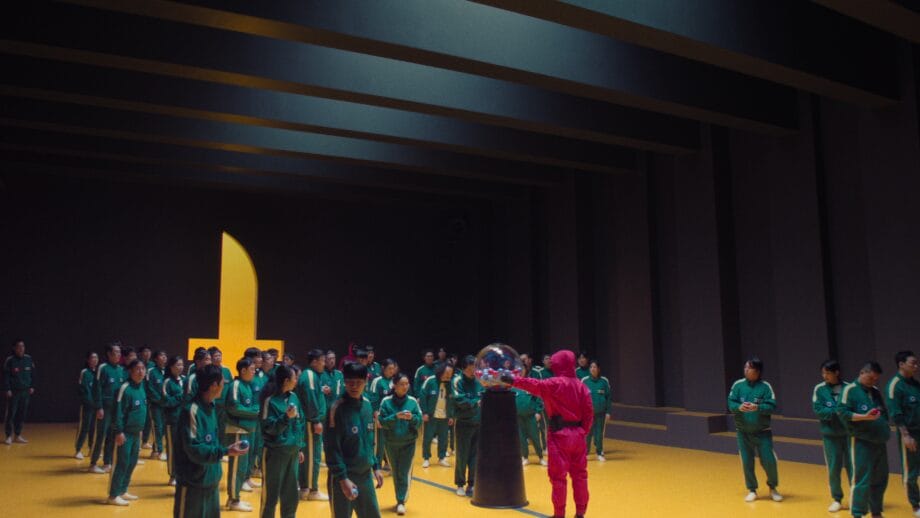
Although the games are more simplified this season, their use as a narrative tool to convey evolving emotions and total moral degradation is as marvellous as ever. The final season of Squid Game reminds us that villains are not exclusive to affluent VIPs or Game Masters, as the participants can be driven by repulsive greed, too, so much to the point that it overcomes their desire to leave the games with their lives intact. This is where Squid Game Season 3 is at its best, as there are very few other mainstream shows that are willing to depict this kind of harrowing realism without any filter whatsoever.
Has the Novelty of Squid Game Already Worn Off?
Squid Game Season 3 is an enjoyable conclusion, yet it often seems unaware of its purpose. The driving conflict between Seong Gi-hun and the Front Man is given little room to breathe, as the titular games return as priority. This isn’t unwelcome but feels disappointingly safe for the finale of an otherwise incredible show. Fans are going to begin to question if Netflix’s cash cow has been completely milked, being largely propped up by the illustrious performances of the returning cast. Given the ongoing development of spin-off shows, the novelty of this unique concept may have already worn off. For the time being, though, Squid Game’s final season encourages enjoyment in all the right areas.
Squid Game Season 3 is now streaming on Netflix!

Release Date: June 27, 2025.
Created by Hwang Dong-hyuk.
Directed by Hwang Dong-hyuk.
Written by Hwang Dong-hyuk.
Executive Producers: Kim Ji-yeon & Hwang Dong-hyuk.
Main Cast: Lee Jung-jae, Lee Byung-hun, Wi Ha-joon, Im Si-wan, Kang Ha-neul, Wi Ha-joon, Park Gyu-young, Lee Jin-woon, Park Sung-hoon, Yang Dong-geun, Kang Ae-shim, Jo Yu-ri, Park Hee-soon, Jeon Seok-ho, Chae Kook-hee, Lee David, Roh Jae-won, Song Young-chang, Lee Sung-woo, Oh Dal-su, Choi Seung-hyun, Jung Ho-yeon, Won Ji-an, & Cate Blanchett.
Composer: Jung Jae-il.
Production Company: Siren Pictures Inc.
Episode Count: 6 (Season Three).