

We at DiscussingFilm were able to preview Charles Pellegrino’s new non-fiction book, Ghosts of Hiroshima, before its August 5th wide release. Now, 80 years after the devastating 1945 atomic bombings on Hiroshima and Nagasaki, Japan, the New York Times bestselling author of Her Name, Titanic and To Hell and Back: The Last Train From Hiroshima has created a haunting yet necessary remembrance of the survivors. Pellegrino’s dedication to preserving these human stories in written history had long taken shape before he met writer-director James Cameron as he was editing Titanic (1997). After serving as a scientific consultant on that film, Pellegrino would go on to do the same for Avatar (2009), leading to a long-standing relationship between the two.
James Cameron’s friendship with historian/author Charles Pellegrino ultimately helped him pursue a deep interest in bringing these true earth-shattering events to the big screen — not for the sake of spectacle but to showcase why nuclear weapons must never be used again. The three-time Academy Award-winning filmmaker has made a huge promise to adapt Ghosts of Hiroshima as his next movie, following the release of Avatar: Fire and Ash later this December. This would make it Cameron’s first non-Avatar film in 30 years.
Based on years of forensic archaeology and interviews with more than 200 survivors, Ghosts of Hiroshima is a vivid, you-are-there account of ordinary human beings thrust into extraordinary events. Tsutomu Yamaguchi, a Japanese engineer who miraculously survived both atomic bombs, is a key figure in the book and will also take center stage in Cameron’s film adaptation.
Ghosts of Hiroshima Might Be the Most Challenging Film of James Cameron’s Career
Charles Pellegrino’s Ghosts of Hiroshima is no easy read, as it is one of the most accurate and personal retellings of what it was like to witness an atomic blast firsthand that can be found on bookshelves today. Cameron has discussed adapting this material into a narrative feature film for years, but now that time has finally come, as the Avatar franchise has permitted him a four-year break between the release of Fire and Ash in December 2025 and Avatar 4 in 2029. We were very fortunate to sit down with James Cameron himself for an exclusive interview, delving into both the Ghosts of Hiroshima book and his upcoming movie adaptation.
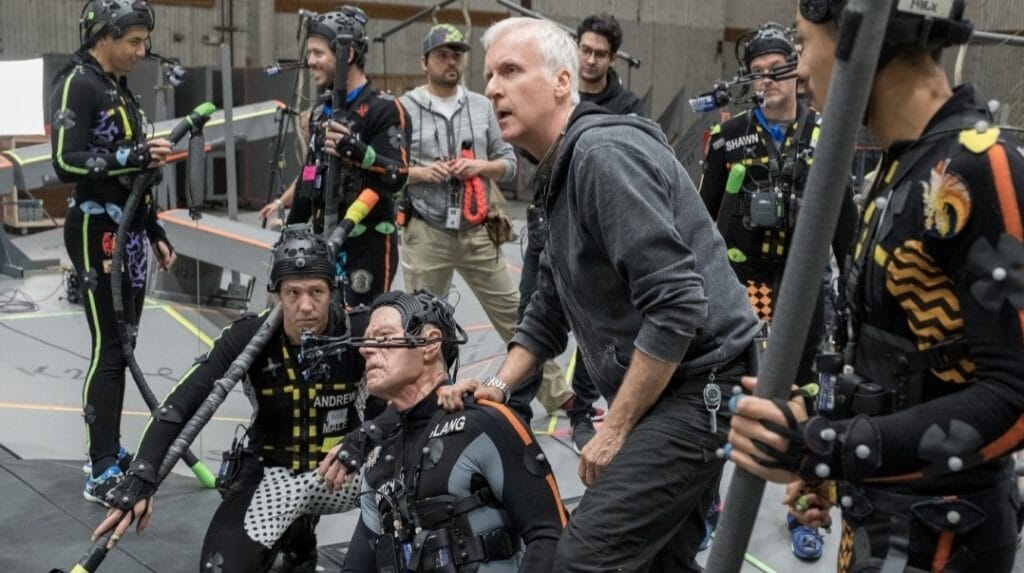
As Cameron began to reveal the earliest details of his vision for Ghosts of Hiroshima — with an emphasis on early, as a script has not yet been finished — it did not take long for the beloved director to confess that this might be the most challenging creative venture of his entire filmmaking career.
James Cameron: “This might be the most challenging film I ever make. I don’t 100% have my strategy fully in place [right now] for how I want to see it, for how I want to shield people from the horror, but still be honest. Also, for how I can find some kind of poetry, beauty, or spiritual epiphany in it somehow, which I know must be there. It’s there in every human story. So, it’s going to be very challenging. I might not even be up to the task, but that never stopped me before.”
James Cameron Will Depict Ground Zero Like No Other Filmmaker Has Previously Attempted
Of course, one of the biggest questions that has arisen from this project, especially in its early stages of development, is how far a celebrated filmmaker like James Cameron is willing to go in depicting one of the most significant tragedies in human history. Cameron himself has cited Schindler’s List (1993) and Saving Private Ryan (1998) as two of his inspirations for capturing “unsparing” wartime tragedy in Ghosts of Hiroshima. Fellow director Steven Spielberg even gave him advice about retelling such horrific historical events, saying that he made the two aforementioned films “as intense” as he could “because my limitation as any filmmaker… is that I can’t make it as intense as it really was.”
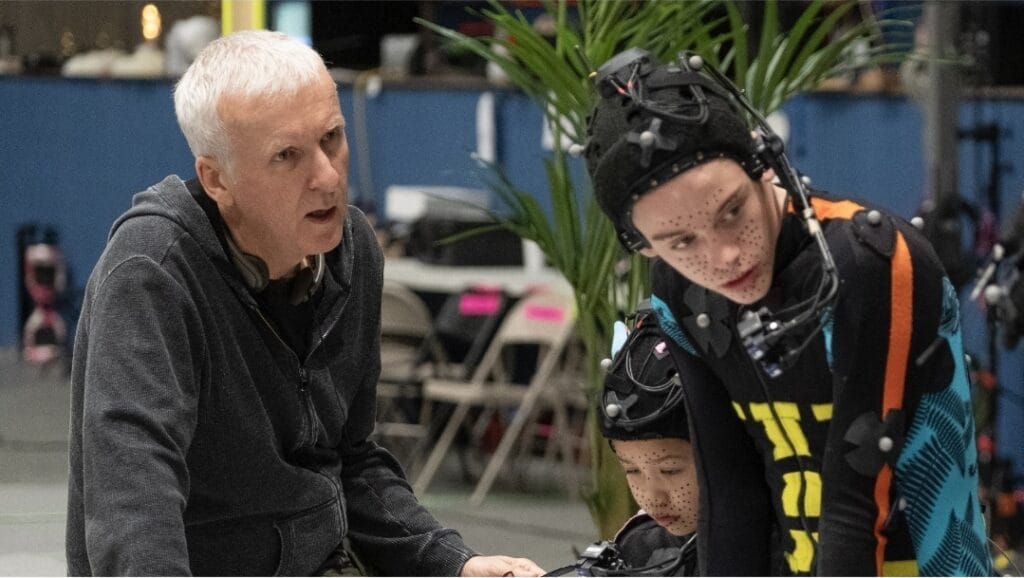
While it’s not entirely clear how graphic Ghosts of Hiroshima will be in showcasing the unspeakable effects an atomic bomb can have on human beings, Cameron did tell us that much of the movie’s point of view will be from ground zero in Hiroshima and Nagasaki. It’s an incredibly intense perspective that previous historical dramas, like Christopher Nolan’s Oppenheimer (2023), have made an effort to avoid. In terms of depicting a nuclear blast, Cameron already got extremely close to reality in a dream sequence from Terminator 2: Judgement Day (1991), and it’s hard to imagine how he can push those boundaries further.
James Cameron: “I want to show you what it was like. You’re just there. You’re a witness to history, you’re a witness to what really happened, and we can do that. I’m going to shoot it in 3D, if need be. I’m going to make it as real for you as I can. You know, I don’t know where it’s going to take me. I am actually afraid of this movie in a way. You live within a movie for a period of time. Avatar is great. I get to live on this fantasy planet with all these amazing creatures and so on. However, there are times when you feel compelled to say something else as an artist.”
On the Topic of Cultural Appropriation
James Cameron is aware of the attention and criticism he can receive as an outsider to Japanese culture. Notably, Cameron had the opportunity to meet the real Tsutomu Yamaguchi, one of the few “double survivors” who willingly came forward to share their story, and received his blessing to make this movie just a few days before his passing in early 2010. However, the director is aware that Yamaguchi’s blessing was merely the first step in accepting the massive responsibility behind this adaptation. As previously confirmed, other double survivors featured in the book will also be included in his Ghosts of Hiroshima film, such as Kenshi Hirata, whose heartbreaking survival tale deserves a nuanced exploration of its own.
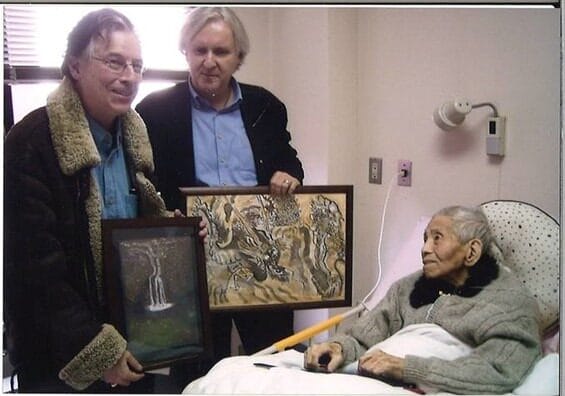
When asked about bringing more Japanese consultants, advisors, or filmmaking crew onto this hefty project, Cameron had the following to say…
James Cameron: “Consultants and advisors? That’s easy. I might want to work with a Japanese line producer. I might want to work with a Japanese screenwriter, if I can find someone as interested in this topic as I am, and who I think I can work with. Look, it’s a little challenging because I’m an outsider to that culture, so that’s going to be a steep learning curve for me. I’ve spent a lot of time in Japan, but I’ve experienced its culture as an outsider. So, I have to get through that, and for [our production], we must worry a little bit about this cultural appropriation concept.”
James Cameron Assures That He Isn’t the Only Filmmaker Allowed to Tell This Story
What more do we currently know about James Cameron’s Ghosts of Hiroshima? Aside from what has already been discussed above, the Oscar-winning director has additionally teased that his film will mainly take place from August 6th, 1945, to August 9 (from the first bombing on Hiroshima to the second on Nagasaki). No scenes with politicians discussing whether or not the use of nuclear weapons is justified will be included. As Cameron told us, this will be a raw showcase of an unimaginable real-life event that could still happen today, given how our world leaders have all but forgotten the toll this act of nuclear war had on the people of Japan.
The American men who were aboard the Enola Gay and Bockscar B-29 Superfortress bomber planes could have their narratives shared in the Ghosts of Hiroshima movie, too. But until James Cameron provides more updates on a completed screenplay down the line, this is all we have to chew on for now. The director left us on a self-reflective note, admitting that he’s not the only one “allowed” to tackle this delicate topic on the big screen. Yet, as he makes clear, no one else has stood up to this tall order, perhaps either by choice or accessibility to a plethora of resources, as Charles Pellegrino has now provided Cameron in his book.
James Cameron: “No Japanese filmmaker has stood up to make this film. No American filmmaker has stood up to make this film. There have been movies that kind of skirt around it, but nobody has gone straight at it head-on. You know, maybe I’m just dumb enough to be the guy to do it? (laughs) By the way, if somebody else wants to take a crack [at this story], before I get fully immersed in this thing, go for it. I mean, anybody, please feel free to step up.”
Charles Pellegrino’s Ghosts of Hiroshima is out everywhere on August 5 from Blackstone Publishing and The Story Factory!