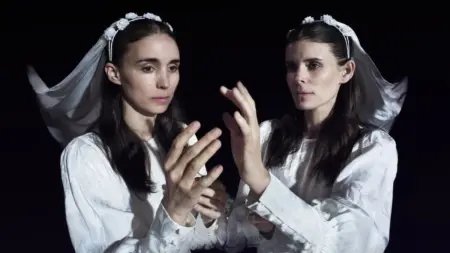


With One Battle After Another (2025), writer-director Paul Thomas Anderson has created one of the most essential cinematic texts of the 2020s. Similar to Ari Aster’s Eddington, which has already aged with uncanny accuracy to today’s increasingly hysterical political climate in the few months since its release, Anderson has his finger right on the pulse of America’s ill heartbeat. Taking heavy inspiration from Thomas Pynchon’s 1990 novel Vineland — PTA’s second adaptation of his work after 2014’s Inherent Vice — it’s easy to describe One Battle After Another as “timely.” However, at what point does a piece of art stop being considered timely if it’s merely flipping the country’s poisoned underbelly that’s been simmering now for almost a decade?
Anderson boldly delves into what happens when that bubbling societal unrest reaches its highest boiling point, leading to unprecedented chaos on both sides of the equation. One Battle After Another is perhaps the most radical project, in terms of its large budget, star power, and unyielding political stances, released by a Hollywood studio in recent years. It openly acknowledges that revolution, and any sort of significant change for that matter, doesn’t come without a hefty price. That unavoidable price is often paid in blood, too, as historically proven. Anderson uses this as the baseline for his script, examining the emotional toll on those who seek to carry out various forms of revolution today, from the moderate to the extreme.
The Rise and Fall of The French 75
The grand narrative at hand sprouts from the romance between Bob ”Ghetto Pat” Ferguson (Leonardo DiCaprio) and Perfidia Beverly Hills (Teyana Taylor), two prominent members of the radicalist revolutionary group known as “The French 75.” With Perfidia acting as one of the group’s de facto leaders and Bob Ferguson as their “Rocket Man,” or artillery expert, the French 75 find great success in bringing the establishment down to its knees. Of their many triumphs, the takeover and subsequent liberation of an immigrant detention center near the Mexican border stands out as a high point. This ignites their feud with Col. Steven J. Lockjaw (Sean Penn), a notorious high-ranking white nationalist who specializes in detaining Latino immigrants.
Courtesy of Warner Bros.
Tragically, it’s Perfidia’s own naivety and ego that bring down the French 75. After making the upsetting decision to leave Bob with their newborn child — choosing to pursue this skewed image of rebellion instead and honor her family’s lineage of powerful revolutionaries — Perfidia is messily caught by the authorities. Despite being undeniably racist, Lockjaw forms a perverted obsession over her. He offers Perfidia a plea bargain in exchange for two things: the identities of all French 75 members, and her irrevocable love. In a shocking turn, she rats on her fellow brothers and sisters. Perfidia manages to escape from Lockjaw’s grimy hands, luckily, but not before he dismantles the revolutionist group and forces Bob into hiding.
A Father-Daughter Duo With No Cause
The plot description above is just the setup for the main conflict in the present, when Lockjaw comes back hunting for Bob and his now teenage daughter, Willa Ferguson (Chase Infiniti), 16 years later. The two reside alone in the small rural town of Baktan Cross, which is widely known as a sanctuary city for immigrants. This gives Lockjaw further reason to launch a full-scale military raid, erupting the streets into mayhem. Bob has sheltered Willa her entire life to prepare her for such an emergency. The only problem is, it’s Willa who has been taking care of her single father as of late, with Bob becoming a bumbling stoner loser and basically forgetting all of his revolutionary training.
Willa, caught between opposing ideologies of who she is meant to be, fuels the film’s emotional core. The one role model she’s ever had is her single dad, who initially raised her as a radical leftist but has since fallen out of touch with modern politics himself. Annoyed by how soft “liberals” have become, Bob hilariously comes across like a boomer conservative as he genuinely tries to grapple with Willa having friends who identify with they/them pronouns. Frustrated by her shielded upbringing, Willa’s perspectives become even more muddled as she discovers the truth behind her absent mother. Begrudgingly, she must accept that her mom isn’t the righteous revolutionary that Bob previously led her to believe.
Chase Infiniti is a New Movie Star in the Making
In her first feature film acting role, Chase Infiniti (Presumed Innocent) walks away as the heart and soul of One Battle After Another. Her discovery cannot be overstated in its sheer brilliance, as she holds her own and even steals scenes acting alongside Oscar-winning veterans like Leonardo DiCaprio (Killers of the Flower Moon) and Sean Penn (Licorice Pizza). In fact, the push and pull between this trio drives the entire story. In his first collaboration with Paul Thomas Anderson (since he regrettably passed on leading 1997’s Boogie Nights), DiCaprio delivers yet another career standout performance. The way he frantically stumbles across each set piece, almost by pure happenstance, showcases a level of physical comedy he’s never tapped into before.

Courtesy of Warner Bros.
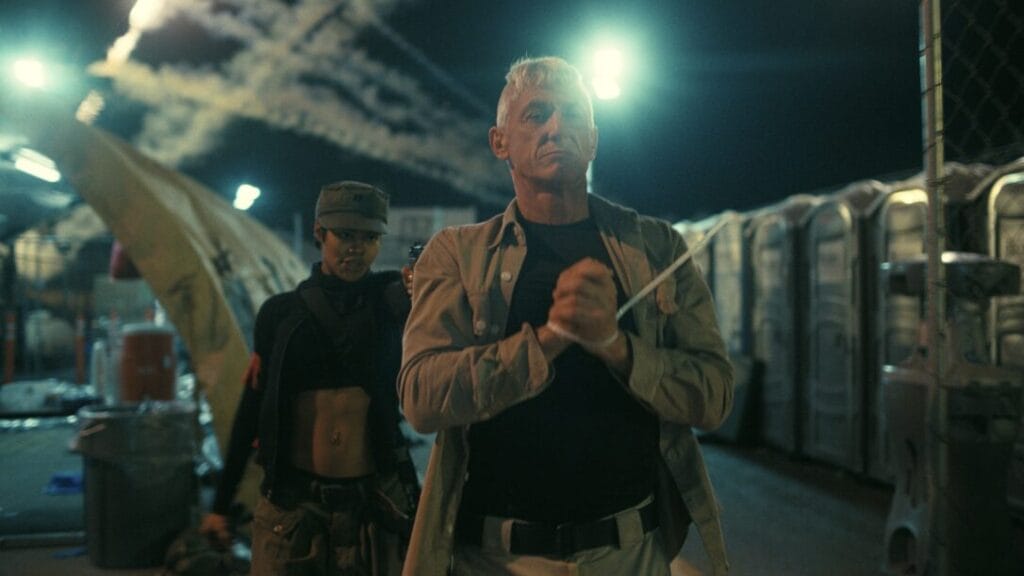
Sean Penn, on the other hand, is unforgettable as Col. Lockjaw. It’s one thing for Anderson to poke fun at real-life white supremacists in positions of power, but to frame Lockjaw as one who has built a celebrated legacy on perpetuating violence and imprisoning immigrants makes the character feel like an extremely relevant villain. Penn portrays Lockjaw from scene to scene like a soulless animal, carrying a stone-cold demeanor and fixed stature. Moreover, just like real-life racists, Lockjaw continuously falls into his own shameless lies that only highlight his irredeemable evil. Penn’s committed performance, in all its irony, leads to both the movie’s most horrifying and darkly hilarious moments, as PTA tests Lockjaw in his self-imposed cycle of lies.
Paul Thomas Anderson Forces Audiences to Wrestle with Their Viewpoints
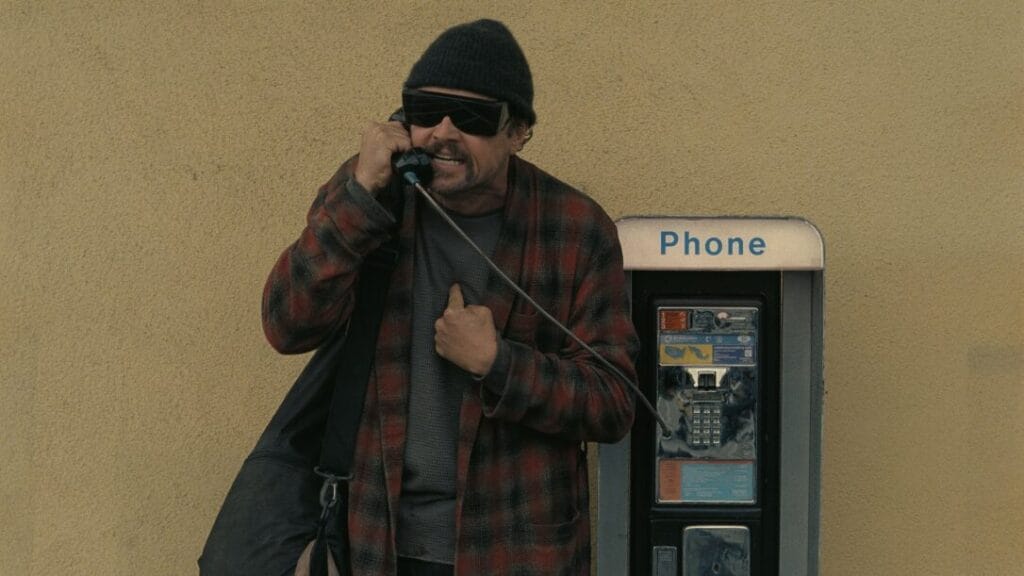
The always-stellar Benicio del Toro (The Phoenician Scheme) as Willa’s karate instructor, Sensei Sergio St. Carlos, shines in an extended second-act sequence where he helps evacuate dozens of undocumented immigrants in time to avoid Lockjaw’s forces. He does so while keeping a zen-like attitude, a huge contrast to Bob’s distressed antics, which suggests a deeper history with Sergio’s upbringing in revolution. Similarly, Perfidia and fellow French 75 leader Deandra, played by Scary Movie icon Regina Hall, balance the film out as the respective fury and level-headedness required to fight fascism. Singer/actress Teyana Taylor(A Thousand and One), although limited in screen time, leaves a mighty impression as Perfidia, an ambitious revolutionary who loses sight of herself amidst an endless struggle.
Courtesy of Warner Bros.
Like any PTA movie, One Battle After Another presents the audience with sympathetically flawed protagonists, making questionable decisions at times when we are desperately rooting for them. Perfidia is the perfect example of this, as viewers wrestle with their view on the character at the same time as her daughter Willa does in the story. Paul Thomas Anderson keeps these stakes profoundly intimate while raising the tension to the highest he’s aimed for yet. His sharp balance of tone — towing the line between what’s relatable at a vulnerable, human level to dark absurdity — allows for incredibly arresting images to hit twice as hard, such as children playing soccer inside the cages of an immigrant detention center.
A Staggering Technical Achievement
Shot on glorious VistaVision (a once-abandoned format brought back by 2024’s The Brutalist), Paul Thomas Anderson and his returning cinematographer Michael Bauman strategically utilize the taller aspect ratio. The film’s climactic car chase sequence, set on a lone highway across the rolling hills of the American Southwest, expertly utilizes the vertical length of the frame to create nail-biting nerves. With the inclusion of many painterly cross fades that are also structured around VistaVision’s rich depth of field, One Battle After Another feels like the ultimate technical culmination of what Anderson has learned throughout his illustrious career. Jonny Greenwood‘s anxiety-inducing score is another layer to this staggering achievement, always pushing the viewer to the edge of their seat.
One Battle After Another ends on a crucial note that plenty of Americans today fail to grasp. The future lies with the youth, and it’s up to older generations to shape their legacies as the pivotal stepping stones for the next in line. In this respect, One Battle After Another can be read as autobiographical from PTA’s perspective as an aging father with teenage kids stepping further out into a world in disarray. Hope isn’t lost for the leaders of tomorrow, though; it’s all about taking it in one victory at a time. In crafting one of the most definitive American epics of the decade, Paul Thomas Anderson has swung the door wide open for a new frontier in filmmaking.
One Battle After Another hits theaters on September 26!

Release Date: September 26, 2025.
Directed by Paul Thomas Anderson.
Screenplay by Paul Thomas Anderson.
Inspired by Vineland by Thomas Pynchon.
Produced by Paul Thomas Anderson, Adam Somner, & Sara Murphy.
Executive Producer: Will Weiske.
Main Cast: Leonardo DiCaprio, Sean Penn, Benicio del Toro, Regina Hall, Teyana Taylor, Chase Infiniti, Alana Haim, Wood Harris, Shayna McHayle, Starletta DuPois, D. W. Moffett, John Hoogenakker, James Raterman, & Paul Grimstad.
Cinematographers: Michael Bauman & Paul Thomas Anderson.
Composer: Jonny Greenwood.
Production Company: Ghoulardi Film Company.
Distributor: Warner Bros. Pictures.
Runtime: 162 minutes.
Rated R.