

Spoiler Warning For It: Welcome to Derry Episode 4!
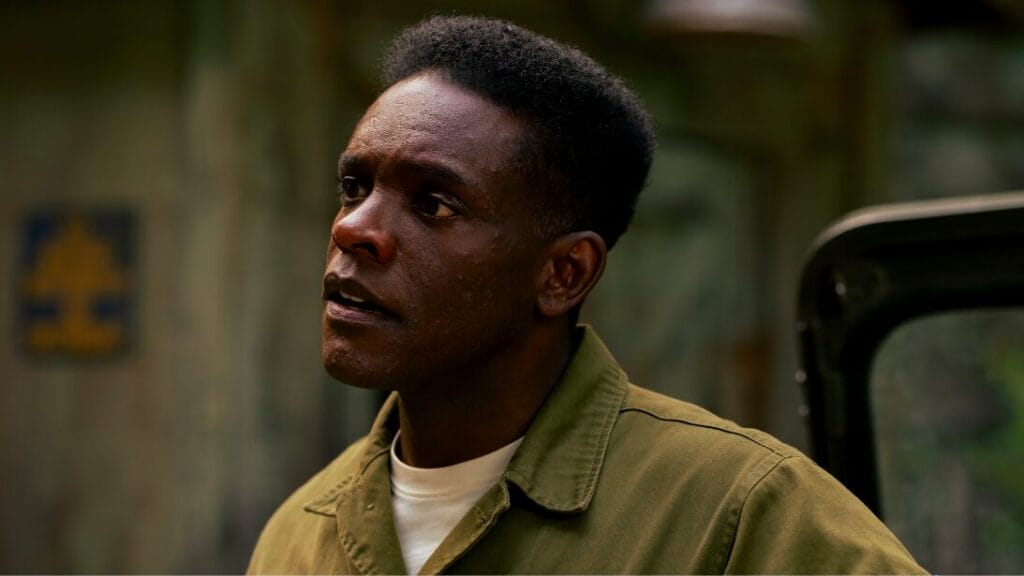
With the fourth episode of It: Welcome to Derry, titled ‘The Great Swirling Apparatus of Our Planet’s Function,’ we’ve reached the midpoint of this first, eight-episode season. Although Bill Skarsgård‘s full presence as Pennywise the Dancing Clown has not yet fully manifested (to the frustration of some impatient viewers), this episode offers the most explicit glimpse into the origins of the beloved horror icon to date. Through the lens of Dick Hallorann’s (Chris Chalk) shine powers, audiences delve into the psyche of Taniel (Joshua Odjick), a young native boy, to witness a vivid history lesson on Pennywise’s connection to the local Shokopiwah tribe.
The plot threads involving the fictionalized Shokopiwah are some of the strongest material Welcome to Derry has to offer, and ironically, it has little to do with the actual source material. The Shokopiwah were first introduced not in Stephen King’s original 1986 novel, but in It: Chapter Two (2019). In that film, an adult Mike Hanlon (Isaiah Mustafa) encounters the Shokopiwah in his search for the origins of Pennywise and learns about a potential way to defeat it through The Ritual of Chüd, which involves ingesting their hallucinogenic roots.
If you’re a fan of the book, you would almost certainly agree that the way the Ritual of Chüd was handled in It: Chapter Two was one of the worst aspects of director Andy Muschietti‘s movie adaptations.
How One Misguided Adaptational Choice Can Impact the Entire Story
In Stephen King’s original novel, The Ritual of Chüd is much more complex, theoretical, and was previously the only known way to defeat Pennywise. It’s portrayed as a cosmic power that doesn’t necessarily belong to any one culture and could be accessed by various methods. In layman’s terms, the performer enters a spiritual, metaphysical state in which they can psychically attack Pennywise. As kids, the Loser’s Club temporarily weakens Pennywise because Bill Denborough is aided in this ritual by the turtle god Maturin (turtle imagery is constantly referenced in Welcome to Derry). As adults, the Losers collaborate in their defeat of Pennywise through the power of belief.
Fans can understand why The Ritual of Chüd had to be altered in the context of a blockbuster; it’s so conceptual and abstract that it would be a huge challenge to reimagine it cinematically. However, the greatest weakness of Andy Muschietti’s film adaptation stems from his interpretation of the ritual. In It: Chapter Two, the ritual forces the Loser’s Club to go on their own fetch quests to find their totems — objects with great meaning to their individual childhoods.
Not only did these multiple side quests artificially lengthen the sequel’s runtime to a staggering 2 hours and 49 minutes, but the ritual also fails to defeat Pennywise in Muschietti’s version. Thus, the events of It: Chapter Two feel utterly pointless as they eventually culminate in the unfortunate scene of the Loser’s Club bullying Pennywise until he shrivels and dies.
It: Chapter Two Played Into Harmful Indigenous Tropes and Stereotypes
Welcome to Derry couldn’t possibly fix everything wrong with It: Chapter Two. However, the HBO show does make an honest effort to rectify some of the problematic side effects of the duology’s portrayal of The Ritual of Chüd — the reliance on harmful indigenous stereotypes and poor portrayal of native spirituality. Especially since Stephen King stories commonly lean on Indigenous culture as a narrative crutch and source for horror (see: The Shining, Pet Sematary, Dreamcatcher, etc.), injecting these tropes into one of King’s works that didn’t engage with it previously was a thoughtless mistake. Not to mention that it’s also contradictory to the spirit of the book, which criticizes bigotry and ignorance through the lens of fear.
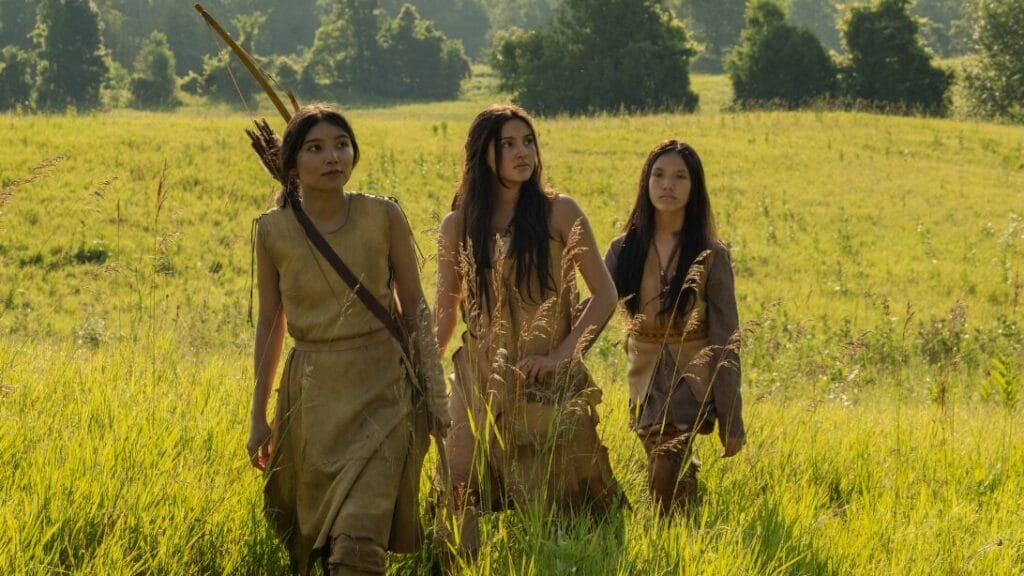
Episode four of It: Welcome to Derry revisits Pennywise’s origins and his encounters with the Shokopiwah, this time with greater detail and an interesting thematic thread between the Dancing Clown and the horror of colonialism. Through Taniel’s childhood memories and his exposure to the Shokopiwah’s mythology as one of the tribe’s younger lore keepers, Dick Hallorann receives visions of Pennywise’s first landing on Earth, long before mankind. First known as the shapeshifting monster, “the Galloo,” Pennywise terrorized and fed on the ancestors of the Shokopiwah. As a defense, they broke off a piece of the meteor that trapped his spirit and turned it into a dagger to ward off and isolate Pennywise towards the western woods.
Welcome to Derry Reframes the Fictionalized Shokopiwah From Victims to Heroes
Out of safety and respect, the Shokopiwah avoided hunting and gathering in the Galloo’s woods for generations and lived in peace alongside the monster. This was disrupted when European settlers came and ignored their warnings. Of course, Pennywise fed on the settlers and grew even more powerful, to the point where the singular dagger was no longer effective against it. To trap Pennywise in the confines of the woods (which would later become Derry, Maine), the Shokopiwah broke off thirteen pieces of the meteor and buried them in pillars to create a sacred barrier around the creature — a potential explanation for why Pennywise’s influence doesn’t leave the outskirts of Derry.
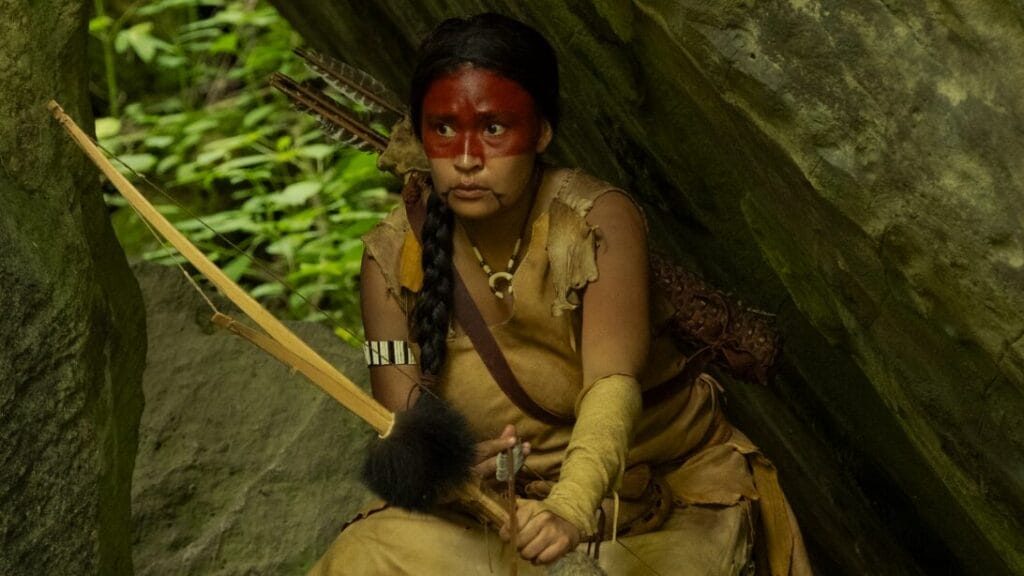
Back in the show’s main setting of 1962, the land disputes over the Shokopiwah and external forces emerge once again, with General Shaw (James Remar) and his military forces stationed in Derry to investigate and exploit the town’s mysterious power. This catches the attention of Rose (Kimberly Guerrero), a leader of Derry’s Indigenous community. One of It‘s main themes is that violence is cyclical. Pennywise’s 27-year feeding cycle represents a never-ending war with the light and the dark. By making the Shokopiwah an inextricable part of It’s lore, the show is making a direct connection between Pennywise as a symbolic monster and America’s history with colonialism. Instead of nameless victims, the Shokopiwah are now heroes in this story.
Cultural Sensitivity Research Enhances the HBO Prequel’s Storytelling
As silly as a story about a murderous space clown can be, there’s an air of respect towards Native culture in Welcome to Derry that was absent from the two movies. That’s no coincidence, either. DiscussingFilm had the honor of chatting with actress Kimberly Guerrero while promoting the HBO series, in which she shared her interest in the Native American themes in Stephen King’s body of work. “In a lot of the King universe, there’s always an indigenous underpinning, right? It’s something happening in the land. The land remembers even when we forget,” Guerrero explained. “To get to unpack that in the King universe and particularly in the world of It is such a gift.”
According to Guerrero, before she was even approached for the role of Rose, Andy and Barbara Muschietti had already done their research. “From the very first conversation, it was all about representation and how to get this right,” Guerrro continued. “They had already brought in this beautiful Penobscot elder, John Bear Mitchell, into the circle, so I immediately connected with him. I’m a historian; my bachelor’s degree was in history. So, I was able to apply my expertise to study the Wabanaki people and their ways. It was infused with authenticity and a genuine desire to honor the Penobscot people [of Maine], past, present, and future.”
In our review of Welcome to Derry, we praised the show for incorporating some of the novel’s stranger, tangential elements into the film’s universe in a way that felt natural, unique, and fitting for the strengths of a prequel. With the Shokopiwah plotlines in the season so far, Welcome to Derry goes above and beyond — taking some of the weaker aspects of the adaptations and shaping them into something worthwhile.
New episodes of It: Welcome to Derry premiere every Sunday on HBO Max!
Developed by Andy Muschietti, Barbara Muschietti, & Jason Fuchs.
Showrunners: Jason Fuchs & Brad Caleb Kane.
Executive Producers: Andy Muschietti, Barbara Muschietti, Jason Fuchs, Brad Caleb Kane, Shelley Meals, Roy Lee, Dan Lin, & Bill Skarsgård.
Main Cast: Taylour Paige, Jovan Adepo, Blake Cameron James, Chris Chalk, James Remar, Stephen Rider, Madeleine Stowe, Rudy Mancuso, Clara Stack, Amanda Christine, Mikkal Karim-Fidler, & Bill Skarsgård.
Recurring Cast: Dean Yool, Alixandra Fuchs, Kimberly Norris Guerrero, Tyner Rushing, Dorian Grey, Thomas Mitchell, BJ Harrison, Peter Outerbridge, Shane Marriott, Chad Rook, Joshua Odjick, & Morningstar Angeline.
Composer: Benjamin Wallfisch.
Production Companies: HBO, Warner Bros. Television, Double Dream, & FiveTen Productions.
Network: HBO.
Episode Count: 8 (Season One).