

For about the last decade and change, we have enjoyed a period of what I’ll begrudgingly call “elevated horror.” In other words, horror movies that are far more intentional in their dramatic and artistic elements than most of the shlock of yesteryear. Of course, horror has consistently produced as many well-rounded, classic films as any other genre. Everything from the original Frankenstein (1931) to The Exorcist (1973) has long been recognized as having richer substance than purely cheap thrills. 2025 was a particularly stellar example of the “horror is deeper than you think” trend, as hits like Ryan Coogler’s Sinners, Zach Cregger’s Weapons, and Danny Boyle’s 28 Years Later garnered adoration of audiences and critics alike.
As great as it’s been to see the horror genre gain profound respect, let’s not let the cheap thrills get a bad rep. While stories featuring surface-level characters attempting to survive and overcome a deadly threat may not be as intellectually deep, they are no less difficult to pull off, maybe even more so. Fear is subjective, and it takes a sharp filmmaker to strike our imaginations with enough power to elicit a stirring reaction. Johannes Roberts is indeed that type of filmmaker. If his prior work didn’t already convince you, his latest film, Primate, is all the evidence you need. It’s a brutal, bloody, and nasty little creature feature, delivering on its promises.
Primate Wastes No Time Getting to the Good Stuff
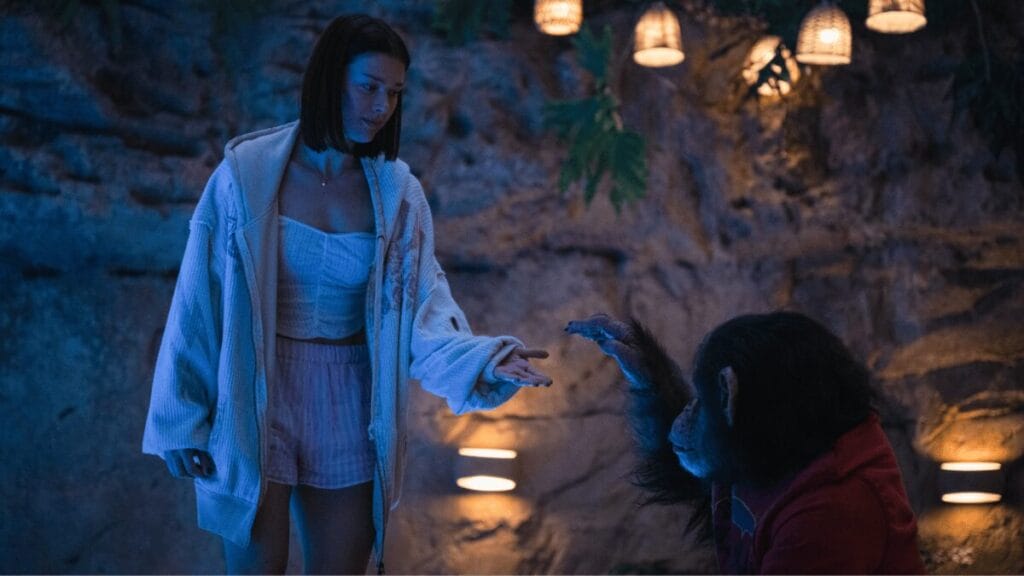
Writer-director Johannes Roberts has demonstrated his horror chops before with movies like 47 Meters Down (2017) and The Strangers: Prey at Night (2018). Like those two examples, Primate understands the importance of cutting to the chase. To be fair, the story begins with a cold-open kill as per countless horror films. However, it sets a gnarly tone for the violence. After that, we’re introduced to our damsels soon-to-be in distress: college student Lucy (Johnny Sequoyah), her bestie Kate (Victoria Wyant), frenemy Hannah (Jessica Alexander), and crush Nick (Benjamin Cheng). Lucy and her entourage are vacationing at her family’s swanky and secluded home in Hawaii, where her sister Erin (Gia Hunter) and deaf father Adam (Oscar-winner Troy Kotsur) reside.
Courtesy of Paramount
The final member of the family is Ben, a docile and friendly chimpanzee whom Lucy and Erin’s parents (including their late mother, who recently passed away from cancer) raised as part of a study. As Lucy parties with her friends and Adam leaves the girls alone for a book tour, no one notices Ben’s increasingly erratic behavior due to a bite from a mongoose that broke into his enclosure. Soon enough, Ben succumbs to a rabies infection, and his subsequent attack on the people inside the home is so sudden that they find themselves trapped without easy access to help. From there, Roberts is laser-focused on suspense, keeping Primate continually engaging.
Johannes Roberts Perfectly Utilizes Classic VFX Techniques
Primate is the type of horror movie that lives or dies on the strength of its effects and their presentation. Fortunately, this is where Johannes Roberts excels. Right from the opening kill, it’s clear that the film’s effects team isn’t monkeying around. They use Ben’s rabies-induced madness as a license to present a series of savage kills that feel much more personal, given that Ben generally isn’t using any weapons. Instead, he’s ripping flesh from faces, tearing open mouths, sinking his teeth into limbs, and so on. In genre terms, these are kills that exist halfway between a slasher and a zombie. Ben may be insane, but he still possesses a disturbingly cogent intellect.

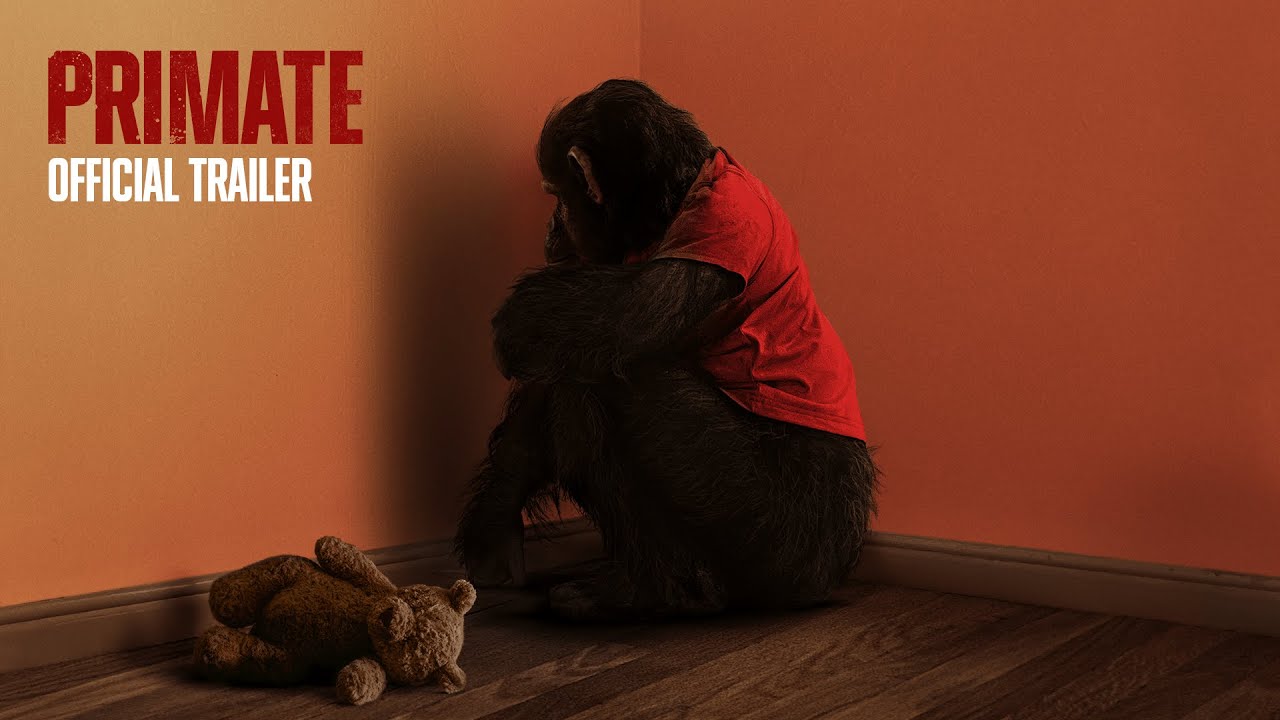
Ben is obviously the star of the show, and he’s portrayed not through digital effects but a classic technique: an actor in a suit. Movement specialist Miguel Torres Umba portrays the chimp in a practical suit specially built for the character by Millennium FX, and it’s incredibly effective. We have seen several instances of fantastic performances of apes or ape-like creatures via performance capture and CGI before. However, Ben stands alone as a chimp who’s not that advanced, but is no dummy, either. By far the film’s creepiest element is how thoughtful Ben seems in his actions, and that comes through thanks to Umba’s performance in the suit, which holds up to scrutiny every second it’s on screen.
Primate has a Clever Script, But Not in the Way You Would Expect
To say that Primate has a clever screenplay may sound odd, particularly when most of the elements that people would look to for intelligent writing aren’t present. The dialogue is fairly rote, the characters are thin, and the plot is predictable. For this genre, though, that’s a feature, not a bug. What would slasher films be without a set of rules to play around with, right? Where Johannes Roberts and co-writer Ernest Riera stumble a bit is, ironically, where they break from the norm. For instance, there are moments when it seems like at least one character might not conform to their horror stereotype. Yet, they all ultimately end up where you would expect them to.
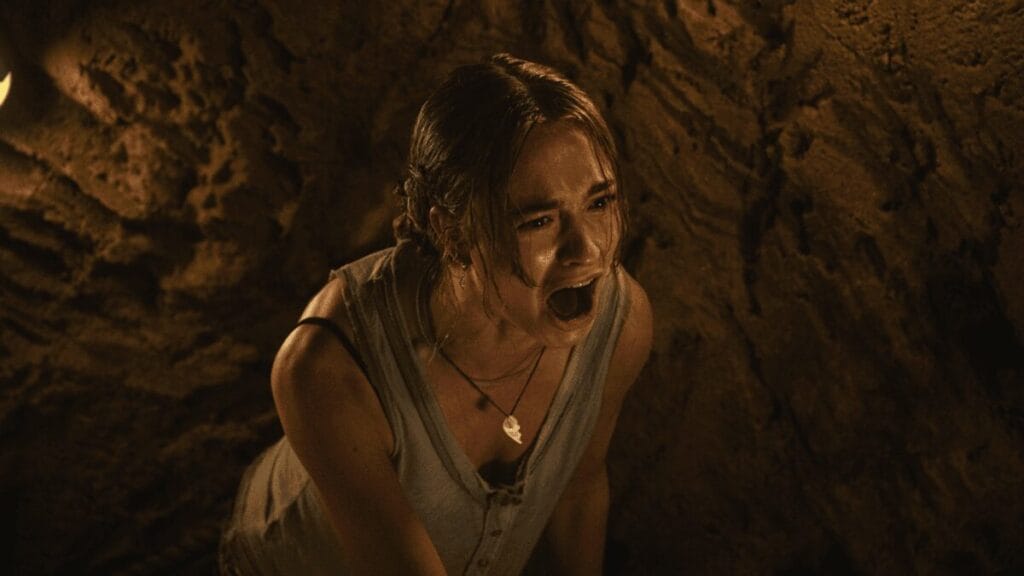
Where Primate demonstrates its cleverness is in anticipating the audience. The movie puts the victims in various situations where they must use their wits to escape or defeat Ben, and Roberts gleefully taunts viewers with answers while staying one step ahead. Primate has multiple instances of characters doing what seems like the most logical next thing, only for Roberts to turn it on its head and cruelly steal away another solution. All good horror filmmakers should be sadists of a sort, and Roberts demonstrates why.
“Sometimes it’s nice just to let a killer chimp be a killer chimp.”
Johannes Roberts has confessed to the press that his biggest inspiration for making Primate was to pay homage to Cujo (1983), the famed movie adaptation of Stephen King’s novel about a killer rabid dog, directed by Lewis Teague. On one level, Primate absolutely succeeds in telling a similarly harrowing, suspenseful, and upsetting story of survival against a previously trusted (and don’t forget cute) animal friend. Cujo, though, contained fascinating themes and characters; there’s a reading of the film where one could say Cujo went crazy because the whole world is diseased. In Primate, Ben simply gets sick. While this tragic course of events mirrors the family’s loss of their mother to cancer, Roberts doesn’t harp on the connection.
Yet, just because Primate isn’t that deep doesn’t make it less effective. Sure, the movie could use some depth, but that could also make it feel less experiential. Roberts clearly wants his audience to self-insert for maximum impact, and for the most part, the gambit works. A down-and-dirty horror film like Primate doesn’t need to (maybe even shouldn’t) elevate its themes. It has critics like myself to bring up ideas, say, about fatal communication breakdowns in a post-COVID world, and apply them to the simian terror at hand. Sometimes it’s nice just to let a killer chimp be a killer chimp, especially if he does the killing as awesome as Ben does.
Primate hits theaters on January 9!
Release Date: January 9, 2026.
Directed by Johannes Roberts.
Written by Johannes Roberts & Ernest Riera.
Produced by Walter Hamada, John Hodges, & Bradley Pilz.
Executive Producers: Johannes Roberts, Pete Chiappetta, Vicki Dee Rock, Nathan Samdahl, Andrew Lary, & Anthony Tittanegro.
Main Cast: Johnny Sequoyah, Jessica Alexander, Troy Kotsur, Victoria Wyant, Gia Hunter, Benjamin Cheng, Charlie Mann, Tienne Simon, Miguel Torres Umba, Kae Alexander, Amina Abdi, & Albert Magashi.
Cinematographer: Stephen Murphy.
Composer: Adrian Johnston.
Editor: Peter Gvozdas.
Production Company: 18hz Productions.
Distributor: Paramount Pictures.
Runtime: 89 minutes.
Rated R.