

In November 2002, 28 Days Later was released in cinemas in the UK. 23 years later… director Danny Boyle has gone on to make eight more feature films and has won an Academy Award. The writer of 28 Days Later, Alex Garland, is now well-known as a director in his own right and has helmed some of the most thought-provoking movies of the last decade. The zombie subgenre of horror, begun by George A. Romero’s Night of the Living Dead in 1968, had lain dormant for nearly a decade before 28 Days Later. Despite telling a story about “infected” people rather than zombies, the film successfully brought the subgenre back to life, and it’s never fully died out since then.
Clearly, 23 years is not an insignificant span of time, as all of this and more has happened between the release of 28 Days Later and this month’s 28 Years Later (2025), which picks up in Boyle and Garland’s alternate world where a Rage Virus was unleashed in the United Kingdom in 2002. While the 2007 sequel 28 Weeks Later (set in 2003 and made by another set of filmmakers) didn’t feature any recurring characters, the franchise still holds tons of potential, and 28 Years Later capitalizes on that potential several times over. 28 Years Later is, put simply, one of the best movies of the year, a chilling horror story that’s equal parts insightful, gory, and genuinely touching.
28 Years Later Rejects the Typical Legacy Sequel Formula
28 Years Later easily cements itself as one of the greatest legacy sequels ever made, almost by default, as the series has essentially operated as an anthology up to now (although that’s about to change). Thus, after a table-setting opening sequence set in the Scottish Highlands during the initial Rage Virus outbreak in 2002, the audience is introduced to an isolated island community just off the mainland coast of Scotland circa 2030. 12-year-old Spike (Alfie Williams) is being ushered into a patriarchal rite of passage by his proud father, Jamie (Aaron Taylor-Johnson), when the sensitive young boy would perhaps rather stay at home with his mysteriously ailing mother, Isla (Jodie Comer).

Spurred on by the sense of community that his island neighbors have fostered over the last few decades and the machismo that his father has instilled in him, Spike agrees to accompany Jamie off the island to the mainland. A causeway that can only be accessed at low tide is what separates them from the unknown. Once there, Jamie teaches Spike how to hunt the Infected, who have not died out thanks in large part to the events of 28 Weeks Later. Spike impressively demonstrates his promise as a hunter, but he’s distracted by a growing sense of discontent and suspicion about things, particularly regarding his father and a mysterious fire that still burns deeper in the mainland.
Danny Boyle and Alex Garland are in Peak Form
Both writer Alex Garland and director Danny Boyle are operating at their peak here. For his part, Garland fleshes out the narrative with a remarkably inventive and rich background. The script blends together elements of numerous genre benchmarks — everything from The Wicker Man to The Last of Us — while echoing the unsaid horrors of his recent solo work, particularly that of Annihilation (2018) and Civil War (2024). The rest of the world, it turns out, has continued on a mostly similar historical track to our own. It’s just the UK that has been cut off for 28 years and devolved into a post-apocalyptic hellhole, with the rest of Europe putting it in a patrolled quarantine zone.

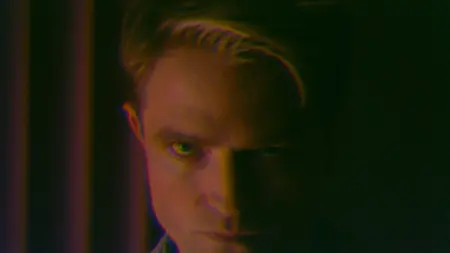
Danny Boyle, who hasn’t made a movie since 2019’s tepid Yesterday (the low point of his otherwise stellar career), creates perfectly controlled chaos. He and cinematographer Anthony Dod Mantle (who also shot 28 Days Later) bring back the digital video grit and canted angle compositions of the original film. However, that immediacy is now infused with additional visual flourishes, including sharp thematic cutaways, sometimes to flashbacks, dream sequences, flash forwards, and even different movies and media entirely, which comment on the themes and action. It’s a mosaic technique that Boyle has been experimenting with throughout his entire career, really coming into its current shape in the director’s prior sequel triumph, T2: Trainspotting (2017).
28 Years Later is one of the Most Gruesome Horror Films of 2025
Amidst all this inventiveness and pure energy (including a splendidly propulsive, pop-flavored score from the band Young Fathers, a Boyle favorite), 28 Years Later never forgets that it’s a horror movie. In addition to a few well-placed jumpscares, Danny Boyle and editor Jon Harris keep a tangible sense of dread alive throughout the film, and thanks to Boyle’s mosaic direction, the viewer can never guess what gruesome image could be possibly coming next. Boyle and Garland don’t rest on the laurels of their Infected, either, as they have updated the creatures to include slow moving, grotesquely bloated ghouls as well as hyper-competent (and angry) predators called Alphas, who have a penchant for ripping out skulls and spinal cords, Yautja-style.

As that implies, 28 Years Later is a deliriously gory thrill ride, one where the violence is so in your face that it rivals this year’s other grisly horror flick, Bring Her Back, in getting you to think twice about chomping your popcorn. None of this violence and gore is used for juvenile purposes either. 28 Years Later considers all aspects of death as a fact of life and points out that the main difference between its world and ours is that death is just much more immediate and impossible to ignore. In this way, the movie feels like a thematic follow-up to Garland’s Civil War and Warfare (2025), with all three concerning literal and figurative reminders of death.
There’s a Cliffhanger, But Don’t Worry
It’s difficult to talk about why the cast of 28 Years Later is so incredible without getting into spoilers. So, suffice it to say that Aaron Taylor-Johnson (Kraven the Hunter) is solid, Jodie Comer (Killing Eve) is fabulous, and Ralph Fiennes (Conclave) plays his part with excellent subversion. There’s a reason why Fiennes agreed to get so jacked for this film; his role as the mysterious Dr. Ian Kelson is truly that special. 28 Years Later belongs to young newcomer Alfie Williams, though, with the entire movie resting on his impressively capable shoulders. His performance is reminiscent of Boyle’s other, underseen coming-of-age film, Millions (2004), making 28 Years Later feel like a spiritual successor.
As you may know, this movie is merely the first installment of a new trilogy. The follow-up, 28 Years Later: The Bone Temple, has already been shot by director Nia DaCosta (The Marvels, Candyman) and is slated for release next year. That means the series is going to abandon its anthology structure and follow the further adventures of Spike and those he meets along the way. It also means that 28 Years Later ends on a bit of a cliffhanger, setting up the next sequel, which may frustrate those who worry that the franchise will turn into commercialized slop. After seeing how filmmakers Danny Boyle and Alex Garland have brilliantly revived the series, I have no such worries.
28 Years Later hits theaters on June 20!

Release Date: June 20, 2025.
Directed by Danny Boyle.
Written by Alex Garland.
Produced by Danny Boyle, Alex Garland, Andrew Macdonald, Peter Rice, & Bernie Bellew.
Executive Producers: Cillian Murphy & Allon Reich.
Main Cast: Jodie Comer, Aaron Taylor-Johnson, Ralph Fiennes, Jack O’Connell, Alfie Williams, Erin Kellyman, Edvin Ryding, Chi Lewis-Parry, & Emma Laird.
Cinematographer: Anthony Dod Mantle.
Composer: Young Fathers.
Production Companies: Columbia Pictures, DNA Films, British Film Institute, & Decibel Films.
Distributor: Sony Pictures Releasing.
Runtime: 115 minutes.
Rated R.