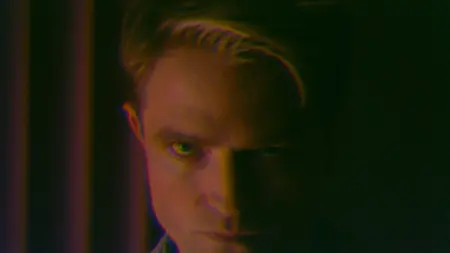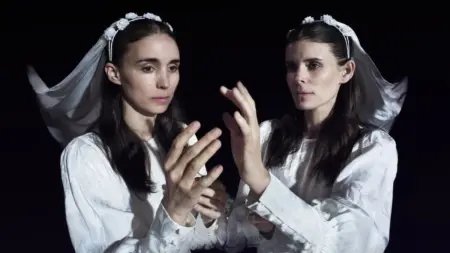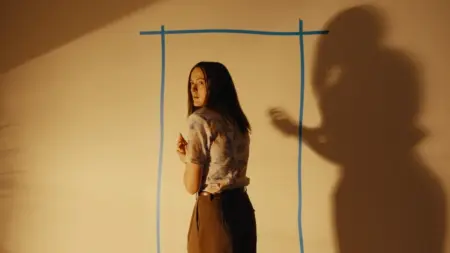


Josh Safdie’s Marty Supreme is one of the biggest success stories of 2025. Instead of getting lost in the end-of-year holiday shuffle, it earned $875,000 during its limited opening-weekend release in only six theaters across Los Angeles and New York City, the highest per-theater average record for beloved indie distributor A24. Since its wide release on Christmas Day, Marty Supreme has earned over $70 million domestically, making it A24’s second-highest-grossing film ever in North America, surpassing Civil War (2024) but coming behind Everything Everywhere All at Once (2022). Fortunately, the film’s tagline, “Dream Big,” proved apt in more ways than one.
Marty Supreme demonstrates just how powerful, unique, and unpredictable cinema can still be. This is thanks not only to younger talent like Timothée Chalamet and Odessa A’zion, or newly minted experts like Josh Safdie and co-writer Ronald Bronstein, but also to the film’s formidable crew, which comprises many legends in their own right. Production designer Jack Fisk has lent his talents to more classic “New Hollywood” features than you can count on one hand. Then there’s cinematographer Darius Khondji, a staple behind the camera since the early 1990s. Best known for shooting Seven (1995) and Panic Room (2002) with David Fincher, and for his frequent collaborations with Oscar-winner Bong Joon-ho and James Gray, Khondji is truly a one-of-a-kind talent.
Darius Khondji’s penchant for kinetic, beautifully composed photography is on full display in Marty Supreme, and is key to the film’s realization. 2025 was already a big year for the famed cinematographer, coming off the heels of his work on Bong Joon-ho’s Mickey 17 and Eddington, his first collaboration with filmmaker Ari Aster. Marty Supreme is Khondji’s second feature with Josh Safdie, having shot Uncut Gems (2019), which has since been celebrated as a modern classic. That same profound love and adoration is already forming around the story of Chalamet’s Marty Mauser, a young Jewish table tennis player from New York who goes through hell and back to prove himself the world’s best at ping-pong in the 1950s.
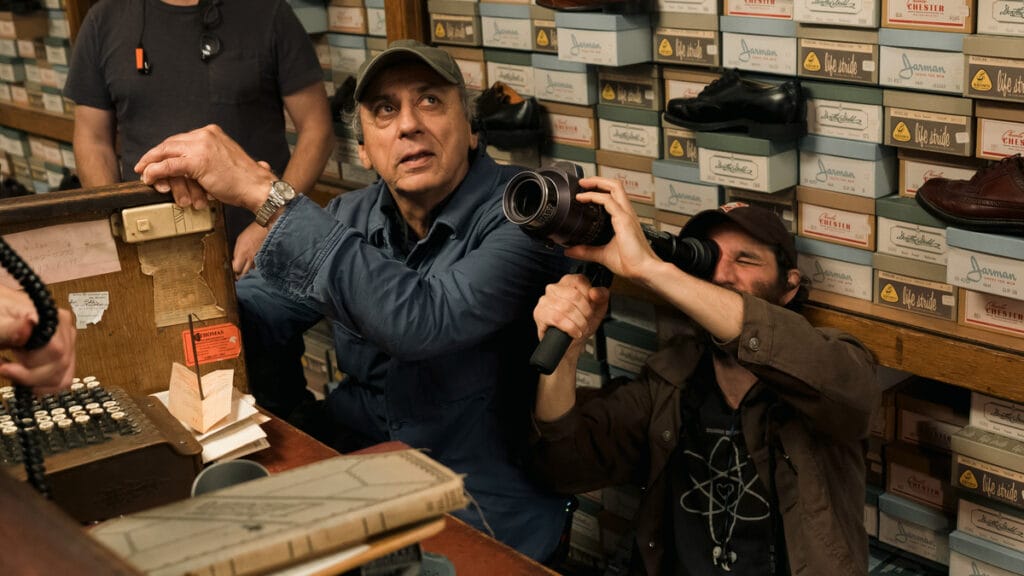
DiscussingFilm was lucky enough to sit down for an exclusive interview with cinematographer Darius Khondji to break down the visual inspirations behind Marty Supreme. During our conversation, Khondji explained why he and writer-director Josh Safdie chose to shoot the movie on 35mm film and how he views his role in the collaborative process. He also revealed his wide range of influences, including cinema from the ’50s and ’70s, as well as Daniel Lopatin‘s original score for Marty Supreme!
Exclusive Interview with Cinematographer Darius Khondji for Marty Supreme
At a recent Los Angeles screening, Josh Safdie called you a perfectionist, which you denied. It made me think: Do you believe perfection is achievable in cinematography? Or, are imperfections something you welcome instead?
Darius Khondji: I’m not sure perfection is achievable. You have to ask the people who are seeking perfection. I don’t believe in perfection. I once read, I think it was an interview with John Ford — one of the greatest American directors and filmmakers in general — he was talking about these Navajo rugs. That they were weaving this incredible Navajo rug, and were putting at the end [a spirit line], a thread. Inside the [rug], to kick away evil. So, the rug was not perfect. There was an imperfection to it, and I truly believe in imperfection. I strongly believe this, to the point that I never aim for perfection.
Throughout my work, and since I started shooting movies, people have told me, “Oh, Darius is a perfectionist.” I feel so far from being a perfectionist… I actually admire the perfectionists. I don’t want to mention names, but I feel some cinematographers, some of my peers, are perfectionists, and I admire them. However, I cannot do that. I love interpreting a movie. I follow a great director, someone who I can help. Once I read the script, I interpret it, and we shoot the film. I shoot the film for this director, not seeking perfection or a mood that’s absolutely correct for the characters at a specific time.
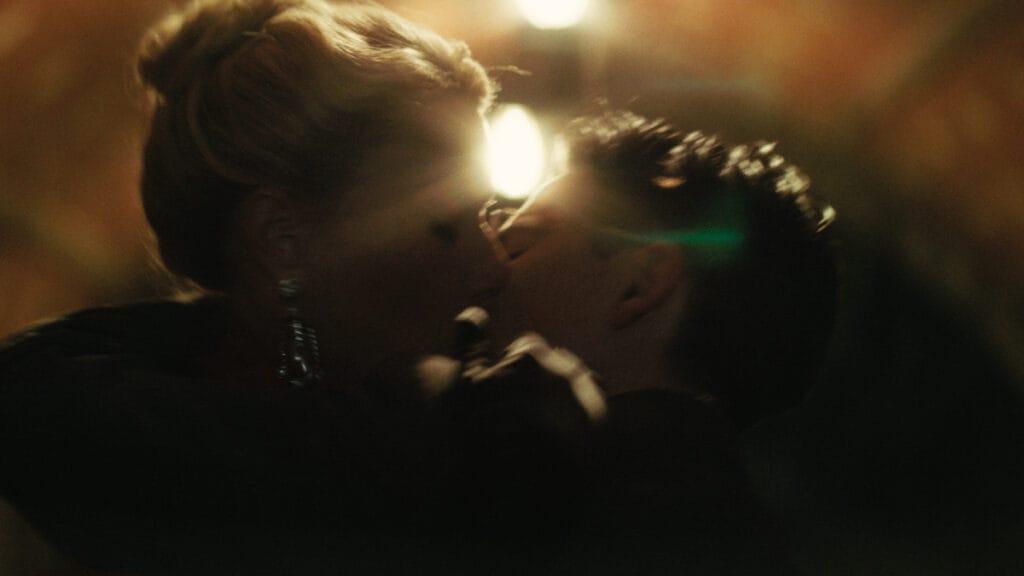
Darius Khondji: I help create a sense of realism in life, in a character, in a particular moment in a movie, but that has nothing to do with perfection. I mean, if a character [like Marty Mauser] is seeking perfection, then we have to build towards a certain representation of perfection. Perfection by itself, though, is not something I look at. Maybe it’s a good thing, because I don’t think I will ever be able to reach it. That’s why I was not very good in school, probably. When I was in school, listening to some of my teachers would fascinate me, because I loved them. Now, those teachers are my directors.
It feels like you shot Marty Supreme in a verité style. Does that style lead to a more freeing process, or is it more nerve-wracking, especially as Josh consistently amps the chaos on screen?
Darius Khondji: It is nerve-wracking at times, but it gives you incredible pleasure as a result. The way Josh works with Ronnie [Bronstein] is that, even when they write, they change regularly. They make changes and notations every day. It’s a medium in complete fusion. Even when it’s delivered by great actors like Timothée, it’s still moving, it’s still changing. The way Josh shoots… we lay out the scenes together. It’s sometimes nerve-wracking. We shoot on multiple cameras and move very fast. But the result is quite fascinating. I watch it like the audience, from a distance. To me, perfection is all about following this and staying in rhythm with the director and the actors.
It’s all about rhythm. It’s like the music of Daniel Lopatin, you know? For me, it’s the continuation of this idea. Sometimes it’s romantic and beautiful; other times it’s like 20 shots in a minute as the actors move fast. Actually, it’s often not quick cuts or edits, but rather quick moments in succession. It brings you closer to reality and to life. I found this kind of cinema extremely energizing and new for me. That’s why Uncut Gems was so important. When I watch Marty Supreme now, it feels like Uncut Gems multiplied by 10. It’s very exciting to live in the moment like this while making a film.
I love what you just said about the rhythm working with Josh, because he and Ronald Bronstein really bake that into the script. Are you part of those conversations with Josh and Ronald while shooting, keeping that rhythm going?
Darius Khondji: That’s a good question. I listen to them… I always try to eavesdrop and listen a little bit because it puts me in the right mood. I don’t want to discover anything at the last minute, because that’s when we are actually rolling. We roll all the time. That means there’s no rehearsal. We don’t really rehearse. Josh loves what is happening in the moment. You know, I would have loved to work with John Cassavetes; there must have been something in the texture of the life he created on screen.
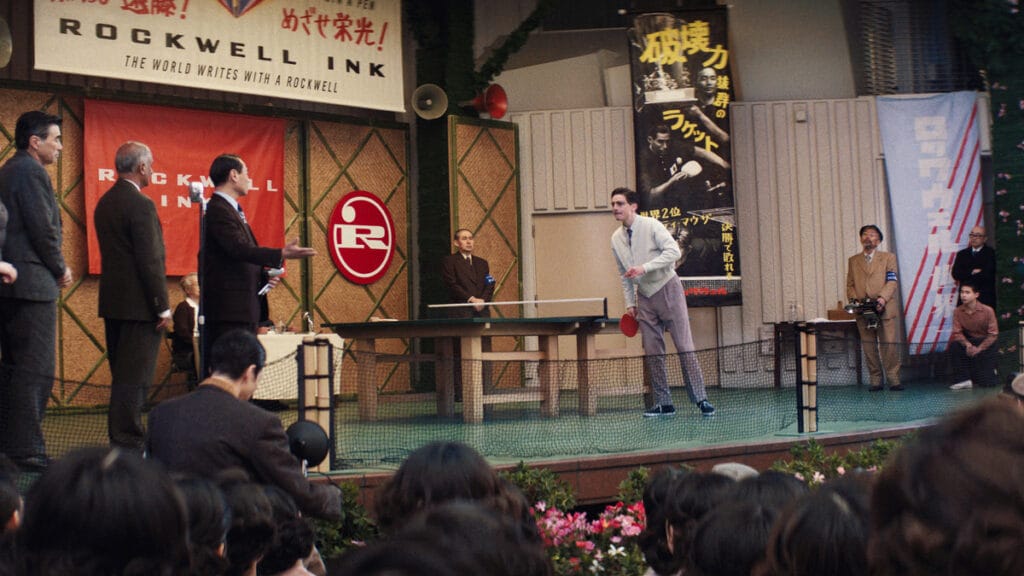
Darius Khondji: There’s a certain degree of realness in the characters [of Safdie’s films], like Adam Sandler and now Timmy. Also, all of these unknown actors and faces that appear in Josh’s movies give them so much life. That’s why I think of John Cassavetes, like Faces (1968), A Woman Under the Influence (1974), or Opening Night (1977), these are the films that I love the most. I feel the same tenderness… there’s a degree of love and tenderness towards the characters that Josh and Ronnie create. I can see it in Marty Supreme, in our cinema together, and I’m so grateful just to be there to witness it.
What drew you to shoot Marty Supreme on 35mm? Was it the period setting, or simply a gut feeling?
Darius Khondji: I’m so glad we did. We did it on Uncut Gems. Josh loves film, and I love film too, but I want to live in the reality of the moment. Some directors prefer shooting digital, as if it were on film; they don’t see the importance of shooting film. I usually didn’t want to deliberately shoot film before. But now, I was recently telling Josh this, Marty Supreme has made me want to shoot on film more than ever. I remember having to choose and put so much input into the visual balance toward film. I’m really a film person now, more than ever.
I have shot film most of my life, actually. I love the digital cinema. But for Marty, I thought film brought us closer to reality, closer to love, and closer to the way life is experienced in, say, Cassavetes’ films. I think Cassavetes would not have shot digital. He was about film the same way. Film brought us into the characters, the action, and the actors. Josh desired to shoot film, and for me, it was the obvious thing to do. I now mainly shoot on film again, with the same pleasure I once had. It’s an interesting process, what’s happening [in my head] because of Marty Supreme.
Some cinematographers like to discuss influences at the start of a production. Given the period setting, were you thinking of any movies from the ’50s? What struck me most about Marty Supreme is that it is a period film, yet it never feels period.
Darius Khondji: I watch films of the ‘50s often; some of Vincente Minnelli’s dramatic works, and some Douglas Sirk. But we also looked at a lot of cinema from the ‘70s. These films and references are like friends who come back to me. I often say that when I travel, I buy books and collect all these reference paintings… references, photographs, and films are really like friends.
We never literally adapt a reference in a scene or directly use an image from another film. But it’s a canvas, it’s something that’s behind, subconsciously in our mind all the time. Just as the music is a mixture of the ’80s, ’50s, and Daniel’s great original score, we drew some visual inspiration from the ’70s. We watched a lot of different things together. Josh often sent me photographs of various things. It gives me a direction and an idea of the world inside his head.
Marty Supreme is now playing in theaters everywhere!
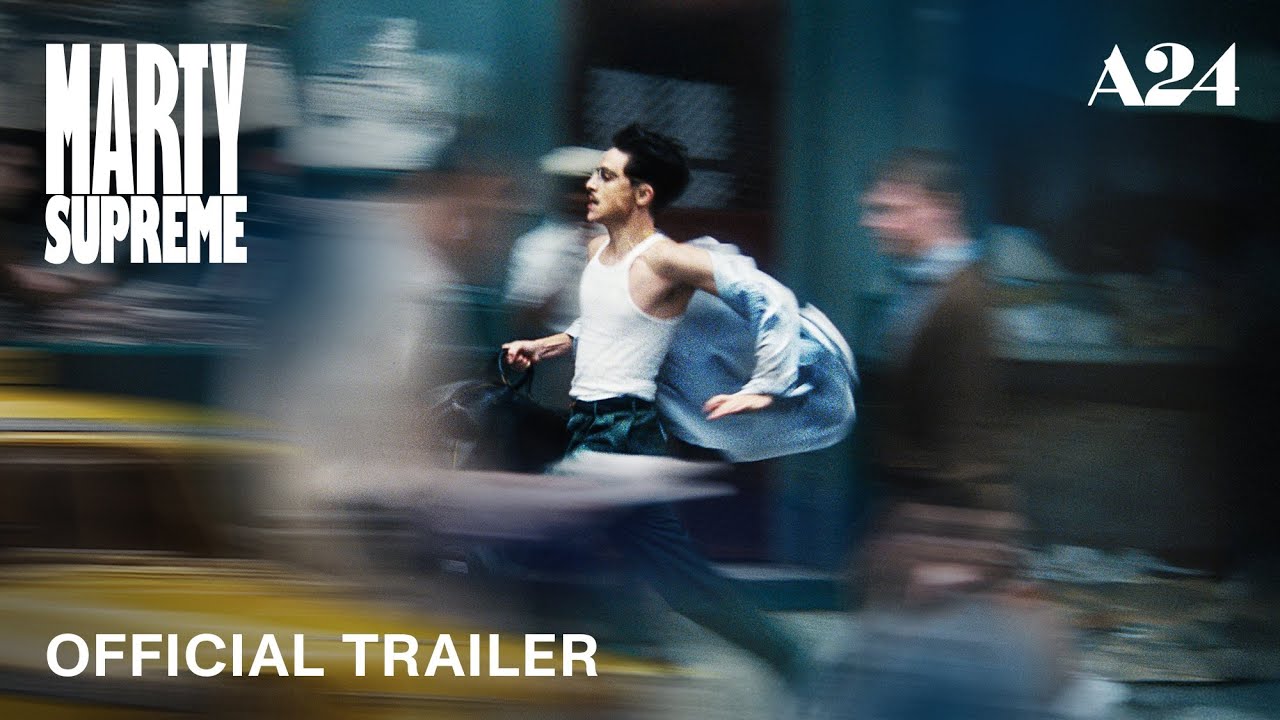
Release Date: December 25, 2025.
Directed by Josh Safdie.
Written by Josh Safdie & Ronald Bronstein.
Produced by Josh Safdie, Ronald Bronstein, Eli Bush, Anthony Katagas, & Timothée Chalamet.
Executive Producers: Timo Argillander, Joe Guest, Sara Rossein, & Andrea Scarso.
Main Cast: Timothée Chalamet, Gwyneth Paltrow, Odessa A’zion, Kevin O’Leary, Tyler Okonma, Abel Ferrara, Fran Drescher, Sandra Bernhard, Spenser Granese, Philippe Petit, Luke Manley, John Catsimatidis, Tracy McGrady, Kemba Walker, Isaac Mizrahi, Naomi Fry, George Gervin, Ted Williams, Emory Cohen, David Mamet, Fred Hechinger, Levon Hawke, Hailey Gates, Géza Röhrig, & Penn Jillette.
Cinematographer: Darius Khondji.
Composer: Daniel Lopatin.
Editors: Josh Safdie & Ronald Bronstein.
Production Company: Central Pictures.
Distributor: A24.
Runtime: 149 minutes.
Rated R.