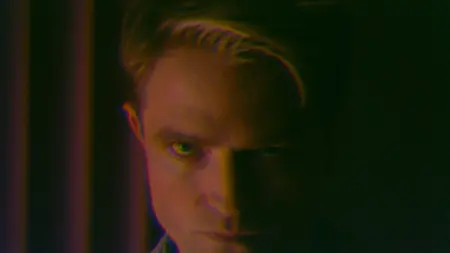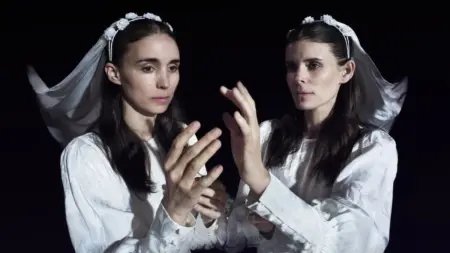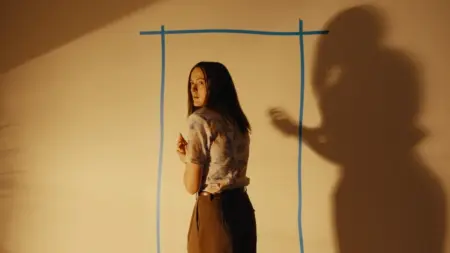


It’s clear, if nothing else, that writer-director Emerald Fennell is an artist who adores controversy. Her first two feature films, the female-revenge deconstruction Promising Young Woman (2020) and the class-warfare thriller Saltburn (2023), despite critical acclaim, are extremely divisive among moviegoers online and have inspired endless debate over Fennell’s merit. Some would describe her as a provocateur, but generally, her critics are numb to her artistic fascinations with violence and eroticism. What defines Fennell’s body of work so far, rather, is a sense of vapidness beneath her shocking yet pristine visual language. In that sense, Fennell’s latest, an adaptation of Emily Brontë’s 1847 novel, Wuthering Heights, is no different than the rest of the pack.
Ever since Fennell announced her latest directorial effort would be based on the literary classic, the project has faced endless scrutiny. While some critiques have been justified, the conversation about the nature of adaptation has been brought to light. Fennell has explained at length that the quotations in the title of “Wuthering Heights” (2026) are there to distinguish her interpretation from the source material. Moreover, she says that her vision was to capture the version of the book that conjured in her head when she read it for the first time as a teenager. It’s one of the more curious approaches to adaptation that we’ve seen in some time. Is it anti-art, or a valid mode of expression?
Like it or loathe it, Emerald Fennell’s Wuthering Heights wears its aspirations on its sleeve; this is not a loyal retelling of Brontë’s revolutionary, boundary-pushing novel. Instead, it’s a flowery, edgy Harlequin-style romantic tragedy version of the same title.
Emerald Fennell’s Most Audio-Visually Accomplished Film to Date
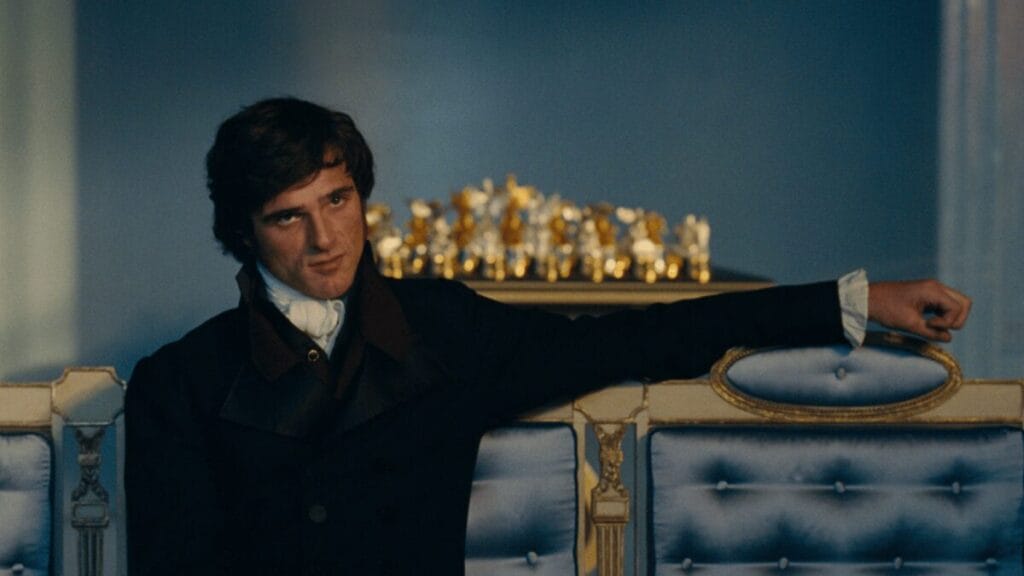
“Wuthering Heights” follows Catherine “Cathy” Earnshaw (Margot Robbie), a wealthy woman living in the Yorkshire moors with her housekeeper and trusted confidante, Nelly (Hong Chau). As a child, her father once returned from a business trip with an orphaned boy, whom he took in and raised as one of his own. The boy grows up to be Heathcliff (Jacob Elordi), the brutish, brooding societal “other” and Cathy’s best friend. When she comes of age and is expected to marry, Cathy meets the wealthy aristocrat Edgar Linton (Shazad Latif), who lives across the way at Thrushcross Grange. Torn between her childhood love and her economic duty as an 18th-century woman, Cathy finds herself in a destructive tale of romantic tragedy.
Courtesy of Warner Bros.
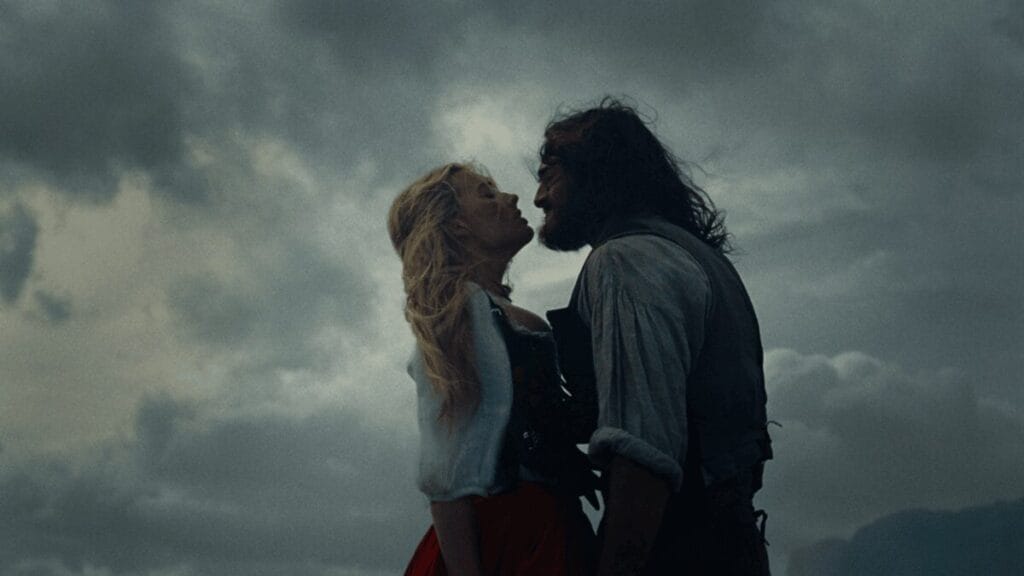
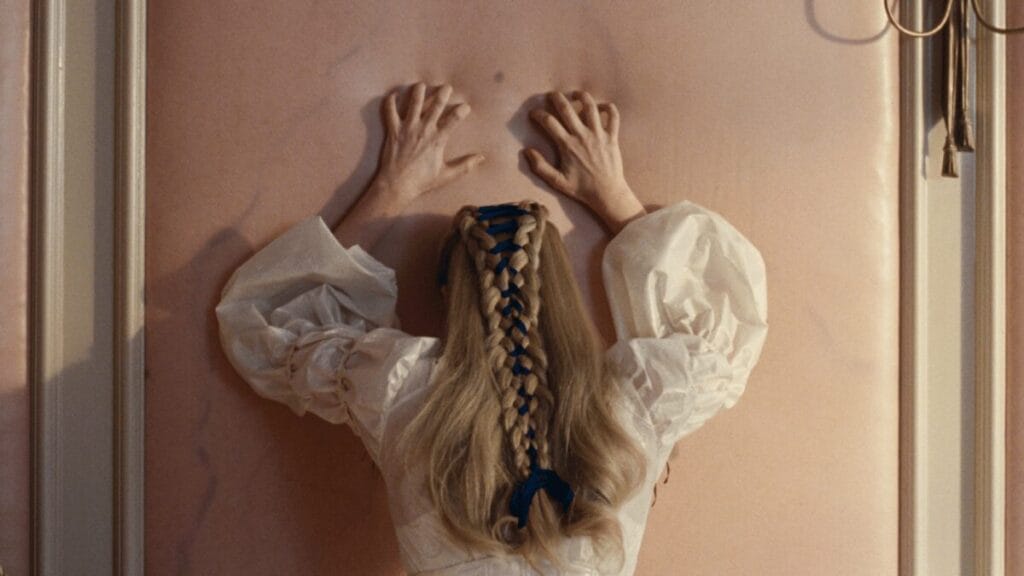
From minute one, “Wuthering Heights” stands out not just as the most beautiful film of Emerald Fennell’s directorial career but also as one of the most visually realized period pieces of recent years. Cinematographer Linus Sandgren and Fennell are a match made in heaven; it’s consistently impressive how much creativity and variety they extract from the setting and a fraction of the source material. Played along with Charli xcx’s haunting, anachronistic original music, and you have a movie that looks and sounds like a dream. It might not be to everyone’s taste (its bluntness is a potential turn-off), but from a purely craft perspective, Fennell fully achieves the subjective and interpretive experience of being consumed by a story.
Wuthering Heights Through the Lens of Sexual Awakening
Consumption being quite the word for it, as Emerald Fennell’s movie adaptation reveals itself to be interested in one aspect of Wuthering Heights more than anything else: its inherent sex appeal. This is an unapologetically steamy film, and everything about it, from its hyper-glossed technical aspects to its sweat-drenched actors in tight costuming, evokes sexuality. When the characters are not engaging in sex, eroticism still manifests. The act of kneading dough, sticking a finger into a fish trapped in aspic jelly, or Jacob Elordi’s hands breaking the membrane of an egg yolk and watching it ooze over his bed. It’s grotesque, hungry, and depraved. It’s sexy.
Courtesy of Warner Bros.
In a time when the mainstream actively rejects female sexuality, it’s actually refreshing to see it depicted like this on screen. Again, in order to really be on board, you have to accept that “Wuthering Heights” isn’t going to be anything like the source material. I was fully prepared for that to be the case and remained open-minded. For the most part, Fennell’s script is purely transformative, and I find that a defensible mode of adaptation. If one of the purposes of art is self-expression, should that also not apply to the act of adaptation?
Especially given that Wuthering Heights is a timeless tale that will continue to be interpreted by various artists over time, there is plenty of room for one adaptation to forge its own path.
A Significantly Less Complex Re-Telling, For Better or Worse
Be that as it may, as much as I will defend her initial vision, it’s not lost on me how Emerald Fennell’s take on Wuthering Heights contains significantly less depth than the original story, and that she seems utterly disinterested in engaging with what makes Brontë’s novel stand the test of time. Fennell’s prioritization of sexual awakening and sadomasochism means the themes of class, otherness, sexism, and generational violence are majorly downplayed. One would say this comes with the territory of portraying the narrative through the lens of Fennell’s 14-year-old self, and that the rosier, less complex viewpoint is part of the vision. I could get behind that. However, sometimes Fennell’s choices are completely at odds.
Courtesy of Warner Bros.
For example, Nelly and Mr. Linton are both racebent here, presumably due to colorblind casting. Although Hong Chau and Shazad Latif are wonderful, their presence as people of color in Fennell’s world only calls to mind the major elephant in the room — that Heathcliff, more than any other character, would benefit from a reinterpretation as a man of color. While fresh Oscar-nominee Jacob Elordi (Frankenstein) is fantastic at what he does, it’s difficult to fathom how that was not something that was ever considered. At the same time, if I wanted a dynamic, modern reinterpretation of Wuthering Heights that directly engages with the racialized abuse Heathcliff faces, Fennell would certainly not be the right filmmaker for the job.
Fennell’s Vision Will Definitely Divide Audiences
Ultimately, that conversation falls outside the scope of a review. Can you enjoy Emerald Fennell’s Wuthering Heights for what it is, and just get lost in its melodrama and titillations? That depends on how much of a relationship you have to the original text, or how much you are willing to see through the cultural contexts surrounding the title “Wuthering Heights.” As a pure exercise in pushing the rigid boundaries that’s expected of adaptations, and as a handsomely made audiovisual piece, there is a lot to be admired about Fennell’s third feature film. Even as someone who has actively disliked Fennell’s work in the past, I still found myself swept away and charmed by its transgressive qualities.
Fennel’s film adaptation of Wuthering Heights will definitely be as divisive as her previous movies, and I can’t really argue with the accusation that it lacks substance. However, there are rare instances when I think a film’s pure artifice and style can justify it as a singular work. That doesn’t make “Wuthering Heights” timeless and brave by any means, but as a pure expression of Fennell’s soul, it’s her most successful one yet.
★ ★ ★ 1/2
Wuthering Heights hits theaters on February 13!
Release Date: February 13, 2026.
Directed by Emerald Fennell.
Screenplay by Emerald Fennell.
Based on Wuthering Heights by Emily Brontë.
Produced by Emerald Fennell, Margot Robbie, Josey McNamara, & Rosie Goodwin.
Executive Producers: Pete Chiappetta, Sara Desmond, Tom Ackerley, Andrew Lary, & Anthony Tittanegro.
Main Cast: Margot Robbie, Jacob Elordi, Hong Chau, Shazad Latif, Alison Oliver, Martin Clunes, Ewan Mitchell, Charlotte Mellington, Owen Cooper, & Vy Nguyen.
Cinematographer: Linus Sandgren.
Composers: Anthony Willis (score) & Charli xcx (songs).
Editor: Victoria Boydell.
Production Companies: MRC, Lie Still, & Lucky Chap Entertainment.
Distributor: Warner Bros. Pictures.
Runtime: 136 minutes.
Rated R.