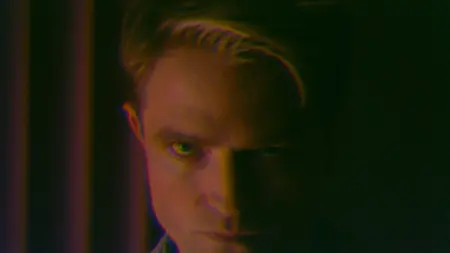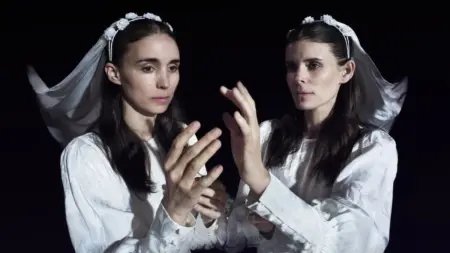


Oscar-winning director Guillermo del Toro explores the human condition in Frankenstein (2025), a bold reimagining of Mary Shelley‘s 1818 Gothic novel of the same name. Del Toro’s earnest affection for monsters has defined his renowned career; he consistently seeks to find beauty in darkness and the unknown. His take on Frankenstein is profoundly heartfelt and sentimental, which is no small feat given how many times Shelley’s novel has been adapted for the big screen. The Mexican auteur discovers new life in one of cinema’s most iconic monsters in an empathetic and endlessly fascinating way.
Frankenstein begins in 1857 with Captain Anderson (Lars Mikkelsen), as his Danish navy fleet struggles with the icy elements in the Farthest North. Here, he stumbles upon a severely injured Victor Frankenstein (Oscar Isaac). But the mad doctor isn’t alone. Victor is being chased by a seemingly vicious, large man-like creature (Jacob Elordi) who attacks the soldiers on board. The Danish Captain and his crew manage to incapacitate the beast for the time being. However, Victor warns that it will return and stop at nothing to kill him.
Victor Frankenstein’s Quest to Defy Death
This is where Guillermo del Toro’s film adaptation truly starts as the first chapter begins, telling Dr. Victor Frankenstein’s origins. Through flashbacks, audiences learn about his unstable obsession with creating life from death. The egotistical scientist’s experiments are seen as crude and vile by his peers; reanimating a cobbled-together, zombie-like body evokes a visceral reaction. It’s not until Henrich Harlander (Christoph Waltz), a wealthy arms manufacturer, walks into the picture that Victor’s life is changed. Inspired by his ghastly ambitions, Harlander promises the doctor infinite resources to complete his mission of creating a living being from the raw flesh of the deceased.
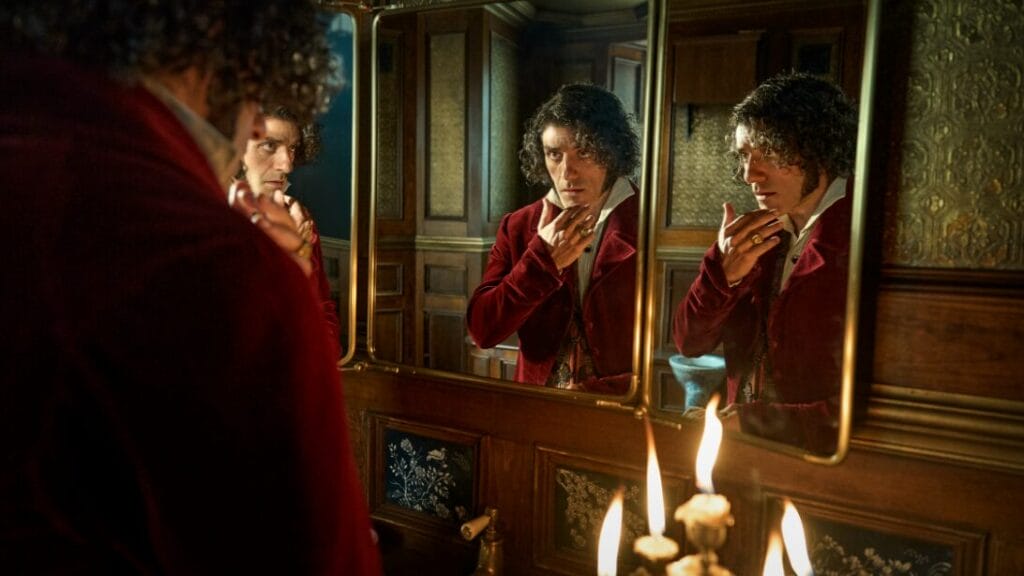
Just like its source material, Frankenstein explores themes of life, death, and creation. Victor’s obsession is driven by the passing of his beloved mother, Claire Frankenstein (Lauren Collins). Having died when giving birth to his younger brother William (Felix Kammerer), the sudden loss of his mother is the personal tragedy that sparks Victor’s descent into madness as he strives to conquer death. Flashes of imposing angels engulfed in flames and vibrant gore, often accompanied by Alexandre Desplat‘s enchanting score, all add to Del Toro’s haunting yet gorgeous blend of darkness and light.
One particular moment stands out as Victor chooses the perfect body parts on a battlefield of corpses before methodically dismembering them for his greatest experiment. While the grotesque visuals are undeniably unnerving, as the titular demented surgeon goes to work, Desplat’s adventurous, almost whimsical score plays in contrast.
Gothic Traditions Fuel Guillermo del Toro’s Vision
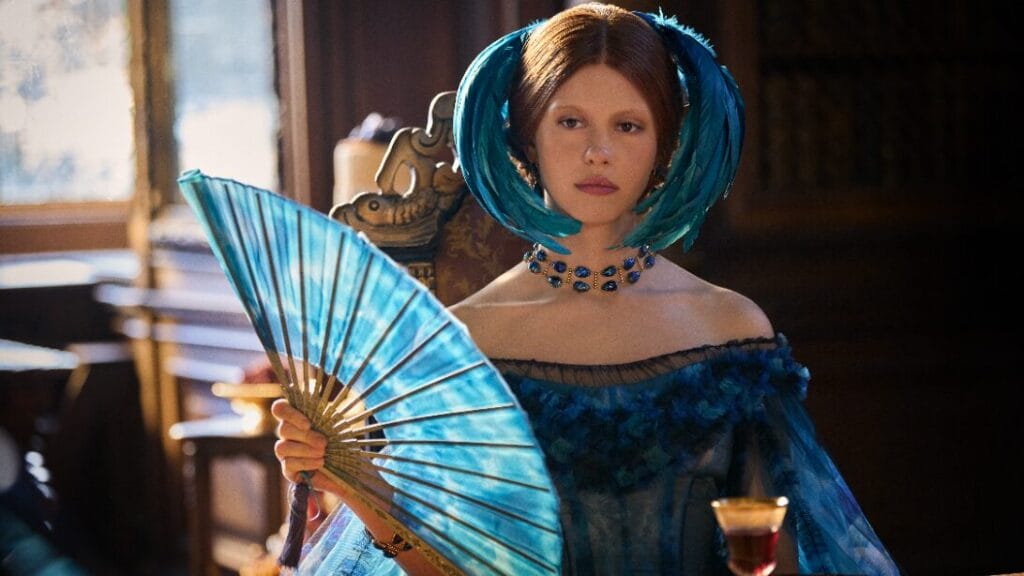
Cinematographer Dan Lausten, continuing his marvelous streak of collaborations with Del Toro after Crimson Peak (2015), The Shape of Water (2017), and Nightmare Alley (2021), strategically utilizes light and shadows to create utterly mesmerizing images. The most unforgettable of these scenes is when the creature holds Elizabeth Lavenza (Mia Goth), William’s fiancée, in her wedding dress, stained in blood. Similarly, a shot of Claire’s pale corpse, surrounded by red roses in her coffin as white snow falls, offers a chilling contrast to Victor’s perspective of purity. These painterly motifs showcase Lausten and Del Toro’s keen understanding of gothic traditions.

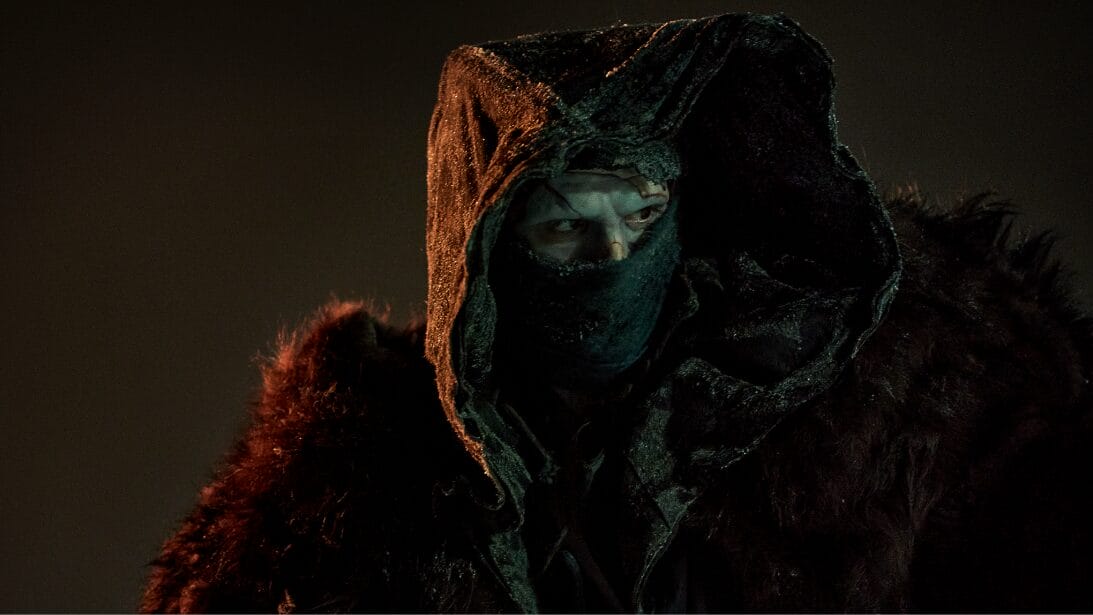
The camera is constantly moving, sweeping through each breathtaking location with fluid grace. It feels like the viewer is drifting through Del Toro’s vast world, wherein the sumptuous costumes and lavish production design play an essential role. Every set piece is steeped in historical detail, from the weathered stone walls of Victor’s laboratory to the rich textiles of the 19th-century clothing. The film’s color palette, dominated by turquoise greens and glowing oranges, brings the story to life with an otherworldly quality. This is paired with astounding prosthetics on actor Jacob Elordi (Saltburn, Priscilla). Frankenstein’s Monster looks consistently incredible from scene to scene; no surprise given Del Toro’s long history in makeup effects.
Jacob Elordi Impresses as He Embodies Frankenstein’s Monster
Victor Frankenstein’s tower, a crumbling structure filled with dark secrets, hints at the pending doom of his monstrous experiment. Its architecture and surrounding landscape are reminiscent of the aforementioned Crimson Peak as well as Pan’s Labyrinth (2006). On that note, Frankenstein touches on obedience and defiance, which are recurring narrative themes in Del Toro’s movies. Victor pushes science to its very limits, defying what was once thought to be possible. Yes, his tragic creation is a testament to his genius, but also to his sheer hubris.
The Creature is held prisoner in chains by Victor due to fears of the outside world, both those that would harm his scientific achievement and reputation. Lamentably, Victor sees his experiment as an “it” rather than a person. But after much dehumanization, the Monster defies his master and seeks to destroy him, breaking free of his iron shackles as he takes control of his destiny. Oscar Isaac (Moon Knight, Inside Llewyn Davis) portrays Victor with an erratic touch, emphasizing his dual brilliance and arrogance as he refuses to see his creation as anything more than a freak of nature.
Isaac leads the film, though it’s Jacob Elordi’s performance that steals the show, even in prosthetics. The Euphoria star is initially unrecognizable as the frightening Monster who furiously hunts his creator. However, Elordi’s face becomes easier to see as the newborn Creature becomes more human. He acts out scenes of violence with fiery anger, while pouring his heart out in the quieter, tender moments.
The Creature Proves His Humanity Through Unlikely Bonds
Unsurprisingly, Guillermo del Toro’s Frankenstein is quite the tear-jerker. One of the most poignant periods in the movie begins as the Monster experiences peace for the first time in his juvenile existence, living harmoniously behind the walls of a family home. He is soon welcomed in by an old, wise blind man (David Bradley) who teaches him about life, literature, and the world beyond. Frankenstein’s Creature, now learning about Adam and Eve and reading poetry like Ozymandias by Percy Bysshe Shelley, becomes enlightened.
Sadly, this peace is fleeting as the Monster soon learns the sad truth about his creation. With this, he becomes enraged with uncontrollable fury for his creator’s choice to give him life. By creating him, Victor has unknowingly sentenced him to immortality, denying him the core human component of death, which pushes the Monster to violence. David Bradley (Guillermo del Toro’s Pinocchio, The Strain) is a nice surprise here as his character’s connection to the Monster proves that man can live alongside such a beast.
Likewise, Mia Goth (MaXXXine, Infinity Pool) has a small but impactful role as Elizabeth, whom Victor is enamored with despite soon being wed to his brother. As with the blind man, Elizabeth instantly forms a connection to the Monster, empathizing with him to a degree that no one else can, given their unique circumstances.
Guillermo del Toro’s Frankenstein Ends on a Bittersweet Note
The film’s ending, though bittersweet, carries a message of hope. Del Toro’s script has its fair share of deviations from the original novel, but ultimately captures the spirit and essence of Mary Shelley’s Frankenstein, viewing it as more wholehearted and compassionate than previous movie adaptations. There is a sense of closure, yet the journey ahead is uncertain. This resolution will feel somewhat unearned for some, since there is only a brief pursuit between Victor and his Monster. Regardless of the plot not focusing on that aspect as much, Del Toro still makes the viewer deeply care for his message.
The Monster’s devastating journey, just like the myth of Prometheus, is one of suffering and knowledge, an endless search for acceptance and love. In the end, the Monster believes that, like the sun, life will rise again, and perhaps he can find a place in this new world. Filmmaker Guillermo del Toro has done it again; he’s made moviegoers reflect on the imperfections and malformations of life in his transfixing, awe-inspiring ode to Mary Shelley’s classic tale.
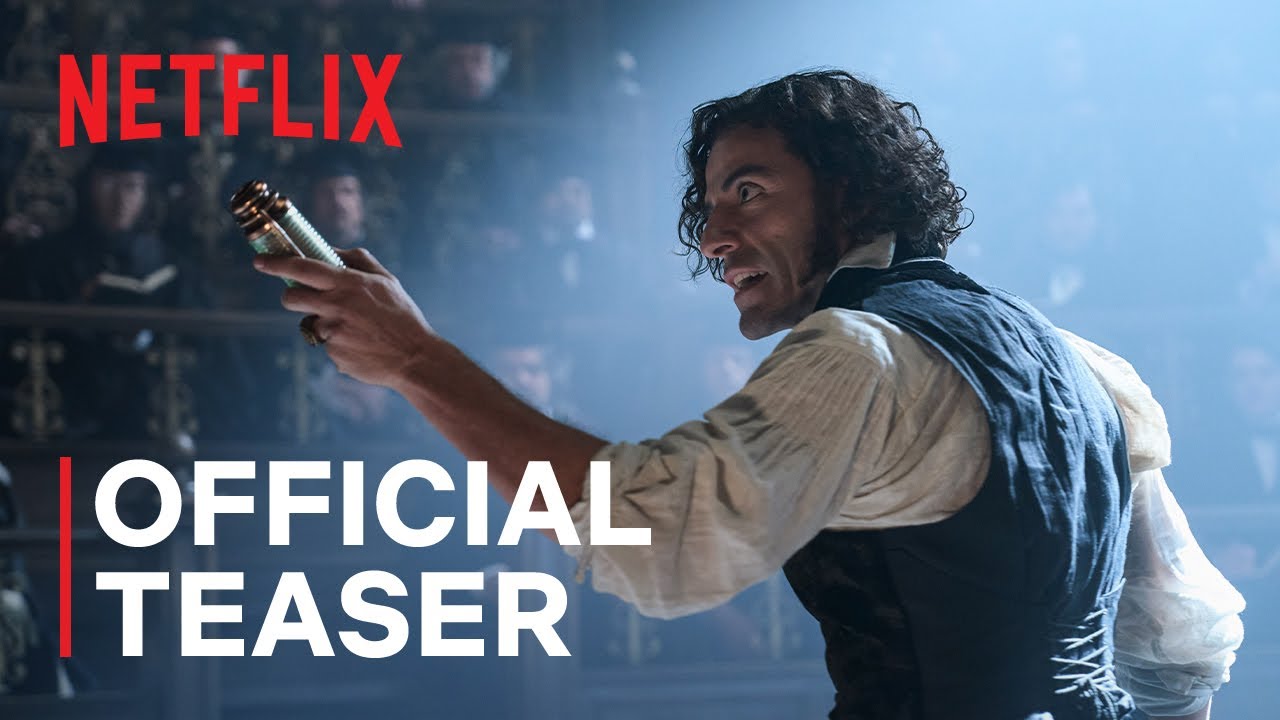
Frankenstein premiered at the 2025 Venice Film Festival! The movie will be released in select theaters on October 17 and will then be available to stream on Netflix on November 7.
Release Date: October 17, 2025.
Directed by Guillermo del Toro.
Screenplay by Guillermo del Toro.
Based on Frankenstein; or, The Modern Prometheus by Mary Shelley.
Produced by Guillermo del Toro, J. Miles Dale, & Scott Stuber.
Main Cast: Oscar Isaac, Jacob Elordi, Mia Goth, Christoph Waltz, Felix Kammerer, Lauren Collins, Lars Mikkelsen, David Bradley, Christian Convery, Sofia Galasso, Charles Dance, Ralph Ineson, & Burn Gorman.
Cinematographer: Dan Laustsen.
Composer: Alexandre Desplat.
Production Companies: Double Dare You, Demilo Films, & Bluegrass 7.
Distributor: Netflix.
Runtime: 149 minutes.
Rated R.