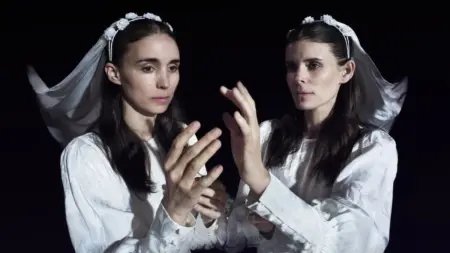


There’s something that feels inherently dangerous about resurrecting Faces of Death. The original 1978 film, directed by John Alan Schwartz, shocked audiences to their core. It would linger in the cultural consciousness as a kind of forbidden object, one of the earliest pieces of media you weren’t supposed to see but couldn’t stop thinking about. Faces of Death (1978) thrived on ambiguity, on that lingering question of whether what you were watching was actually horrifically real or something perversely staged. Nearly fifty years later, that question isn’t just more relevant than ever; it’s downright unavoidable.
With their fresh reimagining, writer-director Daniel Goldhaber and producer/co-writer Isa Mazzei (both known for 2018’s Cam and 2022’s How to Blow Up a Pipeline) don’t simply update Faces of Death for the current, dystopian digital age. They interrogate what “shock” even means in a world where violent imagery is no longer hidden away in the back room of a video store, but algorithmically delivered to the palms of our hands 24/7. The result is a new take that’s less interested in replicating the original film’s taboo notoriety and more focused on dissecting the terrifying ecosystem that allows that content to thrive today.
The Horror of the Content Stream
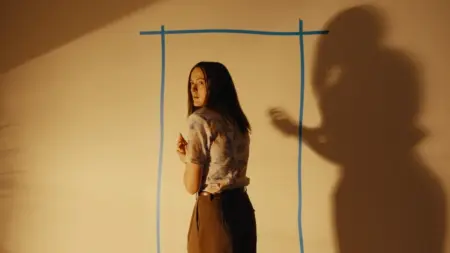
At the center of it all is Margot (Barbie Ferreira), a content moderator for a massive, TikTok and YouTube-like video platform called Kino. It’s a job that requires her to swipe through a relentless stream of strange, disturbing, and often violent uploads, determining what’s real and what’s fake. Most importantly, she helps decide what gets flagged and what is allowed to circulate across the internet. Production designer Christopher Stull presents Kino’s workplace as a sterile, almost clinical environment that suggests detachment. Co-workers like Gabby (Charli xcx) and her manager, Josh (Jermaine Fowler), treat the job with varying degrees of apathy or morbid curiosity. Yet, Margot does her best to retain her humanity and take it seriously.
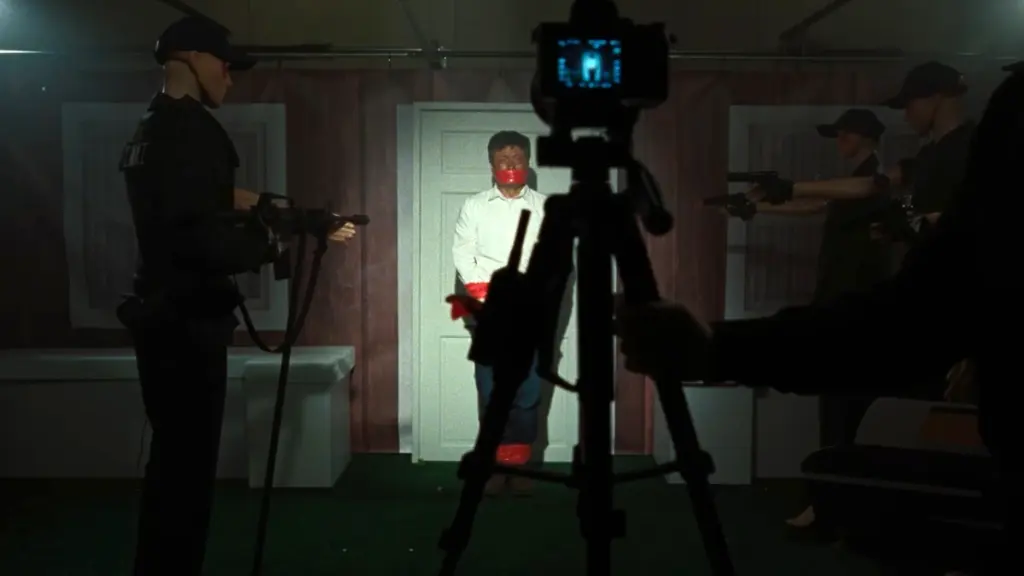
When she stumbles upon videos that appear to be recreating murders from the 1978 Faces of Death, this 2026 reimagining takes on an unexpected meta quality that blurs reality in extremely uncomfortable ways. Through Margot’s eyes, we experience that same “is it real or is it not?” tension that made the original movie infamous, now filtered through Reddit threads, social media algorithms, and the psychological toll of constant exposure. In her search for the truth, Margot goes down a rabbit hole of snuff film fandom that — similar to works such as Spree (2020), We’re All Going to World’s Fair (2021), and Red Rooms (2023) — reflects the darkest parts of modern society in painfully truthful ways.
Performances Rooted in Disturbing Reality
Barbie Ferreira (Euphoria, Mile End Kicks) is excellent here, tasked with the difficult job of reacting to horrors the audience often doesn’t fully see onscreen. Much of her performance is internal, built on subtle shifts in expression as Margot tries to process what she’s witnessing and whether she’s the only one who really cares. Her growing obsession is rooted in a deeply personal trauma, one that, once revealed, reframes her relationship to the content she moderates and gives Faces of Death (2026) a strong emotional anchor.
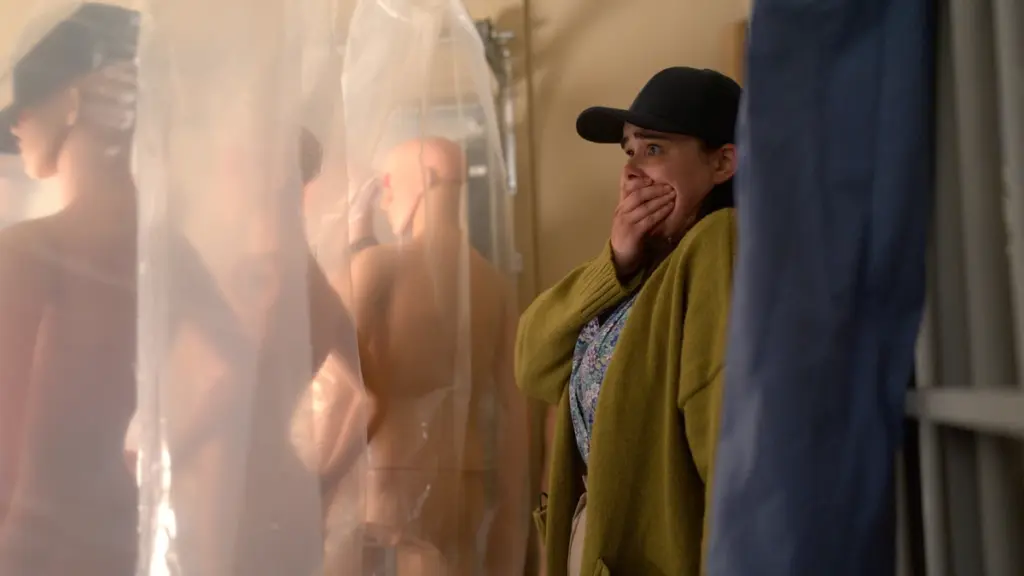
Courtesy of IFC Films
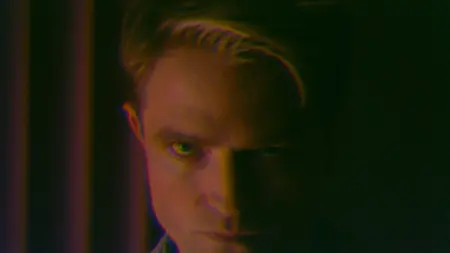
On the other end of the spectrum is Arthur (Dacre Montgomery), the architect behind the videos. Montgomery (Dead Man’s Wire, Stranger Things) plays him with chilling precision and unpredictable malice, crafting a character who’s both cinematically grand and disturbingly plausible. Arthur isn’t solely motivated by a thirst for violence; he’s also driven by attention. He meticulously stages his crimes, uploads them, and feeds off the instant feedback loop of comments, views, and engagement that we all know too well. When viewers dismiss his work as fake or boring, it genuinely offends him. In his mind, he’s giving people exactly what they want. And he’s not exactly being proven wrong.
Violence in the Attention Economy
The idea that violence is not only consumed but also actively incentivized in today’s digital culture is where Faces of Death finds its most compelling footing. Daniel Goldhaber and Isa Mazzei have long been interested in capitalist systems and the harms they create. Here, the true antagonist isn’t necessarily Arthur but the platform itself. Much like the real-world profit-driven companies that inspired it, the film’s in-universe social media platform Kino looms as an unsubtly sinister force, one that profits from engagement regardless of its moral implications — turning outrage, fear, and even death into currency.
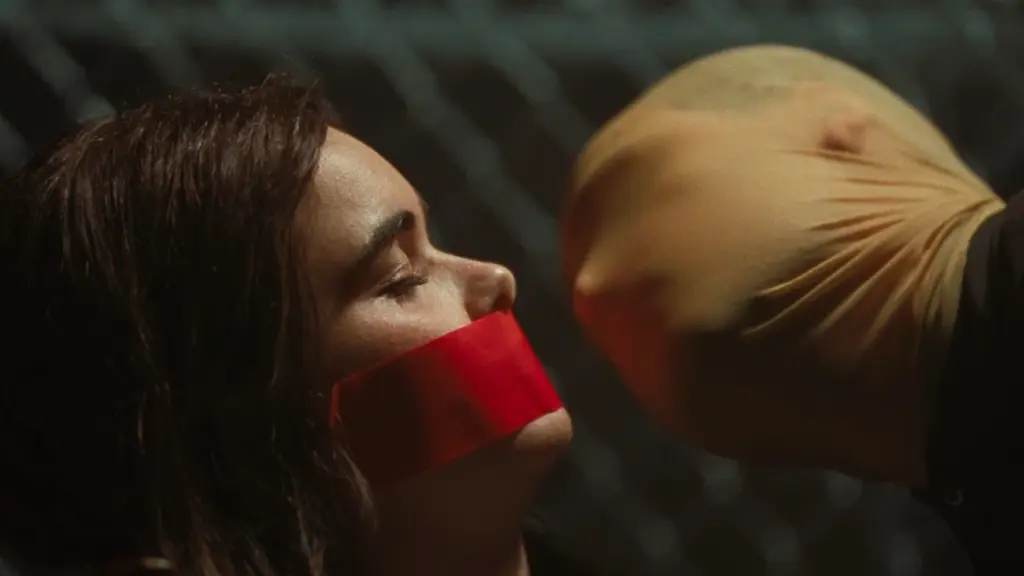
Kino is a reflection of a reality where, as the filmmakers themselves have noted, images of violence — from tragic accidents to intentional atrocities — exist in the same endless doom scroll as brainrot memes and weight loss ads. No matter how absurd or horrific this content may be, it’s all competing for our attention at the end of the day. The horror goes beyond what we see on a digital screen, leading to its quick normalization.
A Slick Thriller with Uneven Edges
Stylistically, 2026’s Faces of Death leans heavier into psychological thriller territory than outright horror. Daniel Goldhaber incorporates plenty of screen-based storytelling, including one imaginative yet chilling moment of split-screen technique, without ever coming across as gimmicky. Cinematographer Isaac Bauman (They Will Kill You) employs plenty of style behind the camera without ever being flashy, and the same goes for composer Gavin Brivik’s (The Pitt) pulsating, synth-heavy score. The two add tremendous texture to the film’s unsettling tone and atmosphere.
Alongside the digital-age terror are traditional, slasher-esque thrills, particularly as Arthur’s actions move into immediate physical danger. A late-film sequence built around a long, unbroken take is a standout. Plus, the finale leans fully into visceral horror with a blood-soaked intensity that feels earned rather than gratuitous.
That said, Faces of Death (2026) isn’t without its flaws. The pacing loses some steam, specifically as the story transitions into its final act, and some narrative threads don’t quite land with the same impact as others. Results will likely vary depending on whether the film truly frightens you on a purely visceral level as well. While the tension is strong, horror veterans may find themselves more intellectually engaged than physically shaken.
You Simply Can’t Look Away
Above all else, Faces of Death lingers because of what it asks of its audience. In an era where real-world violence is just as accessible as fiction — where images of suffering circulate endlessly, often stripped of context or given a false new narrative entirely — the movie forces you to confront your own relationship to what you’re watching. As one character bluntly puts it: we consume this kind of content as entertainment, often forgetting that these are real people with real lives.
Nearly five decades after the original Faces of Death blurred the line between morbid reality and illusion, this bold reinterpretation makes that question feel urgent again. Not by asking whether what we’re seeing is real, but by asking why we’re watching it in the first place… and what it says about us that we can’t seem to look away.
★ ★ ★ ★ ☆
Faces of Death hits theaters on April 10!
Release Date: April 10, 2026.
Directed by Daniel Goldhaber.
Screenplay by Isa Mazzei & Daniel Goldhaber.
Based on Faces of Death (1978) by Gorgon Video.
Produced by Don Murphy, Susan Montford, John Burrud, Greg Gilreath, & Adam Hendricks.
Executive Producers: Isa Mazzei & Rick Benattar.
Main Cast: Barbie Ferreira, Dacre Montgomery, Josie Totah, Aaron Holliday, Jermaine Fowler, Nathaniel Woolsey, & Charli xcx.
Cinematographer: Isaac Bauman.
Composer: Gavin Brivik.
Editor: Taylor Levy.
Production Companies: Legendary Pictures & Angry Films.
Distributor: Independent Film Company (IFC).
Runtime: 98 minutes.
Rated R.