

Countless kids grew up with Avatar: The Last Airbender. It’s an omnipresent marker of the Millennial/Gen-Z experience- a show that, generally speaking, one is either expected to hold in high regard or revisit to realize really does hit that hard. It might not be perfect television, but it gets close. With the creation of Avatar Studios, a new division of Nickelodeon entirely focused on expanding and developing the universe first started in Avatar: The Last Airbender, rumors and announcements immediately started to fly about the new venture.
It was difficult to make sense of any production schedule, especially with Netflix’s own take on the franchise happening concurrently, and while future projects are still very much up in the air, the first swing by the studio has landed in the form of Avatar Aang: The Last Airbender, a sequel film to The Last Airbender that seems to have an on-again-off-again relationship with its own theatrical release.
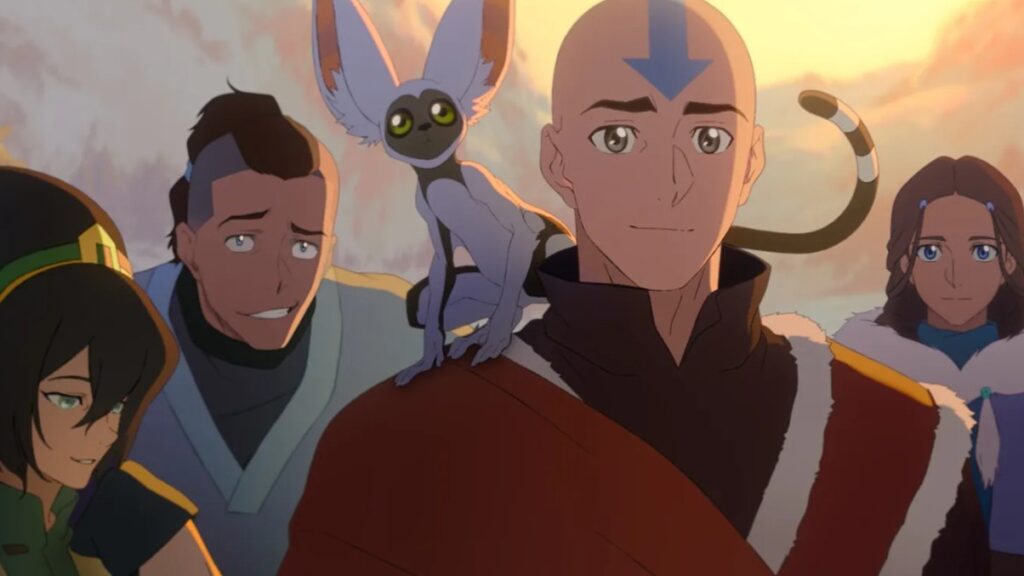
Avatar Aang: The Last Airbender, a renaming of the equally imaginative Avatar: The Legend of Aang, is a sequel film to the iconic animated series. We follow Team Avatar, now adults, as they set out on a new adventure. Anyone who grew up with Avatar: The Last Airbender would be overjoyed at the prospect of reuniting with these beloved characters, now having matured and developed from their childhood trials. That’s not exactly what we got.
The Story of Avatar Aang
Viewers jump right back into the world of Avatar from the perspective of its titular hero. Aang, we’re told, has been spending more and more time searching for artifacts once belonging to the Air Nomads, his people and the victims of a nearly absolute extinction. This fixation leads him to Tagah, who seems to be an ancient Airbender frozen in stasis for untold ages. Avatar Aang explores some interesting angles through Tagah, a man out of time not unlike Aang, but with an older edge that seems to mirror how far the Avatar has come since the childhood depicted in The Last Airbender.
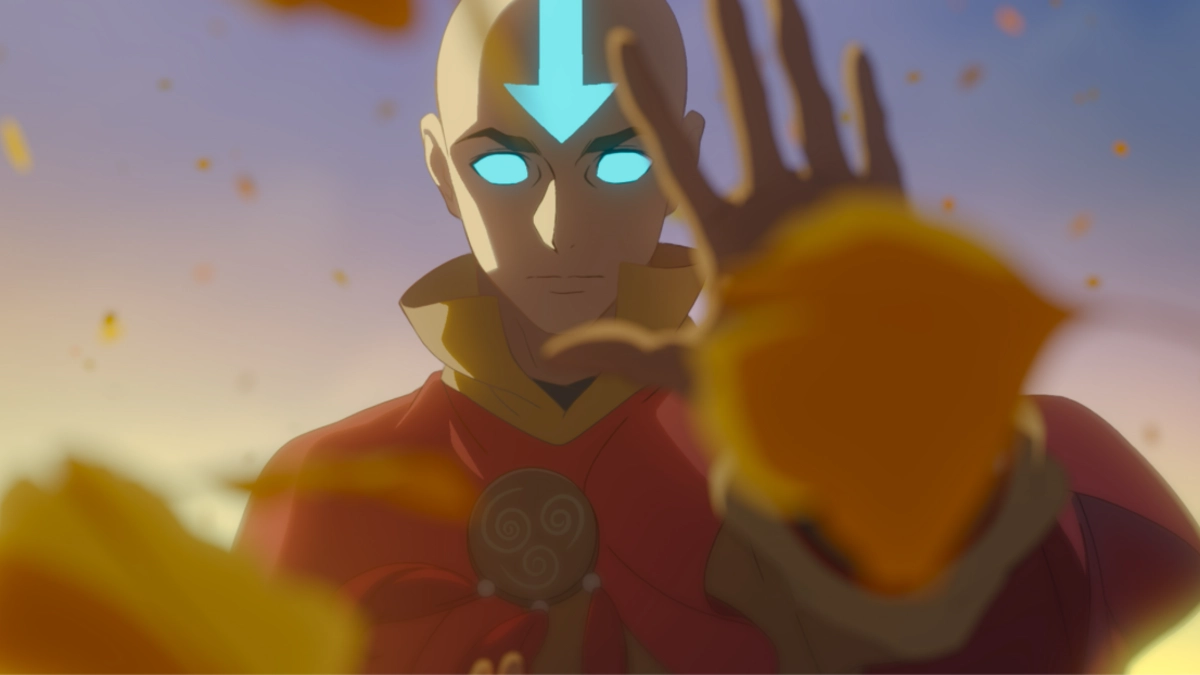
There’s also spiritual development present for Aang with the appearance of another Airbender: Aang and Tagah are able to sync their Airbending, an element of Aang’s abilities that he was never fully able to explore as the last of his kind. This new facet of Airbending, while contributing to his combat effectiveness, more importantly exposes an adult Aang to cooperation with a fellow Air Nomad. This is a rush that, among other things, causes Aang to overlook Tagah’s less-than-ideal vibes. Said vibes are explored further as the story progresses, but Tagah’s endpoint involves the loss of any and all reasonable motivation. Like many of the other early strengths of Avatar Aang, they’re sacrificed on the altar of lore development.
The clear early direction of Avatar Aang is toward adventure. The film’s first-act set-up sees Aang exploring the ancestral homes of the Air Nomads, finding artifacts and battling highly-trained thieves as he tries to uncover an ancient secret. It’s electric, grounded but with a sense of discovery, a tone that feels right out of the original show. The film is further elevated by a boosted animation budget, enabling set pieces that feel downright cinematic.
How Avatar Aang Engages with Avatar: The Last Airbender‘s Legacy
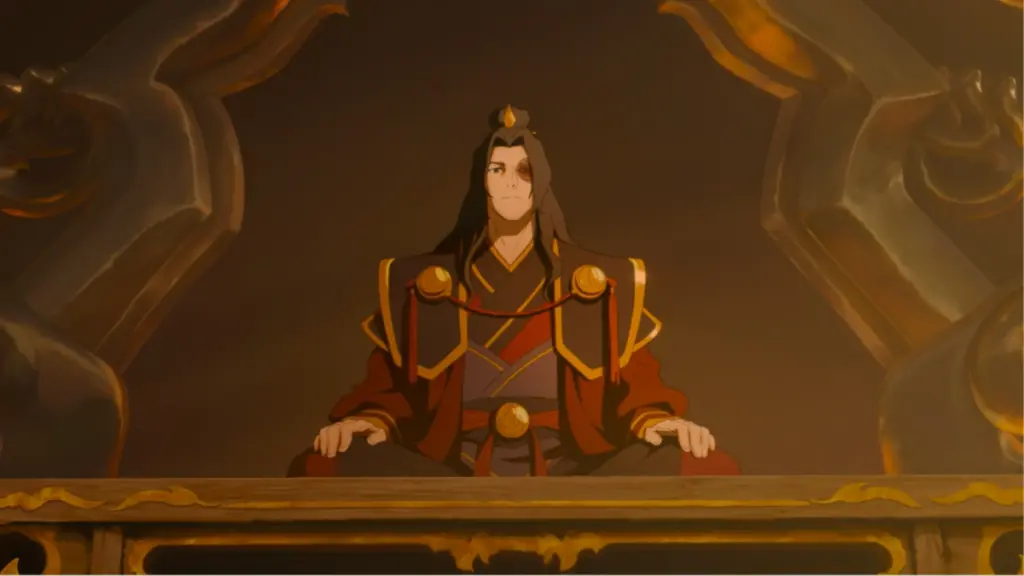
Despite that, it still feels like a natural development of what came before; it’s hard not to associate the exploration of ancient temples in search of spiritual truths with The Firebending Masters, or the bender-vs-non-bender combat with The Blue Spirit. But it may be the aforementioned budget that ultimately sinks Avatar Aang. The need to justify the scale leads the movie away from its heart, or any sense of humanity, and instead prioritizes all-out spectacle. Investment slips away as more and more of the mystery gets revealed and the film’s true ambitions become clear.
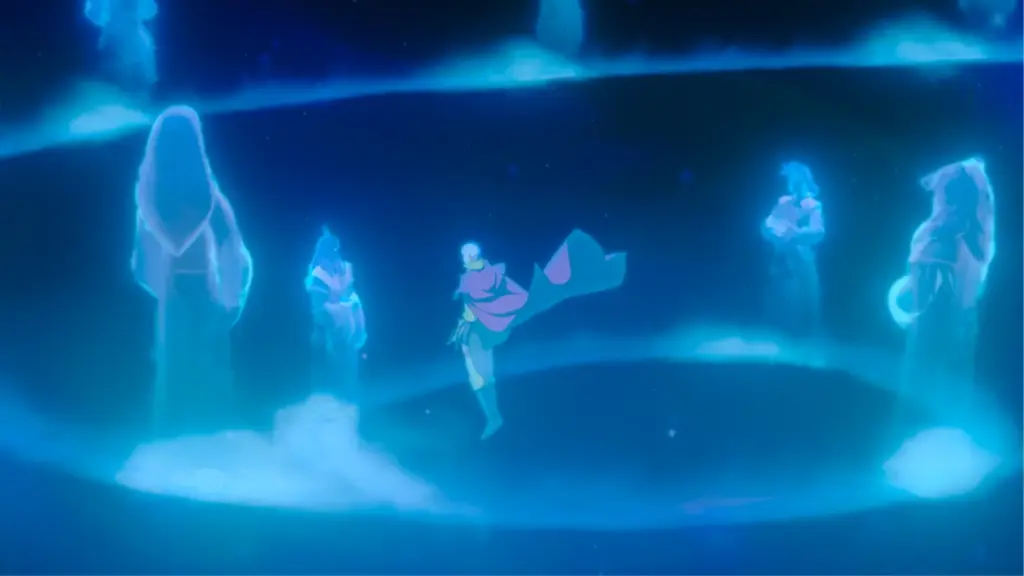
Some of Avatar Aang’s best moments are in its depictions of the wonder and beauty attributed with Airbending, which it dives right into as the film opens on Aang’s childhood among the Air Nomads. It emphasizes the quiet, meditative culture among the Nomads, and the way that Aang carries himself in the modern day works to further the idea with excellent silent cues from the animation. It’s strange, then, to see what Airbending becomes as the narrative progresses. What starts as a flowy, peaceful style of Bending becomes functionally interchangeable with bullets. And Airbending isn’t the only ability that gets this treatment.
Missing in Avatar Aang is the understanding of what made the original series excel. The strength of Avatar: The Last Airbender wasn’t in its airtight worldbuilding, but rather the way that its characters interacted with it. Also essential in The Last Airbender were the sacrifices and development necessary to pursue new revelations, both on practical and personal levels.
Using the elements as an example: Firebending comes with Aang’s impulsiveness harming those close to him (as well as Zuko discovering how to fuel his passion from a place other than anger), Earthbending coincides with Aang developing a stronger, more mature personality, and Toph developing Metalbending is the literalization of her refusal to be bound by obstacles. There’s a physicality to all of it, too, associating each ability with a different approach towards engaging with the material world; Toph has to dig into the metal to bend it to her will, earth is struck, fire is unleashed, air is directed, and water is woven.
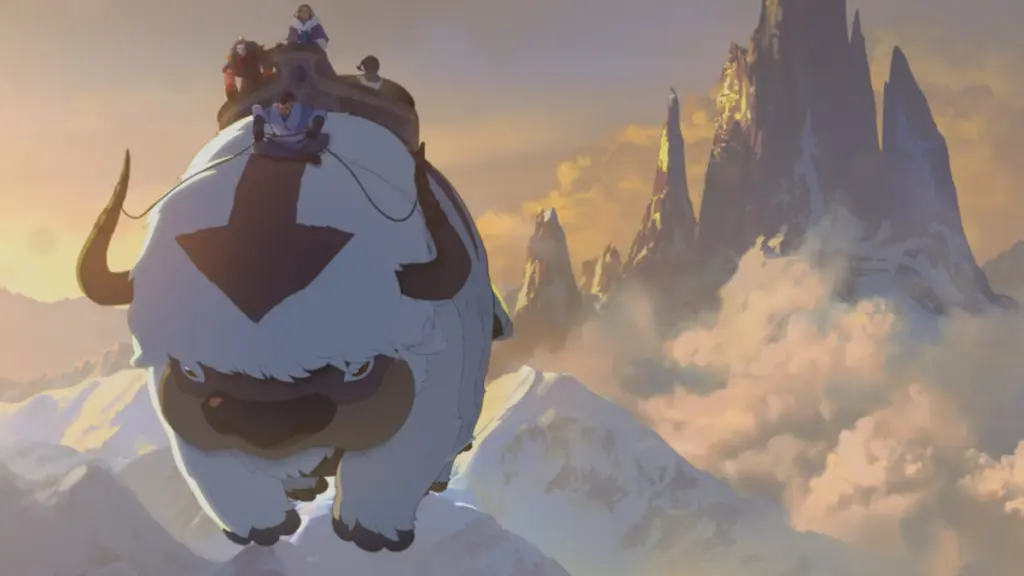
Avatar Aang sees these abilities- and any further development of them- as color-coded power-blasts, used exclusively as tools for shows of strength. Toph waves her hand, and a sheet of metal turns into watery silver blobs to be thrown at undeveloped villains. Eventually, it goes beyond even that, with the new easily-acquired abilities introduced throughout the story transforming the battlefield (and the players) into meaningless, glowing, floating colors that end in one side winning and the other losing, more befitting something like The God of High School (a surely topical reference) than it is a The Last Airbender sequel.
As a result, any gesture towards more interesting themes, be it Aang’s relationship with his lost people or the role of non-benders in the world of Avatar, gets lost in the noise, not receiving the screen time or priority afforded to the abilities, battles, and worldbuilding.
As a film, Avatar Aang doesn’t ever stand on its own two legs; it runs entirely off the goodwill of its predecessors, but without much interest in what makes them tick. Like a lot of other nostalgia-fueled releases, it seems to be built exclusively on cultural markers, invoking things that viewers would hold valuable without seeking to develop or examine them further. Legacy sequels that follow young characters as they grow older are hardly a new phenomenon. They appeal to an audience that is likely looking back on their childhood experiences with the original work fondly and are generally easy wins for studios.
But it’s difficult to imagine a new viewer- especially one belonging to the target age for Avatar: the Last Airbender– being made a believer by this movie. And with its surprisingly blunt writing and strange bit-characters, it’s difficult to say that Avatar Aang is all that more mature than The Last Airbender. Team Avatar and the world that surrounds them don’t feel older; they’ve just been around longer.
As Avatar Aang progresses in its narrative, it also progresses away from its own themes. And if it starts with the very exciting prospect of an Indiana Jonesian adventure starring Aang learning more about his people, it very quickly loses any sense of identity in place of explosive displays. It’s undeniable that the movie looks gorgeous, but without its story aligned, it also ends up feeling weightless.
★ ★ ☆ ☆ ☆
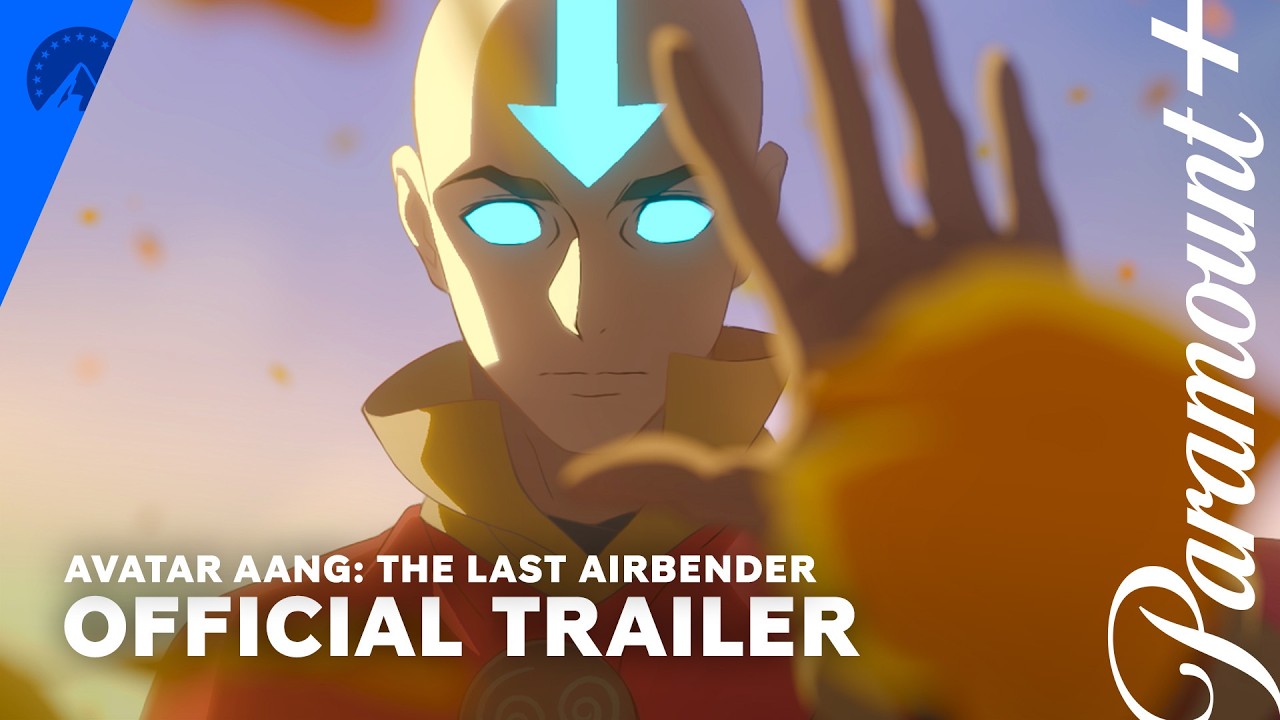
‘Avatar Aang: The Last Airbender’ hits Paramount+ on July 25!
Release Date: July 25, 2026.