

Animation veteran Brad Bird reminds us why he’s one of the modern greats with his clever and stylish sci-fi noir, Ray Gunn (2026). It’s not like many people ever lost faith in him, but his last original animated film, Ratatouille (2007), came out almost twenty years ago. The fan reception to his most recent movie, Incredibles 2 (2018), has also soured a bit over the years. So, a boldly original story like Ray Gunn could not have finally materialized at a better time for Bird, especially as the animation industry continues to take risks with more “adult” projects in the mainstream. In fact, that’s mainly why this story sat in Bird’s back pocket for over 30 years.
Conceived well before Bird made his directorial debut, The Iron Giant (1999), Ray Gunn was almost made at Warner Bros. Animation in the 1990s. Drafts of the script, written by Bird and Matthew Robbins, best known for co-writing Crimson Peak (2015) and Pinocchio (2022) with Guillermo del Toro, date back to 1996. When Warner Bros. wouldn’t make it, Bird retrieved the film’s rights but actually never pitched it to Pixar. With his rich history working under legends at Walt Disney Animation and his success with The Incredibles (2004), he wisely recognized that Ray Gunn‘s intended audience didn’t overlap with Pixar’s younger demographic. Truthfully, it’s hard to imagine most major animation studios releasing Ray Gunn in its final, completed form.
A Singular Vision of Retrofuturism
Now, with backing from Netflix, Skydance Animation, and Cinesite, writer-director Brad Bird has finally brought his unfiltered vision for Ray Gunn to life. His approach isn’t so mature that it alienates younger audiences. Instead, Bird’s inspirations from classic noirs like The Maltese Falcon (1941), The Big Sleep (1946), Out of the Past (1947), and, of course, Chinatown (1974) collide in a sophisticated way older teens and adults can better appreciate. Younger kids will still be mesmerized by the movie’s brilliantly fleshed-out world of flying cars, jetpacks, and laser blasters, though. Yes, you can call Ray Gunn’s blend of science fiction and noir “niche,” but that’s also what makes it so singular and unlike anything else in Western animation today.
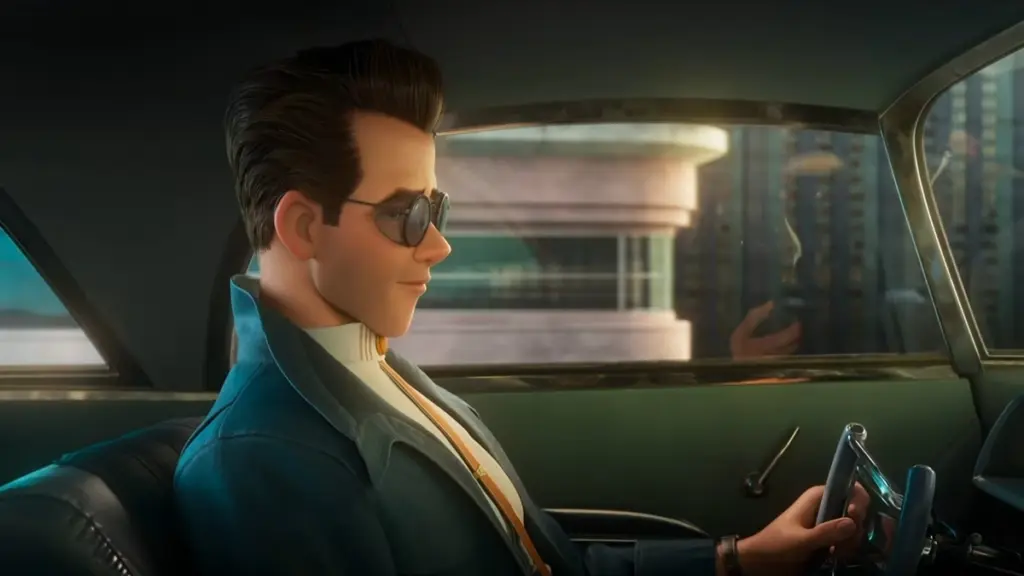
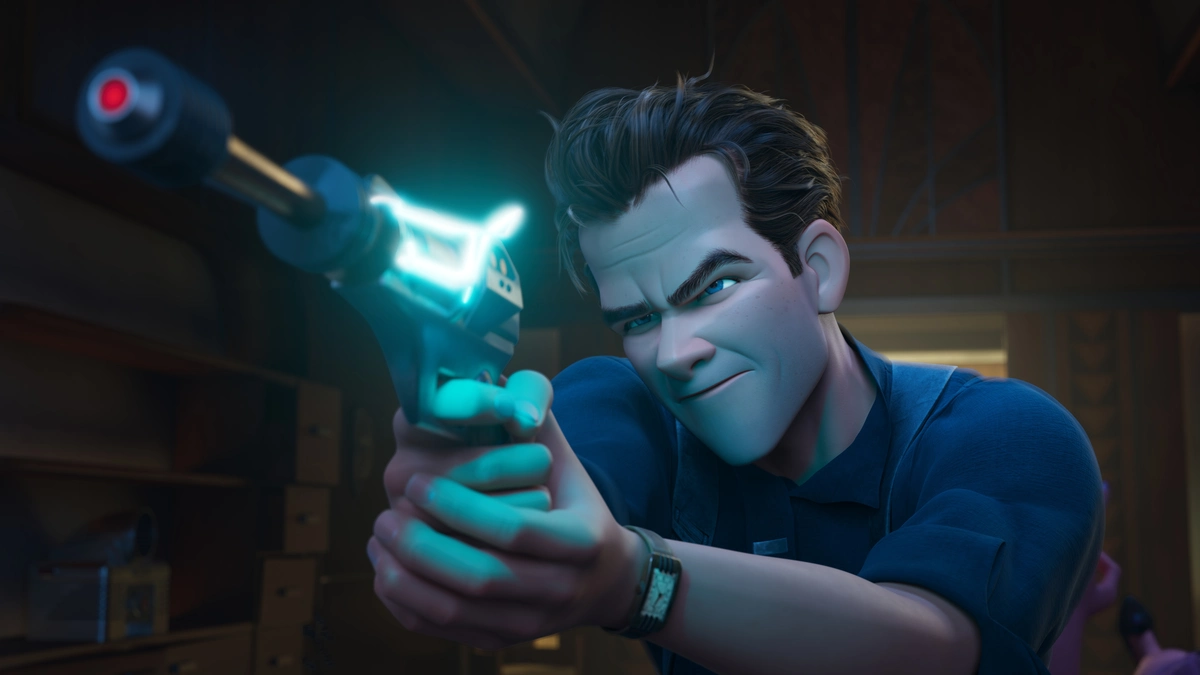
In the bustling, giant retro-futuristic city of Metropia, private eye Raymond Gunn (Sam Rockwell) and his alien partner, Eye-Ra Kadok (Tom Waits), get sucked into a dangerous conspiracy involving pop star sensation Venus Nova (Scarlett Johansson). Bird creates an alternate future as seen from 1939, where aliens of all colors and sizes have migrated to Earth and fully integrated into society. This kind of retrofuturism isn’t as dystopian as something like Ridley Scott’s Blade Runner (1982) or Terry Gilliam’s Brazil (1985), though Bird contrasts Metropia’s vibrant skyline and booming energy with a sinister undertone. This is no perfect utopia, as widespread alien xenophobia defines different social classes, and “offworlders” now have to be smuggled onto the planet illegally.
Eerie Themes Woven Together by a Creative Mystery
Ray Gunn isn’t heavy-handed with how it tackles xenophobia and alien segregation. These are just a few of the building blocks of this radiant yet corrupt vision of the future. By committing so openly to these ideas (something other major distributors would have definitely toned down), the film’s main mystery is allowed to delve into murkier, morally gray territory. In this way, Ray Gunn feels like a true noir — not an animated movie simply toying with homage. Bird’s characters get messier and more puzzled as the narrative wrestles with additional themes of surveillance and the commodification of media and art, with a dash of murder thrown in!
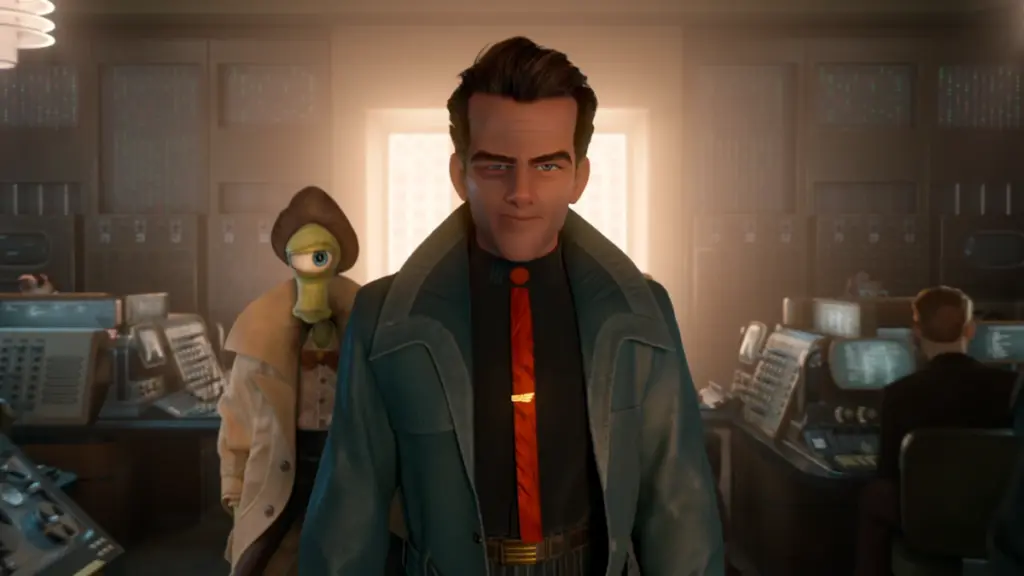
For a story developed over 3 decades ago, it’s incredible that so many of Bird’s original ideas have stood the test of time, as they hit an uncomfortably timely note today. In the end, Ray Gunn leaves us reflecting on how much autonomy we have left in an age when advancing technology, like artificial intelligence, increasingly invades our daily lives. How Bird leads viewers down this rabbit hole, laying breadcrumbs across the film’s central mystery and its complex ideas, is quite ingenious. Yet some might take issue with a couple of key twists for being so obvious. Bird leans into well-known noir tropes here. While these reveals don’t necessarily dampen the thrills, you can see them a mile away.
Subverting the Tropes of Film Noir
Speaking of tropes, Brad Bird and Sam Rockwell (Wild Horse Nine, Good Luck, Have Fun, Don’t Die) craft a highly charming protagonist by subverting the typical noir private detective. Raymond is the last of a dying breed: a good-hearted and honest man in a crooked profession. His clean moral compass and integrity have pushed him and his loyal partner, Eye-Ra, to the brink of bankruptcy, forming a hilariously endearing dynamic between them. Eye-Ra, a cyclopsian alien with tripod legs who acts as a living camera, always keeps it real as a voice of reason, even when that often requires a little deception.
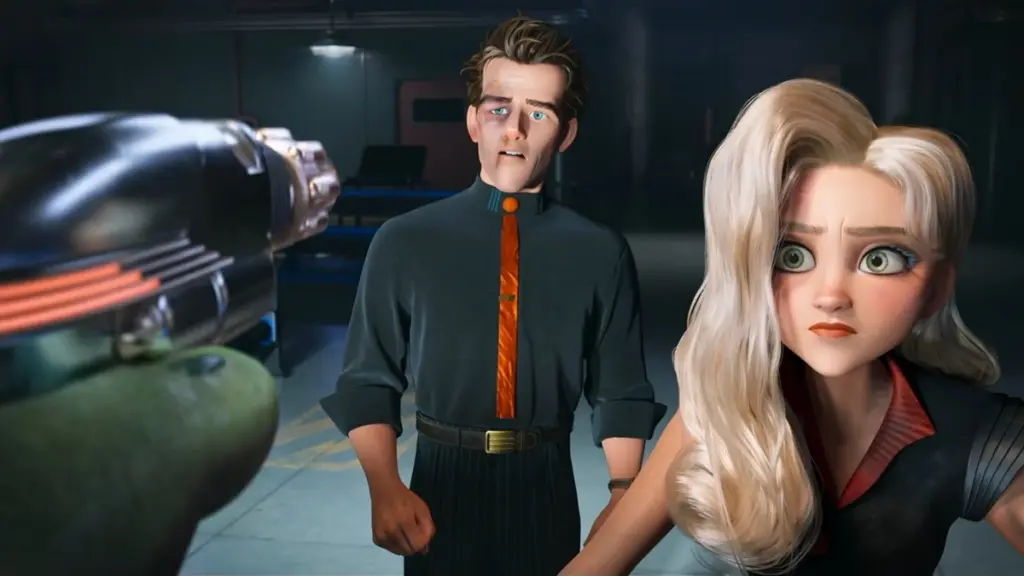
The recognizably raspy voice of singer-songwriter Tom Waits (Father Mother Sister Brother, Seven Psychopaths) perfectly matches Rockwell’s bravado. When you throw Scarlett Johansson (Jurassic World Rebirth, Black Widow) into the mix, who is having tons of fun embracing Venus Nova’s spicy femme fatale role, Ray Gunn stands tall next to Bird’s previous beloved animated hits. Johansson, in particular, shows off her singing chops with three original songs written by Grammy-winning artist Kimbra. “Too Much to Ask” is the notable standout, while the other two serve more as playful narrative tools. Nova’s music isn’t filler or background noise; it’s an extension of her character that further shapes the film’s drama and stakes.
Brad Bird’s Latest Will Only Get Better Over Time
Finally, for a 2-hour animated detective noir, Ray Gunn keeps the pace brisk. The action is propulsive, with each set piece growing more inventive and colorful as the plot introduces increasingly weird sci-fi elements. Michael Giacchino, who’s now scored 6/7 of Bird’s movies, has outdone himself with his most electrifying score since 2022’s The Batman. It echoes flavors of his past collaborations with Bird but isn’t derivative, carving out its own identity as it captures the vibes of vintage retrofuturism and film noir. It’s the kind of immersive, emotionally driven music that can make a romantic dance between Raymond and Venus in zero gravity one of the most memorable scenes of the entire movie.
In another timeline, Brad Bird’s Ray Gunn was released long ago in hand-drawn 2D animation, as its teaser poster shows. While a 2D version of Ray Gunn would have certainly been amazing, the CG version we have isn’t a downgrade. Sleek costumes, inspired action set pieces, captivating characters, and even a steamy romance at its heart make this sci-fi noir destined to age like fine wine. It’s already aged in a pretty insane way since its initial conception, with Bird’s story ultimately taking a stance against AI in art. Somehow, this iteration of Ray Gunn feels more special than if it perhaps came out decades ago. Hopefully, we won’t have to wait as long for Bird’s next passion project.
★ ★ ★ ★ ☆
‘Ray Gunn’ hits Netflix on December 18!
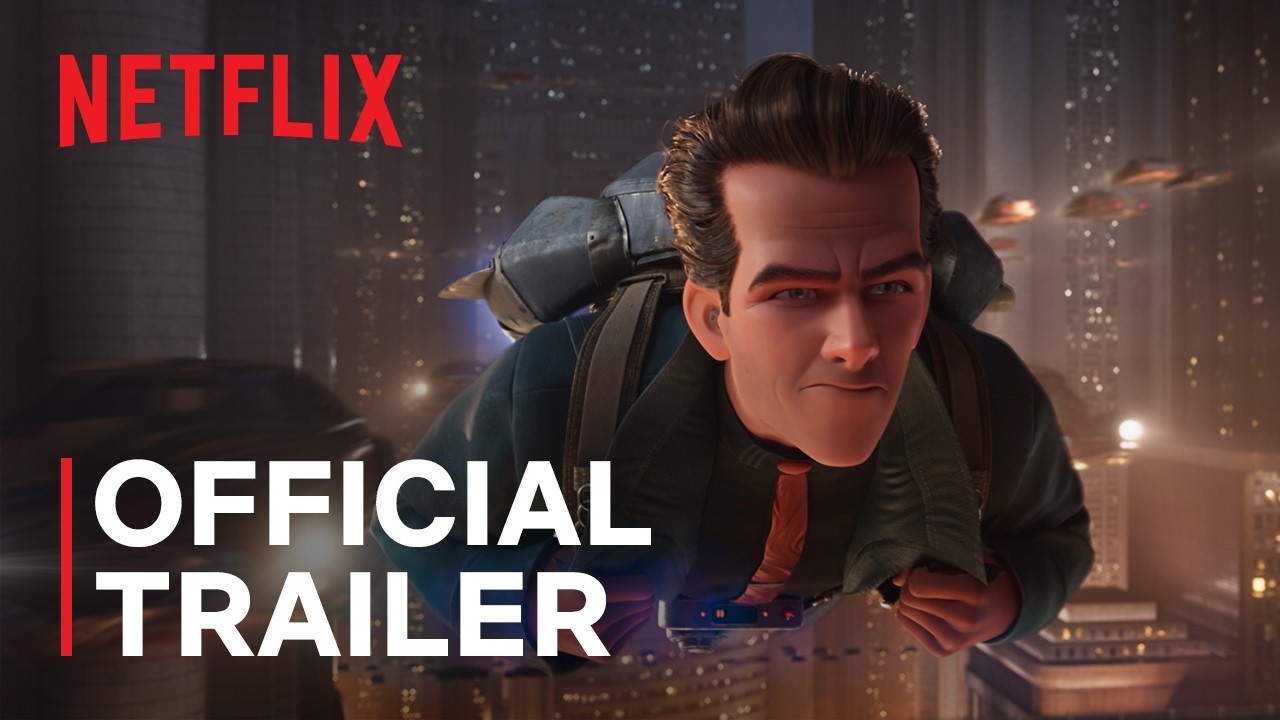
Release Date: December 18, 2026.
Directed by Brad Bird.
Screenplay by Brad Bird & Matthew Robbins.
Story by Brad Bird.
Produced by Brad Bird, John Lasseter, Lisa Beroud, David Ellison, & Dana Goldberg.
Executive Producer: Hannah Minghella.
Main Cast: Sam Rockwell, Scarlett Johansson, Tom Waits, Matt Berry, Bobby Cannavale, Alan Tudyk, Michelle Rodriguez, Michael Chernus, Kathryn Hunter, Brad Bird, Patton Oswalt, John Ratzenberger, Jamie Costa, Kether Donohue, Aasif Mandvi, Matt Jones, & Justin Peck.
Cinematographer: Erik Smitt.
Composer: Michael Giacchino.
Editors: Darren T. Holmes & Karl Armstrong.
Production Company: Skydance Animation.
Distributor: Netflix.
Runtime: 119 minutes.
Rated PG.