

On the surface, Whalefall (2026) seems like the type of movie where you know exactly what you are walking into. For the most part, that’s true. It has a high-concept yet easy-to-understand premise, where the satisfaction comes from watching a character somehow survive an extraordinarily fatal circumstance. It’s a man vs. nature story starring a fresh face in Austin Abrams, hot on the heels of Zach Cregger’s hit Resident Evil adaptation (another genre film in which Abrams plays a highly physical role as a guy having the worst day of his life). There’s an expectation going in for Whalefall, and while it delivers those thrills, it also has something a little more going on under the hood.
Writer-director Brian Duffield’s (No One Will Save You) latest big-screen outing nails all the survival thriller hallmarks, gross-out moments, and high-tension sequences. However, Whalefall is shockingly meditative at the same time. Based on the 2023 novel of the same name by Daniel Kraus, who actually co-wrote the script with Duffield, Whalefall segments the visceral, immediate terror of being swallowed whole by a sperm whale with the more grounded horror of unresolved family trauma. The blending of the two tones is at times clumsy, other times poignant, but still earnest enough in its approach to just about work.
A Father and Son Drama Merges Into a Survival Thriller
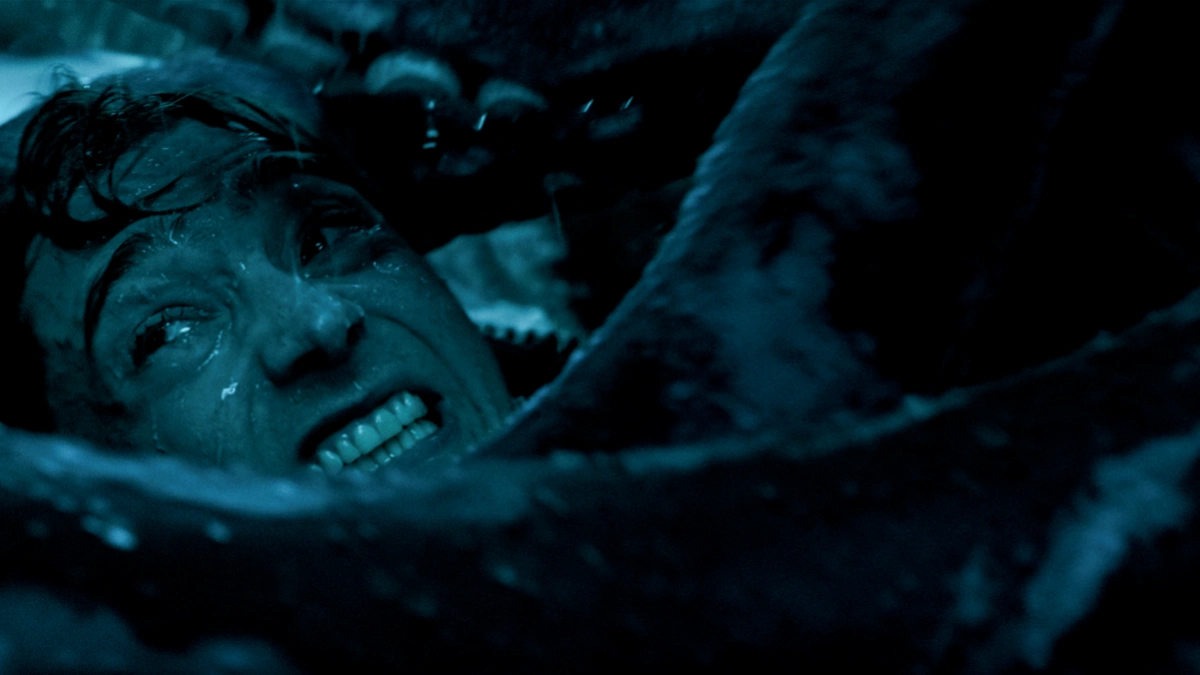
After a brief introduction establishing its characters, Whalefall wastes little time getting into the action. Set off the coast of Monterey, California, the story follows Jay Gardiner (Abrams), the son of professional scuba diver and local legend Mitt (Josh Brolin). In the aftermath of Mitt’s suicide, Jay takes it upon himself to search for his father’s remains to gain some closure for his grieving family. On his mission, though, he is swallowed alive by a sperm whale. With only one hour left in his oxygen tank, Jay must try his best to survive and escape the belly of the beast, all while confronting the memories of his flawed relationship with his father.
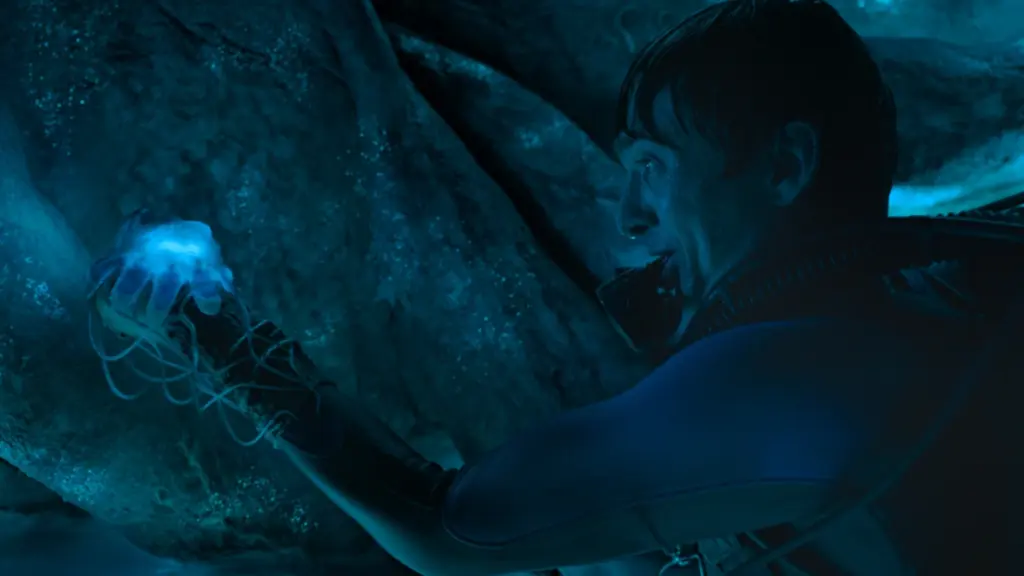
Whalefall’s technical filmmaking isn’t super flashy, but it succeeds at being immersive. The audiovisual design is constantly relaying sensory details, emotions, and stakes to the audience as we watch Abrams avoid digestion. Most of the movie does, in fact, take place inside the whale and plays with space, and the lack thereof, successfully. The craftsmanship lies in the production design, where Brian Duffield and his team built a full-scale whale stomach for Abrams to stumble through, with digital enhancements to complete the final look. The majority of the film is lit with simulated bioluminescence, giving it an eerie, otherworldly feel that complements the more spiritual parts of its narrative.
Austin Abrams Goes Through Hell and Back… Again
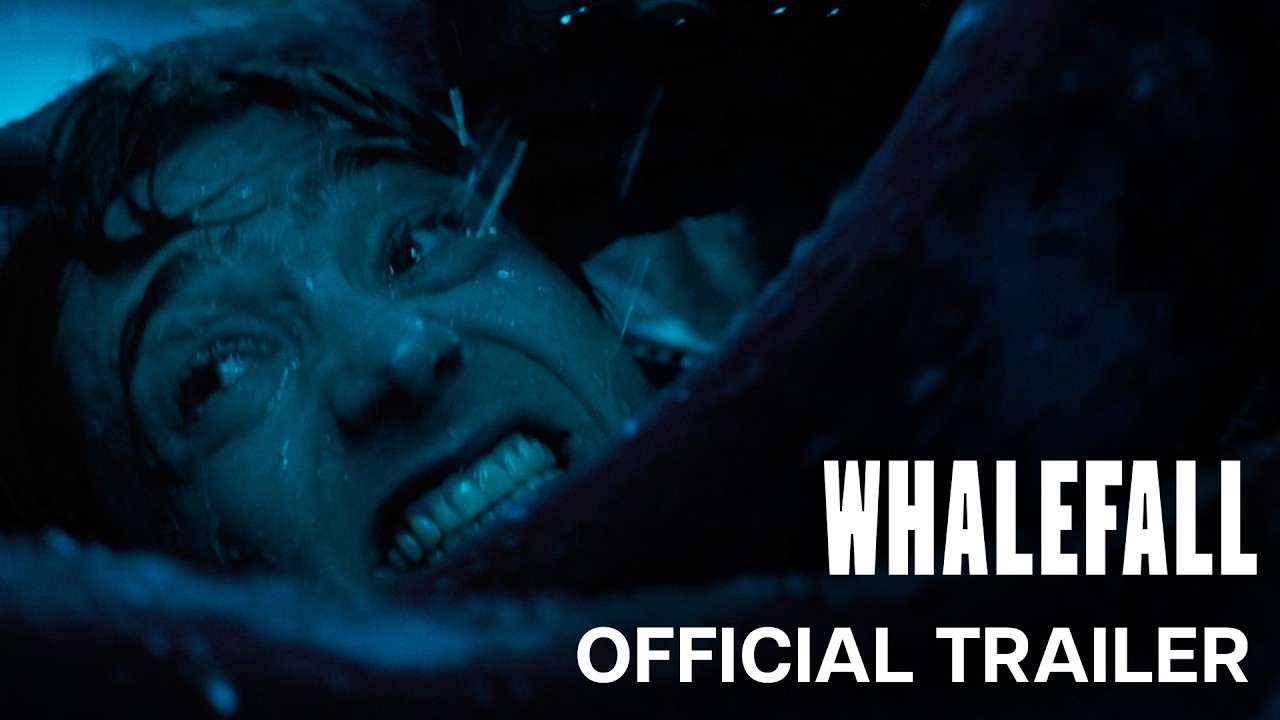
Austin Abrams, once again, gets put through the wringer. He breaks bones, burns in stomach acid, and gets attacked by a giant squid up close and personal. Whalefall is nasty and isolatingly cold. It’s a testament, however, that despite the role being as physically demanding as Resident Evil, Abrams takes Whalefall in another direction. There are some comedic moments, sure, but Abrams plays his character’s reality seriously and imbues Jay with strong pathos. It makes sense; this isn’t a dark comedy at all. Instead, Abrams and Duffield squeeze every ounce of drama and mortifying existentialism from each fleeting moment. It’s impressive to see an actor play with a specific skill and take it in a totally different direction.
Courtesy of Disney
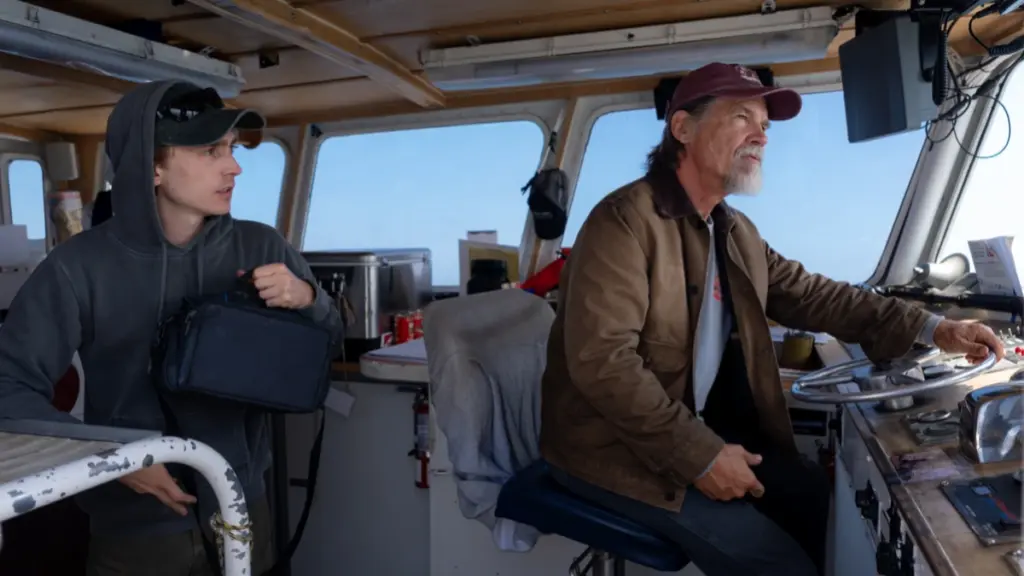
As mentioned, the film breaks up the constant horror of Jay’s situation with flashbacks that inform viewers of his tumultuous relationship with Mitt. Abrams and Josh Brolin (Weapons, The Dog Stars) spend a lot of time bouncing off each other. Brolin’s Ernest Hemingway-esque performance of masculinity is a captivating contrast to Abrams, who is more contemplative and vulnerable. Abrams, impressively, spends most of the movie alone in the present story and holds his own as a captivating screen presence, but Brolin’s antagonism softens into a precise tenderness as Jay’s perspective on Mitt evolves.
Your New Irrational Fear Has Been Unlocked
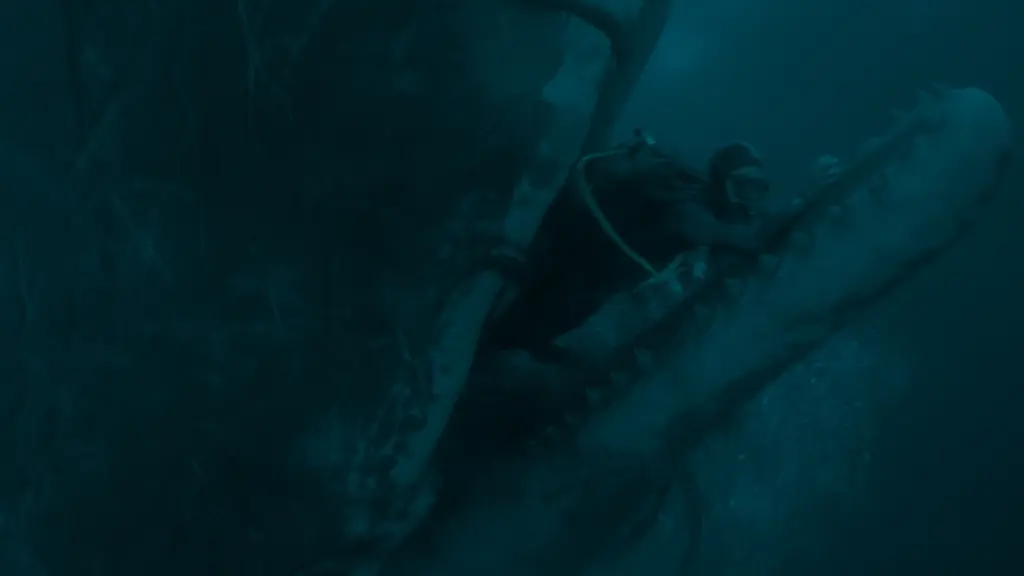
The father/son drama isn’t just background noise to give Whalefall a skeleton or a half-hearted arc; it becomes the central psychological struggle Jay faces as he embodies the role his father played as a scuba diver. His reflection on the memories of his father also reminds him of important lessons and survival skills. As the plot progresses, Jay’s introspection then starts to metaphorically represent his father. It’s a little hokey, especially if you’re tired of modern cinema’s fixation on familial trauma and healing, but darn — the film truly commits to the clashing tones, and Abrams is compelling enough as an actor to mine the melodrama appropriately.
The introspective musings on father/son forgiveness may not work for everyone, and that’s fine. It’s refreshing that, in a film as gross-out absurd as Whalefall, it doesn’t cynically point out the inherent silliness of the situation. If you want to be immersed in the abject terror of being swallowed alive, Whalefall still passes that test with flying colors. It’s an appropriately claustrophobic, guttural, and naturally disturbing movie in its own right. Your new irrational fear has been unlocked.
★ ★ ★ ½
‘Whalefall’ hits theaters on October 16!
Release Date: October 16, 2026.
Directed by Brian Duffield.
Screenplay by Brian Duffield & Daniel Kraus.
Based on Whalefall by Daniel Kraus.
Produced by Brian Grazer, Brian Duffield, Jeb Brody, Allan Mandelbaum, & Ron Howard.
Executive Producers: Richard Abate, Douglas C. Merrifield, & Will Rowbotham.
Main Cast: Austin Abrams, Josh Brolin, Elisabeth Shue, John Ortiz, Jane Levy, & Emily Rudd.
Cinematographer: Aaron Morton.
Composer: Joseph Trapanese.
Editor: Pietro Scalia.
Production Companies: Imagine Entertainment & Jurassic Party Productions.
Distributor: 20th Century Studios.
Runtime: 106 minutes.
Rated R.