

Marvel Studios’ latest miniseries, Echo, is a deeply confused TV show. The Hawkeye spin-off goes back and forth from trying to be a self-contained, family-led story to a follow-up to previous Marvel properties. From the first episode, this narrative tug-of-war is present. Echo is created by Marion Dayre (Better Call Saul), with Dayre and Amy Rardin serving as head writers and Navajo filmmaker Sydney Freeland as lead director. The limited series centers around Maya Lopez (Alaqua Cox), a young deaf Native American woman. Following in the footsteps of her slightly dodgy father, she takes up criminal work under Wilson Fisk (Vincent D’Onofrio), otherwise known as the Kingpin.
Echo‘s story jumps forward in the first episode, picking up in the aftermath of the Hawkeye series, wherein Maya Lopez and her history with Kingpin was first introduced to viewers. Maya now leaves New York City for her hometown in Oklahoma, where she must face her past and reconnect with her roots before seeking vengeance on Kingpin and his whole criminal operation. This time jump is the weakest part of the show’s first three episodes. Echo really picks itself back up, though, when introducing Maya’s family with fantastic use of sound to portray her deafness. This is where the series also starts to give intriguing hints of Native American mythology underneath the surface.
All of this groundwork is eventually put aside to shove through a montage of scenes from Hawkeye, which may feel completely alienating to audiences jumping into Echo from scratch. Even for those fans who did watch Hawkeye, sidelining vital character development to another, arguably lesser, show lessens this one’s impact. Echo is still quite good for the most part, it’s just rough around the edges like many recent MCU projects.
The previously released six-minute fight scene with Charlie Cox’s Matt Murdock/Daredevil is undoubtedly a standout, but seeing it for the first time in the premiere would have made for a superior viewing experience. The fight sequences in Echo are visceral, creative, and superbly shot. Marvel Studios was clearly looking to recreate the sensational action of Netflix’s Daredevil and while Echo falls slightly short of this lofty goal, it’s admittedly not too far off.
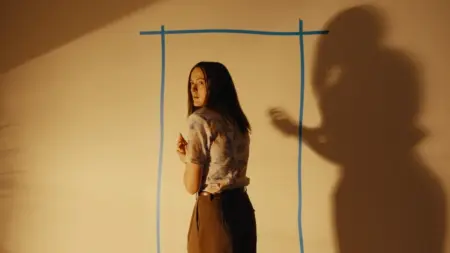
Similarly, the familial drama of Marvel’s Echo is strong and engaging. The limited series shines when showcasing Maya Lopez’s family and fellow Choctaw tribe, exploring many interpersonal and cultural relationships in the process. Maya’s dynamic with her cousin Bonnie (Devery Jacobs) is sweet and gives Echo a real beating heart. Furthermore, Maya’s tension with her estranged grandmother Chula (played by Tantoo Cardinal who recently starred in Killers of the Flower Moon) is a great source of drama.
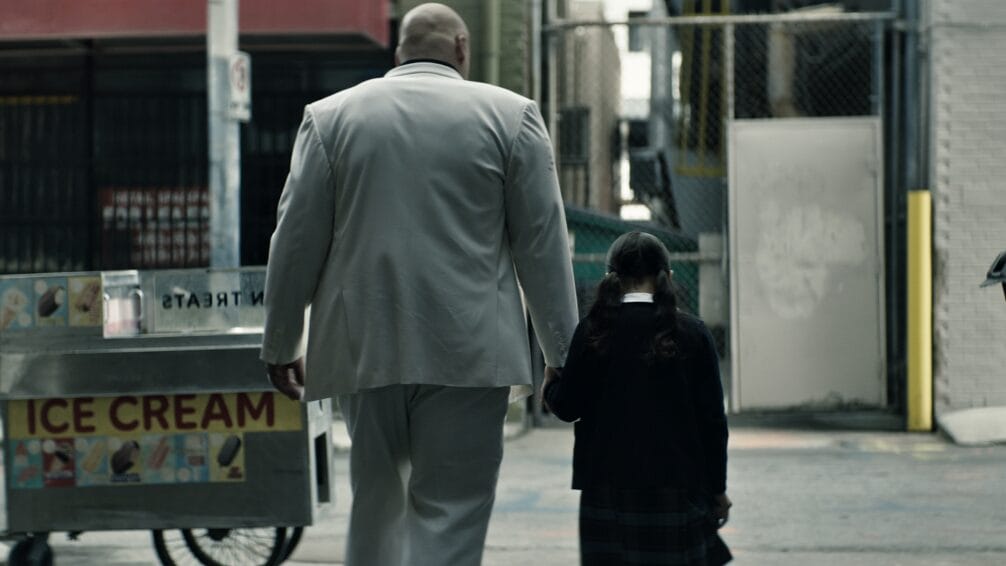
Surprisingly, however, anything with Vincent D’Onofrio’s Kingpin slows the series down and is unengaging. The final two episodes might be able to pull this back as Kingpin is used sparingly in the early episodes, but you can practically feel the intrigue being sucked out of the screen. Despite being the first release under the “Marvel Spotlight” banner, which is meant to tell stories disconnected from the larger MCU continuity, the biggest issue with Echo is that it feels like two separate stories squeezed into one. One of these is fresh and engaging while the other is just dull. Kingpin could perhaps work better as a villain here if so much of the conflict didn’t have to reel back to a mostly unrelated show.
Whenever Echo brings up its connections to the Marvel Cinematic Universe, all dramatic tension is sucked away. Maya Lopez’s story outside of this, though, is enjoyable and, after a detour in episode one, is predominantly focused on in the following two episodes. This is where Echo excels. Alaqua Cox is a star in the making and holds the attention of the screen with intensity throughout. Having a deaf, amputee, Native American character played by a deaf, amputee, Native American adds the authentic feeling of Maya being a fully formed and layered character.
The representation in the show isn’t played as a gimmick or used to try and win points for diversity. The fact that Maya is an amputee is a core plot point, her Choctaw heritage is front and center, and the fact she is deaf is played completely straight. Rather than focus on this incessantly in a project without the scope to properly explore it, Echo presents it as totally normal. Her family all speak sign language, Kingpin has a translator, and Maya’s deafness is used in an exceptional audio motif where the sound is totally cut to display her perspective.
These aspects of Echo enrich the show greatly, with the hints towards her Native American mythology being one of the threads that will have fans ready to click on the next episode. In essence, when Echo is bad, it is very bad. Hawkeye started strongly but finished as one of the weaker MCU Disney+ series and is an integral watch for this show. Kingpin simply feels like what he is – a character exported from a different story with the expectation that his core conflict and stakes will directly translate. Oftentimes, they don’t.
However, when Echo is allowed to branch off and tell its own story, it’s excellent. Visceral fight scenes, engaging family drama, and a unique perspective will all leave viewers wanting more. While it may not be the highest bar to clear, Echo is the MCU’s best street-level series on Disney+ thus far. After the last two episodes are assessed, there could be an argument made for Echo landing in a clear top three with Loki and Wandavision.
This isn’t the spiritual successor to Daredevil many were hoping for, but it wouldn’t have been out of place alongside Netflix’s Marvel shows. With the recent decreasing quality of the MCU, that standard isn’t as low as it used to seem.