

Adapting Homer’s Odyssey seems like a daunting task that writer-director Christopher Nolan could only pull off at this stage of his prolific career. People said the same about Oppenheimer three years ago; you can trace a fascinating path in his filmography leading up to that specific project. The Odyssey (2026) is the next step in this trajectory, with Nolan wrapping another deeply remorseful protagonist in two of his longtime thematic obsessions: memory and time. What truly elevates The Odyssey aside from its monumental visuals (being the first-ever feature shot entirely with 70mm IMAX film cameras) is how it tastefully recontextualizes Homer’s ancient text. Exhilarating as it is meditative, Nolan’s take on the greatest of all stories feels surprisingly urgent.
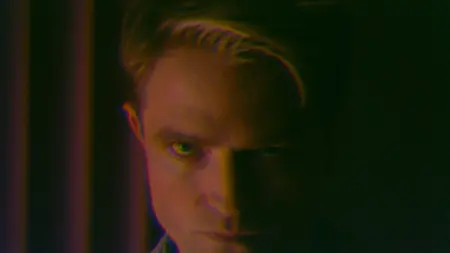
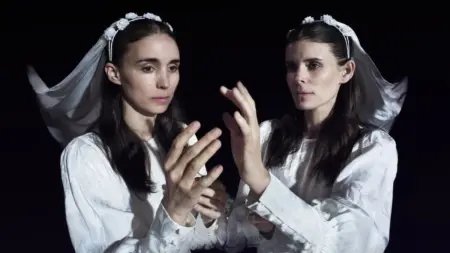
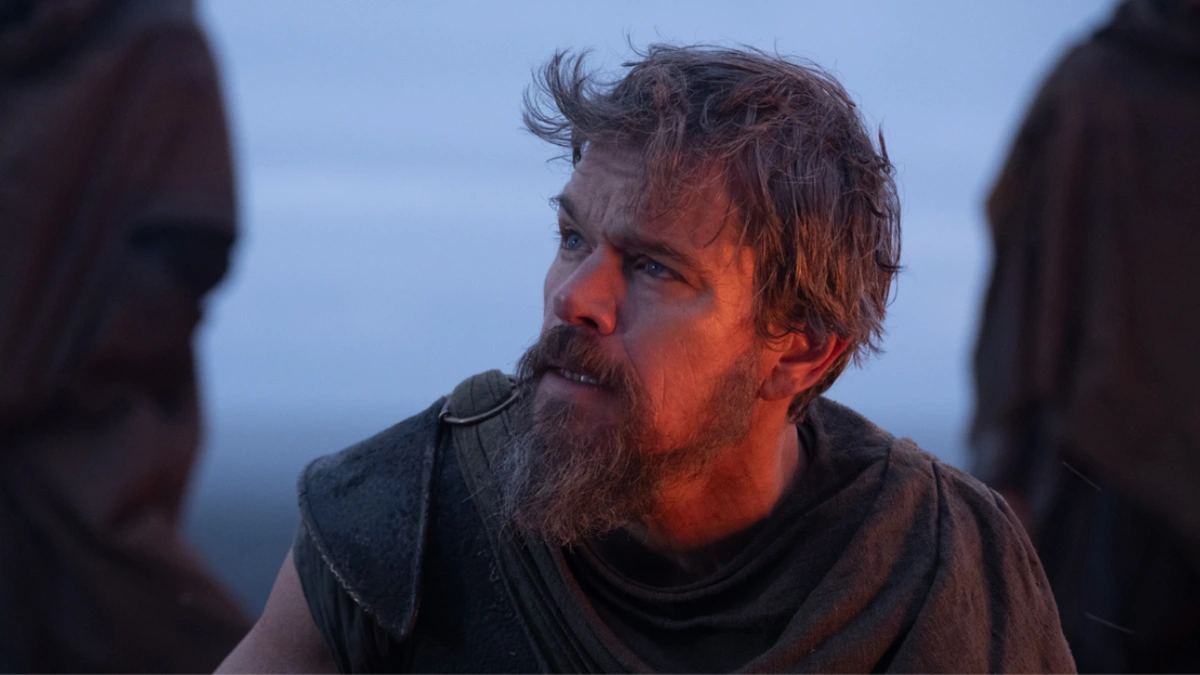
The Greek king of Ithaca, Odysseus (Matt Damon), has not returned home following his legendary victory in the Trojan War. Queen Penelope (Anne Hathaway) and Prince Telemachus (Tom Holland) have been without their king for nearly 20 years — the war itself taking up the first decade, with the second half shrouded in mystery about his survival. This has motivated the slimy Antinous (Robert Pattinson) and dozens of other suitors to occupy their grand palace in hopes of seizing the throne. Thought long dead by most people, all that Ithaca’s royal family and loyal servants, including Odysseus’ wise, blind swineherd Eumaeus (John Leguizamo), have to remember him by are famous songs passed down from city to city by bards.
The Trojan Horse Kicks Off a New Lawless Age
These celebratory songs recount the fall of Troy, a city once thought to be impregnable. Thanks to the deceptive trick of the Trojan Horse, a giant wooden peace offering that Odysseus, the king of Sparta, Menelaus (Jon Bernthal), and their men hid inside to infiltrate Troy, the war came to an end. But at what cost? The law of the Gods, more specifically referred to as Zeus’ law, states that strangers should embrace each other with dignity and respect, no matter who they are. Little did he know, Odysseus’ hand in crafting the Trojan Horse set off a chain of events in a new, lawless land. One that would eventually find him captive under the nymph Calypso (Charlize Theron).
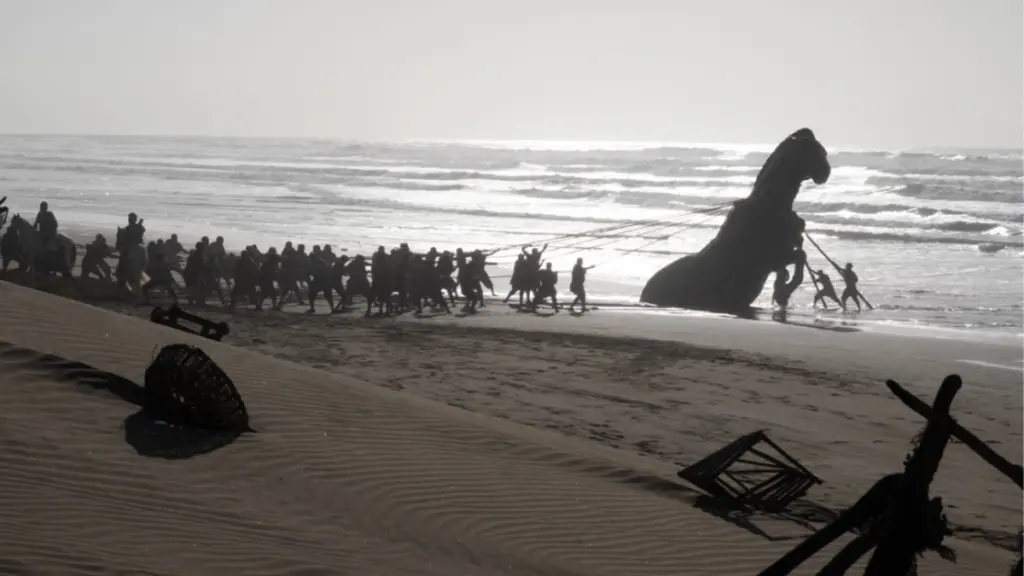
For being Christopher Nolan’s most ambitious project in terms of scale, The Odyssey is rather straightforward in its narrative structure. Viewers follow Penelope and Telemachus as they struggle to keep Antinous and his suitors at bay, while Odysseus simultaneously regains his memory and recounts his perilous journey after the war to an alluring Calypso. In this way, it’s faithful enough to Homer’s epic poem. However, Nolan takes plenty of creative liberties in filling in the gaps of Odysseus’ memories, which include encounters with Polyphemus the Cyclops (Bill Irwin), the witch Circe (Samantha Morton), the blind prophet of the underworld, Tiresias (James Remar), Laestrygonian giants, sirens, and more.
Nolan Portrays the Greek Gods in a Way that is Both Subtle and Mighty
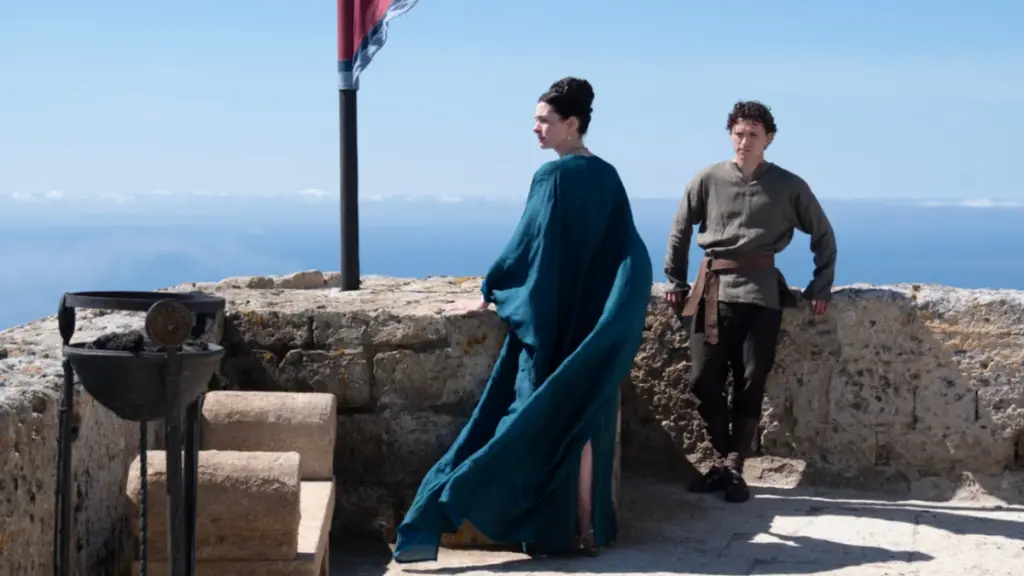
The Odyssey opens with a title card that reads “A time of apparent magic,” which feels like Nolan playing coy with his audience. Many of his films feature a push-and-pull between extremely grounded science and unbridled emotion; think of the “Don’t try to understand it. Feel it” ethos of Tenet’s theoretical “time inversion,” or even the ending of Interstellar. The Odyssey boasts plenty of fantastical creatures, all interpreted quite practically, almost as if they could have existed in real ancient history. To some, this might be a bit frustrating, as certain mythological beings, like the man-eating sea monsters Scylla and Charybdis, look a bit underwhelming. Yet, they all fall in line with Nolan’s vision.
Courtesy of Universal
Nolan isn’t being coy about whether magic exists in The Odyssey but rather about the Greek Gods themselves. The Goddess of wisdom, warfare, and handicraft, Athena (Zendaya), haunts Odysseus in Nolan’s film adaptation, whereas she is traditionally known to protect him in Homer’s poem. The protection she offers him here isn’t literal. She more so helps open Odysseus’ eyes to the harsh truths and horrors of the new world he’s unleashed via the Trojan Horse. That remorse alone is enough to push him home.
Odysseus tells Athena that humans cannot understand the language of the Gods, to which she responds, “Who doesn’t understand thunder, a smile, or a good harvest?” While some people still believe it’s Zeus when thunder and lightning crackle across the sky, others have rejected that notion entirely. Nolan, wisely, leaves much of that interpretation up to us.
‘The Odyssey’ is Destined to Get Better with Each Rewatch
Small details like the peculiar timing of thunder and lightning signaling the possible presence of Zeus, or the cruelty of the ocean waves implying Poseidon’s anger, will make Christopher Nolan’s The Odyssey richer upon multiple revisits. There lies a larger question about Athena’s role, too. Is the Goddess truly appearing before Odysseus, or is her image a manifestation of his guilt and the only source of reckoning that can reunite him with his family? The ingenious thing about Nolan’s script, aside from reveling in the fine details, is that it doesn’t matter what interpretation you choose; the movie ultimately works either way. For having so little screen time, Spider-Man and Dune star Zendaya leaves a deep impression on viewers.
In fact, Zendaya’s performance helps propel the emotional crescendo of the film’s third act. Nolan uses Odysseus’ tale, the earliest example of the hero’s journey, as a channel to question what it would take for our current society to forgive itself for both its past and ongoing sins. In a world where pride and ego continue to fuel wars and powerful leaders continue to use gods and faith as a reason to kill, The Odyssey suggests there is no turning back.
There is a way forward, however, leading to one of the most poignant endings of Nolan’s career. Some have already drawn comparisons to Steven Spielberg’s Disclosure Day, where the final moments feel like such a plea for humanity that your heart can’t help but swell up with hope.
Matt Damon Brilliantly Leads a Memorable Ensemble
Matt Damon and Anne Hathaway deliver career-defining performances in their third collaboration with Christopher Nolan. It’s impressive how much longing and passion for one another they convey, given that they spend the majority of the movie apart. Romance is often understated in Nolan’s films, but it’s one of the key driving forces here. Damon is the most commanding he’s been since perhaps the Bourne trilogy, while still showcasing the necessary tenderness of a righteous king. Hathaway’s effortlessly magnetic screen presence contrasts well with Spider-Man star Tom Holland, who displays great vulnerability. Without the despair and love for his people seen purely in his eyes, the conflict on Ithaca wouldn’t be as compelling as Odysseus’ main plot.
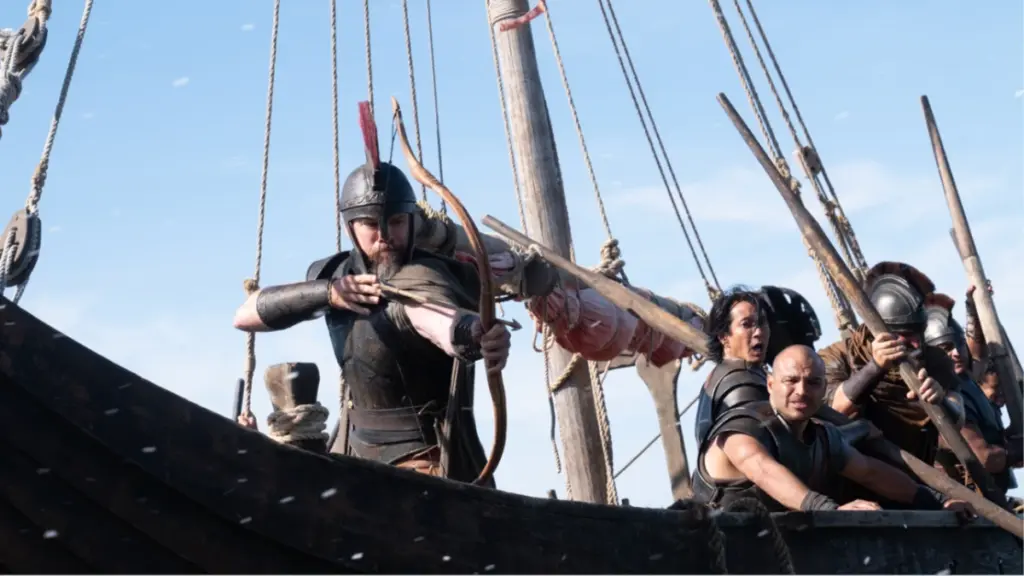
It’s tons of fun seeing Robert Pattinson play a villain you love to hate, embracing the slithery quirks of an influential coward like Antinous. On that note, Nolan is quite clear in how he portrays Antinous and Benny Safdie’s Agamemnon, the all-powerful Greek leader, in the same light as modern politicians. Another of The Odyssey’s staggering features is its use of an incredibly stacked cast. A handful of supporting characters, some of whom only appear for one or two scenes, stay in your head long after the credits roll. Returning Nolan collaborators like Himesh Patel and Elliot Page deserve recognition, as well as first-time Nolan players like the always-fantastic John Leguizamo, Jon Bernthal, Lupita Nyong’o, and Samantha Morton.
A Marvelous Technical Achievement
Christopher Nolan has built himself a perfect trinity of technical collaborators in cinematographer Hoyte van Hoytema, composer Ludwig Göransson, and editor Jennifer Lame. For a film that is constantly ramping up the spectacle with one jaw-dropping set piece after another, its personal stakes are thankfully never compromised. It’s thrilling to see how Hoytema uses the camera to keep the tension alive even in intimate scenes, focus-pulling between characters delivering crucial dialogue in a way that feels uneasy. Göransson and Lame play a huge role in capturing the horrors of Greek mythology as well. Certain sequences in The Odyssey are outright terrifying, and the pulse-pounding score and editing sink you deeper into your seat.
The Odyssey taps into a visceral level of fear that Nolan hasn’t really explored before. Not just fear of the unknown, but also fear of fellow man. Matt Damon’s Odysseus must come to terms with his previous sins in order to face the consequences of his future. As Nolan explores his fading memories and the time lost to war, traces of Inception and Memento can be felt. Damon marvelously makes the mythic hero all his own, though.
Odysseus comes to learn that those who are lucky enough to write songs about the past will do so for the good of those who sadly couldn’t and those to come. When that highly inspiring theme is visualized through astonishing IMAX visuals, and even woven metatextually by the inclusion of rapper Travis Scott as Ithaca’s bard, it’s hard not to consider The Odyssey among Nolan’s best works.
★ ★ ★ ★ ½
‘The Odyssey’ hits theaters on July 17!
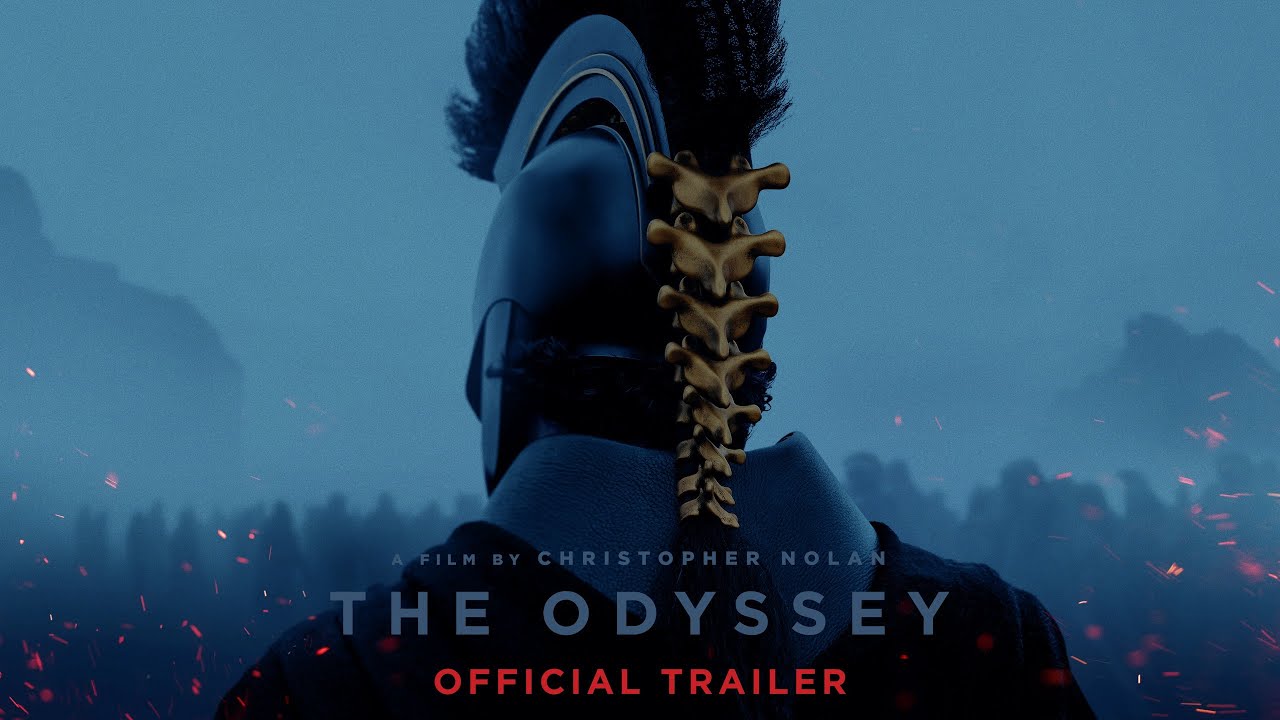
Release Date: July 17, 2026.
Directed by Christopher Nolan.
Screenplay by Christopher Nolan.
Based on Homer’s Odyssey.
Produced by Emma Thomas & Christopher Nolan.
Executive Producer: Thomas Hayslip.
Main Cast: Matt Damon, Anne Hathaway, Tom Holland, Robert Pattinson, Lupita Nyong’o, Jon Bernthal, Zendaya, Charlize Theron, Benny Safdie, John Leguizamo, Himesh Patel, Elliot Page, Samantha Morton, Bill Irwin, Will Yun Lee, Corey Hawkins, Mia Goth, Logan Marshall-Green, Jimmy Gonzales, Andrew Howard, Travis Scott, James Remar, Elyes Gabel, Jesse Garcia, Josh Stewart, & Ryan Hurst.
Cinematographer: Hoyte van Hoytema.
Composer: Ludwig Göransson.
Editor: Jennifer Lame.
Production Companies: Syncopy & Universal Pictures.
Distributor: Universal Pictures.
Runtime: 173 minutes.
Rated R.