


Some stories feel almost destined for certain filmmakers to bring to the big screen. Having been no stranger to adapting manga over the years, it’s unsurprising that the 2021 one-shot manga Look Back, from Chainsaw Man creator Tatsuki Fujimoto, enticed Palme d’Or-winning director Hirokazu Kore-eda. After decades spent exploring the fragile bonds between humans, in films like Shoplifters (2018), Broker (2022), and Monster (2023), this narrative feels like a logical extension of his cinematic sensibility. Following Kiyotaka Oshiyama’s acclaimed animated adaptation of the same source material in 2024, Kore-eda faces the daunting task of breathing life back into a beloved story about how art can bring people together as quickly as it can tear them apart.
In a room cluttered with knick-knacks and shelves lined with manga volumes, fourth-grader Fujino (Furi Nanase) works on the centerpiece of her school newspaper, a four-panel comic strip, otherwise known as yonkoma manga. When her latest creation is distributed to the class, it becomes clear that she is something of a local celebrity among her peers, who eagerly clamor for her autograph. Yet, Fujino is not the only talented artist in her suburban Japanese town. A reclusive girl in the same grade begins publishing her own yonkoma manga, and for the first time, Fujino’s work is overshadowed.
A Friendship Forged in Ink
Fujino is not a quitter, at least not yet. Determined to reclaim her status as the class artist, she spends months practicing day and night as life continues around her. However, she eventually relents, choosing to embrace the fleeting social pleasures of adolescence over what she has come to regard as a fruitless creative pursuit. On the day she graduates from elementary school, Fujino receives one final task from her caring teacher: deliver a diploma to her silent rival. Reluctantly, she accepts, venturing to a house that shows little sign of life beyond a lengthy hallway littered with piles upon piles of sketchbooks.
Courtesy of K2 Pictures
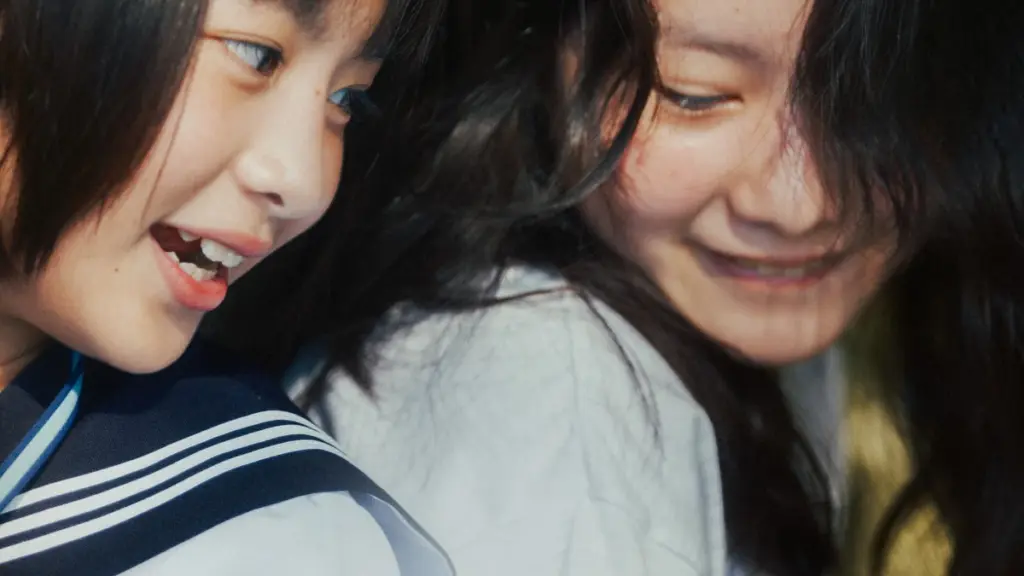
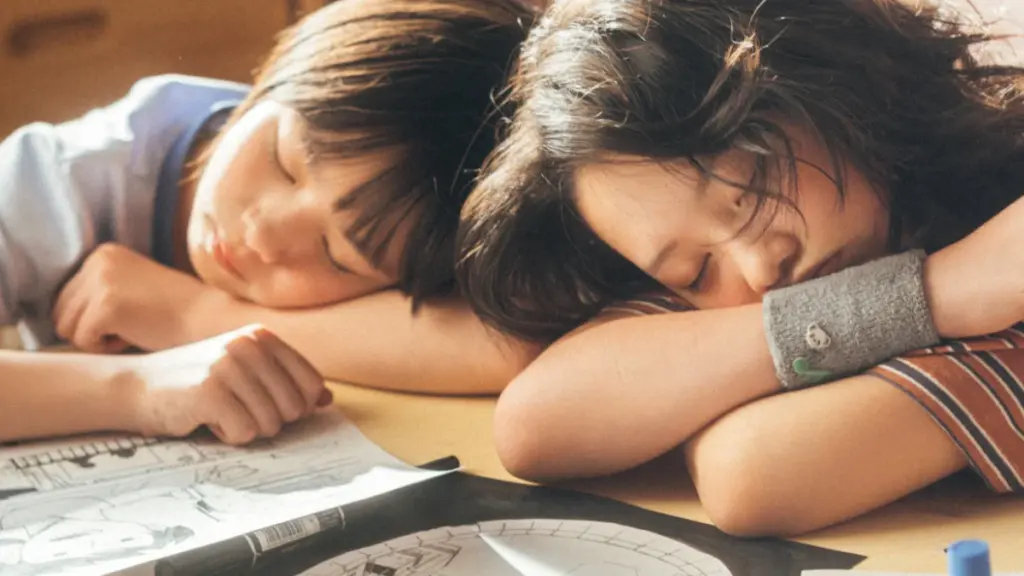
As she turns to leave, Kyomoto (Okada Rokka), a girl of equal stature but a fraction of Fujino’s confidence, emerges, and the rest becomes history. From there, a radiant friendship blossoms between the two small-town girls like the sakura trees outside Fujino’s bedroom window each spring. That same bedroom soon becomes a hub for the pair’s shared endeavor to complete their first manga manuscript. Their first one-shot brings them success beyond their years. As their dreams begin to diverge into adulthood, though, so too does the future they once imagined together.
Hirokazu Kore-eda’s Signature Tenderness Lends Itself Well to this Story
As expected, writer-director Hirokazu Kore-eda’s sensibilities, both in sentimental penmanship and filmic execution, are eagerly suited to this tale. By the very nature of the events which transpire, he taps into a vast reserve of gentleness that often encapsulates a nostalgia for being young and having untameable dreams. Though not immune to being overtly twee at times, Look Back (2026) celebrates not only the intricacies of manga as an art form, but also the intimate connections and sense of community it can forge.
Courtesy of K2 Pictures
Despite its effectiveness, the film’s only real shortcoming is the script’s sporadic tendency to leave too much unsaid. Compared with Fujino, Kyomoto is not afforded the same degree of extensive characterization. This could undoubtedly be a hangover from the source material, but the parameters of a feature-length runtime justify adding this development. Instead, it feels as if Kore-eda has hedged his bets on the audience overlooking the roots of Kyomoto’s reclusive tendencies and peculiar lack of family. This results in a missed opportunity to expand the emotional grandeur of her entire arc.
Finding Cinematic Strength in the Mundane
Even with this oversight considered, the transition between the younger and older versions of Fujino and Kyomoto feels seamless. The performances by Natsuki Deguchi, who plays an older Fujino, and Aju Makita, who plays an older Kyomoto, build naturally on the traits established by their formidable younger counterparts. Thus, their dynamic evolves organically. Their relationship has a lived-in quality that makes each stage of their journey feel like a continuation rather than a reinvention. That sense of genuineness is what, painstakingly, drives the two friends toward the film’s grief-stricken conclusion.

Courtesy of K2 Pictures
A transcendent score by Yuta Bandoh (Belle) supports the story at every turn, swelling and receding at the most opportune moments. It acts as a steady undercurrent to the plot’s emotional weight. Paired with Hirokazu Kore-eda’s measured direction, which consistently finds grandeur even in the mundane moments of childhood, the meticulous application of technique transforms a story rooted in tiny bedrooms and stacks of sketchbooks into something utterly sweeping.
Kore-eda’s Live-Action Adaptation of ‘Look Back’ is a Strikingly Emotional Achievement
Hirokazu Kore-eda’s take on Look Back (2026) is ultimately too effective to be diminished. Fujino and Kyomoto’s friendship is, once again, immortalized as a cinematic meditation on the people who influence our own legacies. In the end, their shared pen name, which endures through Fujino’s work, becomes far more than a creative identity, granting Kyomoto a kind of immortality even in the face of painstaking loss. For a story so preoccupied with the decisions that carry people toward their fates, its most powerful idea is that art can carry the beauty and pain of those we meet along the way.
★ ★ ★ ★ ☆
‘Look Back’ premiered at the 2026 Venice Film Festival!
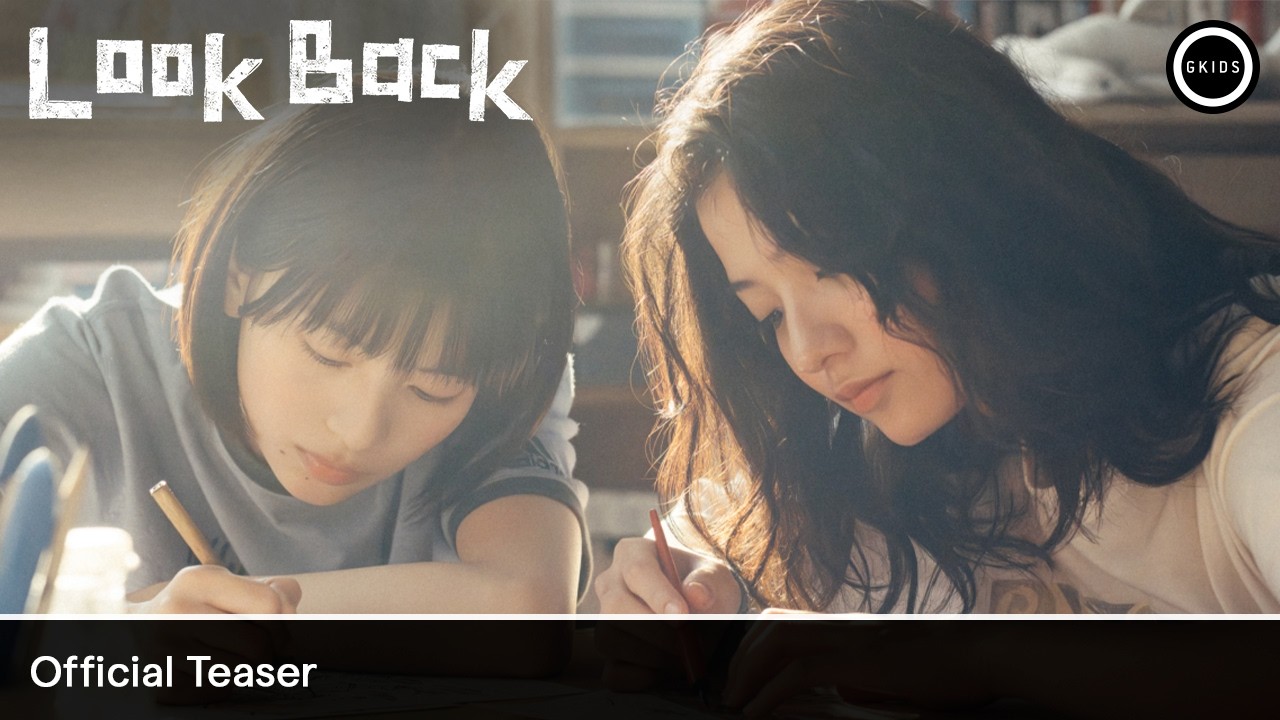
Release Date: TBA 2026.
Directed by Hirokazu Kore-eda.
Screenplay by Hirokazu Kore-eda.
Based on Look Back by Tatsuki Fujimoto.
Produced by Daiju Koide.
Executive Producer: Muneyuki Kii.
Main Cast: Natsuki Deguchi, Aju Makita, Furi Nanase, Rokka Okada, Masaki Suda, Kankurō Kudō, Kayo Noro, Ryō Ikeda, Miyu Sasaki, & Maho Yamada.
Cinematographer: Senzo Ueno.
Composer: Yuta Bandoh.
Editor: Hirokazu Kore-eda.
Production Company: K2 Pictures.
Distributor: K2 Pictures (Japan) & GKIDS (International).
Runtime: 100 minutes.