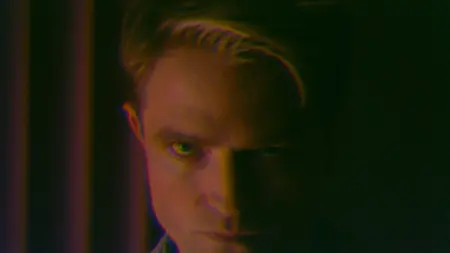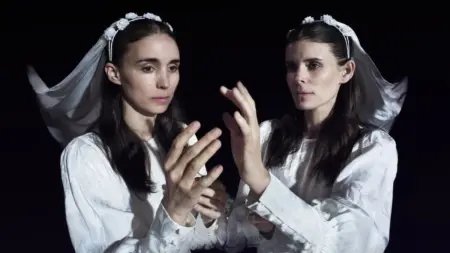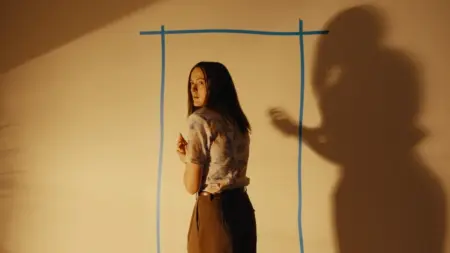


Installation artist and filmmaker Amalia Ulman (El Planeta) returns to Sundance this year with her second feature, Magic Farm. Filmed in her birthplace of northern Argentina, Ulman delivers a wholly unique, funny, and surprisingly touching story of human connection. Blending wit with poignant moments of emotion, Magic Farm captures a distinct slice of life that’s as charming as it is bittersweet, though it occasionally meanders in its execution.
Magic Farm follows a documentary film crew traveling the globe to uncover strange and unusual subcultures. Their subjects are almost always the poor and marginalized — people living on the fringes of society. However, the crew’s main goal is obviously to get clicks and views for their edgy media company, not to create any kind of meaningful storytelling. They exploit their subjects for cheap laughs, often reducing them to caricatures.
The team behind the show is a chaotic mix of personalities: overworked creator and host Edna (Chloë Sevigny), her sleazy partner and producer Dave (Simon Rex), and the younger crew of Jeff (Alex Wolff), Justin (Joe Apollonio), and Elena (played by Ulman herself). Their self-absorbed, slapdash approach to documentary filmmaking comes to a head when a mistake by Jeff lands them in not just the wrong town but the wrong Latin American country entirely. Instead of interviewing a local musician as planned, they scramble to concoct a story from whatever and whoever they can find in the quiet, rural Argentinian village they’ve wound up in.
What ensues is less a traditional plot and more a slice-of-life exploration. As the crew fumbles through their thinly fabricated story, they are drawn into the rhythms and relationships of the town. The various animals throughout the place play a subtle but meaningful role in these moments, with scenes like Edna’s fondness for a local horse adding a quiet tenderness to the chaos. The cinematography enhances this, featuring inventive GoPro-like shots from the perspective of the town’s stray dogs, which are also set to cumbia music, that provide equal amounts of humor and charm.
Amalia Ulman’s direction balances the absurdity of the crew’s situation with deeply human interactions. Justin, for instance, forms a flirtatious back-and-forth with the hotel receptionist (Guillermo Jacubowicz), while Jeff, a hilariously needy and attention-seeking egomaniac, finds an unexpected bond with Manchi (Camila del Campo), a local young woman whose intelligence and wistfulness stand out. These relationships feel natural, interesting, and earned, grounding the more comedic elements of Magic Farm in genuine emotion.
Alex Wolff (A Quiet Place: Day One, Hereditary) is a highlight as Jeff, capturing the character’s pathetic yet strangely endearing qualities. His comedic timing is impeccable, and Wolff is certainly leaning into a somewhat exaggerated persona, but it’s his quieter moments of vulnerability that linger. The ensemble cast is uniformly strong, with each actor bringing depth to their roles, no matter how questionable their characters’ actions may be.
Thematically, Magic Farm is richly layered. Amalia Ulman’s inspirations feel rooted in personal and cultural experiences. The story’s exploration of exploitation vs. communication reflects her observations of the dynamics between hosts and guests, particularly in contexts of cultural and economic disparity. The American crew’s exploitative behavior mirrors the hipster journalism boom of the 2010s from outlets like Vice News, which often disguised ethnographic exploitation under the guise of edgy inclusivity. At the same time, the locals in the village are not entirely forthcoming about the environmental dangers surrounding them, creating a web of mutual deception.
Amalia Ulman’s personal ties to these themes add a powerful authenticity to Magic Farm. Inspired by her family’s experiences in rural Argentina, she weaves the real-world issue of glyphosate contamination, a pressing health and environmental crisis in the Global South, into the script. This backdrop gives the movie a sobering weight, contrasting with its often satirical tone. Even amid these heavy themes, though, Magic Farm is ultimately about connection and collaboration. The relationships that form between the characters, despite their initial self-serving intentions, become the heart of the film.
Stylistically, Amalia Ulman’s approach is inventive and playful. The mix of traditional and unconventional cinematography from Carlos Rigo Belliver creates a sense of intimacy and spontaneity, pulling the audience into the crew’s haphazard journey. Magic Farm‘s sharp yet silly humor is balanced by the quiet beauty of the South American environment, such as a lingering shot of the town’s landscape or a tender interaction between one of the locals and an animal.
However, while the screenplay’s ideas are poignant and its themes resonate, Magic Farm relies heavily on atmospheric, vibing aesthetics. This can result in scenes that wander aimlessly, as the narrative lacks a truly compelling driving force to propel it forward. The laid-back pacing and vignette-like structure make Magic Farm engaging but not entirely gripping, leaving a sense that it could have benefitted from a more focused approach.
Comparisons to Spanish classics like Welcome Mr. Marshall! are apt. Both movies explore the idea of a community rallying around a shared goal that ultimately proves illusory. In Magic Farm, the crew’s experience leaves an indelible mark on everyone involved. Amalia Ulman’s film finds hope and meaning in the connections forged during the production, showing that even in a world rife with exploitation and miscommunication, sincere human bonds can still emerge.
Magic Farm is both deeply personal and universally resonant. Writer-director Amalia Ulman blends satire, heart, and ingenious social commentary into a movie that’s as entertaining as it is thought-provoking. Yet, despite its strengths, the film’s meandering nature holds it back from achieving greatness. For all its originality and cleverness, Magic Farm works well but doesn’t quite leave as strong of a lasting impression as it could have.
Magic Farm premiered at the 2025 Sundance Film Festival and will be released in theaters later this year!
Release Date: TBD.
Directed by Amalia Ulman.
Written by Amalia Ulman.
Produced by Alex Hughes, Eugene Kotlyarenko, & Riccardo Maddalosso.
Executive Producers: Amalia Ulman, Efe Çakarel, Jason Ropell, Zane Mayer, Laura Jacobs, Santiago Gallelli, Matias Roveda, Benjamin Domenech, Tim Headington, Lia Buman, Ana Leocha, Ella Bishops, Pau Suris.
Main Cast: Chloë Sevigny, Alex Wolff, Joe Apollonio, Camila del Campo, Amalia Ulman, & Simon Rex.
Cinematographer: Carlos Rigo Belliver.
Composer: Burke Battelle (Chicken).
Distributor: Mubi.
Runtime: 93 minutes.