

Hideo Kojima’s 2019 video game Death Stranding — the first project the visionary worked on after he departed from Konami and founded his own studio, Kojima Productions — seemed at first widely overlooked upon its release. The game director’s comments about the title being the first “strand-type” game, paired with viral comedic social media posts calling it a “walking simulator,” had established a narrative about Death Stranding that simply wasn’t true. That consensus among gamers and critics has shifted significantly, though, especially since the game’s story of a disconnected society staying indoors was released before the COVID-19 pandemic. Now, six years later, Death Stranding 2: On the Beach is here.
Death Stranding’s unique gameplay elements and cinematic story would soon become staples of Kojima’s evolving creative philosophy. This coincides with the video game creator’s growing public image and popularity in recent years, thanks to viral social media posts of his meetings with various celebrities and opinions on movies. Death Stranding 2: On the Beach is a powerful testament to this creative shift. The action-adventure video game, developed exclusively for the PlayStation 5, feels like the ultimate culmination of Hideo Kojima’s new public persona, doubling down on what made the first game so divisive upon its initial release.
All the Great Aspects of the Original Game are Present
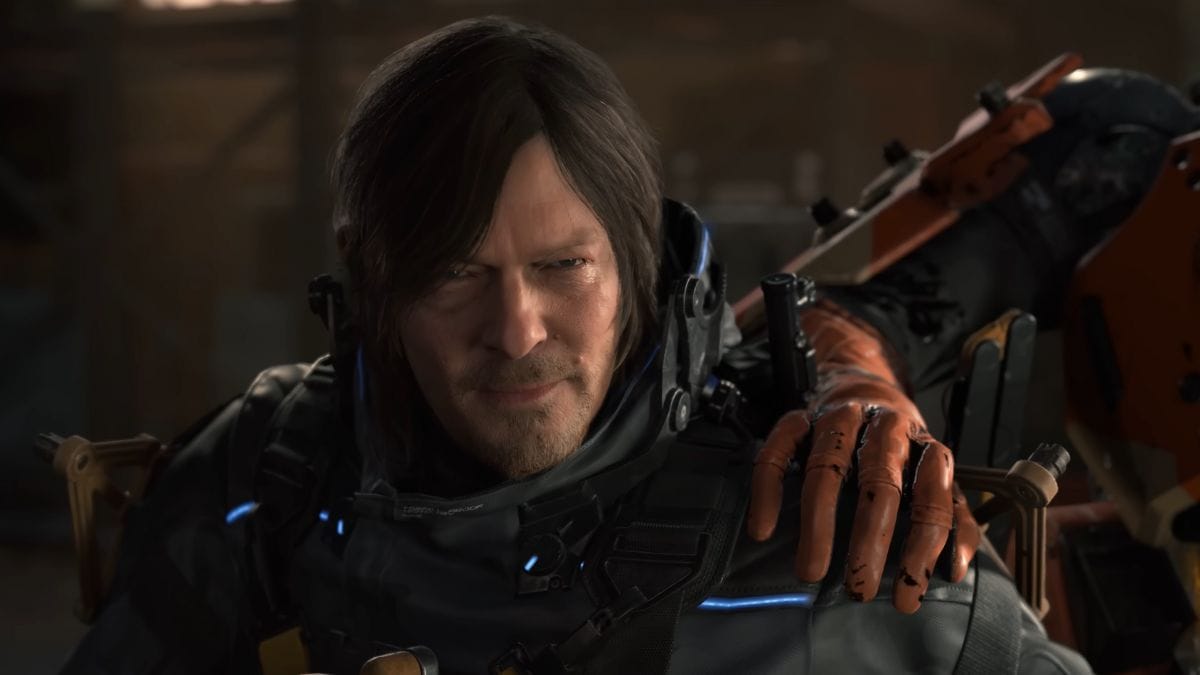
Taking place eleven months after the first game, Death Stranding 2: On the Beach features our protagonist, Sam Porter Bridges (Norman Reedus), being recruited to help connect people once again. Given that Sam’s former employer, Bridges, has already brought together the United Cities of America, it’s now up to the independent company Drawbridge, led by Fragile (Léa Seydoux), to connect the continents of Mexico and Australia. It’s a tall task that players are given, but Sam has a colorful supporting cast of familiar faces — which includes numerous real-life, acclaimed filmmakers and actors — to help him on this journey.
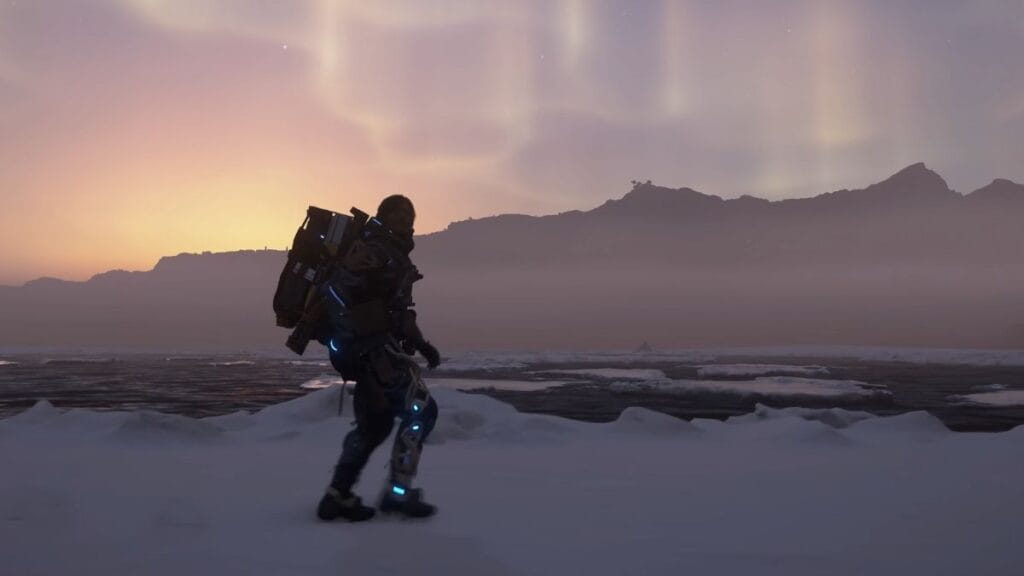
At its core, Death Stranding 2 retains the core elements of the first game, capitalizing on everything that made it so addictive. The sequel offers more expansive systems of delivery, stealth, and combat as Sam connects the continents, resulting in a richer gaming experience. Sam’s quest is also fraught with plenty of unforeseen dangers, along with the ones players have come to expect from the original Death Stranding. The delivery system remains unchanged, with main orders needing to be fulfilled to continue the story, and sub-orders being optional to obtain a better porter grade and receive “likes” from different settlements and cities.
Every Delivery is Different Than the Last
The visual fidelity of Death Stranding 2: On the Beach is extraordinary, thanks to the impressive Decima engine, with the landscape in some instances looking incredibly photorealistic. The kinds of terrains and biomes have increased as well, allowing for a beautiful visual diversity. Death Stranding 2 was played on a standard PlayStation 5 for this review, and even without the capabilities of the PS5 Pro, it ran smoothly with no technical issues. The DualSense controller makes excellent use of haptics and its internal speakers. This is to be expected from PS5 titles, but in this case, it provides a deeper immersion during the well-directed cutscenes.
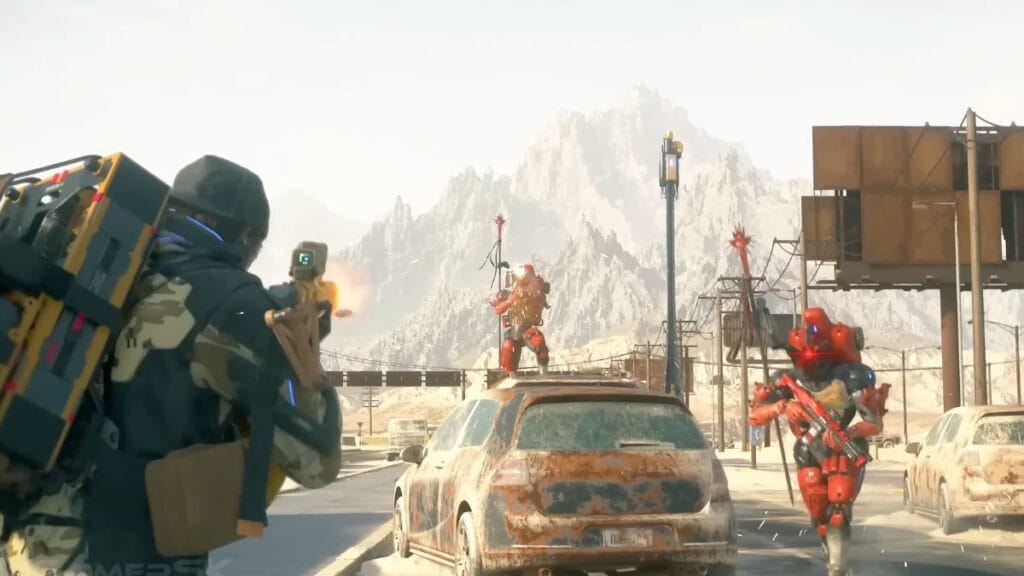
It’s in how players choose to deliver their packages that Death Stranding 2 shines. There are abundant options to choose from when navigating the vast terrain of Australia, the country where most of the game takes place. Whereas the original game employed a direct and pragmatic approach, with minimal conflict during the majority of Sam’s orders, the sequel features a range of opposing forces. Armed survivalists, ghosts called Beached Things (BTs), and rival mechs will often stand in between the player and their destination. It’s ultimately up to you to decide how to deliver each package.
There’s Power in Numbers
Whether it be through all-out warfare or stealthily navigating around foes using the landscape to your advantage, the possibilities in the open world sandbox of Death Stranding 2: On the Beach are seemingly endless. There are more weapons, vehicles, and tools at the player’s disposal than ever before, while still keeping the core philosophy of the first game intact. When you add the many new weapons at Sam’s disposal (including a super cool blood boomerang) with the smooth and free-flowing combat from the first game, Death Stranding 2 is at its peak.
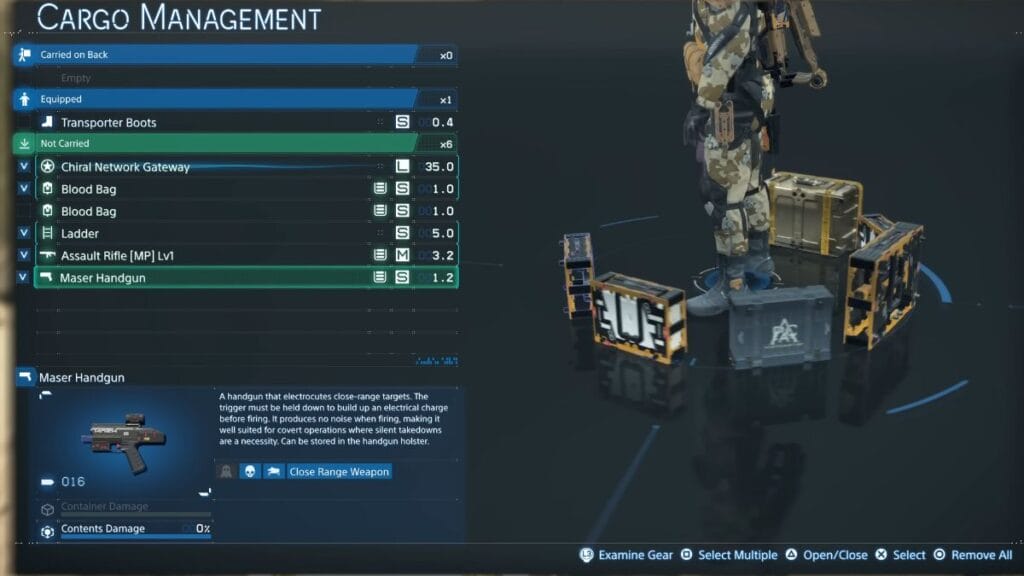
The strand-type game method carries over from the first, allowing players to assist each other on the journey across Australia by sharing materials and creations. Hideo Kojima and his team have yet again found a way to create a sense of interconnectivity with players you’ll never meet, but forever be thankful for in the most unexpected of times. In addition to the freeway and road systems from the first game, Death Stranding 2 introduces a Monorail system and the DHV Magellean ship (which suspiciously resembles a Metal Gear) to the list of ways people can connect. Customization and delivery systems are efficient, expertly combining delivery operations and combat into a one-of-a-kind gameplay experience.
A Story Rooted in Reality
There were moments when I found myself at the mercy of the unforgiving terrain, only for a player-made shelter to then offer me solace, or a generator created by someone with a random username finally allowing me to refuel my vehicles and equipment. It’s in those instances that Death Stranding 2: On the Beach drives home its themes of connectivity. One minor complaint would be that the second half of the game relies too heavily on vehicles, making long-distance travel much easier. However, whereas the first game makes that feel like the easiest decision for mankind, Hideo Kojima poses an interesting question in Death Stranding 2.

The video game has been marketed with the mysterious tagline of “SHOULD WE HAVE CONNECTED?” hanging over many of the posters and trailers (that were all created and edited by Kojima himself). As has been the case with the narratives of all his previous works, Death Stranding 2 features some eerily socially relevant thematic points. With the advancement of players (as Sam) throughout America in the first game came specific innovations and automation that would lead to unforeseen consequences in the sequel. While I won’t delve into specific plot details, Kojima draws some extremely compelling and frightening parallels with artificial intelligence in Death Stranding 2.
A Cinematic Gaming Experience Like No Other
Hideo Kojima perfectly balances lengthy cutscenes with engaging gameplay in Death Stranding 2: On the Beach. The story takes a lot less time to build up than the first Death Stranding, with the benefit of a sequel being that it can skip past all the lore-dumps that happened in the first. There is also a “corpus” that you can access that recaps the story up to that point, and an appendix for various terms used in the plot’s exposition. The improvement in pacing is a significant win for this sequel, which will hopefully allow more players to become easily invested in the exceptionally layered video game.
Kojima’s affinity for the film industry shines through in the cinematic presentation of Death Stranding 2. Right from the breathtaking opening cinematic sequence, the game is as much to be enjoyed for its thrilling narrative as it is for its strategic delivery service and combat-filled gameplay. Joining Norman Reedus, Lea Seydoux, and Nicolas Winding Refn/Darren Jacobs as Heartman from the first game are newcomers Elle Fanning as Tomorrow, George Miller/Marty Rhone as Tarman, Fatih Akin/Jonathan Roumie as Dollman, and Shioli Kutsuna as Rainy. Kojima’s knack for creating lovable and engaging characters has never been stronger than with this latest game.
“Kojima Heavily Leans Into the Unexpected”
Troy Baker also returns as the villain Higgs, with the actor becoming even more of a wildcard and getting to let loose with his performance. Higgs exemplifies everything zany and unexpected from Death Stranding 2: On the Beach, as Kojima heavily leans into the unexpected for much of the visual aesthetic and cinematic presentation of the story.

For every serious lingering moment, there is one of pure insanity that makes superb use of the strange and disorienting world of the game, along with brilliant music composed by Woodkid and Ludvig Forssell. The action-packed sequel has moments that will leave your jaw on the floor, combining cinematics and gameplay so seamlessly that players won’t help but be on the edge of their seats.
Death Stranding 2 is a Visually Stunning Masterpiece
Overall, it’s hard not to call Hideo Kojima a visionary for the way he creates an intersection of genres and storytelling in the video game medium, forming a visually stunning masterpiece where one piece is just as crucial to the bigger picture as the next. The video game creator, unaffected by the initial negative response to Death Stranding (2019), instead compels players to contend with his bold creation on its own terms, rather than adhering to preconceived notions of what a Kojima game should be.
Death Stranding 2: On the Beach is an immensely ambitious sequel that allows players to navigate the world however they see fit. Although the narrative may seem overwhelming at first, the complex story of Death Stranding 2 comes full circle in a beautiful and satisfying way. Additionally, it’s hard not to become fully immersed when walking down a gorgeous landscape, packages in hand, when a track from an indie band suddenly starts playing to make you feel like you’re the star of your own movie.
Death Stranding 2: On the Beach releases on PlayStation 5 on June 26, 2025!

Release Date: June 26, 2025 (PlayStation 5).
Developed by Kojima Productions.
Published by Sony Interactive Entertainment.
Produced by Hideo Kojima.
Written by Hideo Kojima, Kenji Yano, & Shuyo Murata.
Programmed by Akio Sakamoto.
Game Director: Hideo Kojima.
Creative Director: Hideo Kojima.
Narrative Director: Hideo Kojima.
Engine: Decima.
Composers: Ludvig Forssell & Woodkid.