

When playing the opening minutes of Ghost of Yōtei (2025), it’s hard not to get immediately immersed in the vengeful tale of the wandering mercenary Atsu. This first encounter feels incredibly high-stakes for what should be an introductory mission that gets players acquainted with the game’s controls and story. Reminiscent of the opening of Toshiya Fujita’s 1974 film Lady Snowblood, Yōtei’s foundation is a strong one, making it all too easy to become invested in Atsu’s narrative of unrelenting rage. With a title sequence similar to Ghost of Tsushima (2020), Sucker Punch’s jaw-dropping sequel hits the ground running and doesn’t lose momentum.
Based in Bellevue, Washington, Sucker Punch has accomplished the rare feat of developing and releasing an impressive PlayStation 5 exclusive triple-A title with a smaller team than what’s expected in today’s cutthroat video game industry. As players explore the environments of Mount Yōtei and Ezo, Japan, it becomes evident that the studio’s goal wasn’t necessarily to create a bigger sequel, but rather to deliver a more polished and varied experience than Tsushima. Directed by Nate Fox and Jason Connell, Ghost of Yōtei functions as an engaging, standalone follow-up, introducing numerous new gameplay mechanics while also building upon what made Tsushima so fantastic to begin with.
A Story Rooted in Revenge and Folklore
Taking place 300 years after Tsushima at the beginning of the Edo period in 1603, Ghost of Yōtei revolves around Atsu and her quest for revenge against a band of warriors formerly known as the “Yōtei Six.” The group took everything from Atsu when she was a young girl, led by former samurai Lord Saitō, and comprising members known by the aliases of the Snake, Oni, Kitsune, Spider, and Dragon. Killing her whole family and leaving her for dead, Atsu is back decades later, almost like a vengeful spirit. She seeks retribution and justice in the midst of a power struggle between Saitō and Clan Matsume, led by a Shogun who wishes to bring “order” to Ezo.
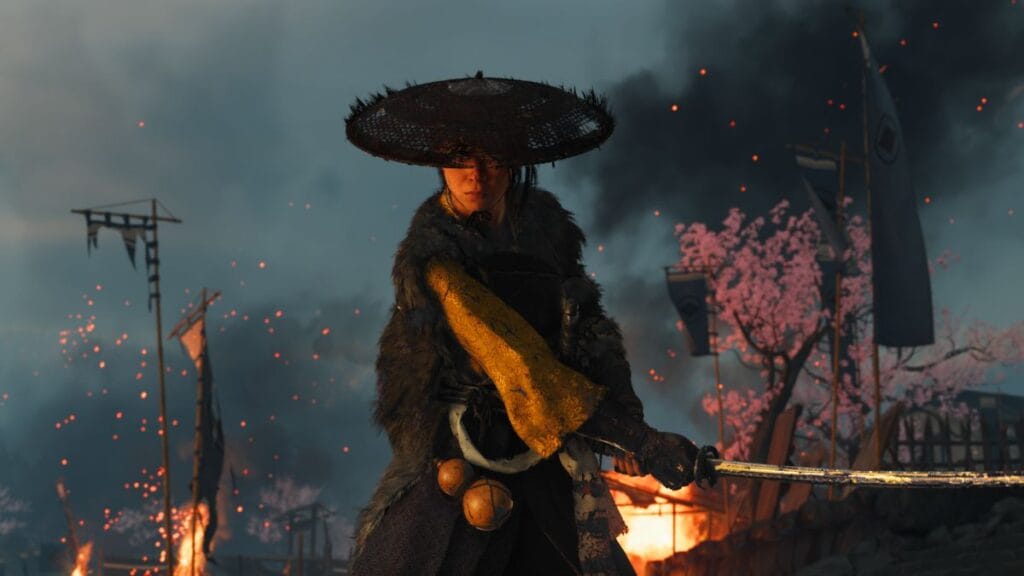
Much more than Tsushima, Ghost of Yōtei has an alluring mysticism and theatricality that leans remarkably further into the samurai classics that have inspired both games. Travelling on Atsu’s horse across the lush and colorful landscapes, paired with the game camera’s wide-angle, makes you feel like you’re playing out a scene from Akira Kurosawa’s samurai epic Ran. The various cinematic angles and framing deployed at the start and end of combat sequences all contribute to making this game an improvement over the first, especially in its cinematic presentation.
Where Thematic Style and Spirit Converge
It’s not just in style that Ghost of Yōtei rises above Tsushima. The 2020 game received its fair share of criticism for the animation and cutscenes not syncing up with the Japanese dubbed audio track. That issue is long gone in this sequel, which features not only captivating Japanese performances but also animation that syncs up with the cutscenes and dialogue well enough to maintain the immersion. Additionally, the Yōtei Six are better layered than the one-dimensional Mongol enemies of the first game. Yōtei is a significantly darker tale that wears its influences differently on its sleeve compared to the first game.
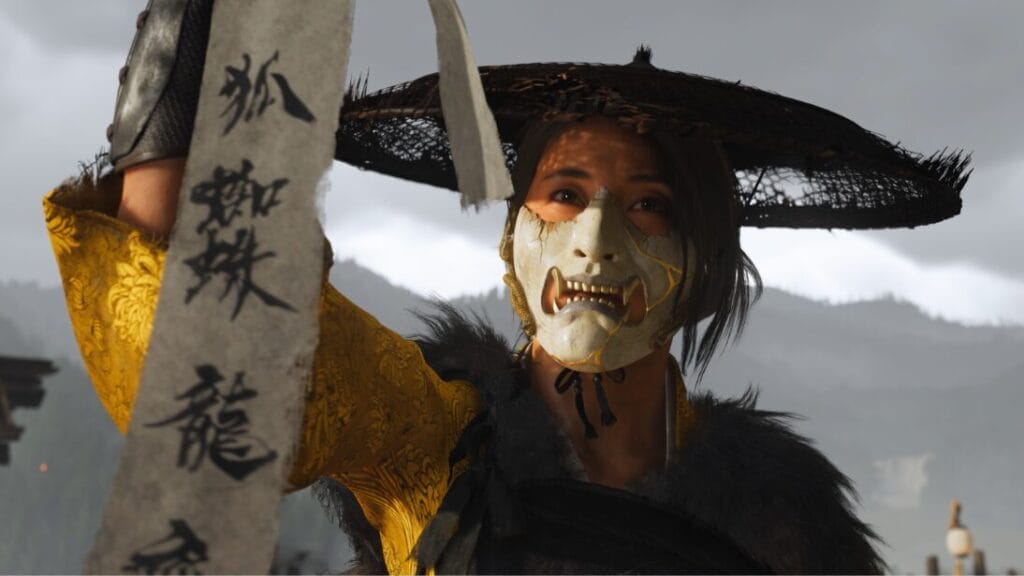
Atsu is the polar opposite of Jin Sakai, following the Sucker Punch tradition that began with Infamous: Second Son (2014). Whereas Jin was reluctant to sink deeper into the ways of the Ghost, Atsu fully embraces the role, becoming an extremely bitter, hardened, and empathetic anti-hero at times. The Onryō legend in Japanese folklore is often associated with the vengeful spirits of women who have been wronged in some shape or form, making the female protagonist at the center all the more critical to the story. Erika Ishii’s performance as the titular character is impressive, bringing a meaner perspective and ferocity than what was previously seen with Jin.
Six Names, Each On Different Kinds of Blades
The rest of the supporting cast brings nuance to their roles, too, with a wide variety of scoundrels, samurai, ronin, and villagers being fully realized. The script has a greater focus on family and the handling of past trauma, and thanks to Sucker Punch’s choice to allow players to progress through the narrative in whatever order they prefer, the emotional beats land twice as hard. Six notable foes must taste your blade, and the person you choose to hunt first has a huge impact on the plot. Here, players really get to have fun and become immersed in this new side of Japan that the developers have created.
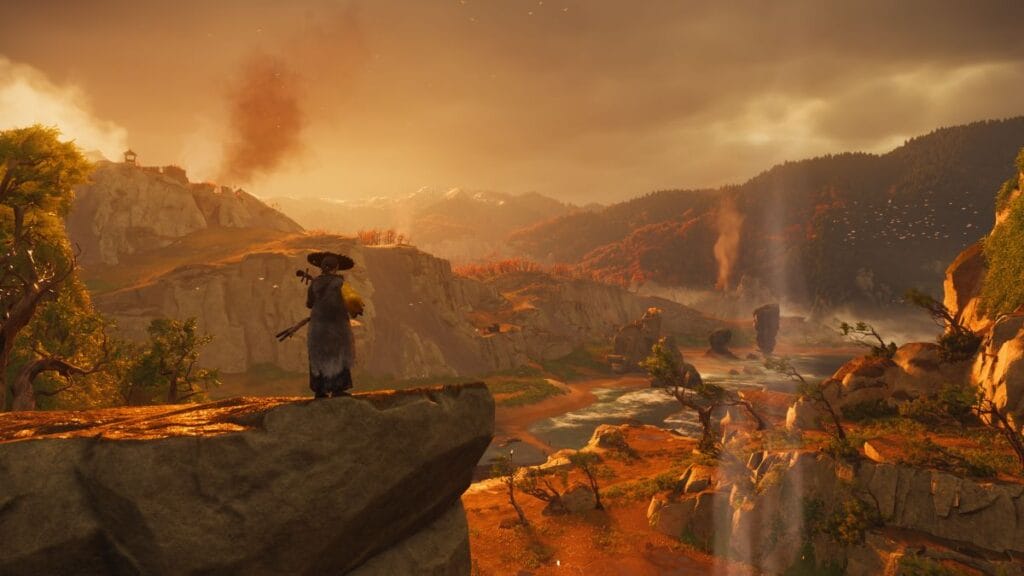
Speaking of which, the open world is readily available almost immediately upon starting the game, and there are plenty of progression options that open up all kinds of fighting styles. Whereas Tsushima allowed the player to use four different sword stances, Ghost of Yōtei offers players four distinct weapons, each with their own skill trees. Thus, combat is more diverse and free-flowing than ever before. The enemy diversity means that players have the option to equip multiple weapons to make certain battles easier, though it isn’t required. For those who want the complete samurai experience, a katana is deadly enough to make your enemies fall, but it might take extra work.
Forged in Steel, But Shaped By Choice
The Kusarigama, Dual Katanas, Yari Spear, and Odachi are all weapons that can be earned through side quests. Unconventional weapons, such as the Tanegashima matchlock gun, can be equipped as well. Each one is built for a specific type of enemy, and switching between them is as seamless as switching stances. It’s a little unusual in the sense that it breaks immersion with how the weapons can sometimes appear out of thin air, yet it doesn’t interrupt Ghost of Yōtei‘s smooth combat style.
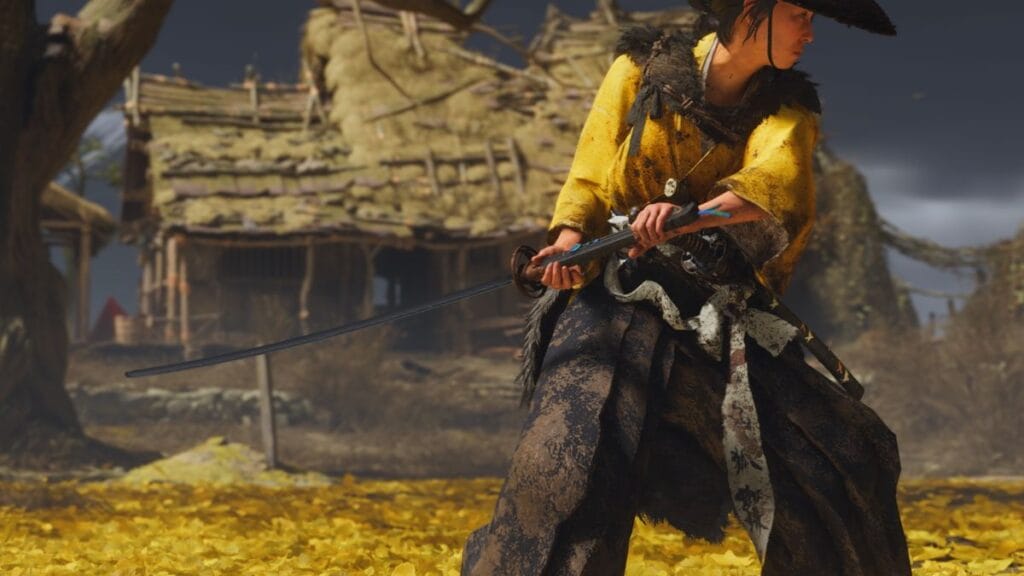
So, you can be as thoughtful (or as reckless) as you want in your approach to every encounter. Rushing in headfirst to an enemy base or a major boss fight isn’t the most viable option, but it’s doable. However, completing side missions, discovering shrines, baths, and other types of landmarks all help to grow Atsu as a fighter. Extra time spent in the game’s open world rewards players with a practical edge over opponents. The side quests that expand your repertoire of moves are never a total chore either; instead, they enhance the game’s themes and flesh out the vast environments of Ezo.
A Vivid World Painted By Samurai Cinema and Pop Culture
Thanks to the power of the PS5, Ghost of Yōtei is a visual upgrade from even the next-gen director’s cut of Tsushima, with an increased amount of landscapes and vibrant colors. The wind guide is as reminiscent of an Akira Kurosawa film as ever, featuring richer ways to experience the life of a wandering mercenary. A new option that allows you to camp to restore spirit and stamina is an exceptional highlight, adding nuance to your journey. It often helps to slow the breakneck pace of the plot and just take in the visual splendor.
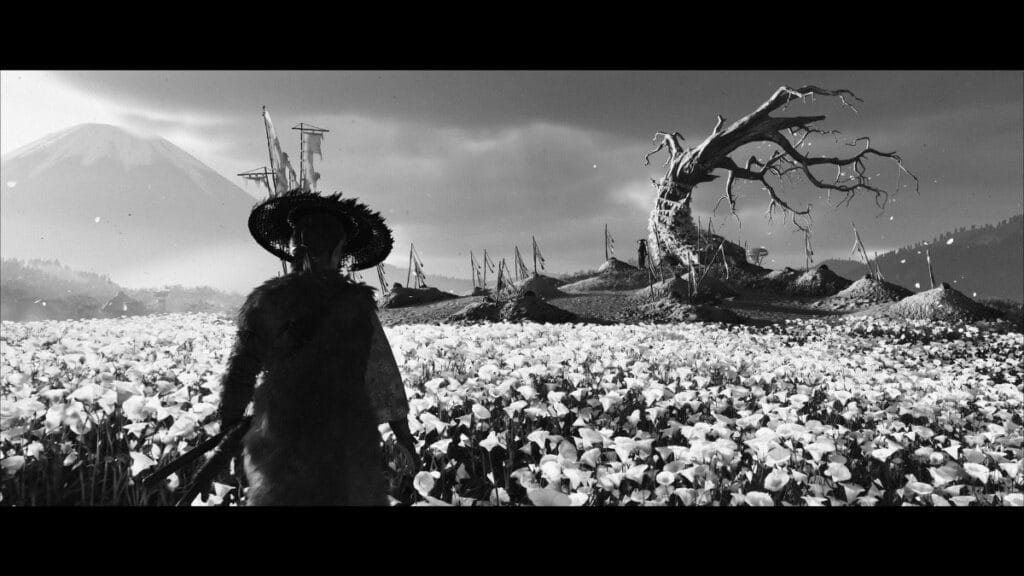
The black-and-white “Kurosawa” mode returns from the first game, and is joined by two new ones: Miike Mode and Watanabe Mode. Named after two legendary creators — Japanese filmmaker Takashi Miike and Anime Director Shinichirō Watanabe — their work has had a large influence on Ghost of Yōtei. With the former, players can expect closer camera angles, increasing the difficulty and intensity of combat. It’s notably reminiscent of the director’s seminal works, such as 13 Assassins (2010). Wantanabe mode adds in lo-fi beats produced by the director, making your blood-soaked adventure across Feudal Japan feel like an episode of Samurai Champloo.
Ghost of Yōtei Features Powerful Songs of Vengeance and Loss
Outside of Wantanabe mode, though, players are treated to a marvelous score. The music by Toma Otowa is appropriately epic, with themes for the main title, Atsu, and even the Yōtei Six complementing each other with their eccentric differences. Special musical cues in the story include lyrics that are translated on screen, too, and it’s in these moments that Ghost of Yōtei surpasses its predecessors in its authenticity. Sucker Punch isn’t reinventing the wheel with this latest samurai open-world game, but they are definitely refining it in a way other studios haven’t. However, that’s not to say there aren’t some of the usual gripes that come with games structured like Yōtei.
A few tedious missions in the wide range of content, like those involving wolves, don’t necessarily contribute to the gaming experience other than progressing the mechanics. Everything serves a clear purpose, yet that doesn’t mean it’s worth doing in the grand scheme of things. The map expansion system, which provides key location details for optional tasks, can come off as cumbersome and unappealing during long hours of gameplay. Despite that, Ghost of Yōtei is still an excellent outing from Sucker Punch.
A Refined Sequel That Honors What Came Before
Ghost of Tsushima, as much as it was dedicated to the classic samurai films that inspired it, never completely bought into the atmosphere and thematic points of the iconic movies that it modeled itself after. Thankfully, Ghost of Yōtei is a step in the right direction, not making things larger in scale for the sake of it, but instead polishing and expanding on what worked in the studio’s first samurai outing. For that alone, Yōtei is a commendable sequel. It may come as no surprise that it rivals this year’s Assassin’s Creed Shadows in multiple aspects.
Ghost of Yōtei’s mixture of samurai movie influences, Japanese folklore, and improved combat makes the game one of the most immersive experiences of the year. While the free-flowing and ever-changing combat might be a double-edged sword and take some players out of the game, it also serves as something that could bring them back for several playthroughs. There are so many unique ways to experience Atsu’s tale of revenge, with players having the power to shift the narrative with each of their choices. This makes Sony and Sucker Punch’s latest offering one that would please even the Onryō.
Ghost of Yōtei releases on PlayStation 5 on October 2!

Release Date: October 2, 2025 (PlayStation 5).
Developed by Sucker Punch Productions.
Published by Sony Interactive Entertainment.
Produced by Brian Fleming.
Written by John Dombrow, Li C. Kuo, Ariadna Martinez, Nitai Poddar, Ian Ryan, and Courtney Woods.
Game Directors: Nate Fox and Jason Connell.
Engine: Proprietary Engine.
Composers: Toma Otowa.