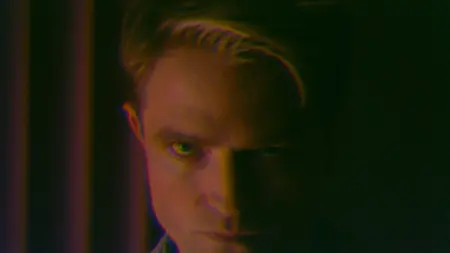


Disney’s Tron franchise has always lived in a peculiar space in cultural history. Steven Lisberger’s 1982 original film was a visual revolution that introduced audiences to the concept of entering a digital world and meeting the programs that inhabit it, even if it ultimately became more of a cult object than a blockbuster success. Nearly three decades later, Tron: Legacy (2010) built on that foundation with a sleek reinvention, bolstered by Joseph Kosinski’s (Top Gun: Maverick, F1) thrilling direction and an unforgettable Daft Punk score. Legacy wasn’t flawless, though it has since carved its place as a definitive blockbuster of its era, celebrated for marrying futuristic designs, effects, and ideas that were, once again, slightly ahead of their time.
Tron: Ares (2025), the long-gestating third entry, had enormous pressure riding on it before a single frame was shot. Singer-actor Jared Leto has been attached for nearly a decade as leading star and producer, calling himself a “Tron super nerd” and fighting to keep the sequel alive through years of development limbo at Walt Disney Studios. That persistence finally pays off here. Directed by Joachim Rønning (Young Woman and the Sea, Maleficent: Mistress of Evil), Ares manages to both honor the past and push the series into an edgier, more tactile direction.
It’s not without imperfections, but that’s just par for the course for this niche franchise. Like the films before it, Tron: Ares feels destined to grow into something bigger than initial reactions may suggest.
A New Digital Dawn
One of the biggest questions surrounding Tron: Ares was how it could possibly top the visual language of its predecessors. Joachim Rønning makes a bold choice by leaning harder into physicality than abstraction. Where Tron: Legacy felt like an elegant, 21st-century digital dreamscape, Ares grounds its light cycles, disc battles, and laser trails in a tangible weight. Industrial Light & Magic (ILM) delivers stunning effects, but what makes them hit harder is how often the narrative incorporates practical elements into its ethereal digital playground. Real light cycles, constructed sets, and tactile costuming anchor the fantasy. Thus, when the neon walls arrive, they don’t just feel like pixels — they genuinely feel like the Grid colliding with the real world.
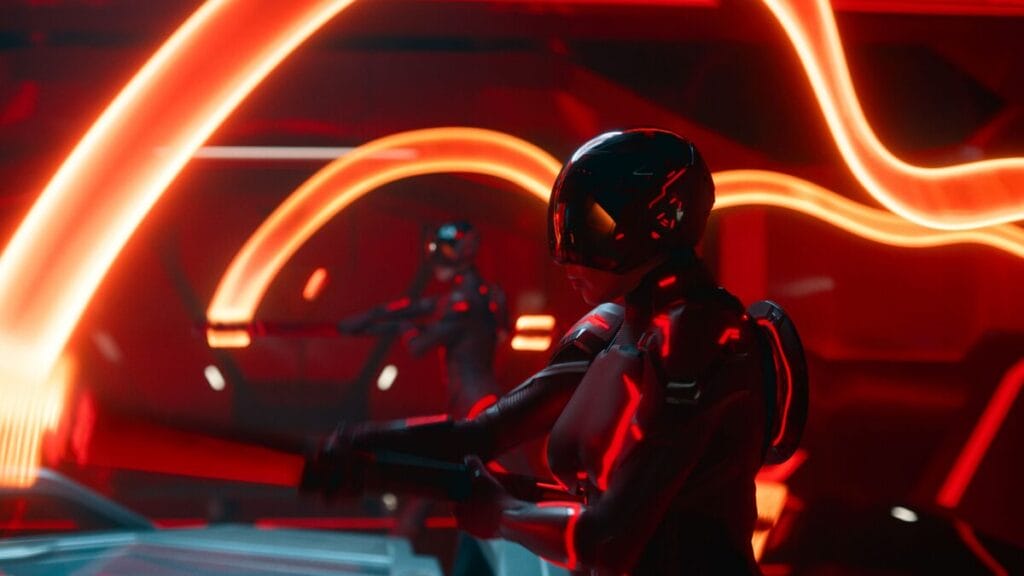
That collision also serves as the basis for the film’s story. The plot this time pushes the Grid into the physical world, exploring what happens when digital life meets with flesh-and-blood existence on planet Earth. It’s an idea that has lurked in the background of the series since the beginning, and Ares finally embraces it fully. The results are thrilling, poignant, and push the cult franchise in a fresh direction, where future possibilities seem infinite.
ENCOM VS DILLINGER
Set years after the events of the second movie, viewers follow a highly sophisticated AI program named Ares (Leto), introduced into the human world on a dangerous mission that threatens to blur the boundary between user and code. As corporate and military interests look to exploit the digital realm for their own gain, Ares finds himself torn between his loyalty to the Grid and his growing understanding of what it means to exist in reality. New allies and old enemies surface as the struggle expands beyond cyberspace, turning the streets of our world into a battleground of glowing trails and collapsing systems.
Ares is brought into being by the brilliant yet reckless Julian Dillinger (Evan Peters), the recently appointed CEO of the well-respected Dillinger Systems company. Their main competition is ENCOM, whose current, aloof CEO, Eve Kim (Greta Lee), is Julian’s moral opposite; someone interested in using the miraculous technology of today for the betterment of humankind, as opposed to focusing it on weapons-grade inventions. Nonetheless, their primary goal remains the same. The two are in search of the Permanence Code (this movie’s MacGuffin in every way), a vital piece of code left behind by the legendary Kevin Flynn (Jeff Bridges) that might allow programs like Ares to exist on the physical plane permanently.
Nine Inch Nails Enter The Grid
Of course, no Tron film can survive without its musical soundscape acting as a central character. After Wendy Carlos’ pioneering electronic score for the original movie and Daft Punk’s epoch-defining work on Tron: Legacy, the bar was impossibly high. Enter none other than Nine Inch Nails. 2x Oscar-winning composers Trent Reznor and Atticus Ross — who have contributed dozens of film scores as themselves but never officially as their band until now — don’t simply step into the shoes of their predecessors, they derezz it all to the ground and rebuild.
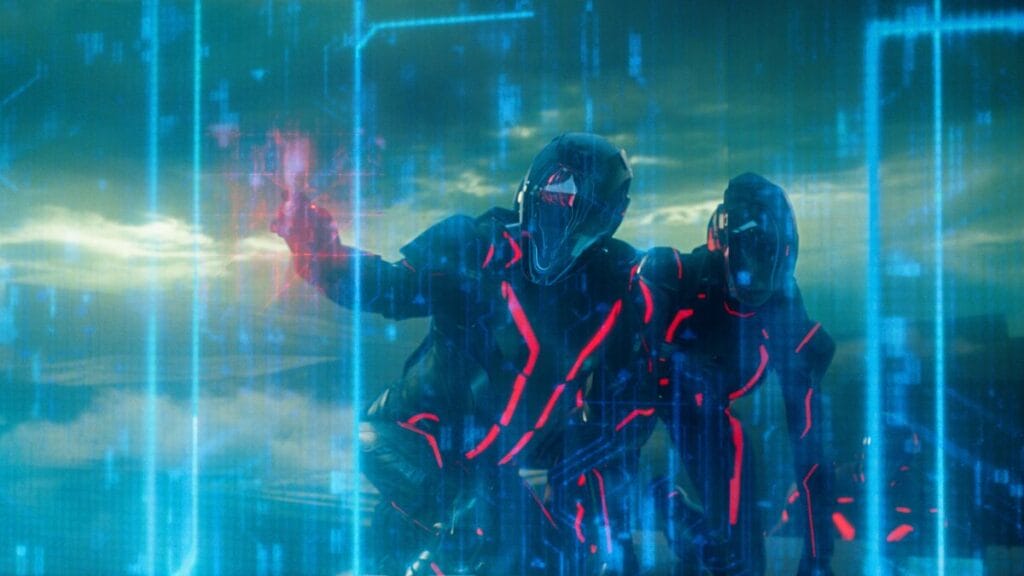
Nine Inch Nails give Tron: Ares a grittier, industrial edge, contrasting digital sterility with raw, uncontrollable chaos. Joachim Rønning has admitted to using their compositions as inspiration while filming, shaping sequences to match the unique menace and melancholy of their soundscapes. The results are electrifying. Where Daft Punk’s work felt like a gleaming symphony of code, Nine Inch Nails infuses Ares with their signature sounds of jagged humanity. It’s not merely background music, it’s pure narrative propulsion. The score becomes the pulse of the entire movie, reminding us constantly of the tension between machine precision and human imperfection.
Jared Leto, Keeper of the Flame
Leto’s presence in major motion pictures has always been divisive, even after his Best Supporting Actor Oscar win for Dallas Buyer’s Club (2013). Also, his last blockbuster outing, Morbius (2022), was a total disaster. However, Ares represents one of his most personal projects. His reverence for Tron isn’t an act; he speaks of himself as a lifelong devotee, and that sense of responsibility translates on screen. As the titular Ares, he embodies a digital warrior stepping into uncharted territory, striking a balance between stoicism and vulnerability. Leto is capable of portraying the physical aspects of the character, but his emotional side is (wisely) restrained. It’s a far subtler performance than people may be expecting, despite all of the action.
The rest of the cast rises to the challenge, too. While everyone is caught in a swirl of glowing visuals and existential stakes, Joachim Rønning ensures the actors remain at the emotional core. It’s easy for a movie this drenched in spectacle to lose its humanity, but the performances thankfully keep the story resonant enough. Greta Lee (Past Lives) especially steals the show with a genuinely sincere performance, as Eve is someone driven by both grief and hope, as well as the overwhelming responsibility of her position as the head of ENCOM. Likewise, Julian’s complex relationship with his mother, Elisabeth (Gillian Anderson), grounds Ares’ main antagonist in an all-too-human web of insecurity.
Imperfect but Ambitious
Like its predecessors, Tron: Ares is far from perfect. The script occasionally stumbles under the weight of exposition, and certain subplots are used more like loose connective tissue instead of contributing to any fully realized arc. Certain secondary characters, like Gillian Anderson’s Elisabeth Dillinger and ENCOM’s CTO Ajay Singh, played by Hasan Minhaj, seem like they had a few important scenes cut in the editing room. The ambition of marrying a complex digital mythology with blockbuster thrills can sometimes strain coherence. However, that’s always been part of Tron’s identity. These movies don’t follow conventional blockbuster rhythms; they aim for something stranger, elusive, and potentially more rewarding over time.
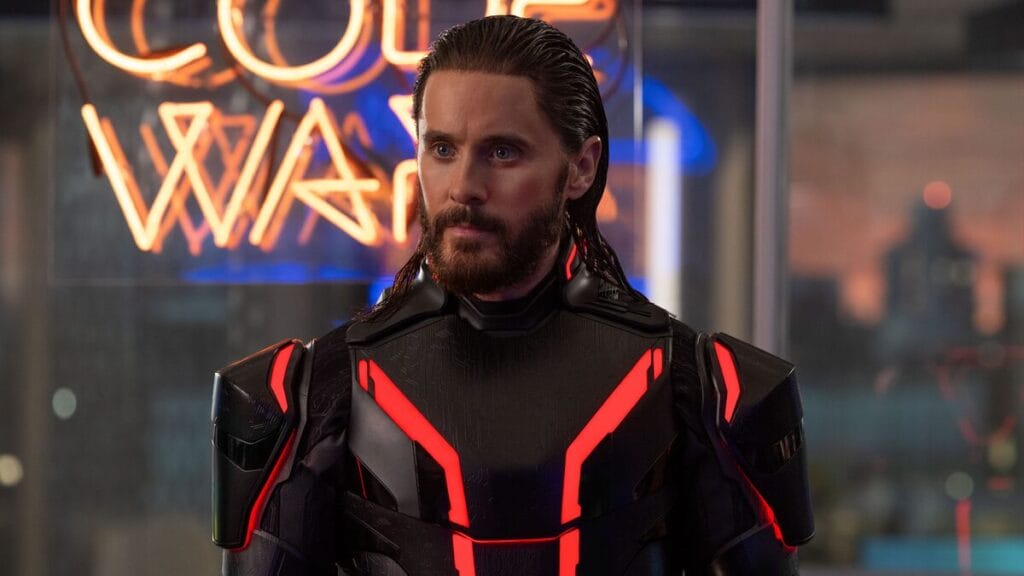
In the end, that’s what makes Ares surprisingly satisfying. It doesn’t try to replicate Tron: Legacy’s elegance or the original’s pioneering techno-babble maximalism. Rather, it accepts the responsibility of being the third chapter in a series defined by experimentation. In doing so, it offers something different: a neon-soaked adventure seeking what it means to cross the boundary between creation and creator, between simulation and life. While these ideas have certainly been worn out in the science fiction genre, Ares finds an exciting and action-packed way to explore them on the big screen.
A New Legacy
Tron: Ares might not convert everyone to the church of programs and users. For those already attuned to the franchise’s rhythm, though, it’s a stirring addition. Director Joachim Rønning succeeds in creating a tactile spectacle that avoids digital overload. Greta Lee delivers the most human and emotional central performance in any Tron movie. Finally, Nine Inch Nails reshapes the series’ sonic identity with an instantly memorable industrial soundtrack. All of this makes Ares emerge as a harmony between homage and reinvention.
The Tron series has always been about bold swings. Sometimes messy, sometimes transcendent, always singular. Ares fits that legacy, ensuring the franchise’s glowing circuits remain lit for a new generation and hopefully beyond. It’s not simply about revisiting the Grid — it’s about proving there’s still plenty of power left in it.
Tron: Ares hits theaters on October 10!

Release Date: October 10, 2025.
Directed by Joachim Rønning.
Screenplay by Jesse Wigutow.
Story by Jesse Wigutow & David DiGilio.
Based on characters created by Steven Lisberger & Bonnie MacBird.
Produced by Jared Leto, Sean Bailey, Steven Lisberger, Emma Ludbrook, Jeffrey Silver, & Justin Springer.
Executive Producers: Russell Allen, Joseph Kosinski, Trent Reznor, & Atticus Ross.
Main Cast: Jared Leto, Greta Lee, Evan Peters, Jodie Turner-Smith, Hasan Minhaj, Arturo Castro, Gillian Anderson, Jeff Bridges, Cameron Monaghan, & Sarah Desjardins.
Cinematographer: Jeff Cronenweth.
Composers: Nine Inch Nails.
Production Companies: Walt Disney Pictures & Sean Bailey Productions.
Distributor: Walt Disney Studios Motion Pictures.
Runtime: 119 minutes.
Rated PG-13.