

After the success of Rian Johnson’s original murder-mystery film Knives Out in 2019, Netflix swooped in with a whopping $450 million deal, promising the world two more installments. Next came Glass Onion in 2022, where renowned private detective Benoit Blanc (Daniel Craig) sniffed out a murderous billionaire on a beachy island, a far cry from the first movie’s Agatha Christie-esque New England estate. Now, the final part of Johnson’s Netflix deal has arrived with Knives Out 3, formally titled Wake Up Dead Man: A Knives Out Mystery (2025), a gothic take on the murder-mystery genre à la Edgar Allan Poe.
Benoit Blanc is called into a small town in Upstate New York for his most dangerous case. A notable priest, Monsignor Jefferson Wicks (Josh Brolin), has been murdered. The obvious culprit is Reverend Jud Duplenticy (Josh O’Connor), a young priest with a checkered past who disagreed with how the tradition-minded and charismatic Monsignor weaponized his cult of personality within the congregation. Is Johnson once again putting an intentional and witty spin on the obvious culprit being the correct one, as he did in Glass Onion, or are there more sinister forces at play in Wake Up Dead Man?
A (Not So) Classic Murder Mystery
The success of Knives Out as a definitive murder-mystery franchise is due, in part, to writer-director Rian Johnson’s mastery of pastiche. Genre is defined by expectation; the best works in any genre lay the foundations for what to expect in future entries. Johnson borrows from these great works and patches them together in a way that is stylistically familiar yet defies classic beats, making the narrative feel as fresh as ever. The Knives Out films nail this balance, and Wake Up Dead Man is no exception. That being said, it’s difficult to discuss Wake Up Dead Man without understanding the contexts of the stories that inspired it.
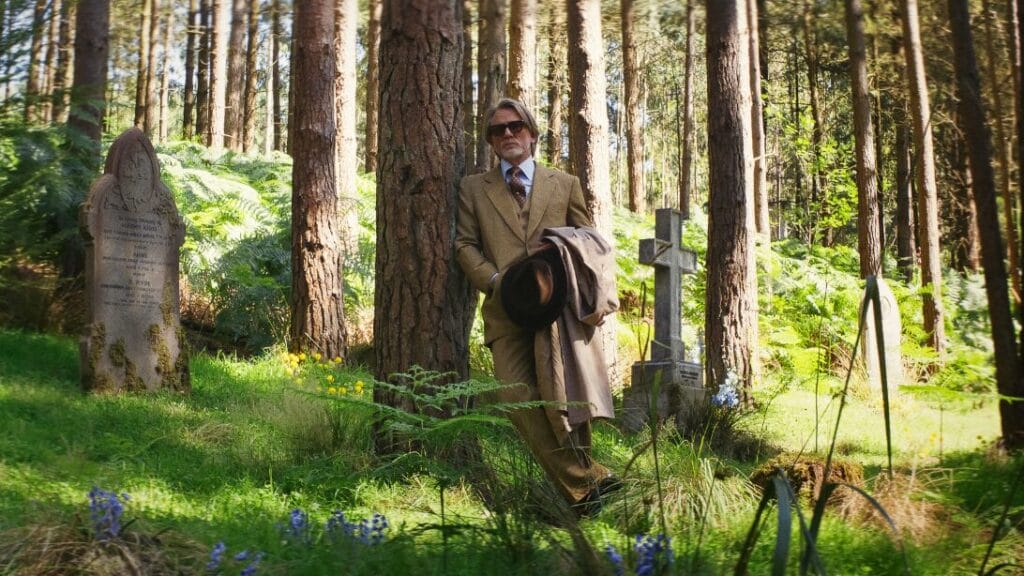
Johnson’s tone in this latest Knives Out mystery harks back to Edgar Allan Poe, who penned one of the first modern detective stories, The Murders in the Rue Morgue (1841). Poe’s name alone conjures macabre images of domed ceilings cast in shadows and the cries of ravens. Sometimes, this is far from the truth. The Murders in the Rue Morgue is set in urban Paris and, by murder-mystery standards, is also somewhat underwhelming. However, Wake Up Dead Man is gothic in a more traditional sense.
An Impossible Crime
Johnson’s setting is a character in and of itself — a beautiful stained-glass-and-stone church shrouded by a forest and haunted by a devastating tale. Steve Yedlin‘s cinematography is beautifully vibrant and rich; the use of hard light and sharp contrasts reflects both the dualism of Christianity (the divine versus the satanic) and the opposing viewpoints of the two priests in the story. The conflict between a loving, accepting church and a fearing, defensive church is conveyed solely through visual storytelling. Yet, while Wake Up Dead Man differs so starkly from The Murders in the Rue Morgue in its gothic aesthetics, they have one thing in common: they’re both locked-room mysteries.
The locked-room mystery is discussed at length in Rian Johnson’s script. It’s defined as a murder committed in a room in which the murderer could not enter or exit without being detected. They can be poorly executed because there is no simple solution to an “impossible crime.” For example, Sir Arthur Conan Doyle’s The Adventure of the Speckled Band (1892) is an exceptional Sherlock Holmes locked-room mystery.
At the end of The Adventure of the Speckled Band, Holmes proclaims that a trained snake committed the murder. He finds a small saucer of milk in a cabinet and deduces that the snake must have been trained with the milk and hidden there, waiting for its moment to strike when alone with its victim. It was the only way to make sense of the clues in an otherwise impossible crime.
But Snakes Don’t Drink Milk, Right?
There are many metaphorical snakes in Wake Up Dead Man, lapping up a large number of metaphorical dairy products. The murder is needlessly convoluted, over-kneaded, and under-proofed. At around the halfway point, it’s not too hard to guess who the real killer is. The mystery is somehow derivative while also attempting desperately to be subversive. As far as constituting a satisfying whodunit, it pales in comparison to the original Knives Out film.
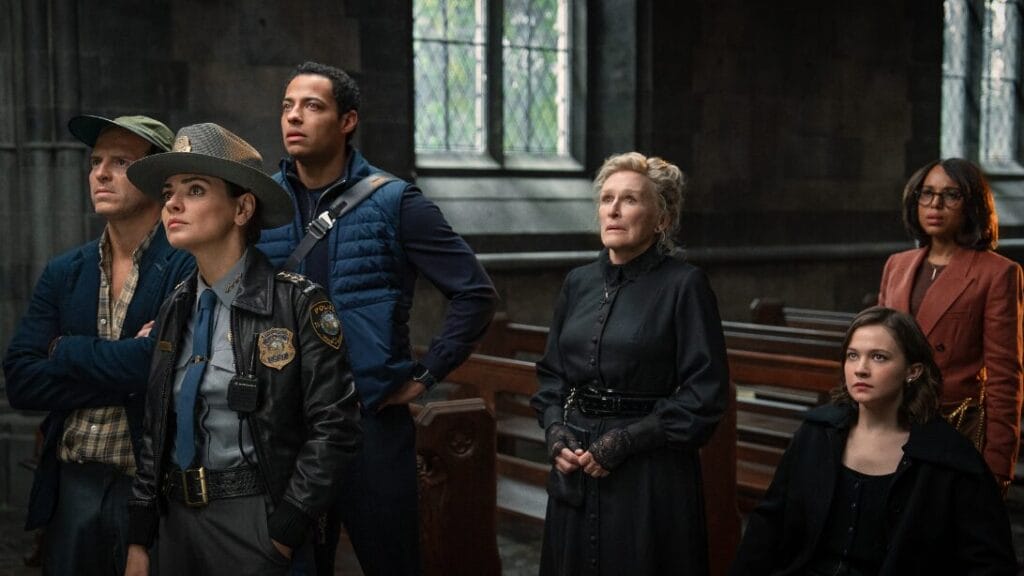
In the hands of a proficient filmmaker like Rian Johnson, it’s permissible if the clues don’t quite make sense — if snakes drink milk. The ironic CinemaSin-like dings in logic are marginal. However, any good story works when the audience cares enough about the characters and the stakes. The better the story, the more willing people are to suspend their disbelief, and Wake Up Dead Man is just engaging enough to distract from the head-scratching technicalities of its plot.
Josh O’Connor is the Heart and Soul of Wake Up Dead Man
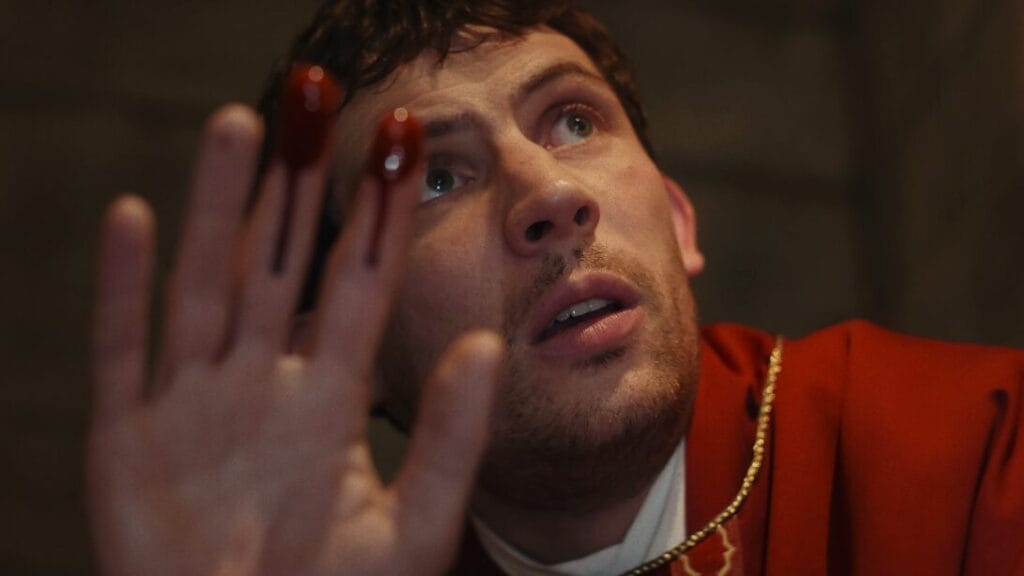
Daniel Craig, charming as always, is having loads of fun as Benoit Blanc, though he just barely straddles the line of flanderization. Still, his performance is entertaining rather than distracting, even if he has less screen time than expected. Josh O’Connor is the clear standout as Rev. Jud Duplenticy. Typically, in a Knives Out movie, there is one empathetic co-lead who directly works with Blanc for viewers to project themselves onto, but Wake Up Dead Man goes further. Jud is the beating heart of the film, its narrative center, representing the church’s loving, comforting possibilities. O’Connor, coming off this year’s The History of Sound and The Mastermind, commands the role with the perfect blend of vulnerability and comedic flair.
Courtesy of Netflix
Rev. Jud offers a large contrast to the callous Msgr. Jefferson Wicks. The previous Knives Out installments play with archetypes as they explore larger themes, but Wake Up Dead Man is the first entry to blend character and theme seamlessly. Each member of the ensemble represents a different relationship with religion, from those being exploited to those abusing it for political gain. Well-rounded, the film does not disavow religion as a whole, but deconstructs how it can be corrupted and abused. Unfortunately, since the plot is structured individualistically, many of the church’s systemic issues are only grazed. The conclusion to the central mystery, too, is steeped in individualistic greed, oversimplifying the themes to an almost hammy degree.
Rian Johnson Assembles Yet Another Stellar Ensemble
Nonetheless, Wake Up Dead Man boasts the best character dynamics of the Knives Out trilogy. The star-studded lineup, including Mila Kunis, Jeremy Renner, Andrew Scott, Daryl McCormack, and Thomas Haden Church, is fantastic. Among the supporting cast, Glenn Close and Kerry Washington are special standouts, especially as women who have to contend with the church’s misogynistic disdain for the seemingly depraved woman defining its history. Cailee Spaeny (Alien: Romulus, Priscilla) as Simone Vivane, a disabled former concert cellist, is touching as well. It would have been far more apt if a disabled actor had been cast in the role, though, as she is a wheelchair user.
If you’re a Knives Out fan, get excited. Wake Up Dead Man is a great installment — an engaging murder-mystery movie that takes audiences on a rollercoaster of twists and turns. Beautifully shot and thoughtfully constructed, it’s simply a good time at the cinema. Even with its messy locked-room mystery, it deserves better than the short theatrical run Netflix is giving it.
Wake Up Dead Man: A Knives Out Mystery hits select theaters on November 26 and then releases on Netflix on December 12!

Release Date: December 12, 2025.
Directed by Rian Johnson.
Written by Rian Johnson.
Produced by Rian Johnson, Ram Bergman, & Katie McNeill.
Executive Producer: Tom Karnowski.
Main Cast: Daniel Craig, Josh O’Connor, Glenn Close, Josh Brolin, Mila Kunis, Jeremy Renner, Kerry Washington, Andrew Scott, Cailee Spaeny, Daryl McCormack, & Thomas Haden Church.
Cinematographer: Steve Yedlin.
Composer: Nathan Johnson.
Production Companies: T-Street Productions & Ram Bergman Productions.
Distributor: Netflix.
Runtime: 140 minutes.
Rated PG-13.