

There’s something almost miraculous about the existence of Daredevil: Born Again Season 2. How the show continues to stand tall as one of Marvel’s strongest efforts, television or otherwise, is one thing. However, we also have to consider how this particular Disney+ original series came to be. Following a creatively turbulent production, showrunner Dario Scardapane and his team had to rebuild the first season mid-flight, and it was evident in the patched-up final product. So, the fact that this second season feels as cohesive and fully realized as it does is nothing short of impressive.
Picking up directly from the seismic events of Season 1, Daredevil: Born Again wastes no time dropping us back into a New York City firmly under the thumb of Mayor Wilson Fisk (Vincent D’Onofrio). Now entrenched as the city’s wannabe dictator, Fisk’s grip is suffocating, enforced through his militarized Anti-Vigilante Task Force that operates with frightening autonomy. It’s a bold narrative pivot that reframes the series from a crime drama to a resistance thriller, paving the way for fan-favorite Marvel characters like the superpowered P.I. Jessica Jones (Krysten Ritter) to finally return to the spotlight. The heroes are no longer just fighting criminals, but an entire system that has turned against them.
Bigger Stakes and Sharper Edges
At the center of it all, Matt Murdock (Charlie Cox) finds himself in the most desperate position audiences have ever seen him in. Forced into hiding and operating in the shadows more than ever before, his war against Fisk now completely relies on strategically navigating through moral complications. Above all else, though, this struggle is extremely personal. Season 2 leans heavily into Matt’s defining dichotomy — the lawyer who believes in the system versus the vigilante who breaks it — and pushes that tension to its breaking point in ways that feel inevitable and deeply compelling.
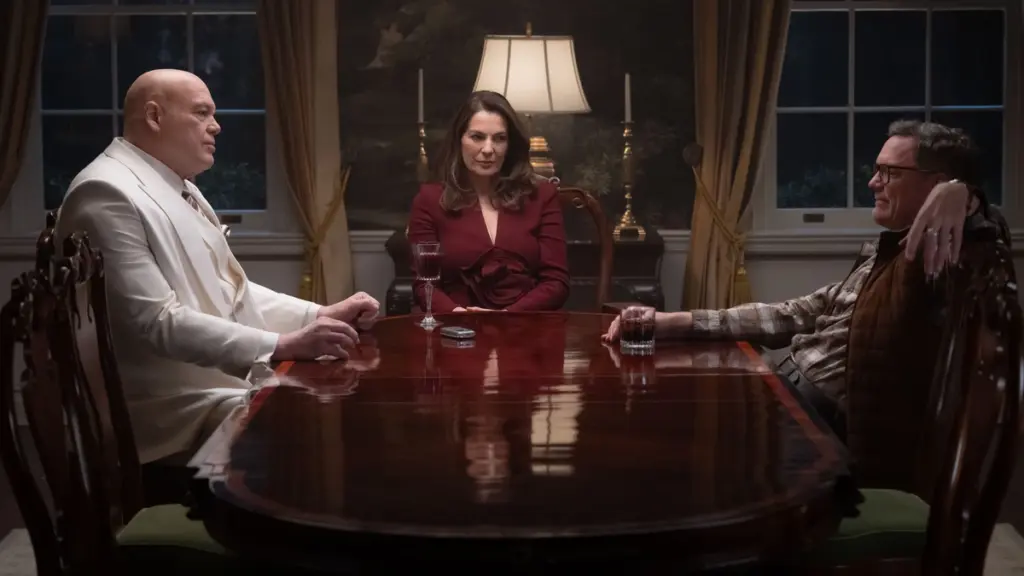
What makes Daredevil: Born Again Season 2 so effective is how confidently it expands its scope without losing sight of what makes Daredevil work. Yes, the stakes are bigger than ever, and the plot has reached beyond Hell’s Kitchen. However, the series never sacrifices its grounded, street-level identity. If anything, the escalation only sharpens the show’s edge. The writing is more assured, the pacing more deliberate, and the thematic weight much more pronounced. This is a story about unchecked power versus desperate resistance, and it doesn’t shy away from how messy those ideas can be.
A Visual Upgrade from the First Season
The overarching sense of escalation carries over into the action, which is some of the best the series has ever delivered. From the expected, brutal close-quarters fights that fans love to far larger, ambitious set pieces (like the season opener aboard a cargo ship and a mid-season jailbreak battle), Daredevil: Born Again Season 2 strikes a near-perfect balance between spectacle and storytelling. There’s a clear understanding here that action isn’t merely about choreography, it’s about character. Every punch thrown, every sequence staged, reveals something about who these people are and what they are willing to do for their respective sides.
Courtesy of Disney
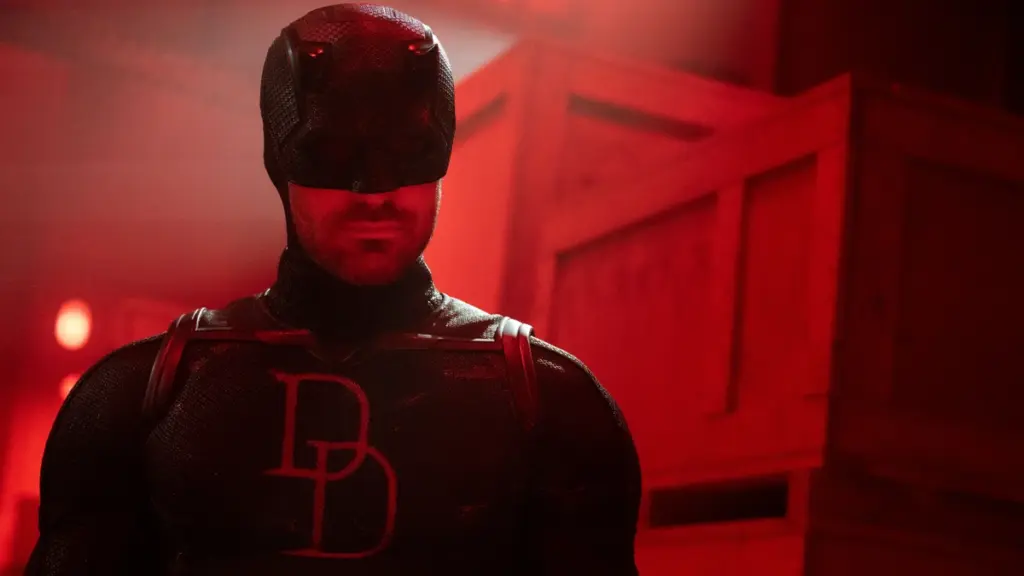
Daredevil: Born Again Season 2 boasts many visual improvements as well. There is a stronger sense of style, a uniquely deliberate use of lighting and color, and a renewed emphasis on atmosphere that recalls the best elements of the original Netflix run. This isn’t a nostalgia play, though, as Born Again continues to forge its own identity. The evolution of Daredevil’s suit is a perfect example of this. In this season, it serves as both a slick visual upgrade that finally gives viewers the long-awaited Double D’s and a subtle reflection of Matt’s shifting mindset.
An Extraordinary Ensemble
Of course, none of this would work without Charlie Cox and Vincent D’Onofrio, who remain the beating heart of the series. Cox continues to bring a layered vulnerability to Matt, capturing his dual resilience and fragility while also delving into his progressing rage as his allies continue to fall. D’Onofrio, on the other hand, is as imposing as ever. Plus, a surprising mid-season development takes Fisk to unexpected emotional places. The two leads share a dynamic that remains electric even when they aren’t in the same room, their rivalry woven into the very fabric of the show, as their respective arcs continue to mirror each other brilliantly.
Another of this season’s biggest strengths is how much time it invests in its supporting cast. Karen Page (Deborah Ann Woll) is given an exceptionally compelling arc, growing in ways that challenge both her and Matt’s moral boundaries. The show isn’t afraid to let her step into darker territory once again, and the key difference between what she’s willing to do versus the lines Matt won’t cross becomes one of the season’s most engaging throughlines.
Elsewhere, returning and new characters alike are given room to breathe. The ensemble is further fleshed out with no one left ignored, adding great depth to the world without pulling focus from its core conflict. Recurring vigilante Bullseye (Wilson Bethel) steps into an excitingly larger role this season, as does Fisk’s supposed protégé Daniel Blake (Michael Gandolfini) and traumatized Muse victim Heather Glenn (Margarita Levieva).
Real World Reflections in Daredevil: Born Again Season 2
The show’s expanded ensemble allows it to explore its themes from multiple angles, too. This isn’t just a story about heroes and villains. It’s about systems, influence, and the way power reshapes people. The parallels to current real-world politics are hard, if not outright impossible, to ignore, but the series approaches them with enough nuance to avoid any heavy-handedness. Instead, showrunner Dario Scardapane uses those ideas to heighten the stakes, making the conflict feel as immediate as possible and uncomfortably relevant.
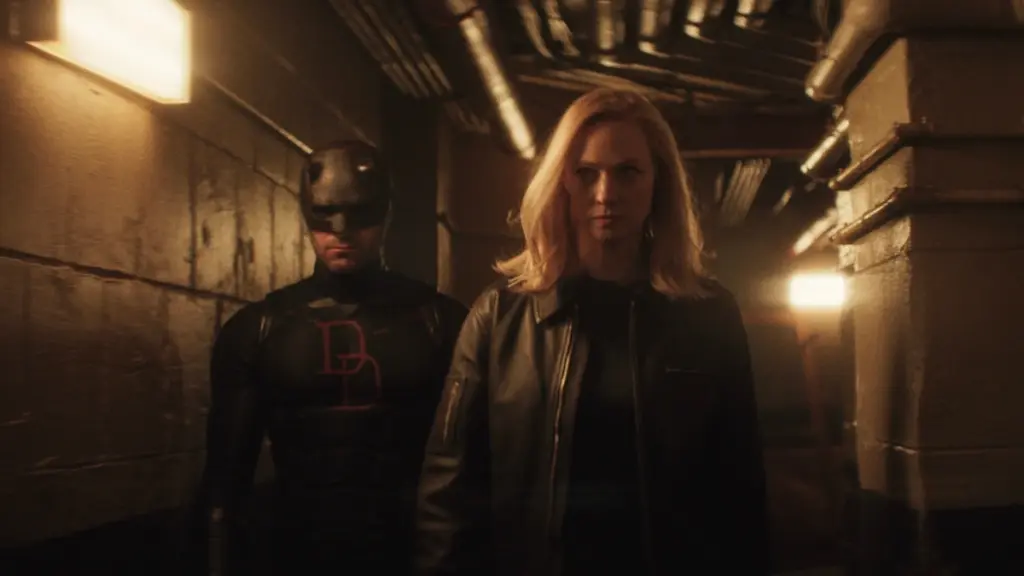
If there’s anything that truly defines Daredevil: Born Again Season 2, it’s the willingness to take actual risks. The narrative makes daring choices that are consistently earned rather than being shocking for its own sake. There’s a genuine sense of unpredictability here, a feeling that no character is safe and that anything could happen, which keeps the tension high from beginning to end. It’s the kind of storytelling that demands investment and rewards it in equal measure, whether you’re an old or newer fan.
A Triumph for Marvel Television
By the time the season reaches its finale, it’s clear that Daredevil: Born Again is nowhere near content to coast on familiarity. It’s actively evolving, pushing its characters and its world into new territory while staying true to what made the original Netflix show resonate in the first place. This results in a rare sequel series that not only lives up to its predecessor but also, in some ways, surpasses it.
In a landscape that’s still crowded with superhero content, Daredevil: Born Again Season 2 stands out by remembering what makes these stories matter in the first place. It’s not about the superpowers or the spectacle or the team-ups and cameos. It’s about the people behind the masks, and the choices they make when the world around them starts to fall apart.
★ ★ ★ ★ 1/2
Daredevil: Born Again Season 2 premieres on Disney+ on March 24!
Created by Dario Scardapane, Matt Corman, & Chris Ord.
Based on Marvel Comics.
Showrunner: Dario Scardapane.
Series Directors: Aaron Moorhead, Justin Benson, Solvan “Slick” Naim, Angela Barnes, & Iain B. MacDonald.
Executive Producers: Kevin Feige, Louis D’Esposito, Brad Winderbaum, Sana Amanat, Chris Gary, Dario Scardapane, Matt Corman, Chris Ord, Aaron Moorhead, & Justin Benson.
Main Cast: Charlie Cox, Vincent D’Onofrio, Margarita Levieva, Deborah Ann Woll, Krysten Ritter, Ayelet Zurer, Wilson Bethel, Michael Gandolfini, Clark Johnson, Susan Varon, Matthew Lillard, Lili Taylor, Zabryna Guevara, Nikki M. James, Genneya Walton, Ayelet Zurer, Arty Frousha, & Tony Dalton.
Composers: The Newton Brothers.
Production Company: Marvel Television.
Network: Disney+.
Episode Count: 8 (Season Two).