

Batman: Knightfall Part 1 – Knightfall promises to launch a new era for DC animation, one navigating the destruction of the caped crusader. Returning to the director’s chair for Warner Bros. Animation‘s latest release, Jeff Wamester (Justice League: Crisis on Infinite Earths) exhibits a darker tale in hopes of rekindling audiences’ admiration for explosive DC animated movies. Batman: Knightfall, published in three parts from 1993 to 1994, is one of The Dark Knight’s most prestigious comic events. Psychologically fragmented by the death of his latest Robin, Jason Todd, and physically exhausted from sleepless nights battling his notorious rogue’s gallery, Bruce Wayne’s psyche is broken. But little does he know that his greatest physical threat yet looms in the shadows.
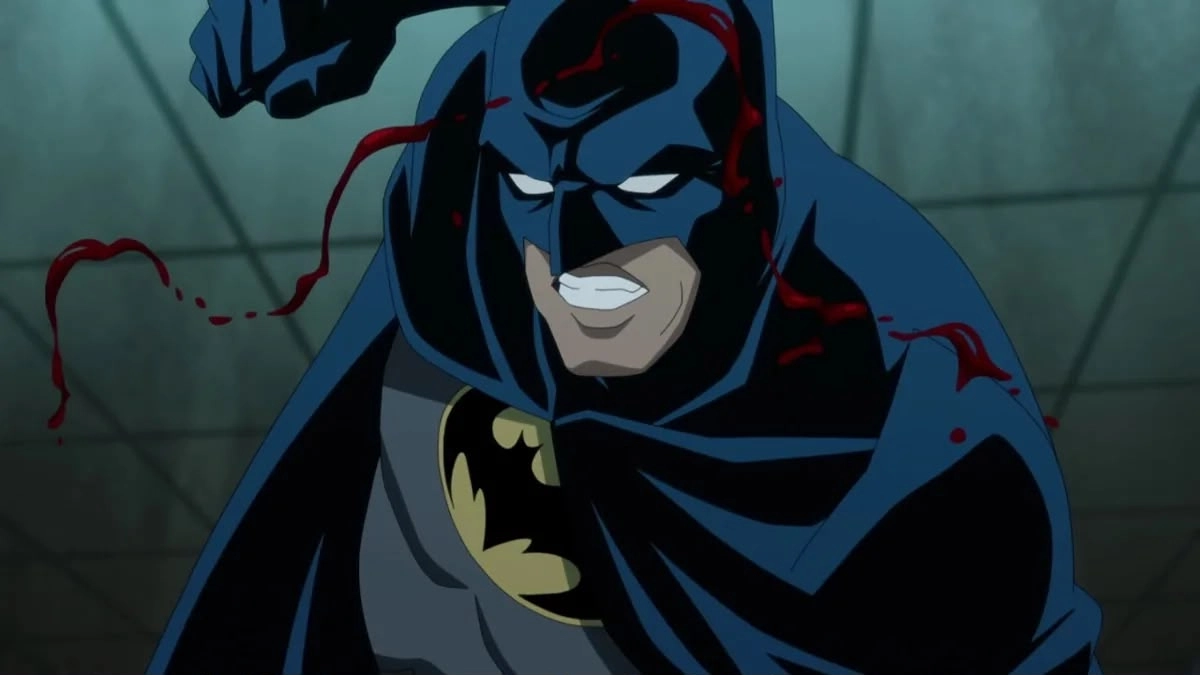
Star Trek star Anson Mount returns to voice Batman in his iconic blue and grey suit, taking over from Jensen Ackles’ (The Boys) reign. Despite a new voice behind the vigilante, this iteration of Batman is the most experienced. Years of vigilantism and detective work have taken their toll, but are called upon after the unexpected destruction of Arkham Asylum. With villains like The Riddler, Mad Hatter, and Victor Zsaz on the loose, and a mysterious foe in the midst, Batman must also confront his inner turmoil to save Gotham once more.
Thanks to its brutal antagonist, Batman: Knightfall Part 1 dodges some of the errors of past DC animated films. However, as exciting as a promised animated Knightfall trilogy seems, other underwhelming elements here may temper fan expectations.
Huge Stakes Stagnated by a Slow Introduction
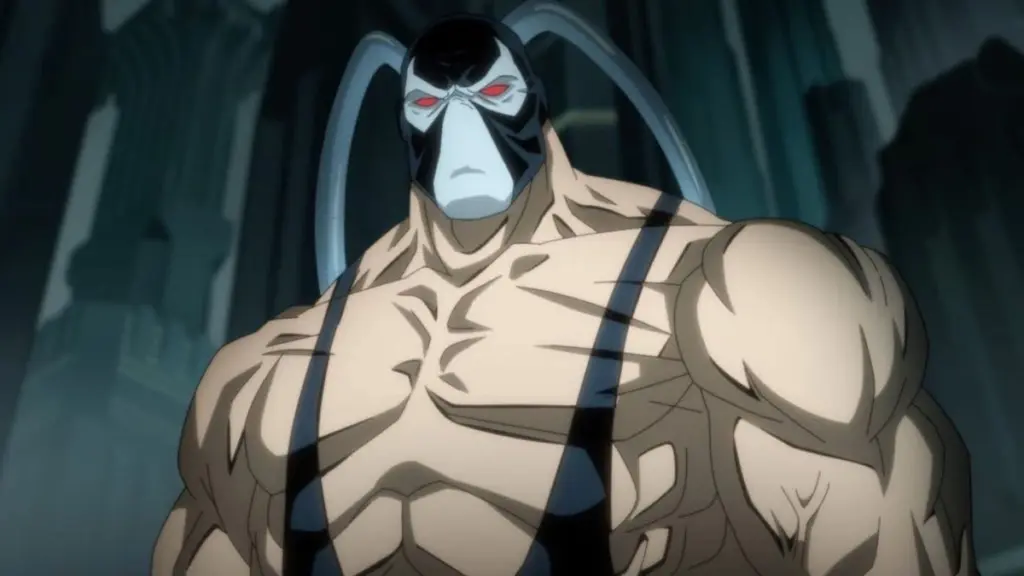
A recurring theme throughout Batman’s collection of supervillains is the unquenchable thirst for control and power. From the Joker to Mr. Freeze, whether live-action or animated, the ultimate goal is absolute domination over Gotham City. Thus, it’s no surprise that Batman: Knightfall Part 1 reproduces this narrative, but strives for a thematic edge with the titan-infused supervillain Bane, voiced by Michael Mando (Spider-Man: Brand New Day). Born inside the prison walls of Peña Duro and forced to serve the life sentence of his father, his upbringing was defined by pain, torture, and survival. While Bane’s emotion-driven introduction is rooted in his relationship with his ill-stricken mother, Knightfall Part 1‘s beginning is disappointingly sluggish.
Courtesy of Warner Bros. Animation
The film’s biggest crime is falsely believing it explores fresh territory in an all-too-familiar opening. This target audience already recognizes Bane, plus this version isn’t unconventional enough to warrant such a deep fascination with a relatively ordinary origin story. Admittedly, many pacing complaints end here, but the movie immediately races against a razor-sharp 79-minute runtime that barely succeeds in concluding the first of three confirmed parts. Even for newcomers, this introduction isn’t compelling enough for the indulgence it provides. Brief moments, such as young Bane’s aggressive disdain for weakness and, consequently, his isolation, are flashes of brilliance. Though they quickly simmer out in favor of playing the rest of this first chapter safe.
DC Animation Has Plenty of Room to Grow
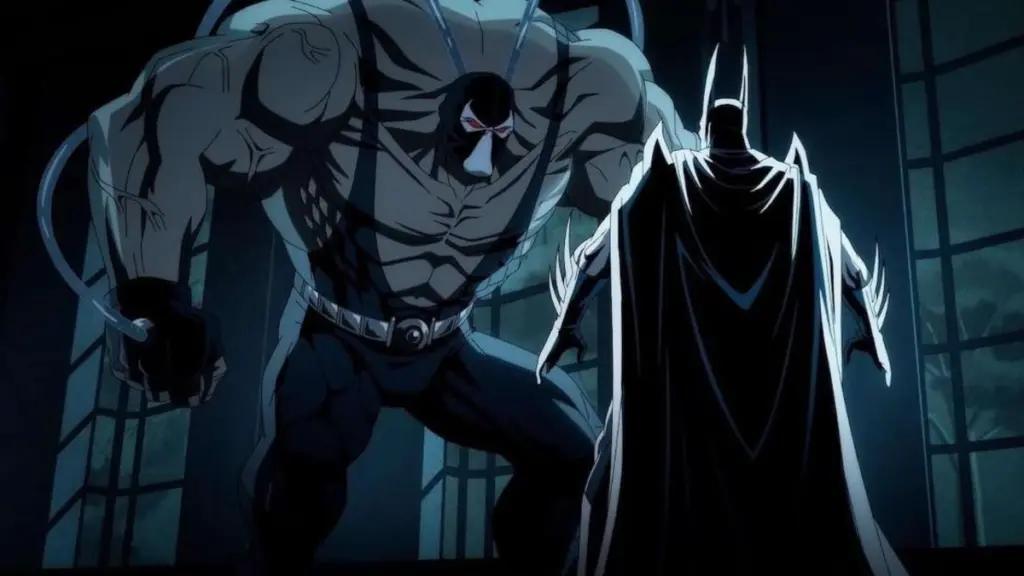
Frustratingly, this trend continues with the introduction of Batman, Tim Drake/Robin (Jack Giffin), and Azrael/Jean-Paul Valley (Pablo Schreiber). The film’s animation style often feels uninspired and wooden, showing off the occasional riveting action sequence. To temper an overly negative impression, the singular interaction between Jean-Paul Valley and Batman in Gotham is exceptionally done. It deliberately misdirects audiences through suspense before a brutal dismemberment of criminals distinguishes a clear moral separation between the two characters. However, these moments are limited. While an improvement from past animated DC adventures, no matter how low that bar might be, fans may still question why the visual style lacks confidence and isn’t more experimental — especially during such a revolutionary period of the medium.
Courtesy of Warner Bros. Animation
The rather safe animation style undersells the gravity of Batman’s circumstances. With the characters each possessing wildly unique fighting methods — Bane utilizing sheer brawn, Batman his martial arts, and Azrael a damn fire sword — they all come across far too similar. Additionally, the look of Gotham City is spiritless. Strangely clean and lacking the usual sinisterness, this version, albeit mildly unique with its visualization of Arkham Asylum, feels closer to Metropolis than the underbelly of DC’s criminal society. Batman: Knightfall Part 1 is frequently describable as passive, and for lack of a better word, just fine. An electric conclusion ups the ante mildly, but still doesn’t quite match the stakes on display.
Robin and Azrael Steal Batman’s Limelight
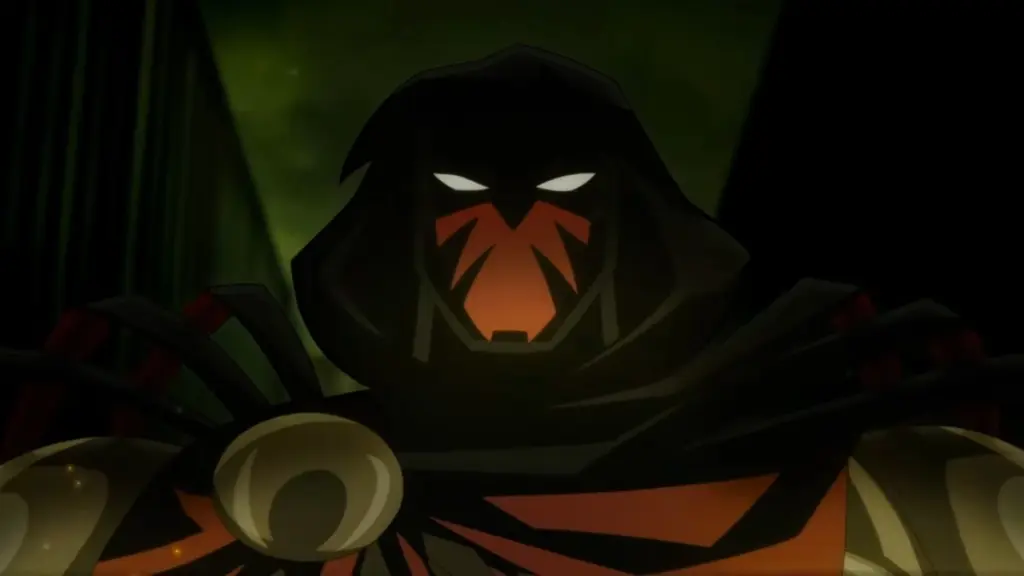
The nucleus of the Batman: Knightfall storyline is the titular Dark Knight’s struggle to overcome trauma and learn to trust again at his physically weakest state. Here, Knightfall Part 1 finally succeeds. This exploration of Bruce’s inner turmoil and its direct consequence on those he promises to protect is magnetic. It’s addicting to watch this “perfect” specimen of intelligence and muscle slowly crumble over 79 minutes. Batman becomes weaker and more human, succumbing to violent rage as his rogue’s gallery torments Gotham in the guise of Bane’s shadowy masterplan. The stunted runtime and pacing prevent a richer deconstruction of Bruce Wayne, though. Instead, this is traded for a handful of generic beats in fear of losing momentum.
Courtesy of Warner Bros. Animation
Batman controversially takes a narrative backseat for Tim Drake’s Robin, with the pair sharing a strained relationship. The Boy Wonder rebels against his mentor’s orders as he attempts to rehabilitate the self-demonized Jean-Paul Valley during psychotic bursts of killing instinct. Together, the newfound duo thrillingly utilize their detective skills to uncover the man behind Gotham’s demise. Yet, much like the splintered psyche of Batman, Azrael’s descent to darkness is frustratingly refused enough room to breathe. He enters and exits with a pre-established backstory guaranteed to confuse newcomers, regardless of the promise of context to come. For every success, another flaw prevents Batman: Knightfall Part 1 from truly flourishing.
An Epic Cliffhanger Saves the Day
One aspect certain to arrive uncontended is Pablo Schreiber’s (Halo) immense voice performance as Azrael. Alongside Michael Mando’s Bane, the two inject calamitous energy into their roles, rescuing moments of stagnation under Anson Mount’s Batman. Although, excluding the final scene, Mount’s vigilante isn’t provided the same gravitas of material as his Bruce Wayne. In the next two installments, fans will be clamoring for more of these dark characters, as Mando and Schreiber individually save Batman: Knightfall Part 1 from feeling lifeless. Their anger, guilt, and satisfaction build up to some of the best DC animated performances in years, up there with the likes of Kevin Conroy’s Batman and Mark Hamill’s Joker.
Batman: Knightfall Part 1 is a bit of a mixed bag. Each of this animated movie’s successes is weighed down by some kind of baggage, revealing itself to be an unadventurous retreat back into mediocrity. Director Jeff Wamester’s enthusiasm prior to the film’s screening at the 2026 Annecy International Animation Film Festival is misplaced, but admirable. Perhaps it’s an indication that DC’s animated Knightfall trilogy will form a complete picture in the end, allowing each singular chapter to shine. Parts 2 and 3, Knightquest and KnightsEnd, will release at a later date. For the time being, Batman’s latest animated feature is undercooked. It’s only saved by exceptional voice acting performances and an intriguing dismantling of The Dark Knight’s identity.
★ ★ ★ ☆ ☆
‘Batman: Knightfall Part 1 – Knightfall’ hits Digital on August 25!