

In my lifetime, the seedy presence of the British tabloids has never waned. Even now, older generations in the U.K. have allegiances to certain papers, perhaps candidly for the sake of content and curation, but often out of sheer routine. Some of my earliest memories consist of being sent to the shops to pick up a paper for my grandmother. Her poison of choice, The Daily Star, would lie in stacks alongside a plethora of other titles, including the most popular competition: The Daily Mirror and The Sun. Though these tabloid newspapers share an uncanny resemblance now, they weren’t always so alike.
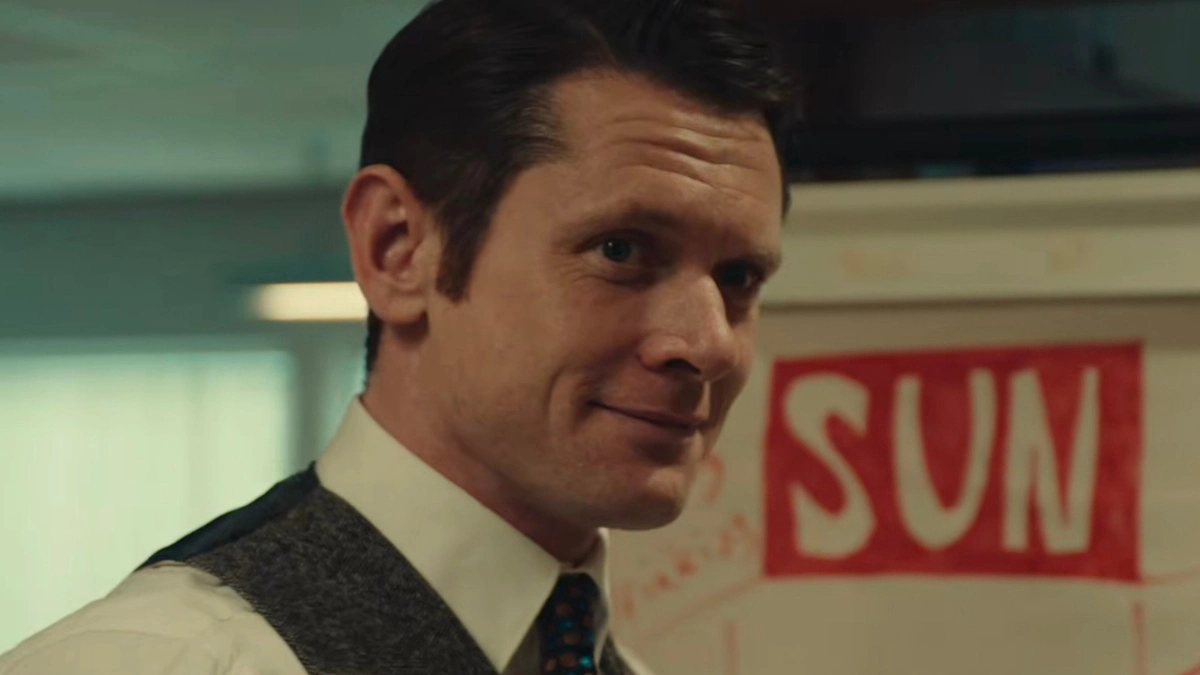
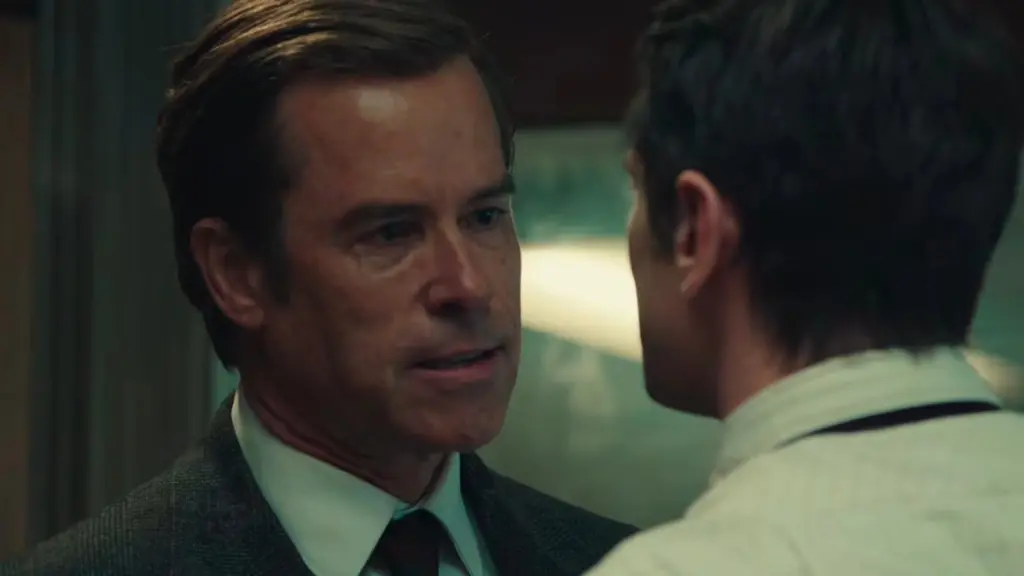
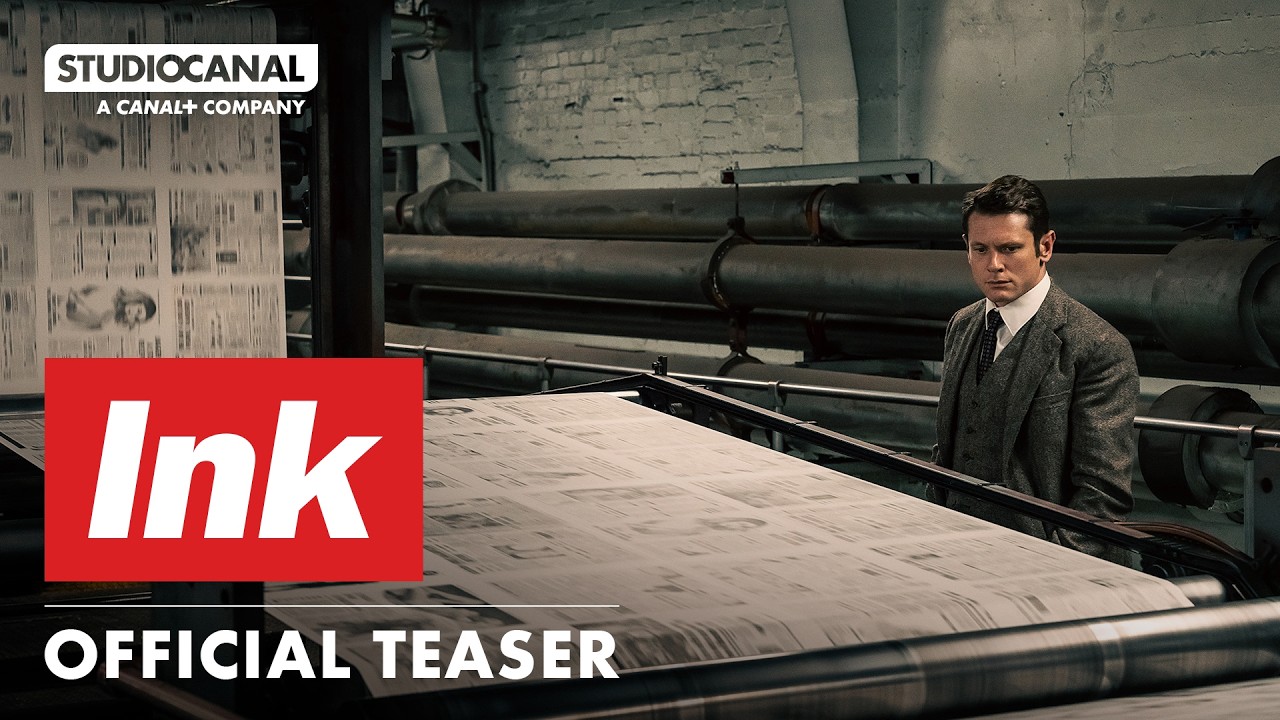
While The Mirror launched as Britain’s inaugural tabloid at the turn of the 20th century, The Sun was largely disregarded as a broadsheet until Australian-American media mogul Rupert Murdoch bought the rights in the late ’60s. It’s this moment in time where Danny Boyle’s Ink (2026) kicks off its narrative. In the heart of Fleet Street, the historic hub of the British press, Murdoch (Guy Pearce) courts editor Larry Lamb (Jack O’Connell) over wine and a gourmet meal in an attempt to poach him from The Daily Mirror. He’s trying to realize his dream of a new boundary-pushing paper.
After striking an agreement, Murdoch and Lamb stand in a hushed street and press their faces against the concrete, hearing the roar of printing presses beneath them as if it were a call to arms.
The Wolf of Fleet Street
Before long, it is Lamb’s turn to try his hand at poaching. One by one, he approaches colleagues from his previous newsroom, including his long-term mistress Jules Davies (Claire Foy), selling her and the others the same promises passed down from Murdoch. Lamb finds no trouble in assembling a team, each with their own expertise, as trivial or mass-appealing as it may seem. However, their first edition fails to satisfy Murdoch’s craving for something that breaks the mold, sending them quite literally back to the drawing board. What emerges on the next attempt is a series of topics that prioritize readers’ entertainment and attention, no matter the prospective reputational cost.
Written by James Graham, the playwright who wrote the original production of the same name that debuted on the West End in 2017, Ink fluctuates in effectiveness as it chronicles the rise of The Sun. The film’s first half is fairly steady and justified in its tameness, but as time passes and actions become more questionable, the script reveals itself to be far less scathing and more empathetic than warranted. What the audience sees is ultimately just a glimpse into a long and tempestuous history of what is now widely regarded as one of the most detested and untrustworthy news sources in all of Britain.
Tonal & Technical Blunders
As the film’s snapshot in time draws to a close, it positions Larry Lamb as an Oppenheimer-like figure, except without an ounce of remorse or concern for anything outside of his individual legacy. Only in the fleeting minutes does Ink allude to the harrowing cost of Lamb and Murdoch’s mission to perpetually provoke the public. Without exaggeration, the toxic culture that they incited has become a staple of the British mediascape and has time and time again proved fatal without consequence. This is something you would have hoped the movie would be more interested in wrestling with.
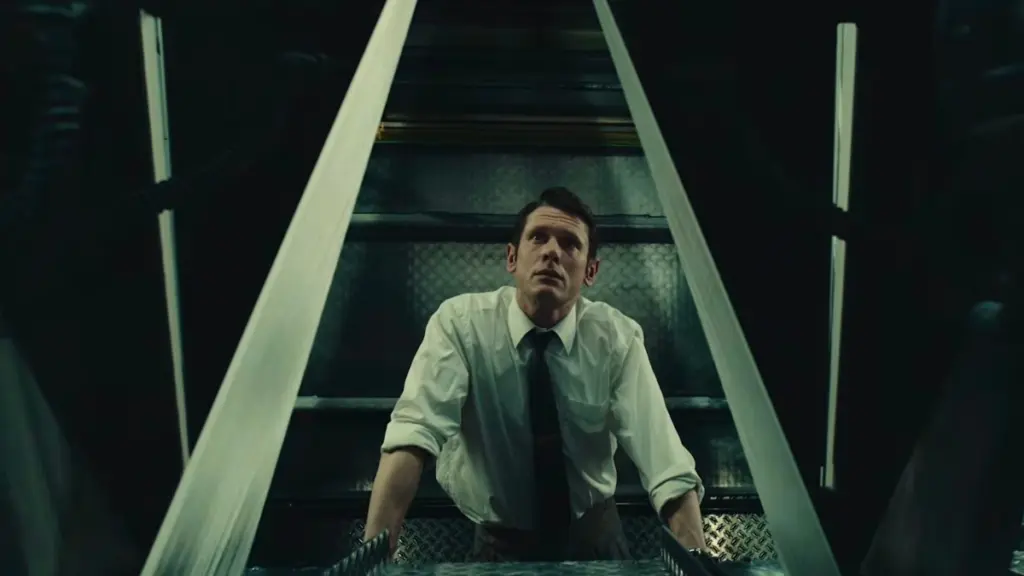
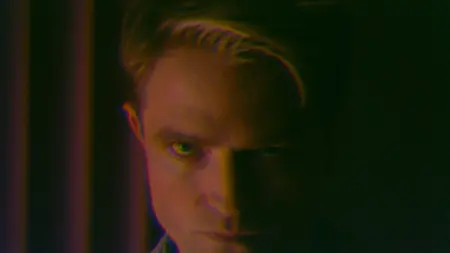
Director Danny Boyle tries to inject a touch of cinematic flair into this story, but it feels tonally incompatible. Between bringing back his signature 360-degree iPhone rig from 28 Years Later (2025) and using a fisheye-turned-GoPro lens for an intense kidnapping scene, the brief moments these techniques are employed are difficult to perceive as anything but inopportune. As interesting and visually stimulating as Boyle’s style is, the film’s tone doesn’t feel like a good match, especially with its underwhelming script.
A Soft Script Stifles Performances
On the note of Ink‘s screenplay, any and all issues with the performances stem from it. There is no doubt that Jack O’Connell (Sinners, 28 Years Later: The Bone Temple) is a commanding screen presence and has little issue carrying the majority of Ink on his shoulders. However, his character is astonishingly not given much chance to show any evolution. Even in the moments he is afforded that opportunity, his heavy-handed accent work tends to divert attention.

Meanwhile, Guy Pearce (The Brutalist, The Dog Stars) as Murdoch tends to disappear into the background and suffers from the same textual deficiencies, no fault of his own. The Crown star Claire Foy equally tries her best, but even she is not entirely immune to the one-dimensional nature thrust upon all of the film’s female characters.
The bones of Ink‘s premise have the potential to examine how becoming the most successful outlet in the highly competitive newspaper industry birthed an untamed monster. Danny Boyle’s film only breezily traces over the pinpoints that changed the trajectory of the British media landscape and set it on a course toward the madness viewers know it to be now. Ink lacks the discipline, or rather determination, to take sides and point fingers, opting to go out on a hushed whimper instead of a biting roar.
★ ★ ½
‘Ink’ hits select theaters on December 11 and Netflix on January 8, 2027!
Release Date: December 11, 2026.
Directed by Danny Boyle.
Screenplay by James Graham.
Based on the play Ink by James Graham.
Produced by Danny Boyle, Tessa Ross, Michael Ellenberg, & Tracey Seaward.
Executive Producers: Tonia Davis, Zoë Edwards, James Graham, Ron Halpern, Anna Marsh, Joe Naftalin, & Sudie Smyth.
Main Cast: Jack O’Connell, Guy Pearce, & Claire Foy.
Cinematographer: Alwin H. Küchler.
Composer: Daniel Pemberton.
Editor: Fin Oates.
Production Companies: House Productions, Media Res, Decibel Films, & StudioCanal.
Distributors: Netflix (U.S.) & StudioCanal (United Kingdom).
Runtime: 116 minutes.