

Each year Sundance Film Festival kicks off the festival circuit whilst launching several films from all across the globe. Over the years it has become a launchpad for notable feature directorial debuts, this year is no different with the premiere of Sundance Labs Alumni Sean Wang’s DÌDI (弟弟) generating waves of buzz. The coming-of-age film delves into the complex experience of growing up as an Asian-American teenager in the late 2000s. We follow the mischievous yet kind of awkward Chris [Izaac Wang], a Middle Schooler who is clumsily navigating his growing romantic desires, evolving friendships, and complex family life. The film explores themes of cultural identity, shame, and self-discovery, reflecting Wang’s own experiences during adolescence.
DÌDI (弟弟)‘s authenticity, emotional depth, and the crafted balance of humor and poignancy make for a well-rounded and pertinent viewing experience, as after all, we were all thirteen years old at some point. To celebrate the film’s release in UK cinemas, we sat down with director Sean Wang to discuss the genesis of a script that feels so anecdotal and how the real essence of ‘coming of age’ occurs far later in life, as we grow and gain perspective.
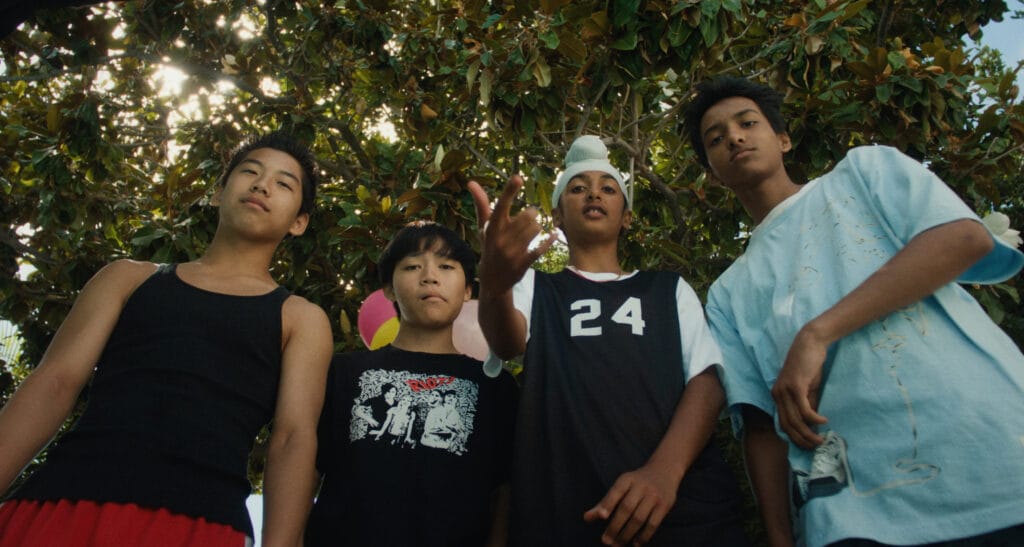
With any script that is this personal, I’m always curious to hear about what the jumping-off point is- where do you even begin?
For a while, it was less about writing the script and more about just remembering things and thinking that would be a funny scene. I just try to write things that I would want to see in a movie. They didn’t have to be full scenes, it was a very haphazard way of writing.
Once I had a lot of material I knew there was something here something there, which became what is all of this and what is the story here? From the beginning, I wasn’t interested in writing a memoir, but I did feel like there were so many things from my own upbringing and my adolescence, that I felt like I hadn’t seen in the movies I love that play around in this genre.
So, it kind of started from a place of writing aimlessly and trying to have fun with it, and then you turn to the intellectual side of your brain and ask yourself what the story is here, which I realized that the story is obviously about a 13-year-old, but ultimately id if we’re going to write a story about an Asian-American boy in the late 2000s, this idea of like, shame and how he wrestles with different forms of it in his life whether it be personal shame, cultural shame or societal shame, that was all going to be baked into the movie. I realized that was what the movie is about, shame and love as well as how those things inform one another. It all started from that place of just remembering things and modifying all of them to serve the theme of the story.
When many of those moments are anecdotal in a way and you are adapting them for the screen, is there a balance you have to reach between staying true and embellishing?
The way I describe it now is like, the container is autobiographical, but everything within that container I felt the freedom to embellish, combine, cut, fictionalize, and dramatize for the sake of the story. I always knew I was going in that direction, but I went to the Sundance Screenwriters Lab, and my first mentor there was Lulu Wang. She gave me a note and told me to just free yourself from the responsibility that you think you have to the people in your life and look at the people you are writing as characters. I think she did the same thing with The Farewell, she got all of that on the page and said I have to remove myself from all of that and look at these people as characters who are in a story. It’s all about how can we embellish fictionalized and tweak things to make the richest possible version of the story. So, to answer your question, we embellished a lot but also stayed true to a lot of things because it fit the themes of the story.
What I love so much about this film is that it taps into such a broad audience of people who will be able to relate to it, whether it be children of immigrants, or people like me who were Third Culture Kids. You touched on it briefly, but there aren’t really any coming-of-age films that delve into cultural shame. I really grappled with that as a teenager and it wasn’t until I hit my 20s that I did a full 180 on it and realized that was not who I was. Did you have that kind of moment ever in your life?
I mean, I think I’m having it right now. We’re playing in a genre called ‘Coming of Age’ and I think everybody will label it that, but the kid in the movie doesn’t really come of age. He grows, changes, and learns some lessons, but by the end of the movie, he’s not thinking ‘I am so proud’. He doesn’t have these big epiphanies or big movie moments where he thinks he is now wise as he enters high school.
I feel like the real coming-of-age element in this film is what you just mentioned that I also went through in my 20s being able to look back at that time and knowing that now I have the perspective and the distance to look at it objectively, but also realize that so many things that happened back then and the way that they shaped me for good or bad. I’m now unpacking and processing it and that was the journey of writing the script. I’m turning thirty in a few months and it feels like I’ve just now gotten to the other side and feel like I’m a different person.
Retrospect is crazy.
Retrospect is crazy!
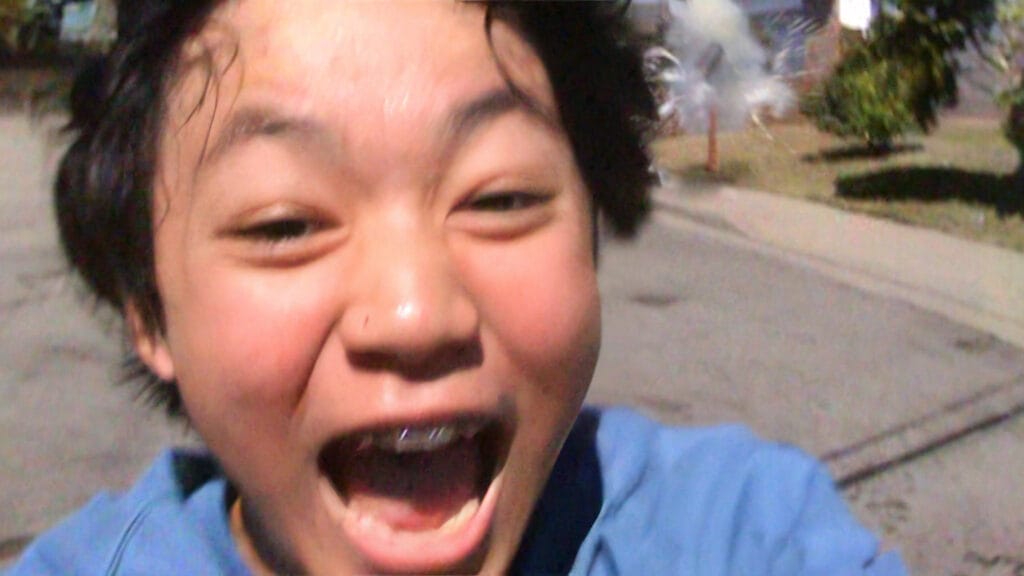
My teenage years were all about just trying to be a chameleon and blend in, but I realize now that I lost so much of myself at the time in that process.
I don’t even think that the character in the movie is doing it purposefully either, I didn’t know I was doing it either, it’s very insidious and ambivalent. There is a line one of the girls says in the movie and it’s ‘You’re cute for an Asian’, I heard that growing up and so many other things like ‘You’re the coolest Asian I know’ or ‘I don’t even see you as Asian’.
They think it’s some sort of compliment, but when you’re that age, you don’t have the perspective or vocabulary to diagnose it, but when you’re in your 20s looking back and breaking down all the little layers of what that means, and what it means is that you as who you are is just less than a cultural standard and that does something to the way you look at yourself. These were all labels assigned to me that I didn’t choose. So, the film was a container to explore all the behaviors that led to this. All the kids in this movie, grow up to be people like us, so we don’t need to overtly explain the lessons that they learned in the movie.
Speaking of the kids, is it difficult to cast someone when you know that there are parts of yourself that you need them to embody to some degree, and what made Izaac [Wang] the perfect choice?
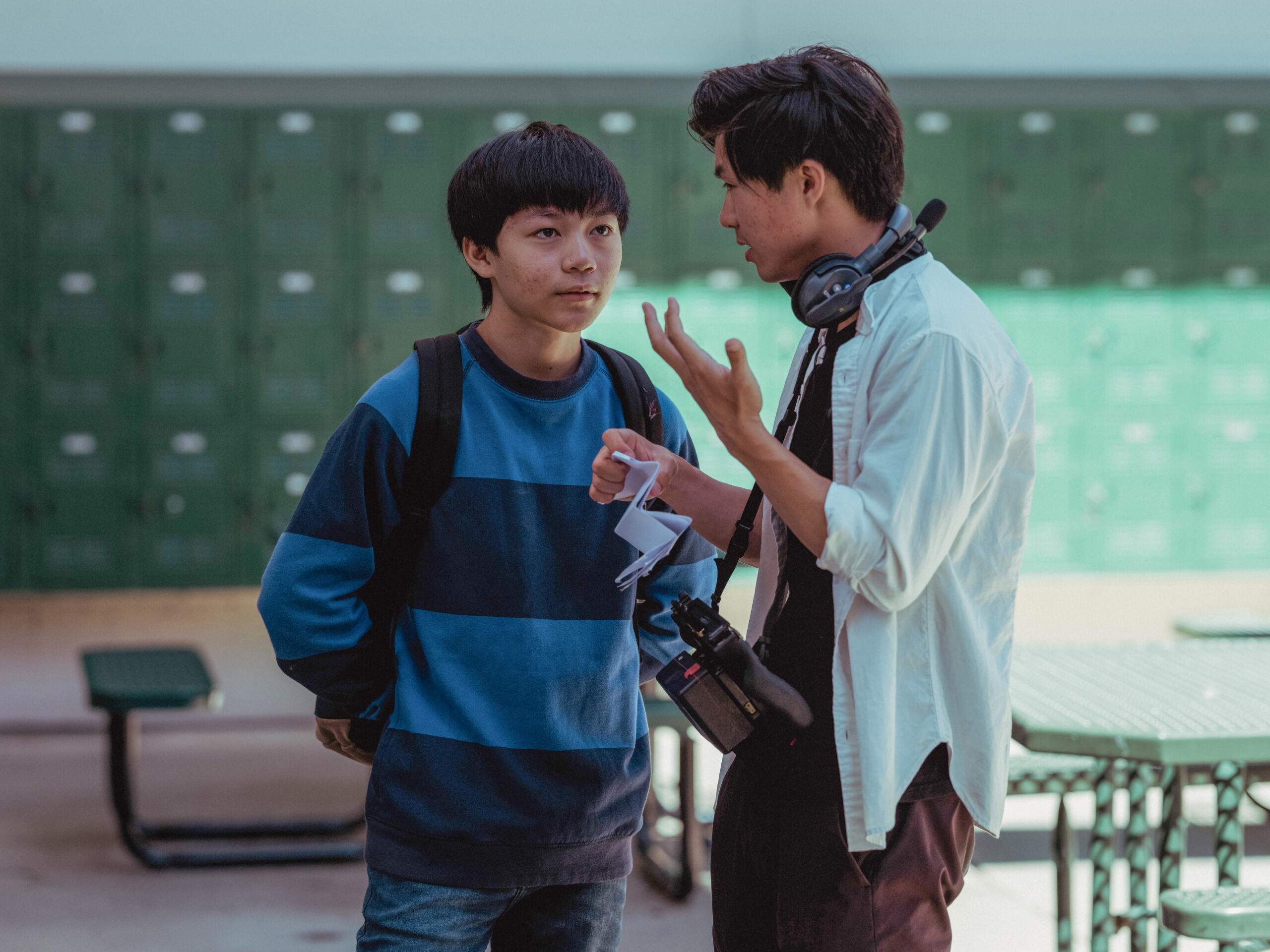
I think by the time we were casting I had fully realized that this character was not me, so it was a matter of what is right for the character. On the page Chris is someone who is both angsty and meek, and not a dweeb, but also not the coolest kid in his friend group. That was a hard thing, finding someone who could be that, who was cool enough to believe that someone like Madi would have been interested in him, but he’s also believably someone who could be like let me try to tell this squirrel story.
It was about finding that balance and Izaac brought all of that, he was someone you could believe kind of fumbles through things, but also you could believe that someone would say to him ‘You’re the coolest Asian’ at that time. From a performance perspective, he is an actor and we could trust him with a movie of this size, it’s not a huge movie, but still, it’s a lot of money. He’s carrying the whole thing, he’s in every single scene, and that is a lot to put on any person, but for someone his age to take you on a journey and have an emotional arc. His performance in the movie is very crafted, it was never just him being like I’m just gonna be myself and then it can be figured out in the edit, it was very nuanced and calculated.
He’d never led a movie before, but in that sense, it felt like the natural progression for someone like him who had done acting before but was over being a child actor by the time we started shooting. We gave him this experience where we said forget all about your training as an actor and just come in and be the kid that you want to be, but in a movie. Be a punk, be angsty, be all the things that you probably otherwise have to hide.
What is it like trying to get a group of modern kids to wrap their heads around the culture and technological scene of the late 2000s? Was it hard to get them to grasp things like flip phones and MySpace?
It was mostly confusing when we were just talking about it. The good thing about all the MySpace stuff was that we built it all in post, so it’s not like they had to learn how to remove their top friends or anything [laughs]. With the flip phones, I can remember Izaac flipping it open but then using two hands. But it wasn’t that hard, because the bet that we were taking is that being thirteen and the experiences you go through at that age are the same across generations and that’s why we can watch movies like Stand By Me from the past and still resonate with those emotions.
The context of the culture is different, but the emotions are the same. So it was that it was kind of empowering being able to tell them, don’t act like you have to change who you are to be thirteen in this time. I do think that the irreverence you have as a kid now that it feels consistent. We would improv a lot on set and sometimes a present-day word would sneak in that we didn’t use back then, so I would have to say that was great, let’s do it again, but just don’t say bet.
It’s funny how things like that are such clear indicators of the time.
Exactly, it’s the small things.
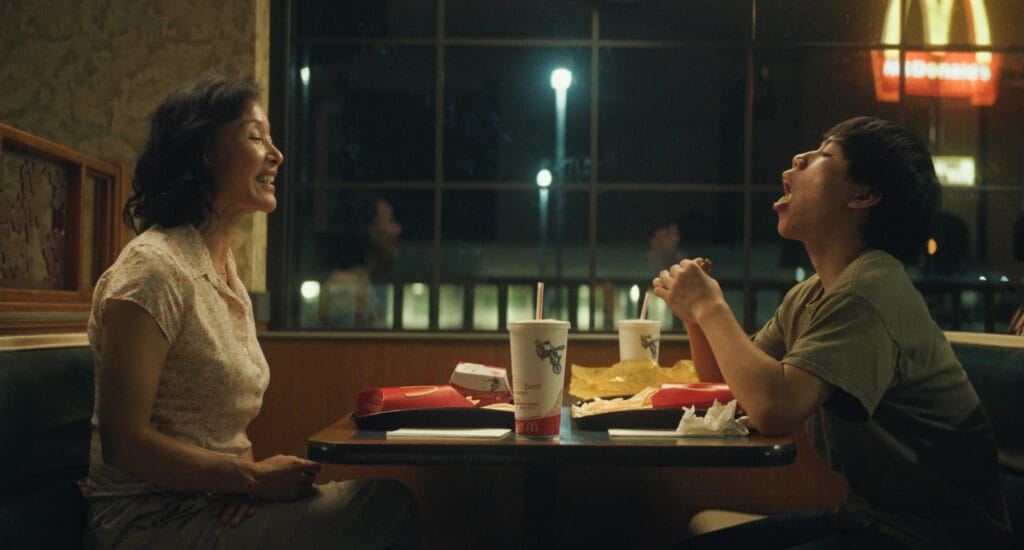
Did you draw any inspiration from other films that tap into this specific age of the childhood to adolescence transition?
So many, but also not just necessarily from this age period. I think any movie that I felt like it didn’t pander to kids. I love Stand By Me and that was a big influence. 400 Blows, This is England, Water Lilies, It Felt Like Love, Ratcatcher, but then also things like Spirited Away or Beasts of the Southern Wild. Any film that has incredible performances from children and was a movie about kids, but not just for kids. There is just something about seeing honest and raw portraits of childhood that don’t speak down to kids is something that I’ve always been really drawn to.
There are so many personal touches in this film. Your grandma plays Chris’s grandmother, but there were also things like your mom’s paintings and shooting in your childhood bedroom. Is that quite like an emotional experience on set?
It’s honestly really weird because when you’re in it, you’re so in it. Your director hat is on and you’re thinking about making sure you complete everything for the day and get the right performances. It’s not until after that you’re kind of like oh wait my grandma is in the movie.
Obviously, you are aware, but when you’re on set, time is money and you’re having to compromise every day. It wasn’t really until after the edit when we had finished the movie and now that I’ve had a little bit of space from it I’m thinking wow, that is my room!
To wrap things up, where are you looking to take your career next? Are there any specific genres you would love to explore?
I want to run the DiscussingFilm page.
Welcome to the team, you’re hired!
I’m writing the next thing right now, and I’m really excited about it, but I’d like to hopefully not prescribe anything moving forward. A lot of the things I’ve made so far have been because there is a direct tie from the personal to the autobiographical, but I don’t want to just do that. It always felt like a good way in, but I don’t want to just make it always felt like an opportunity to do that as a young filmmaker to as like a way in. I hope that even if I’m doing a musical or a period piece set in the 1960s, it could still be just as personal.
DÌDI (弟弟) is now playing in theaters!
Release Date: July 26, 2024 (US) | August 2, 2024 (UK)
Directed by Sean Wang.
Written by Sean Wang.
Produced by Sean Wang, Josh Peters, Carlos López Estrada & Valerie Bush.
Main Cast: Izaac Wang, Shirley Chen, Chang Li Hua, Joan Chen, Raul Dial, Aaron Chang
& Mahaela Park.
Cinematographer: Sam A. Davis.
Composer: Giosue Greco.
Production Companies: AntiGravity Academy, Spark Features, Unapologetic Projects & Maiden Voyage Pictures.
Distributor: Focus Features.
Runtime: 93 minutes.