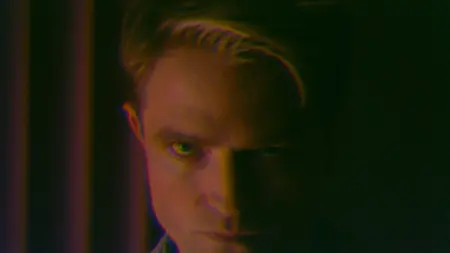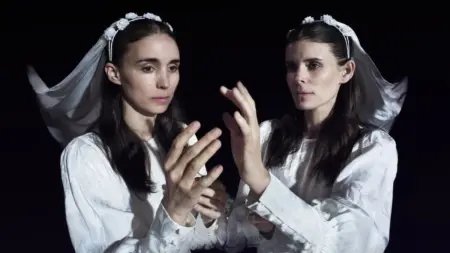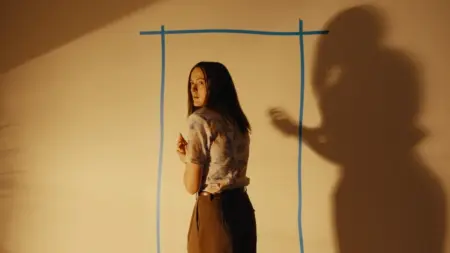


A truly incredible movie has the power to entirely immerse you in its world, to the point where it’s difficult to place where your reality ends and the characters’ begins. Few rising filmmakers have the utter confidence to shape worlds as singularly as Jane Schoenbrun. Teenage Sex and Death at Camp Miasma (2026), the follow-up to their indie gems I Saw the TV Glow (2024) and We’re All Going to the World’s Fair (2021), is filled to the brim with genre commentary, societal ideology, and mixed-media experimentation, pushing Schoenbrun toward peak creative form.
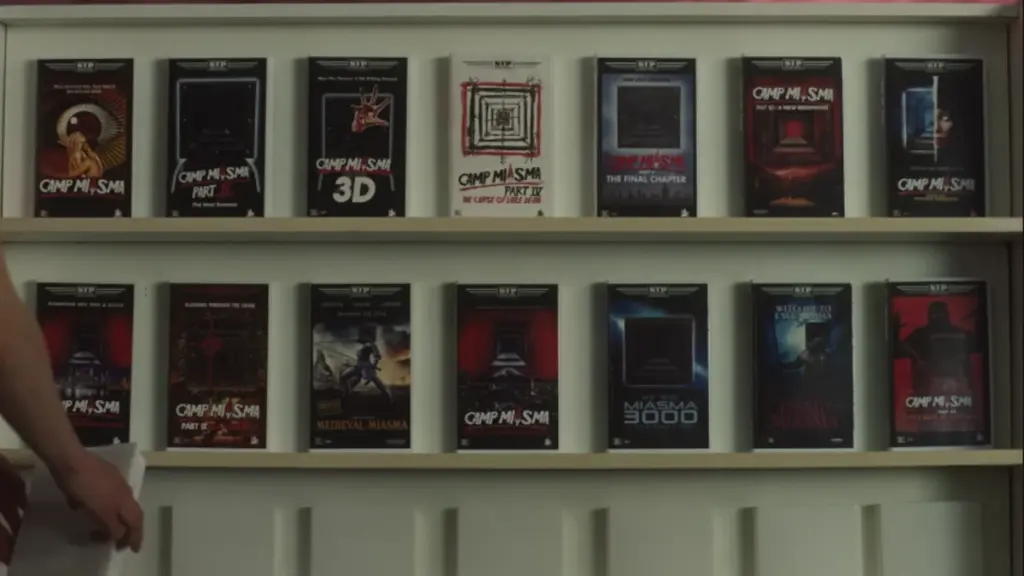
Much like the slasher movies deeply ingrained in pop culture, Camp Miasma was once a standalone gorefest about a vengeful phantom that slaughters teenagers at summer camp. However, it has since become a franchise milked nearly to its own death. In an opening montage featuring VHS tapes, novelty merchandise, and headline clippings, viewers are brought up to speed on the series’ vast legacy as it’s now being placed in new hands. Emerging queer filmmaker Kris (Hannah Einbinder) is tasked not only with resurrecting the IP but also with washing it clean of poorly aged writing. As she reaches for her Camp Miasma reboot, Kris arranges a visit to meet one of the franchise’s original stars, Billy Presley (Gillian Anderson).
Jane Schoenbrun’s Script Dissects “The Final Girl”
Having not starred in another movie since the first Camp Miasma, Kris has low expectations for meeting the reclusive actress. The last thing she expects is receiving cryptic coordinates that lead her to where this whole story really began: the shooting location of the original film. Here, in a series of wooden cabins flooded with memorabilia, Billy lives a relatively simple life. Though weary at first, Kris’ affection for the elusive star bubbles to the surface. Then, as an original print unspools endlessly from a reel through a projector, the lines between lived experience and fictional events progressively blur. Kris is thrust into a position she has long fantasized about: becoming the final girl, both figuratively and literally.
Courtesy of Mubi
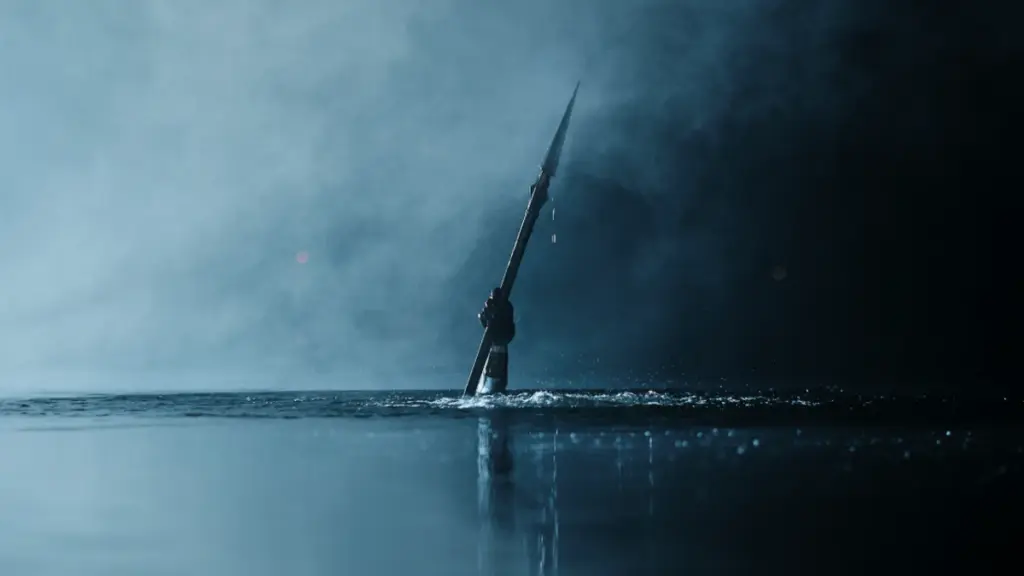
With its innovative blend of dark comedy and romantic intimacy, Teenage Sex and Death at Camp Miasma maintains an unprecedented level of immersion that could have easily fallen apart in the wrong hands. Writer-director Jane Schoenbrun crafts a spectacularly cohesive and self-referential lore that teeters on the edge between homage and hilarious parody. Moreover, the film stands as an analysis of the slasher genre’s archetypes and the industry’s relentless tendency to commodify any property it can exploit at every available opportunity. Unburdened by any hint of smugness, Schoenbrun tackles postmodernism in a masterfully witty manner that is nearly as sharp as the spear of Camp Miasma’s resident homicidal entity, Little Death (Jack Haven).
Hannah Einbinder and Gillian Anderson’s Dynamic is to Die For
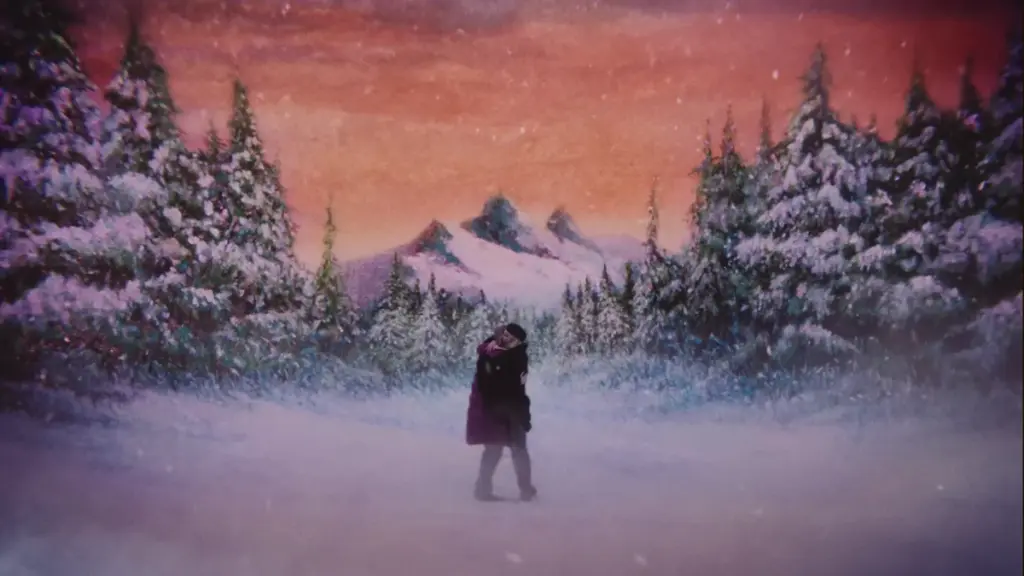
Teenage Sex and Death at Camp Miasma fully dips into horror on occasion, but not without unapologetically leaning into the campiness of savage set pieces that send blood and guts gushing. Jane Schoenbrun’s screenplay takes great pleasure in poking fun at slasher films while simultaneously carrying resonant sincerity about sexual identity. The visual aesthetics align with what has come to be expected of the budding auteur’s stylistic approach, forging a gorgeous blend of tangible mixed media that leaves no frame dull or a single minute uninspired. A staggering level of tonal complexity is enmeshed within the very foundations of this narrative and will inevitably draw audiences back over and over again.
Courtesy of Mubi
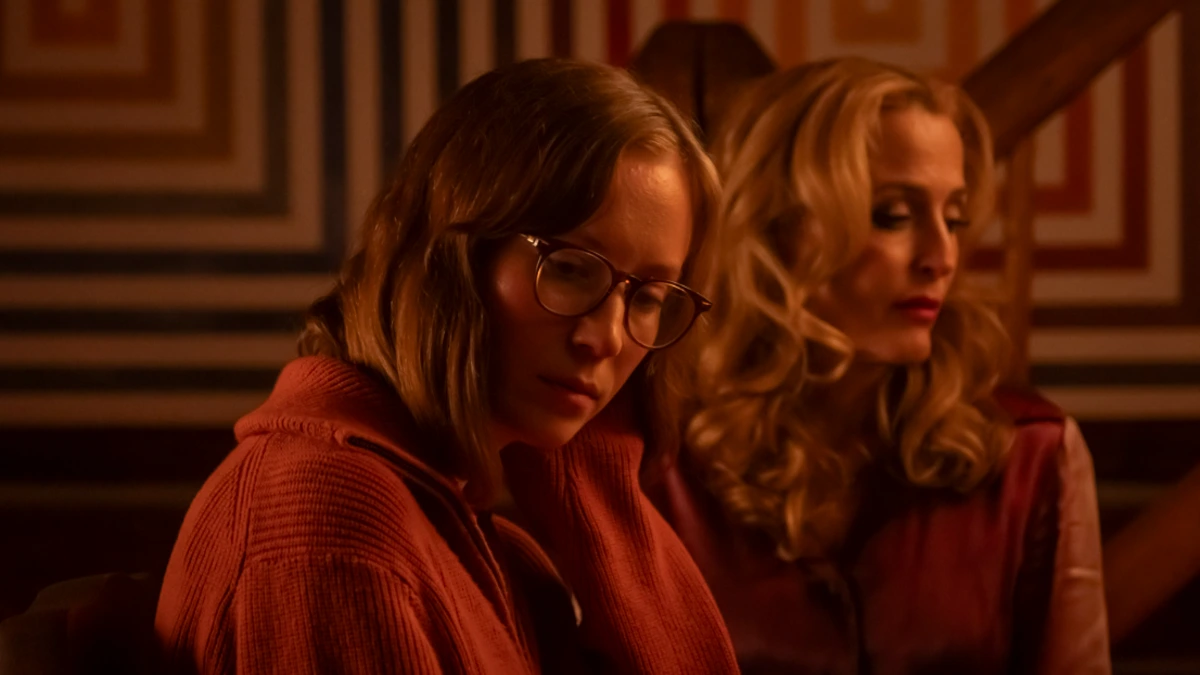
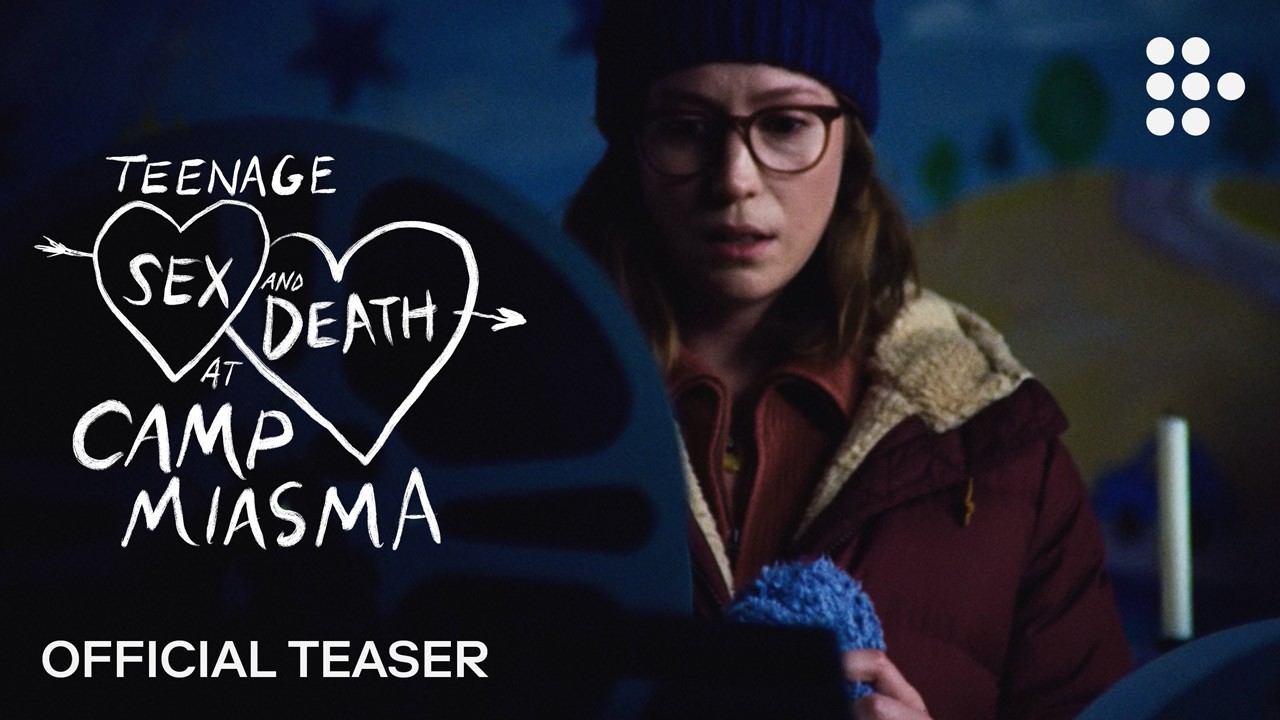
For Emmy-winners Hannah Einbinder (Hacks) and Gillian Anderson (The X-Files), Teenage Sex and Death at Camp Miasma offers no straightforward assignment. Yet, the two stars plunge into the deep end without a moment’s hesitation. Einbinder flexes her renowned comedic instincts through impeccable delivery, while Anderson finds a sweet spot between subdued charm and restrained eccentricity. For Kris, Camp Miasma was her queer sexual awakening in her youth, making her increasing infatuation with Billy feel deeply personal as she finds herself sucked into the lore and world of the original movie. Together, Einbinder and Anderson move through their character’s sexual vulnerability hand in hand, molding a special dynamic that allows tenderness to gush through the lacerations of absurdity.
A New Classic in Queer Cinema
Courtesy of Mubi
The mere existence of Teenage Sex and Death at Camp Miasma feels miraculous in its own right. Hardly ever is a filmmaker afforded the freedom to formulate something this bold and mesmerizing without the usual constraints. That’s especially the case here, as queer and trans themes of feeling dissociated in your own body continue to be handled with delicate care and nuance. Jane Schoenbrun is operating at full throttle, and for the benefit of all of us. Their work is singular and uncompromising, making it nearly impossible to imagine anyone else replicating the specificity of the craftsmanship and intellectual ambition on display.
Teenage Sex and Death at Camp Miasma is uncompromising in its deconstruction of slashers and our everlasting personal connections to the horror genre at large. It’s a true beacon of inspiration in the landscape of contemporary filmmaking and a rare reminder of what is possible when artistic vision is completely realized.
★ ★ ★ ★ ★
Teenage Sex and Death at Camp Miasma premiered at the 2026 Cannes Film Festival and hits theaters on August 7!
Release Date: August 7, 2026.
Directed by Jane Schoenbrun.
Written by Jane Schoenbrun.
Produced by Dede Gardner & Jeremy Kleiner.
Executive Producers: Daniel Bekerman, Efe Cakarel, Brad Pitt, Zane Meyer, Jason Ropell, & Caddy Vanasirikul.
Main Cast: Hannah Einbinder, Gillian Anderson, Amanda Fix, Arthur Conti, Eva Victor, Zach Cherry, Sarah Sherman, Patrick Fischler, Dylan Baker, Jasmin Savoy Brown, Quintessa Swindell, Kevin McDonald, & Jack Haven.
Cinematographer: Eric Yue.
Composer: Alex G.
Editor: Graham Mason.
Production Companies: Mubi, Plan B Entertainment, & Scythia Films.
Distributor: Mubi.
Runtime: 112 minutes.
Rated R.