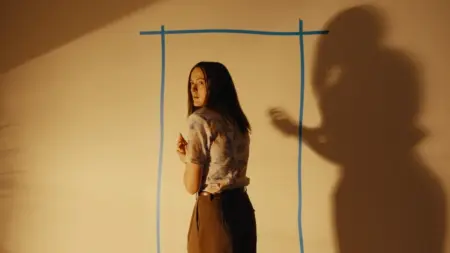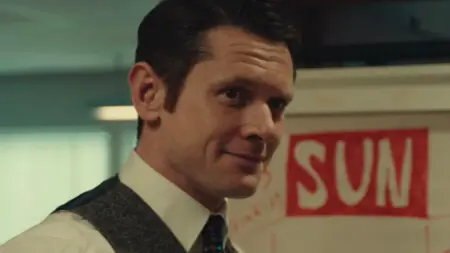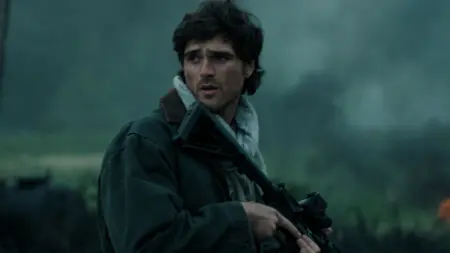


In the late 1980s, German filmmaker Werner Herzog (Grizzly Man, Nosferatu the Vampyre) met Freda and Greta Chaplin, identical twin sisters from England who, over the years, had garnered their fair share of public attention for living in perpetual synchronization. The impression the twins left on Herzog has persisted for decades, culminating in his latest narrative feature film, Bucking Fastard (2026). Written and directed by Herzog, Bucking Fastard is not a direct adaptation of their lives, but a dramatization that explores the intricacies of twinhood under circumstances mirroring a predicament the Chaplin twins once faced in real life.
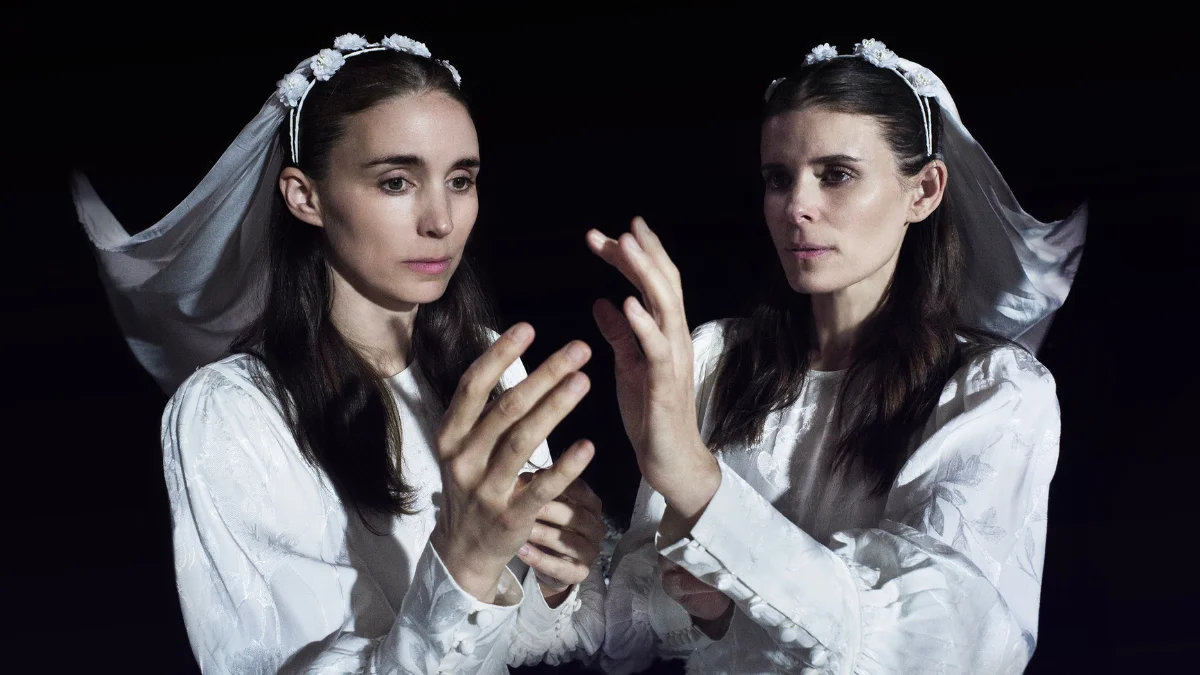
In the Irish country town of Tullamore, viewers first find twin sisters Jean (Kate Mara) and Joan Holbrooke (Rooney Mara) in a compact, mahogany-plastered courtroom. Sitting at the defense counsel table, they don matching outfits and hairstyles, letting their long brunette hair cascade down their backs. When called to testify against the need for a restraining order, they recount their love affair with their rowdy neighbor, Gareth Mulroney (Orlando Bloom). Words come out of their mouths not always in exact synchronization, but rather as if they are two individuals sharing the same hive mind.
An Escape Into the Unknown
For the Holbrooke sisters, this trial only further fuels their passionate rage born out of unrequited love. In their unique mentality, it seems as though few things matter more than the desire to be wanted. After a string of arson-related antics, the two are encouraged to relocate from their current sleepy domain to Dublin. It could be a possible relief from the stigma built against them and their first chance at independence. However, the city is no place for souls like Jean and Joan, whose lack of cynicism towards the real world is preyed upon by dodgy characters with sleazy intentions.
In their tiny port-side flat, the Holbrooke twins seem fairly content despite becoming increasingly reclusive. Ireland makes for an apt setting; the culture, along with a light dusting of Celtic mythology, lends itself well to Herzog’s story. The Irish landscape becomes central to the plot as the sisters begin excavating a large tunnel, alongside their newfound pet fox, Cupid, in search of a fantastical place where they would truly belong.
Werner Herzog Leaves Plenty Unanswered, For Better or Worse
Werner Herzog approaches his screenplay with nothing but tenderness for its characters, pointing fingers at the cruelty of the world rather than the Holbrooke twins’ involuntary nature. Bucking Fastard presents a way of life that is so incomprehensible that it, in turn, conjures an empathetic and almost defensive response from the audience. Herzog’s film is quite effective, particularly in the first half, as the sisters’ peculiar perspective on everyday life becomes customary.
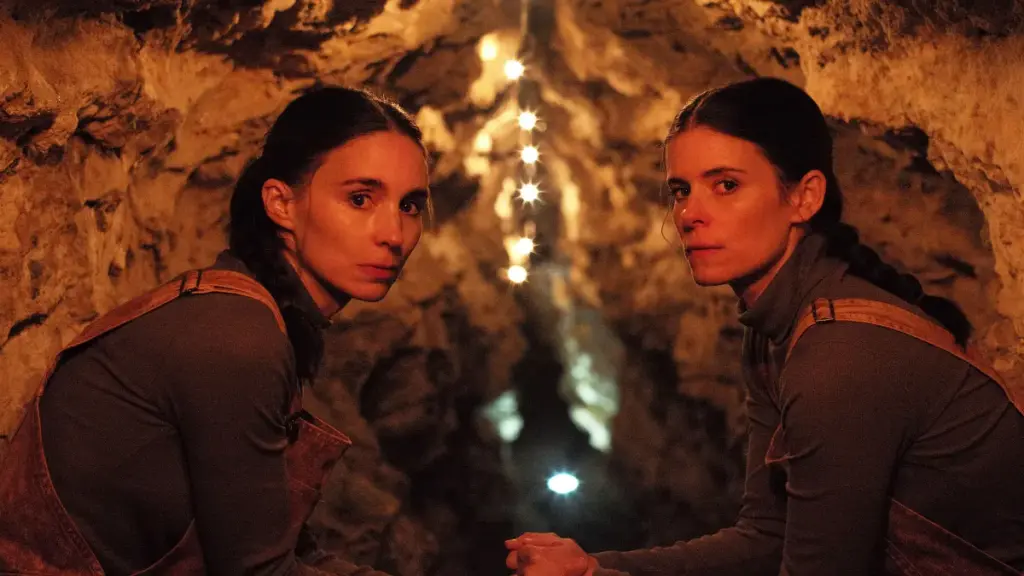
Moving into the latter half of the movie, Herzog’s script becomes arduous to follow in terms of the logistics of how the sisters operate in unison and offers little insight into how they came to be this way. Not to mention, there is apparently no reason as to why they are the only people in the entire movie without an Irish accent (aside from the obvious fact that the Mara sisters are American). There is a degree to which this story works without these questions answered, but as these kinds of discrepancies keep piling up, they overrule the fantasy of it all.
The Mara Sisters Are Transcendent in ‘Bucking Fastard’
The crowning achievements of Herzog’s movie are the performances turned in by real-life sisters Kate (A Teacher, Friendship) and Rooney Mara (Women Talking, Nightmare Alley), marking their first major on-screen collaboration. Given the uncanny level of synchronization between the Holbrookes, either of the two could have coordinated their role beyond the point of granting any individuality to their respective character. Instead, they excel flawlessly together and separately, mastering micro-expressions and cadences in their simultaneity that ultimately sells the story.
The Mara sisters are supported by an ensemble who make fleeting appearances throughout the Holbrooke sisters’ whimsical journey. This includes a boisterous Orlando Bloom (Pirates of the Caribbean) and a poignant performance from Domhnall Gleeson (The Paper). In the late stages of Bucking Fastard, a slight complacency emerges, tugging at the film’s already mellow pacing, which walks the line between engaging and sluggish. The first hour is constructed and executed in an exemplary manner, and while it never goes off the rails, the fuel tank slowly drains as Joan and Jean Holbrooke get into a monotonous routine that endures ostensibly both on and off screen.
This loss of footing does not detract from the film’s other accomplishments, yet it reinforces the notion that Werner Herzog’s Bucking Fastard might have benefited from delving further into either end of the spectrum between mystery and delirium.
★ ★ ★ ½
‘Bucking Fastard’ premiered at the 2026 Venice Film Festival!
Release Date: TBA.
Directed by Werner Herzog.
Written by Werner Herzog.
Produced by Werner Herzog, Clara Wu Tsai, Ariel Leon Isacovitch, Agnes Chu, Kieran Corrigan, Emanuele Moretti, Andrea Bucko, & Nick N Raslan.
Main Cast: Kate Mara, Rooney Mara, Orlando Bloom, Domhnall Gleeson, & Hugh O’Conor.
Cinematographer: Peter Zeitlinger.
Composer: Ernst Reijseger.
Editor: Marco Capalbo.
Production Companies: Providence Road Entertainment & Gateway to Orkney.
Distributor: TBA.
Runtime: 109 minutes.