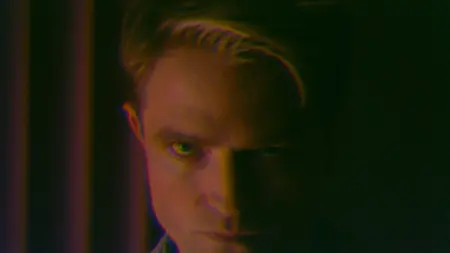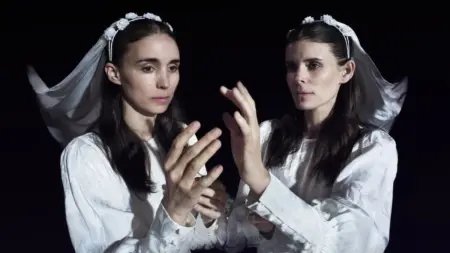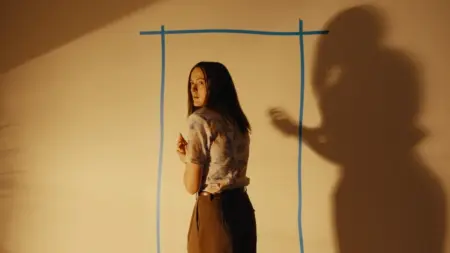


Writer-director M. Night Shyamalan is infamously known as one of the most divisive voices in Hollywood. His name is widely associated with an early career of hits and then an unfortunate string of financial bombs in the mid-to-late 2000s. However, in an ongoing Hollywood era defined by remakes, an oversaturation of sequels, and IP-driven cinematic universes, the Indian-American filmmaker has almost singlehandedly kept the mid-budget thriller, the kind of movie that originally put his name on the map, alive.
Shyamalan’s latest thriller, Trap, focused on a seemingly normal suburban dad and firefighter named Cooper Abbott (Josh Hartnett) as he takes his young daughter Riley (Ariel Donoghue) to see global pop star Lady Raven (Saleka Night Shyamalan as) at the Philadelphia stop of her new tour. As we come to learn, the pop concert is actually a trap orchestrated by the FBI to capture a serial killer known as “The Butcher,” who, in a double twist, turns out to be our main character.
A Path to Creative Freedom
Trap‘s exciting premise propelled it to a $82.7 million global box office. While that might seem trivial compared to other blockbusters, like Deadpool and Wolverine and Twisters, Trap earned half of its $30 million production budget back on its opening weekend alone. This continued M. Night Shyamalan’s current box office trend of his films earning more than double their budgets in theaters. Additionally, since Trap debuted on Max in October 2024, it’s risen to the top of the platform’s streaming charts. So, what’s the secret to Shyamalan’s ongoing streak of original box office successes? How did he survive the backlash of his mid-career failures and become one of the most fearless mainstream auteurs we have working today?
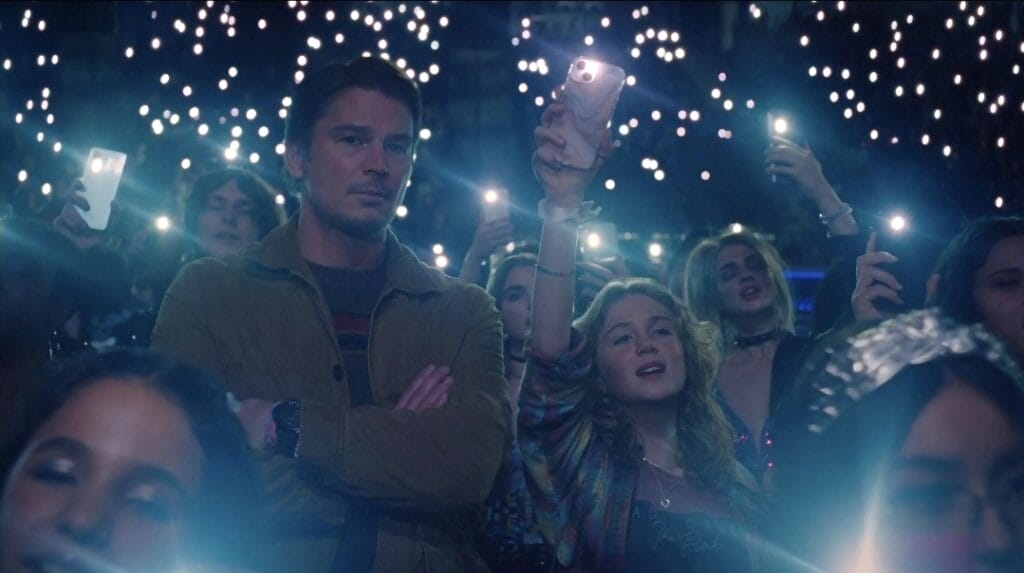
Courtesy of Warner Bros.
Simply put, Shyamalan has developed a special production formula that allows him to balance the two things every Hollywood creative has to struggle with: artistic integrity and business strategy. By taking the money he has earned throughout his career and self-financing mid-budget movies, he is allowed both creative freedom and a safety net with the major studios that will distribute his projects. When Trap ended its theatrical run, it made $42 million domestically and $82 million worldwide. Though it’s considered one of Shyamalan’s lowest-grossing films as of late, Trap still successfully recouped its entire budget and made a significant net profit — all with little risk on its distributor, Warner Bros.
It’s a wonderful win-win situation. However, the truth is that Shyamalan pioneered this business model not just out of preference but also necessity.
“The Next Spielberg”
After the critical/financial success of The Sixth Sense (1999), Unbreakable (2000), and Signs (2002), M. Night Shyamalan was dubbed by Newsweek as “The Next Spielberg,” a cultural sentiment that would deteriorate as the director transitioned away from thrilling crowd-pleasers into films that struggled to find broad appeal. Lady in the Water (2006) and The Happening (2008) are more artistically indulgent pictures that were critically panned in their time. Those movies have their passionate haters and defenders in almost equal measure today, but The Last Airbender (2010) and After Earth (2013) were huge, expensive failures that are extremely hard to defend for even Shyamalan’s most devoted fans (like me).
M. Night Shyamalan’s two attempts at big-budget filmmaking have lengthy histories that almost warrant a separate article alone, but it’s safe to say the director failed to translate his eccentric qualities into the blockbuster realm, and the restrictions that come with that territory only further inhibited his abilities. In July 2024, Shyamalan told The Atlantic this was his “hired gun” phase, working on other people’s ideas instead of his own. He was losing sight of what he wanted out of his movies, as well as what the audience hungered for.
From Bright Newcomer to the Butt of a Joke
It feels urgent to point out how vitriolic the hatred for M. Night Shyamalan was at this particular time. Many avid moviegoers are old enough to remember the internet memes that tore down many aspects of his signature style. Some of these are matters of personal taste disguised as objective criticisms and still persist today. The way Shyamalan writes dialogue, despite being an intentional stylistic choice meant to invoke a dream-like and often humorous tone, has been deemed “unrealistic” or “cringy” by many audiences. Moreover, the “Shyamalan Twist” has become a meme onto itself.
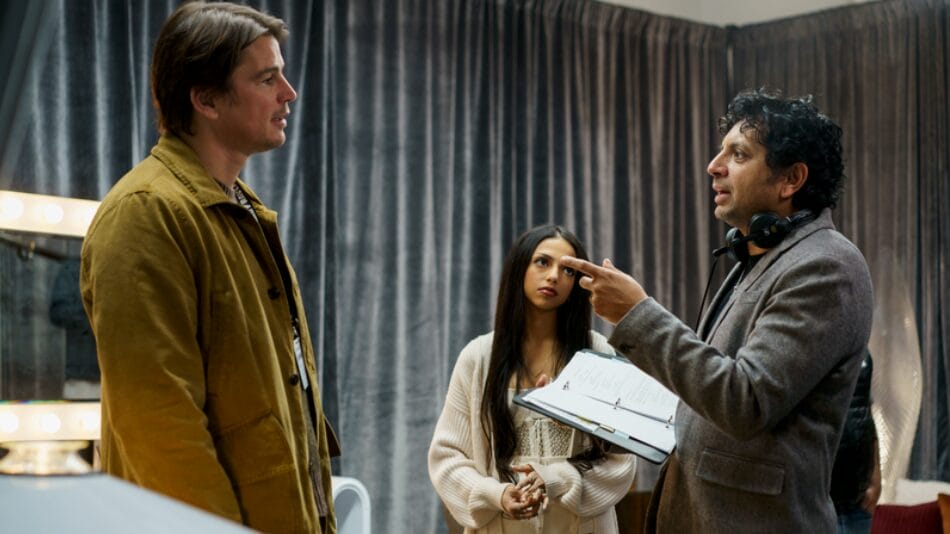
It must also be pointed out how much of this backlash has been racially charged, from the “Shamalamadingdong” jokes to the attacks on his themes of faith/spiritualism, as well as a dismissal of his work as “incompetent.” The cultural mocking had a real effect on Shyamalan’s reputation. In the aftermath of his blockbuster outings, he struggled to find fulfilling projects. Embarrassed by After Earth, Sony Pictures hid all traces of Shyamalan’s name from the marketing.
How The Visit Caused Shyamalan’s Career Renaissance
M. Night Shyamalan’s disillusionment with big-budget studio filmmaking ultimately taught him to return to basics. Hungering for creative control, he decided that his next feature would be entirely self-funded. With the personal financial risk, he would maintain creative control and forge a low-stakes bet for its eventual distributor, Universal Pictures. Mortgaging a loan on his Pennsylvania estate, Shyamalan fully covered the production costs of The Visit (2015), a found-footage horror film about two siblings meeting their maternal grandparents for the first time in their farmhouse.
The Visit received moderate critical acclaim (some calling it a return to form for the director, others not so convinced), but it went on to make a whopping $98.5 million on a flimsy $5 million budget. This major success story would begin a new, exciting era for Shyamalan that has continued to flourish today. All of Shyamalan’s efforts since The Visit —Split (2016), Glass (2019), Old (2021), Knock at the Cabin (2023), and his Apple TV+ series Servant (2019-2023) — have all, impressively, been independently financed.
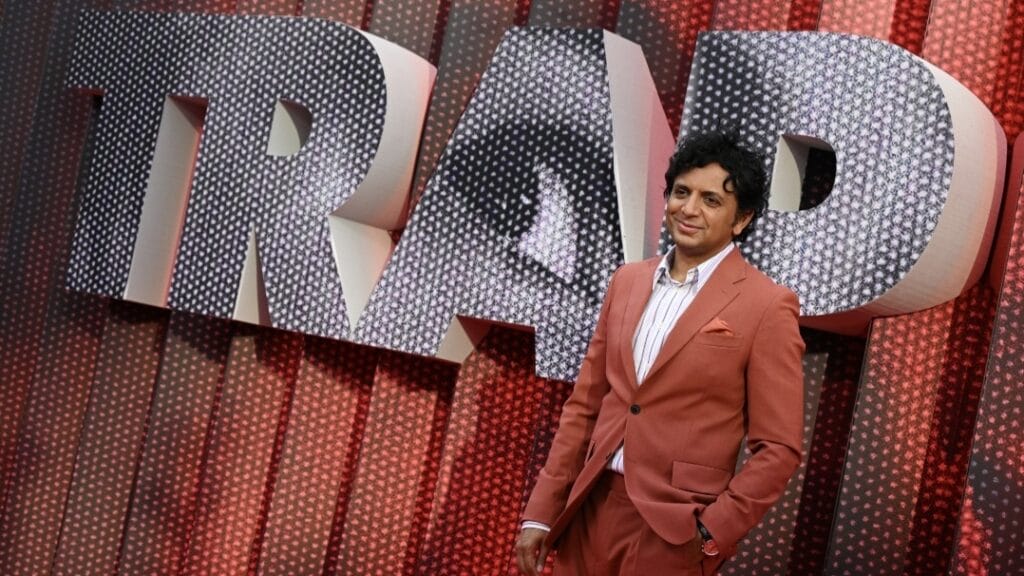
While all of the mentioned theatrical releases received varying critical reception (which is irrelevant to Shyamalan; more on this later), they have each grossed significantly more money than what they were produced for. Shyamalan has found himself a dependable niche in the market for mid-budget films at a time when they are nearly extinct or going straight to streaming. He simply observed the Hollywood landscape, saw what was missing, and has proved time and time again there’s a dependable market for movies in between the scale of an arthouse indie and a blockbuster popcorn flick.
Why Shyamalan is Relevant Now More Than Ever
This latest phase of M. Night Shyamalan’s career has proven that although he may never achieve the same kind of widespread success the way Steven Spielberg did in his prime, he is equally fulfilled in this Hollywood climate, making mid-budget thrillers that speak to his loyal fanbase… and especially his haters. He’s in a rare position for a mainstream filmmaker where critical consensus does little to no damage to his image. Undeterred by the baggage that comes with it, Shyamalan smartly knew that his name was a valuable brand worth investing in. “Directed by M. Night Shyamalan” signals to audiences the kind of cinema they are getting themselves into: genre films that are off-kilter and ambitious, yet original and experimental.
This even attracts people who don’t love Shyamalan’s work: the kinds of movie fans who are more invested in the art of filmmaking than the average consumer and are willing to take a gamble on something that may or may not work for them. In the gap between his biggest failures and controversies, Hollywood has become increasingly more safe and predictable, and audiences can only take so much “comfort food.” Despite the critical divisiveness and C+ CinemaScores (as received by Trap), you can certainly interpret Shyamalan’s continued success as a sign that audiences are craving sincerity and originality enough that they will seek it out from one of Hollywood’s most provocative storytellers.
Long Live M. Night Shyamalan
The magic of M. Night Shyamalan’s comeback story is that he didn’t have to find a commercial way to repackage his artistic voice. He’s an artist who’s stayed extremely true to his unique sensibilities. Also, one who’s simply been patient and waited for the right moment for his projects to thrive. He’s grown in some ways, too. His works no longer contain the petty defensiveness that plagued past films like Lady in the Water, and his matured technical skills are on marvelous display in newer movies like Trap.
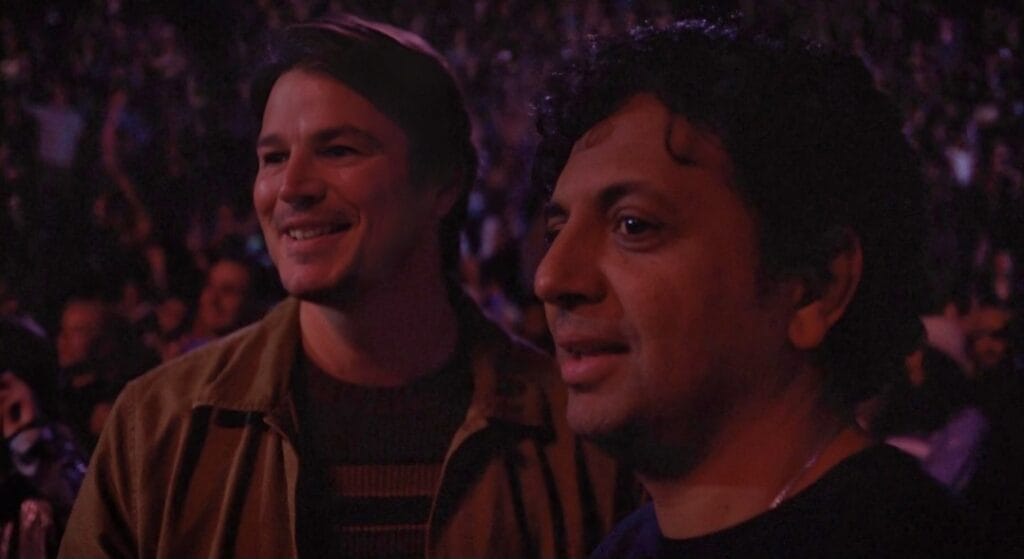
Courtesy of Warner Bros.
Regardless of any personal grievances, you can easily make the case that the Shyamalan we know today is not totally unlike the one who made The Sixth Sense. His 1999 breakout psychological thriller followed a young boy haunted by spirits and his relationship with his psychologist. Essentially, it’s an impressively sensitive drama wrapped into a ghost story — a humanistic and spiritual take on well-explored horror genre conventions.
The same distinct qualities of The Sixth Sense can be found in the movies Shyamalan is making today. In Old, Shyamalan finds the beauty in love and redemption in a family unit contrasted with the pandemic-inspired horror of growing up too fast. In Knock at the Cabin, a gay couple and their child make a selfless decision to save the world from the apocalypse because Shyamalan believes in the good of the human spirit. In Trap, he challenges us to see both the good and bad of its protagonist in a strangely empathetic take on the serial killer thriller.
M. Night Shyamalan’s filmography has always been concerned with the spiritual contrast between the light and the dark, and thanks to the path that he’s forged for himself as a self-sufficient directorial voice, we get to continue to wonder where he will go next.
M. Night Shyamalan’s Trap is now streaming on Max!
Release Date: August 2, 2024.
Directed by M. Night Shyamalan.
Written by M. Night Shyamalan.
Produced by Ashwin Rajan, Marc Bienstock, & M. Night Shyamalan.
Executive Producer: Steven Schneider.
Main Cast: Josh Hartnett, Ariel Donoghue, Saleka Shyamalan, Hayley Mills, Alison Pill, Lochland Miller, Marnie McPhail, Jonathan Langdon, Tim Russ, Vanessa Smythe, Kid Cudi, & Hailey Summer.
Cinematographer: Sayombhu Mukdeeprom.
Composer: Herdís Stefánsdóttir.
Production Companies: Blinding Edge Pictures.
Distributor: Warner Bros. Pictures.
Runtime: 105 minutes.
Rated PG-13.