

All horror stories are about trauma in one way or another, and thus their tone can be calibrated toward a more adrenaline-pumping fear or an insidiously disturbing one. Horror films about grief, specifically, are typically not light affairs, and Bring Her Back (2025) is no exception. Directed by Aussie twin brothers Danny and Michael Philippou of Talk to Me (2022) and RackaRacka YouTube fame, Bring Her Back somehow isn’t one of the most depressing movies of the year, despite it absolutely dripping in grief. One of the reasons for this is that the Philippou twins have a clear knack for turning weighty material into horror films that are intellectually and emotionally profound in equal spades.
Another reason why Bring Her Back is a richer horror experience than you might expect is that the movie, written by Danny Philippou and Talk to Me co-writer Bill Hinzman, isn’t merely a fictional tale. It’s actually an intensely personal work from the filmmakers, who tragically lost both a relative and a close family friend right before embarking on the project. Where Talk To Me centers around a seductive desire to communicate with the dead, Bring Her Back (as the title suggests) explores the toxic coping mechanism of seeking to bring a loved one back from the beyond. The story at hand acknowledges that, yes, this kind of somber longing is selfish, but it is also deeply heartfelt.
A Tale of Two Orphans
17-year-old Andy (Billy Barratt) has taken it upon himself to act not just as a big brother, but essentially a guardian to his younger sister, Piper (Sora Wong), who’s only a couple of years younger and is partially sighted. When the siblings come home to discover their single father has brutally died from an unexpected seizure while taking a shower, they are hastily thrown into Australia’s foster care system. Andy is sadly not yet of legal age to allow himself and Piper to move into their own place as they had planned, so things seem to work out when Laura (Sally Hawkins) comes into the picture.

Courtesy of A24
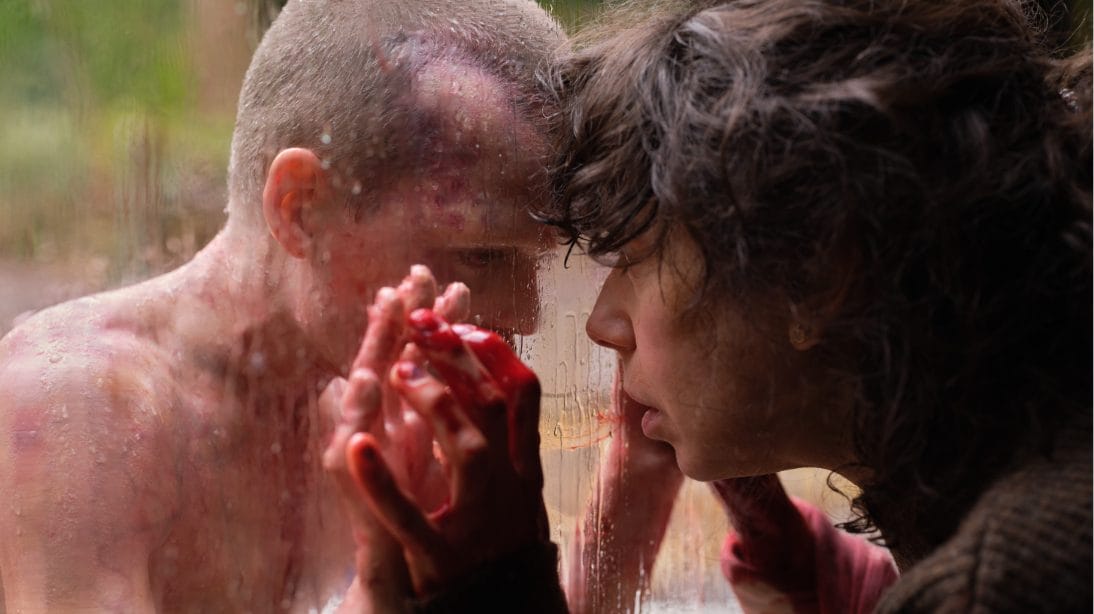
Laura, a middle-aged single woman, agrees to adopt both orphans into her secluded foster home, despite Andy having a more troubled record. She becomes notably fond of Piper right from the start, as she recently lost her fully blind biological daughter, Cathy, in a pool accident a couple of years ago. In his attempts to chalk up his behavior to Laura to prove his responsibility, Andy begins to wonder what the reasons are for her increasingly unhinged behavior. This is especially regarding how Laura takes care of her other foster child, Oliver (Jonah Wren Phillips), who chooses to be mute for unknown reasons and appears highly disturbed.
The Philippous Craft Horrifying Lore Without Overexplaining It
Part of the fun of Bring Her Back, if “fun” is the right word, lies in the script’s parsing out of what exactly is going on. The movie begins with a glimpse of grainy camcorder footage that previews Laura’s ghoulish schemes. It’s a how-to video made by some shady European group (whether it’s a cult or something else, the filmmakers aren’t telling) that claims it’s possible to bring a person back from the dead. What this terrifying ritual entails, and the lengths Laura is willing to go to perform this procedure, is what keeps Bring Her Back so intellectually stimulating. Unlike the supernatural elements of Talk to Me, the “rules” of this plot are never explicitly laid out for viewers.

In the way Bring Her Back exposes its characters’ deepest flaws and anxieties, it can be compared to Ari Aster’s Hereditary (2018). Yet, where that movie was a cruel, subversive satire on the hidden resentments of the common family, Bring Her Back is a look at how grief and loss can totally possess someone’s soul, to the point of transforming them into something else entirely. The ways in which family violence can arise out of learned behavior and a perverted sense of loving are touched upon as well. All of this might sound trite if we were discussing your average Blumhouse flick, but directors Danny and Michael Philippou treat these themes with a large degree of maturity and respect.
A Modern Throwback to Hagsploitation
The Philippou brothers have scored an ace in the hole with 2x Oscar-nominee Sally Hawkins (2017’s The Shape of Water). Put simply, Hawkins’ performance in Bring Her Back is one of the most fully realized in any horror film. In a lesser actress’ hands, the evil foster mother might have become fodder for genre camp. This could have easily been the case as the Philippous have admitted that one of their inspirations for their antagonist (and Bring Her Back as a whole) is the Psycho-biddy subgenre (aka Hagsploitation), the wave of horror movies featuring older women in the leading roles: What Ever Happened to Baby Jane? (1962), Hush…Hush, Sweet Charlotte (1964), Butcher, Baker, Nightmare Maker (1981), and others.
Instead of devolving Laura into a histrionic madwoman stalking her foster kids like prey, Sally Hawkins keeps her humanity and empathy present. Her tragic portrayal only serves to muddy the moral waters and help maintain the film’s emotional center. It’s a high-wire performance that looks effortless, and Hawkins may be the first horror villain since Anthony Hopkins’ Hannibal Lecter to be equal parts scary and grounded.
Providing Closure Through Horror
With all of this, it seems like the horror elements of Bring Her Back might be incidental, but that is not the case. The film is unrepentantly gnarly, showcasing moments of practical gore and staging setpieces that are truly inspired in their dementedness. The Philippou twins are consummate showmen — they know how to prey upon an audience’s nerves at just the right time. It’s a quality of theirs that speaks to their populist sensibilities, and makes you lament that their proposed live-action Street Fighter movie adaptation fell through. However, they aren’t ballyhoo artists, either, and all this gruesomeness isn’t without purpose. The narrative’s emotional weight further justifies the outrageous violence, as the characters physically reflect their internal turmoil.

An Unlikely Gift that Keeps Giving
Ultimately, Bring Her Back is such a successful work of horror fiction because it encapsulates all the genre has to offer. It contains imagery that will get under your skin and stay there for days, if not weeks. Moreover, its screenplay is built with layers of nuance. The Australian filmmaking duo explores their heavy subject matter with so much deftness that the movie may end up feeling as strangely consoling as it does disturbing. Although Bring Her Back is being distributed in the United States under the indie banner of A24, the Philippou’s authorial stamp boasts a special blend of arthouse and mainstream appeal, one which is intoxicatingly rich.
You can walk into Bring Her Back and have a bone-chilling experience with all the unrelenting terror it delivers. However, you can also come to Danny and Michael Philippou’s second feature film for understanding, for closure, even for solace, and it will still have something to offer you after that. In making a horror movie about devastating loss, the Philippous have ironically given us all a gift.
Bring Her Back hits theaters on May 30!

Release Date: May 30, 2025.
Directed by Danny & Michael Philippou.
Written by Danny Philippou and Bill Hinzman.
Produced by Samantha Jennings & Kristina Ceyton.
Executive Producers: Danny Philippou, Michael Philippou, Salman Al-Rashid, Sam Frohman, & Daniel Negret.
Main Cast: Sally Hawkins, Billy Barratt, Sora Wong, Jonah Wren Phillips, Sally-Anne Upton, Stephen Phillips, Liam Damons, Mischa Heywood, & Olga Miller.
Cinematographer: Aaron McLisky.
Composer: Cornel Wilczek.
Production Companies: Causeway Films & RackaRacka.
Distributors: A24 (U.S.) & Stage 6 Films (International).
Runtime: 104 minutes.
Rated R.