

“This will begin to make things right.”
There’s a newfound layer of irony to the first line of spoken dialogue in Star Wars: The Force Awakens, released a decade ago on December 18, 2015. Lor San Tekka (Max von Sydow) is referring to the data chip he’s given Poe Dameron (Oscar Isaac), which contains intel that could change the tide of the Resistance’s battle with the First Order. This is soon revealed to be the current location of the now-missing Luke Skywalker (Mark Hamill). In a metatextual sense, however, the opening line was an exciting promise to audiences in 2015 that the sequel trilogy would rectify the franchise’s wrongs. It was an outright acknowledgement that writer-director J.J. Abrams and co-writer Lawrence Kasdan had something to prove.
Today, the Star Wars franchise remains as bountiful in “content” as ever, though its cultural significance has decayed into a shell of what it formally was. There are countless factors and opinions on where Lucasfilm went wrong. Yet, on the tenth anniversary of The Force Awakens, that is, as Maz Kanata (Lupita Nyong’o) said, “a good story, for another time.” Instead of repeating a decade’s worth of well-trodden discourse, let’s reminisce on an era of pop culture gone by. From politics to the state of the film industry, 2015 feels like the last breath of a simpler time. We didn’t know it then, but the release of The Force Awakens was one of our last moments of monoculture.
Star Wars Used to Be More Than Popular IP
Given the current state of the brand, it’s hard to imagine that Star Wars once defied fandom. It was a treasure passed down from generations since 1977, integral to film history, and a major part of the zeitgeist. The release of a Star Wars movie used to be a certified event in and of itself. Class was interrupted the day the first trailer for The Force Awakens dropped, so that my teacher could play it on the projector. BB-8’s image was plastered all over the aisles of retail stores. Pre-sales for TFA crashed ticketing sites, and before reserved seating became the standard, dedicated audiences lined up for hours to snag the best seats in the house.
I left school early on Thursday night to line up at the now-demolished AMC Downtown Disney 12 with my friends, chatting with the costumed fans and their families who were waiting to secure their spots as well. “It’s not every day a Star Wars film comes out” was the sentiment of the night’s rituals. As we were seated an hour before showtime, the theater was tossing around a Death Star-shaped beach ball. Yes, it was a celebration of a billion-dollar brand, but there was also something innocent and communal about how Star Wars brought people together. The level of excitement was unmatched and unlike anything I’ve experienced to this day.
If the commodification of geek culture defined the 2010s, then the release of Episode VII was the apex of that movement, right before the rise of fabricated culture wars and the backlash towards inclusivity that characterized the Trump era. The Force Awakens is a fundamentally flawed film; there’s no denying that. However, it has stuck with me throughout the past decade because, along with Rian Johnson’s The Last Jedi (2017), it is one of the few Star Wars stories that fully embody the idea that Star Wars belongs to everyone.
The Third Generation Battle Between the Dark and the Light
Set thirty years after 1983’s Return of the Jedi, the Galactic Empire has been reborn under the rising fascist regime of the First Order, led by the mysterious Kylo Ren (Adam Driver). In response, General Leia Organa (Carrie Fisher) has organized the Resistance to bring hope to the galaxy and bring her brother, Luke, back from his self-imposed exile. As X-wing pilot Poe Dameron gets captured by Ren’s forces, he sends BB-8 off to finish his job and deliver key information to the Resistance. We meet Finn (John Boyega), a disillusioned Stormtrooper, in the film’s intro as well, marked by the bloody handprint of a downed trooper. He takes off his helmet and decides to aid Poe’s escape.
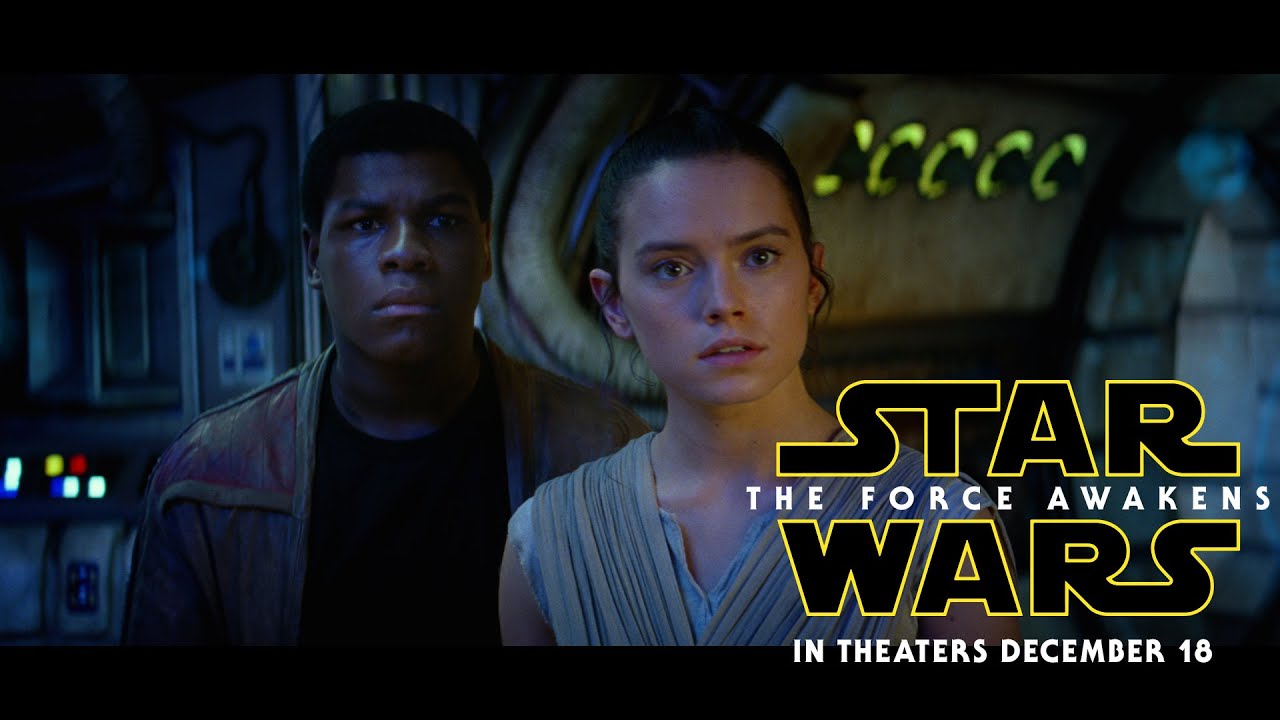
Enter, Rey (Daisy Ridley), who has one of the greatest introductions of any character in the entire Star Wars universe. We follow her daily routine as she scavenges for scrap metal to trade for food rations. Her home base is an abandoned AT-AT Walker, where she tallies the days since her parents abandoned her on the desert planet Jakku. She gazes at the sky, longing for adventure as she wears a Rebel Alliance helmet. While it’s been long enough that the galaxy has largely forgotten about the events of the original trilogy, Rey knows all the myths and legends about the Jedi Luke Skywalker and his loyal friends.
Rey is a Stand-In for the Star Wars Superfan
Rey is the audience surrogate for the idealized Star Wars fan — a person who longs for the kind of belonging and sense of adventure that wash over her when she hears these tales of old. More powerful and capable than she knows, Rey’s self-doubt and imposter syndrome constantly stop her from realizing her full potential throughout the movie. Her refusal of the hero’s journey in Maz Kanata’s castle calls to mind: where is her place in this story? This aspect of her character has resonated particularly with young girls, a demographic that was once gatekept from Star Wars and is now encouraged to play the leading role for the first time. It’s an arc of empowerment.
Daisy Ridley proves to be a natural screen presence as Rey; she’s warm, excitable, and a little bit rough around the edges. During her lightsaber battle with Kylo Ren, her fighting style is scrappy and spastic compared to the blind rage Ren displays. The infamous “Mary Sue” criticism that swept the internet was nothing more than poorly veiled sexism. An endless list of extraordinary people with special skills makes up the Star Wars universe. Even so, Rey, a survivalist since birth, has a unique justification for her natural talents. Regardless of how 2019’s The Rise of Skywalker butchered her story, Rey has remained one of the most influential female protagonists in cinema over the past decade.
A New Golden Trio
Though Rey is the most developed, the rest of the supporting cast hold their own as likeable characters in their own right. Finn is one of the more original elements of The Force Awakens — the franchise’s first reformed stormtrooper, given a face and identity. John Boyega gives Finn a sturdy sense of selflessness and loyalty that is easy to root for. Poe radiates a wonderful mixture of Han Solo’s swagger and Leia’s rebellious spirit. Earlier drafts of the script saw him die in the TIE fighter crash on Jakku. Luckily, Oscar Isaac’s effortlessly charming screen presence convinced J.J. Abrams to keep him around, cementing Rey, Finn, and Poe as our new golden trio.
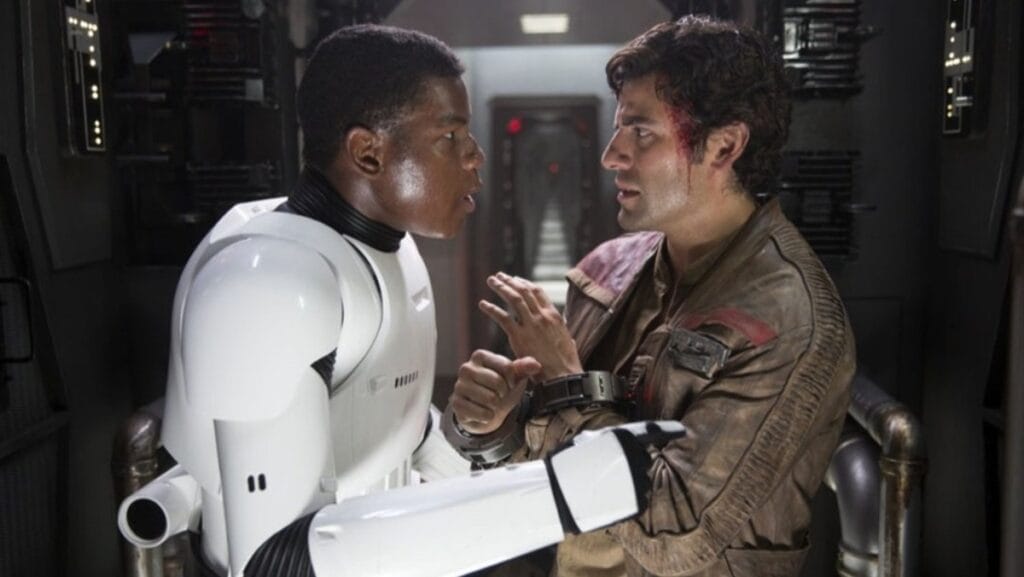
Isaac and Boyega’s on-screen chemistry was instantaneously magnetic. In an era heavily influenced by Joss Whedon’s irony-poisoned style of writing, it was genuinely compelling to see two men intimately care for one another in a blockbuster of this magnitude. It’s no wonder that they would be claimed as icons by the queer community. With Rey as the Jedi, Finn and Poe’s dynamic was the closest parallel to Han and Leia’s famed romance. It was always a pipe dream, but it’s vital to remember that the queer reading of Finn and Poe was no niche headcanon; it was a campaign embraced by Isaac himself. Their impact on queer fans is still felt today, yet Finnpoe remains a missed storytelling opportunity.
The Solo Family Bloodline Haunts the Narrative
Then there is Adam Driver’s Kylo Ren, revealed to be Ben Solo, the corrupted son of Han and Leia. Driver was one of the more established actors going into the sequel trilogy, and there’s a reason why his career has continued to thrive. Ren is a vengeful, emotionally stunted, rage-induced menace, yet Driver is always able to showcase his vulnerability, even when he commits patricide. Kylo’s chaotic angst positions the main antagonist as the stark opposite of Vader, who was systematically cruel. Getting audiences invested in brand new characters in such a prestigious series is a herculean task, and for the most part, The Force Awakens passes that test with flying colors.
It’s fascinating that a legacy sequel packed to the brim with fan service would resist the urge to reunite our original heroes: Luke, Han, and Leia. To this day, this is one of the biggest gripes fans have with the sequel trilogy. Be that as it may, I believe it was ultimately the right choice for the story being told. Don’t confuse screentime with impact. The Force Awakens manages to achieve something interesting and unexpected with our core original trio. Contrary to his public reputation as a grump, Harrison Ford’s take on an older Han Solo is arguably one of his best performances. Watching the scoundrel we once knew grow into a selfless hero is incredibly rewarding.
The late Carrie Fisher definitively left her mark on Leia Organa, the princess-turned-general of the Resistance. Fisher doesn’t have the longest screen time in The Force Awakens, but truly evolves into an older and wiser Leia with an assertive spirit that is instantly familiar. Although they are denied their happy ever after, Han and Leia’s dynamic in this movie feels authentic. Divorced and riddled with guilt over their child, Ford and Fisher portray a nuanced type of love that is challenging. Han’s sacrifice in reaching out to Ben is equal parts heroic and heartbreaking, but the wave of grief Leia feels within the Force is what carries the most emotional weight.
The Force Awakens was a Gateway to a Deeper Love of Cinema
Revisiting The Force Awakens serves as a reminder that, unlike today’s franchises, Star Wars shows great reverence for film as a medium. Despite a troubled production, TFA is gorgeously shot. The bold, high-contrast colors and skillful craftsmanship from all departments sparked a renewed interest in filmmaking within me. There are explicit homages, such as the TIE fighter shot that references Apocalypse Now (1979) and Rey’s scavenging sequence, which is strongly influenced by Nausicaä of the Valley of the Wind (1984). For many young cinephiles, an interest in Star Wars would grow into an interest in George Lucas and Steven Spielberg, and following their work would blossom into a broader love of cinema.
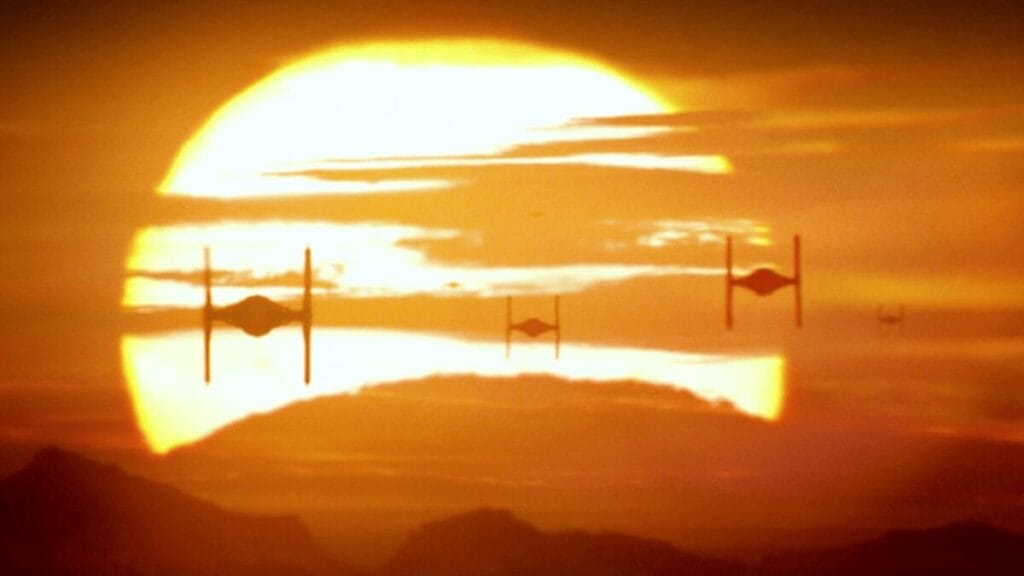
While The Force Awakens does often look too polished, it has a physicality and lived-in quality to its aesthetic that most modern blockbusters care little about preserving. With certain exceptions, like Denis Villeneuve’s Dune and James Cameron’s Avatar franchises, few blockbusters are made with as much care as TFA was ten years ago, and that is a true shame. Instead of being exposed to film history, young moviegoers are engaging with overly self-referential and indulgent brands and defending lower-quality entertainment. Star Wars has always been corporate, but was once inseparable from Lucas’s interests, from Akira Kurosawa to Flash Gordon. At its peak, the sequel trilogy carried this tradition. Now, the whole franchise is exclusively interested in its own iconography.
Using Star Wars Iconography to Center New Heroes
Which finally leads us to the number one criticism of The Force Awakens. Plenty has been said about how derivative it is of 1977’s Star Wars, otherwise known as A New Hope. George Lucas himself famously said that Star Wars “rhymes” like a poem; there is admittedly more to that argument than just superficial visual parallels. Aesthetically and structurally, TFA plays it as safely as possible. This, sadly, holds it back from being a truly great movie. On the other hand, there is a clear difference in how the sequels actively engage with Star Wars tropes, as opposed to the cheap nostalgia of The Mandalorian.
The Force Awakens wraps its brave aspirations in the familiar. It’s a legacy sequel that uses Star Wars iconography to recenter its narrative focus from the original cast to a fresh, inclusive trio. It’s a passing of the torch: a movie made to celebrate the younger generation and instill hope in them as the makers of their future. For the first time, a strong female lead, a Black man, and a Latino man were the new faces of the franchise. “Star Wars is for everyone” became Lucasfilm’s go-to catchphrase. It was a big deal then, and it continues to resonate now, especially as the virtue of diversity is under attack.
Representation Matters
There are obvious shortcomings in Lucasfilm’s representation, and I’m far from the first to point this out. Keeping that in mind, we should consider that the impact remains important. In my teenage years, I ran a stan account and met a plethora of fans from all walks of life through the Star Wars fandom. For many of them, The Force Awakens was their entry point. The Finnpoe shipping community helped me embrace my gay identity. My enthusiasm for Star Wars has led me to my closest friends, and we have watched each other grow up over the past decade. Never underestimate the power of shared interest — my experience with fandom has fundamentally shaped me as a person.
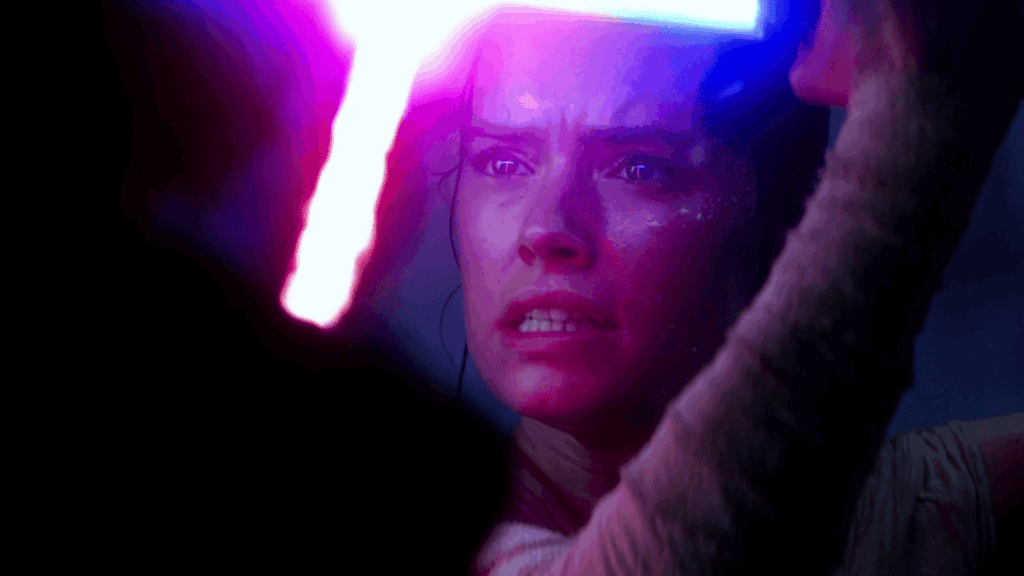
2015 wasn’t a fantastical time where bigotry didn’t exist. John Boyega notoriously received backlash for portraying a Black stormtrooper, and online chuavanists picked Daisy Ridley’s body apart. However, back then, it felt that as a society, we acknowledged these were fringe hate groups. We didn’t dignify their vitriol the way the media does today. The Force Awakens didn’t come out in a post-political era, but it was one of the last moments before a shift toward conservatism in mainstream culture. It was a simpler time before society platformed a massive backlash towards inclusivity and identity politics. 2015 was the year gay marriage was legalized. In 2025, we’re at serious risk of losing our civil rights.
A Hero Can Come From Anywhere
The final moment of The Force Awakens is golden. Taking off in the Millennium Falcon, Rey leaves the Resistance Base with the coordinates and lands on the lush, sacred island of Ahch-To. Up the steps, she finds an older, enigmatic Luke Skywalker, and, without a word, Rey reaches out and offers him the Skywalker Lightsaber. It’s a cry for help, a call to action. The ambiguity in their expressions says more than any piece of dialogue could. Hamill conveys fear, strength, and grief with a single gaze. A wipe to credits, and John Williams’ score sweeps over. It perfectly captures what makes Star Wars special: a limitless sense of adventure and imagination that leaves audiences astonished and wanting more.
I had never cared about anything as passionately as I cared about the sequel trilogy at sixteen years old. Today, it’s hard to picture what that enthusiasm feels like. To a degree, there is melancholy to that fact, as I find myself constantly chasing that thrill of fandom and community. As much as Star Wars has fallen from grace in that time, I acknowledge that what I’m feeling is also a major part of growing up. Looking back on the tenth anniversary of The Force Awakens, I mourn, to some degree, what Star Wars used to be. At the same time, I’ve come to realize that I’m mourning what it was like to be a carefree teenager, too.
The Rise of Skywalker makes returning to The Force Awakens extremely difficult for the majority of fans, as it exposes the limits of J.J. Abrams’ flawed “mystery box” style of storytelling. That widespread sentiment of wasted potential, especially since The Last Jedi left a huge door open for Abrams to do whatever he wanted, is a valid response. For what it’s worth, there’s still a lot to love about the movie, ten years later. Like Han and Leia’s love for each other, my love for TFA has not diminished. It has merely evolved.
In dire times, I’ve found great comfort in TFA’s brave, inclusive message: that my generation will shape the future, that every life in the galaxy is significant, and that even when self-doubt plagues our minds, a hero can come from anywhere.