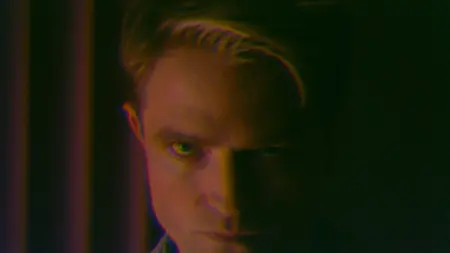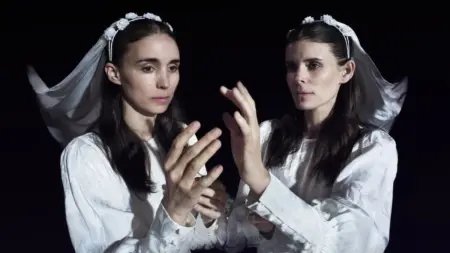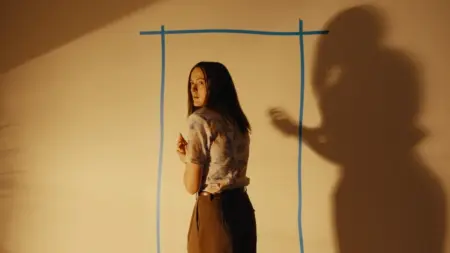


Guilt has a funny way of manifesting itself. Alongside trauma, it’s one of the few ways you can actually be haunted in the real world. It creates a heavy burden, leading down the darkest corridors of one’s psyche. In some cases, you have to directly confront those feelings if you want to escape them. Hokum (2026), the latest from Irish writer-director Damian McCarthy (Caveat), is one of many recent horror movies exploring these themes — a trend that has admittedly grown quite tiresome. However, McCarthy deftly contains them through a simple premise. Whereas Neon‘s marketing suggests a “new nightmare,” Hokum is instead a sentimental, Stephen King-esque exploration of childhood guilt and parental relationships, centering on an oh-so-tormented Adam Scott.
When horror novelist Ohm Bauman (Adam Scott) takes a trip to the Irish countryside to scatter his parents’ ashes at their honeymoon hotel, strange happenings, disappearances, and tales of a witch haunting the honeymoon suite circulate the secluded woods. The film’s exploration of parentage through a haunted hotel is fully indebted to Stanley Kubrick’s adaptation of Stephen King’s The Shining (1980) — if not its sequel, Mike Flanagan’s Doctor Sleep (2019). McCarthy’s sense of self-awareness veers Hokum into the realm of pastiche, imbuing Irish tragedy and Celtic folklore into a story that feels both inspired and singular. It’s less a reinvention of the wheel than a refurbishment, making for a compellingly spooky yet familiar piece of genre fiction.
Checking In
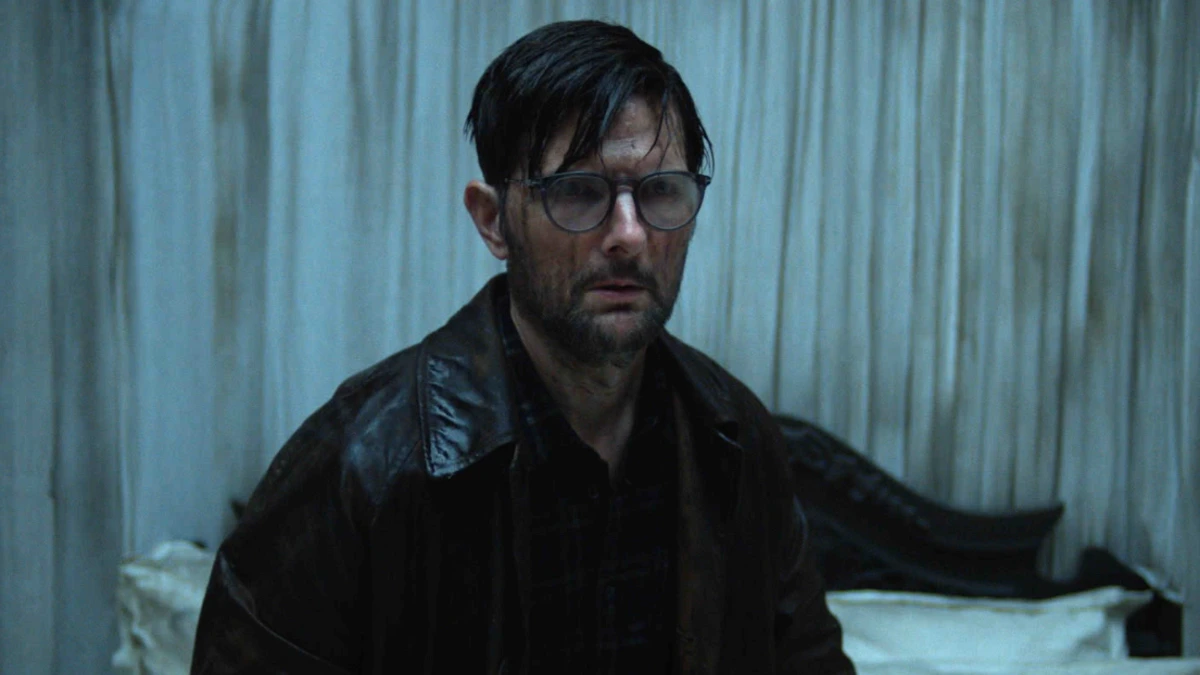
Between Severance and Parks and Recreation, it’s easy to forget that Adam Scott got his start in horror. His first major role was at the age of 21, as the murderous yet short-lived Jacques in Hellraiser: Bloodline (1996). Recently, Scott also had a tiny part in Osgood Perkins’ adaptation of Stephen King’s The Monkey (2025). But here, he really gets to sink his teeth into Damian McCarthy’s touching script. Plagued with a near-Freudian case of mommy issues and childhood trauma from his father, American author Ohm Bauman compartmentalizes his sorrows into his writing and closes himself off from any meaningful connection. Scott’s dry sense of humor complements Ohm’s antisocial demeanor, anchoring Hokum to a thornily flawed yet sympathetic protagonist.
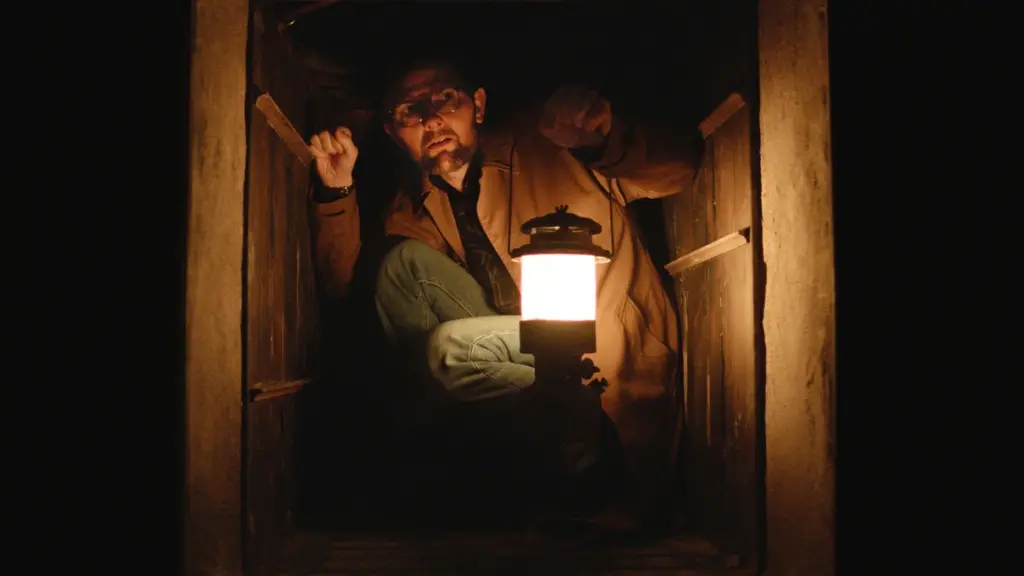
When an employee at the remote Irish inn goes missing, Ohm takes it upon himself to descend into the belly of the beast. What follows is a delightfully charming little mystery, where everyone’s a suspect. Between the creepy tall-tale-telling hotel owner, fanboyish bellhops, and magic-mushroom-loving woodsmen, there’s a cavalcade of characters who could all be responsible for the goings-on around the hotel grounds. There’s an off-kilter quality to this intriguing narrative, having an element of surprise that is both unsettling and entertaining. At its best, the movie feels like wandering through a Celtic-horror-themed haunted house, playing out more like a thrill ride than a fright fest. Hokum is a concentrated and focused effort, courtesy of McCarthy’s ever-improving directorial style.
Form and Function
After winning the Midnighter Audience Award at SXSW 2024 with his previous feature, the supernatural detective-thriller Oddity, Damian McCarthy returns with his most confident work to date. Working under Roy Lee and Steven Schneider’s Spooky Pictures banner, McCarthy’s eye for horror is far more polished and refined, while maintaining his knack for eerie sound design, weird-looking rabbits, and secluded Irish locales. McCarthy knows how to build a good scare, but he truly excels in building atmosphere. Though it veers into jump scare territory a bit too often, Hokum’s controlled sense of malaise is as effective as it is suspensefully moody.
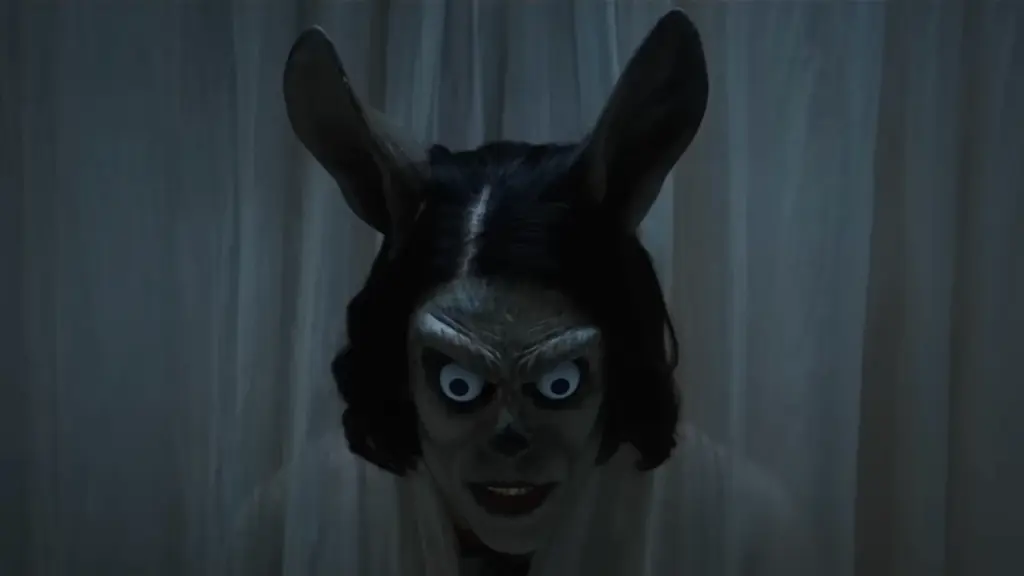
Coupled with McCarthy’s skilled and assured direction, Hokum finds charm in its simplicity. At no point is McCarthy trying to make the next Hereditary-tier horror classic; he’s flexing his chops within genre conventions and adding his signature touch — rabbits and all. Shots are so wide that Adam Scott is tiny in the frame, reverting Ohm to an almost childlike level of fear. Maybe I’ve built up a tolerance for this sort of thing, but I found myself more excited by Ohm’s torment than I was truly scared. He deserves a bit of a wake-up call, and it’s surely among the ruder of awakenings. One could argue that confronting your deepest, darkest secrets is much more terrifying than fairy tales.
Down the Rabbit Hole
Above all else, Hokum excels in its breezily smooth pace, methodically unraveling within its short-but-sweet 107-minute runtime. Rigidly structured into three distinct acts (akin to a Stephen King novella), there’s rarely a dull moment, with Damian McCarthy always knowing how to keep viewers on their toes. I would compare it to Zach Cregger’s Barbarian (2022), minus the Justin Long detour. Some audiences might be underwhelmed by how straightforward Hokum is, but it’s honestly refreshing to see a horror movie that knows exactly what it is, playing within sandboxes new and old. As the haunting allure of the honeymoon suite draws Ohm closer to uncovering the hotel’s many mysteries, he’s forced to confront his familial trauma head-on.
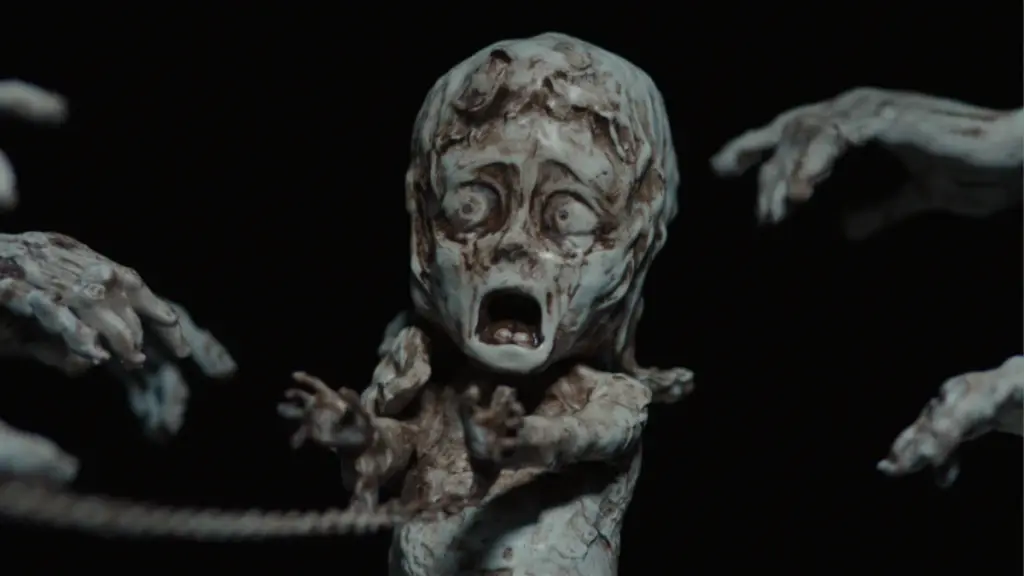
Horror films about grief and trauma are the most trite commodities in the genre space as of late, coming off as cop-outs instead of meaningful explorations of the emotional spectrum. It’s a tired trope that, while we certainly need to see less of it, shouldn’t be off limits either. There’s a fine line between stinkers like Trey Edward Shults’ It Comes at Night (2017) and gems like RackaRacka’s Bring Her Back (2025), with Hokum thankfully leaning towards the latter through Adam Scott’s tragically tortured performance. There’s a bleeding-heart to Hokum that so many of these movies lack, with a fiery finale that opts for rich emotional catharsis over what the studio would love to market as “nightmare fuel.”
Through the Looking-Glass
More often than not, coming out the other end of the tunnel is the scariest thing one can do. The majority of us have to run the gauntlet at some point; there’s nothing like a psychological reckoning to cleanse the spirit. If there’s something to be learned from Damian McCarthy’s Hokum, it’s that closure doesn’t come easy. Adam Scott’s horror writer is sent through the wringer, partly by fate and partly by his own design, not only facing his fears but also finding some form of catharsis through his deceased parents. By no means is Hokum a groundbreaking classic, though it’s sure to gain fans amongst the mushier horror heads.
Within the confines of haunted houses, bad dads, and direct homages to Stephen King, Hokum is a competent horror film that prefers to tug your heart rather than make it palpitate. At its core, horror is about mood and emotion, which Hokum has in spades. For every effective jumpscare is a moment that creates deeper empathy for Ohm, making for a well-rounded character piece with heart and scares aplenty. Those expecting Hokum to scare the daylights out of them will be sorely disappointed. However, those willing to be surprised will find it a quaint and sensitive portrait of loss, guilt, and acceptance.
★ ★ ★ 1/2
Hokum hits theaters on May 1!
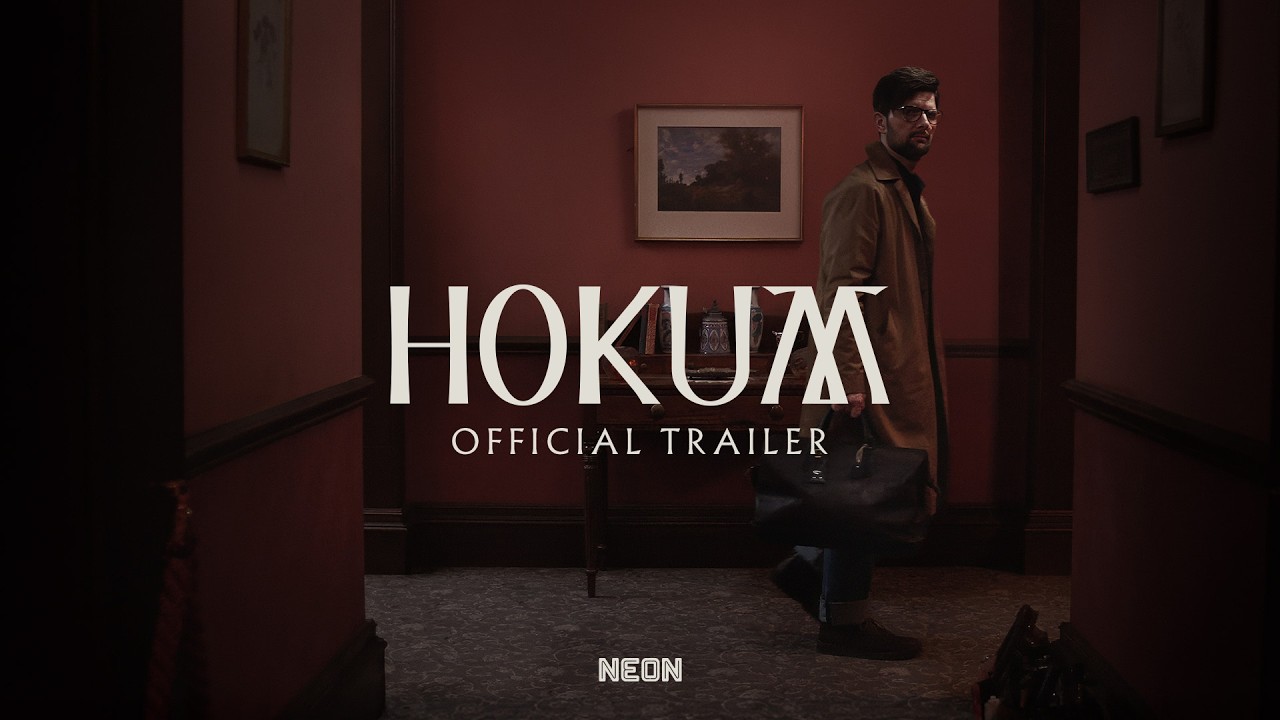
Directed by Damian McCarthy.
Written by Damian McCarthy.
Produced by Roy Lee, Steven Schneider, Derek Dauchy, Ruth Treacy, Julianne Forde, & Mairtín de Barra.
Executive Producers: Andrew Childs, Jeff Deutchman, Ryan Friscia, Dan Kagan, Ken Kao, Bryan Meng, Evan O’Brien, Keith Potter, Tom Quinn, Josh Rosenbaum, Ben Ross, Rami Yasin, & Dr. Terence Chan.
Main Cast: Adam Scott, Peter Coonan, David Wilmot, Florence Ordesh, Michael Patric, Will O’Connell, Brendan Conroy, Austin Amelio, Mallory Adams, & Sioux Carroll.
Cinematographer: Colm Hogan.
Composer: Joseph Bishara.
Editor: Brian Philip Davis.
Production Companies: Image Nation Abu Dhabi, Team Thrives, Spooky Pictures, Tailored Films, & Cweature Features.
Distributor: Neon (U.S.) & Black Bear Pictures (United Kingdom and Ireland).
Runtime: 107 minutes.
Rated R.