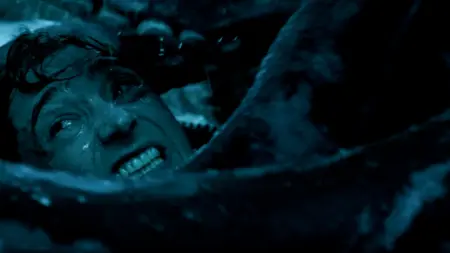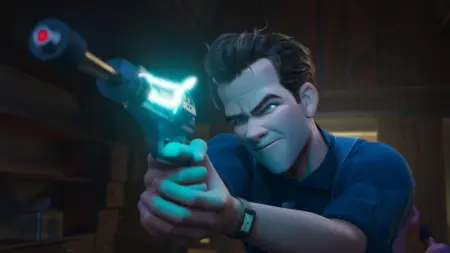

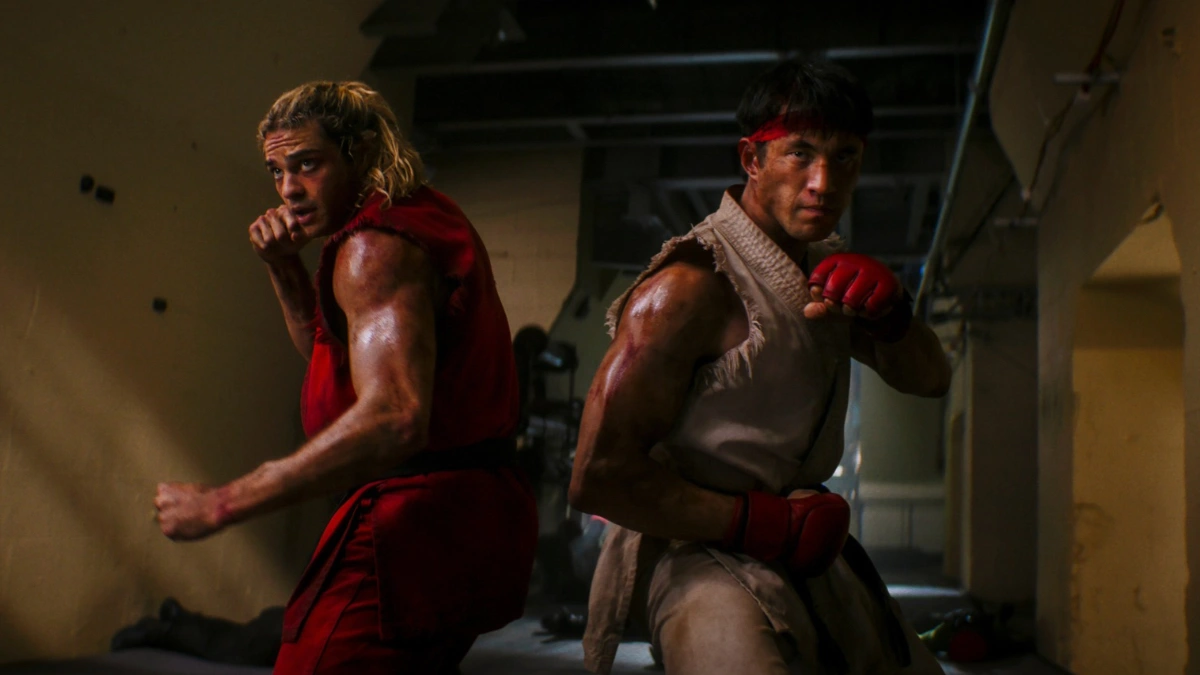

There’s no sugarcoating it: Street Fighter (2026) is a bit of a mess and, at times, all over the place. Given the resurgence of video game adaptations, many of which have defied abysmal reviews to top the box office on sheer popularity, it was only a matter of time before Capcom tried its hand at bringing Street Fighter to the big screen again. The days of 1994’s Street Fighter, starring Jean-Claude Van Damme, are long behind us — it’s now acceptable for movies to embrace the inherent silliness and absurdity of video games. If anything, fans crave it even more at this point in time after years of grounded live-action adaptations across games, comic books, manga, and other media.
Despite being so disconnected at times from both itself and its viewers, there is something oddly compelling about how much Street Fighter actually gets right. Unlike the recent Mortal Kombat films, director Kitao Sakurai (Bad Trip, The Eric Andre Show) leans heavily into the high-energy and heightened reality of anime. That’s not to say this year’s Mortal Kombat II, for example, doesn’t embrace its fantasy elements, but in Street Fighter (2026), characters can get hit by fireballs or suplexed on top of cars and shake off the pain. When applying this anime logic to the charming leading trio of Ryu, Ken, and Chun-Li, this iteration of Street Fighter surprisingly delivers plenty of genuine fun.
Assembling the World’s Finest Warriors
Story-wise, this film adaptation pulls from one of the franchise’s iconic games, Street Fighter II. In 1993, Lord M. Bison (David Dastmalchian), the evil dictator of the fictional country of Shadaloo, hosts the second World Warrior Tournament to draw out the former champion, Ryu (Andrew Koji), from hiding. After defeating Sagat, the King of Muay Thai, and leaving him brutally wounded at the end of the first tournament in 1987, Ryu gave up fighting and exiled himself to keep the “Dark Hadou” at bay. A manipulative force of demonic energy, the Dark Hadou nearly consumed Ryu and corrupted his relationship with his adopted brother, Ken Masters (Noah Centineo), which tragically resulted in the death of their master, Gouken.
Courtesy of Paramount
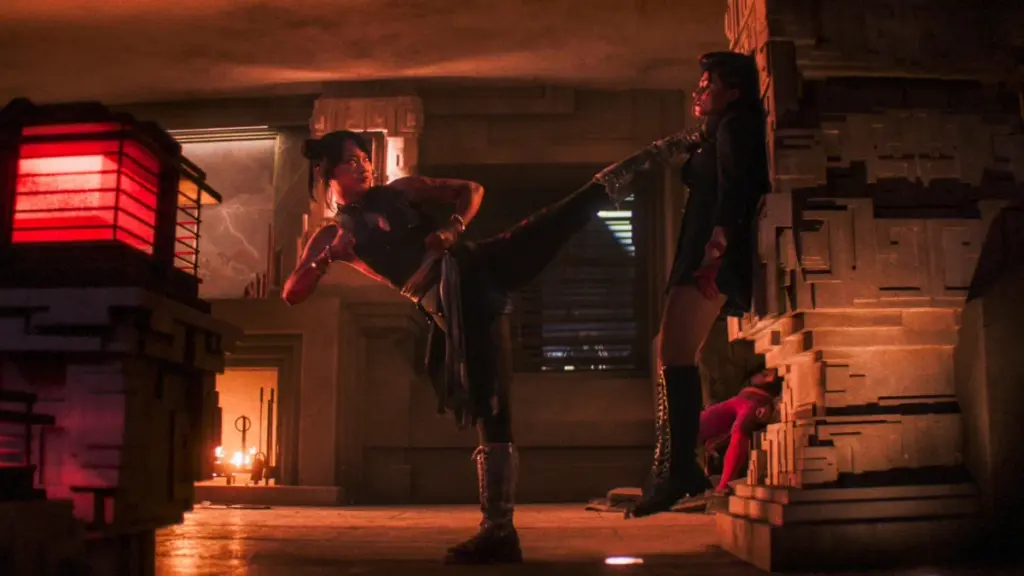
Fast forward 6 years, and Ken is now seen as a has-been, corporate sellout in the fighting world. In an effort to finally prove his worth and step out of Ryu’s shadow, he enters Bison’s tournament with his last remaining friend/promoter, Dan Hibiki (Andrew Schulz), by his side. Thus, the stage is set for Ryu and Ken to reunite and possibly settle their differences among the world’s top fighters, including Guile (Cody Rhodes), Dhalsim (Vidyut Jammwal), Balrog (50 Cent), Vega (Orville Peck), and Zangief (Olivier Richters). Meanwhile, in the background, undercover Interpol agent Chun-Li (Callina Liang) plots to take down Bison’s criminal empire from within, clashing with the high-ranking “dolls,” Cammy (Mel Jarnson) and Juli (Rayna Vallandingham).
‘Street Fighter’ Doesn’t Pull its Absurd Punches
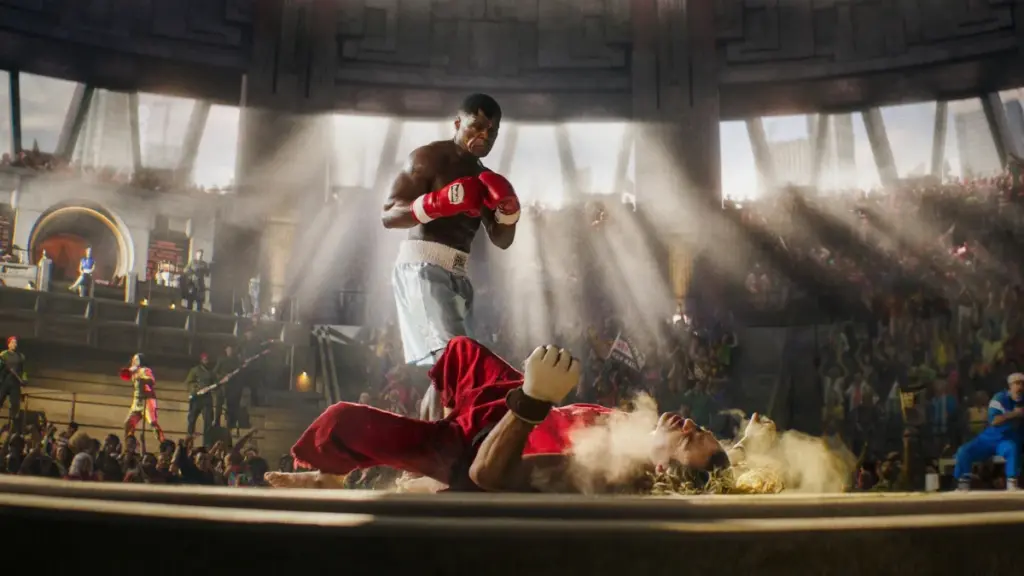
It’s admirable how much Street Fighter (2026) commits to the franchise’s particularly eccentric lore. Certain characters have backgrounds ripe for the big screen, like Chun-Li and Guile, who operate in the world of intelligence warfare. On the other hand, characters like Blanka (Jason Momoa) are so fantastical, if not outright ridiculous. This movie understands that clashing all of these colorful faces together, along with their unique fighting styles, is part of the franchise’s whole appeal. It’s quite entertaining to see Andrew Koji’s naturally stoic Ryu share the screen with… rap icon and business mogul Curtis “50 Cent” Jackson as the egotistical boxer Balrog, who has a hilarious yet menacing presence in the fighting arena despite his awkward M-shaped haircut.
Courtesy of Paramount
The downside is that Street Fighter has a major balancing problem. First, not everyone in the jam-packed cast gets an equal opportunity to shine. Country musician Orville Peck and Indian action star Vidyut Jammwal (Commando trilogy) get multiple chances to leave a lasting impression as Vega and Dhalsim, respectively. Truly, they make it feel like their characters leaped right out of the games. Unfortunately, WWE megastar Cody Rhodes and the Dutch Giant Olivier Richters (Reacher) only get to show off their characters’ signature fight moves once or twice. It’s especially criminal for Rhodes’ Guile, since he chews up the scenery and steals every other (non-fighting) moment he has. For some reason, the film’s funniest character is underutilized!
A Fighting Game Movie that Often Feels Patched
Turning to the film’s script, it’s hard to say whether someone (presumably writer-director Kitao Sakurai) tried to salvage what they were given through rewrites or in post-production. While his sense of humor isn’t irony-pilled — don’t worry, Street Fighter never makes fun of itself, not even with 50 Cent’s haircut — he often lets jokes run on too long, to the point of awkwardness. These jokes are also specifically horny for whatever reason, which isn’t necessarily a problem but just makes it more bizarre when they don’t land. One bit with SNL alum Kyle Mooney should have been cut entirely for this reason. Speaking of cutting, the second act suffers from a few confusing edits that almost derail the story.
The large number of needle drops start to lose their effect as well. At one point, you feel like the filmmakers think constant ‘90s tunes (to match the setting) are needed to keep general audiences invested. When everything else is firing on all cylinders, from the imaginative action choreography to the performances, the constant needle drops are like putting a hat on a hat. However, seeing Evil Ryu and Akuma fight to the heavy metal of White Zombie is admittedly pretty badass. This brings us to the two villains at hand, Akuma and M. Bison, and to the fact that Street Fighter (2026) has so much going on that it can’t commit to a real ending.
The Main Fighting Trio Distract From the Messiness
Some will find Street Fighter’s open ending unsatisfying. You wish the narrative had stuck with one villain and given them more attention, rather than juggling both and ending on a cliffhanger because time ran out. Still, David Dastmalchian (Late Night with the Devil) is enjoyable as the mustache-twirling Bison. He, Rhodes, and Mel Jarnson’s Cammy mostly rely on camp, and the results vary depending on how much they actually get to do. Fans might be disappointed by Bison in this regard, as he’s mainly pulling the strings. Akuma, though, is a nightmarish and intimidating presence. Thanks to current WWE World Heavyweight Champion Roman Reigns, Akuma lives up to the hype, and Kitao Sakurai gives him the aura he deserves.
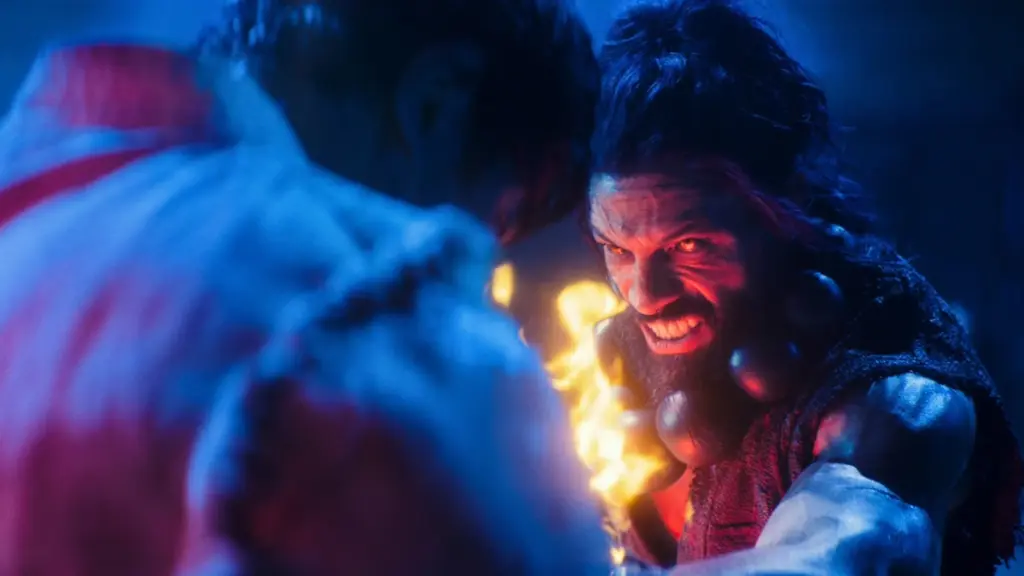
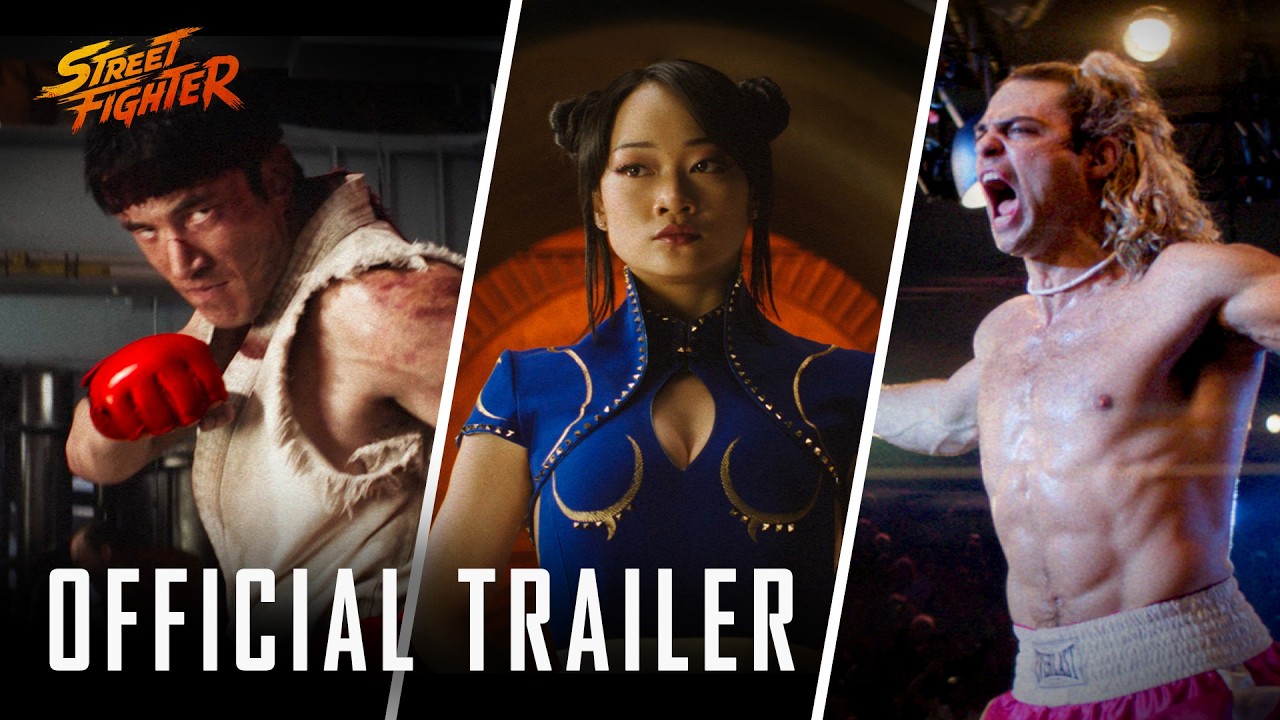
For all its issues, Street Fighter doesn’t feel like a hollow cash grab. It’s shocking, considering everything I just pegged it for. Beyond the previously mentioned memorable supporting roles, the central trio nails their respective characters. Andrew Koji (Warrior) finds depth and pathos in Ryu’s selflessness, while Noah Centineo (The Recruit) brings out great empathy from behind Ken’s hotshot attitude and charisma. Callina Liang (Presence) embodies Chun-Li with palpable determination and rage. Seeing a video game movie that is so unashamed of its roots is also a plus. The world of Street Fighter feels fleshed out here, where hadoukens, hurricane kicks, and shoryukens are perceived as a natural extension of the film’s vibrant visuals and production design.
‘Street Fighter’ Brings 2D Animation Back to the Big Screen in a Huge Way
Last but not least, it’s hard to remember the last time a big-budget Hollywood production featured this much hand-drawn animation. Animation studio Titmouse brings every flashback in the movie to life, from the prologue to scenes exploring Ryu and Ken’s early training. It’s not a gimmick; these 2D-animated sequences capture key moments of character development and elevate the film’s mythology as it transitions back to live-action. Additionally, they expand to the full IMAX ratio for those screenings — an even rarer occasion! It’s cool to see famous moves from the games carry the same weight in 2D animation as they do in the live-action fight choreography, which frequently shifts its camera focus depending on what style is being highlighted.
Gamers love to throw out the “It’s for the fans” excuse to defend flawed video game adaptations. They will probably do the same here, since elements (like Jason Momoa’s comically bad line readings as Blanka) are simply too egregious for anyone else to ignore. However, you don’t need to be a pre-established fan to get on Street Fighter‘s chaotic wavelength. There’s tons of fun to be had here, but its flaws could prove fatal soon. Ending on a cliffhanger that a sequel isn’t guaranteed to answer (at least not yet) is certainly a strange choice. Kitao Sakurai is talented enough to craft a superior sequel, sure. For now, though, this first movie will have to stay a guilty pleasure.
★ ★ ★ ☆ ☆
‘Street Fighter’ hits theaters on October 16!
Directed by Kitao Sakurai.
Screenplay by T.J. Fixman & Kitao Sakurai.
Story by Dalan Musson & Gary Dauberman.
Based on Street Fighter by Capcom.
Produced by Mary Parent, Cale Boyter, Jason Momoa, Takayuki Nakayama, & Stefan Makhoul.
Executive Producers: Jay Ashenfelter, JJ Hook, Haruhiro Tsujimoto, & Kenzo Tsujimoto.
Main Cast: Andrew Koji, Noah Centineo, Callina Liang, Joe “Roman Reigns” Anoa’i, David Dastmalchian, Cody Rhodes, Eric André, Andrew Schulz, Vidyut Jammwal, Curtis “50 Cent” Jackson, Jason Momoa, Orville Peck, Olivier Richters, Hirooki Goto, Mel Jarnson, Rayna Vallandingham, Alexander Volkanovski, Kyle Mooney, & Don Lee.
Cinematographer: Ken Seng.
Composers: Leo Birenberg & Zach Robinson.
Editor: Luke Lynch.
Production Companies: Legendary Pictures & Capcom.
Distributor: Paramount Pictures.
Runtime: 120 minutes.
Rated PG-13.