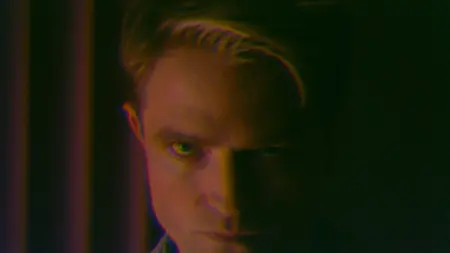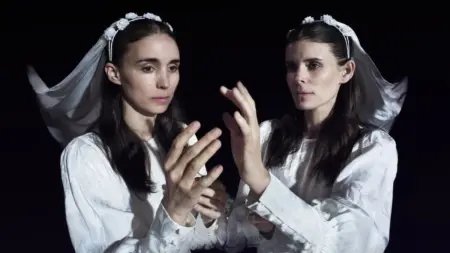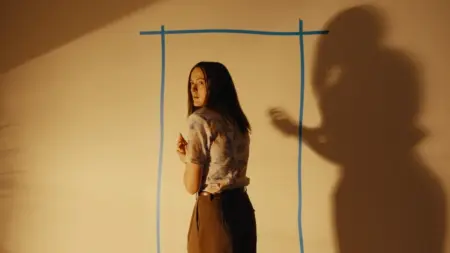


Actor-turned-filmmaker Maggie Gyllenhaal aims for the jugular with The Bride! (2026). Her follow-up to 2021’s The Lost Daughter is as ambitious as sophomore efforts come, blending elements of horror, surrealism, and 1930s crime thrillers in reimagining one of cinema’s most recognizable monsters, The Bride of Frankenstein. A bold swing is one easy way to call it. Though upon a first watch, a certain irony becomes clear. For taking so many adventurous risks, from the eye-popping, ’30s-inspired designs of its main two monsters to its surprisingly metatextual narrative, The Bride! is only ambitious at a surface level. It’s the kind of movie that has so much on its mind that it barely says anything substantial about any one idea.
At the heart of it all is Women Talking and Hamnet star Jessie Buckley, who is poised to win her first Oscar next week for her devastating performance in the latter. In The Bride!, Buckley is tasked with multiple roles. The first is Frankenstein author Mary Shelley, who, believe it or not, is an active participant in the story. Gyllenhaal’s script operates in a dream-like state, in which Shelley herself opens the film from beyond the grave, speaking to the audience and fully breaking the fourth wall. She describes what’s about to unfold as a spiritual sequel to her classic book, immediately throwing subtlety out the window and setting the stage for a brash interpretation of her work.
Promising Layers of Meta Storytelling
The unique narrative structure of Maggie Gyllenhaal’s The Bride! flaunts massive potential right from the get-go. Following Mary Shelley’s introduction, we meet Ida (also played by Buckley), an escort in 1936 Chicago who soon meets her demise at the orders of a dangerous mob boss (played by Zlatko Burić), who runs a notorious underground sex ring. Then, Frankenstein’s Monster, or “Frank” for short, arrives in town. Gyllenhaal makes it a point to let viewers know that this version of the creature was brought to life by Dr. Frankenstein in 1819, one year after the publication of Shelley’s novel in 1818. He’s come to 1930s Chicago in search of the groundbreaking scientist Dr. Euphronious (Annette Bening).
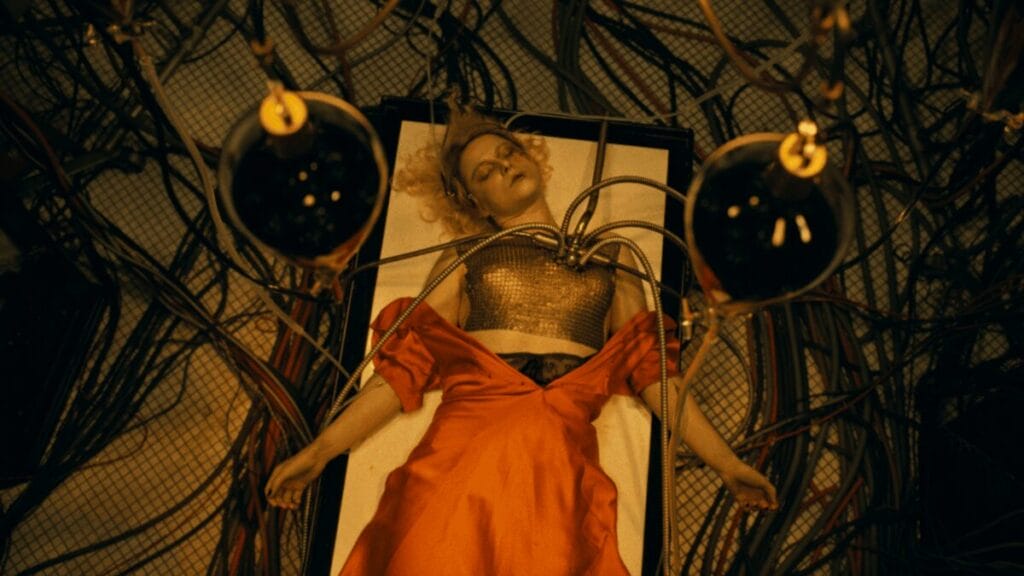
Tormented by his sheer loneliness, Frank asks Euphronious to create a companion for him. He insists that his desire for intimacy doesn’t stem from sex or lust, but from a century’s worth of sorrow from being outcast and mislabeled as a beast. It doesn’t take much to convince the brilliant yet radical doctor, and so they go grave-robbing at the local cemetery. They miraculously find Ida’s fresh corpse mostly intact. With seemingly no one left behind to mourn this poor, murdered woman, Euphronious resurrects her via mad science. However, Frank now has to earn his Bride’s love, which is further complicated by her amnesia about her past life and, well, the omniscient ghost of Mary Shelley.
The Literal Ghost of Mary Shelley Haunts The Bride!
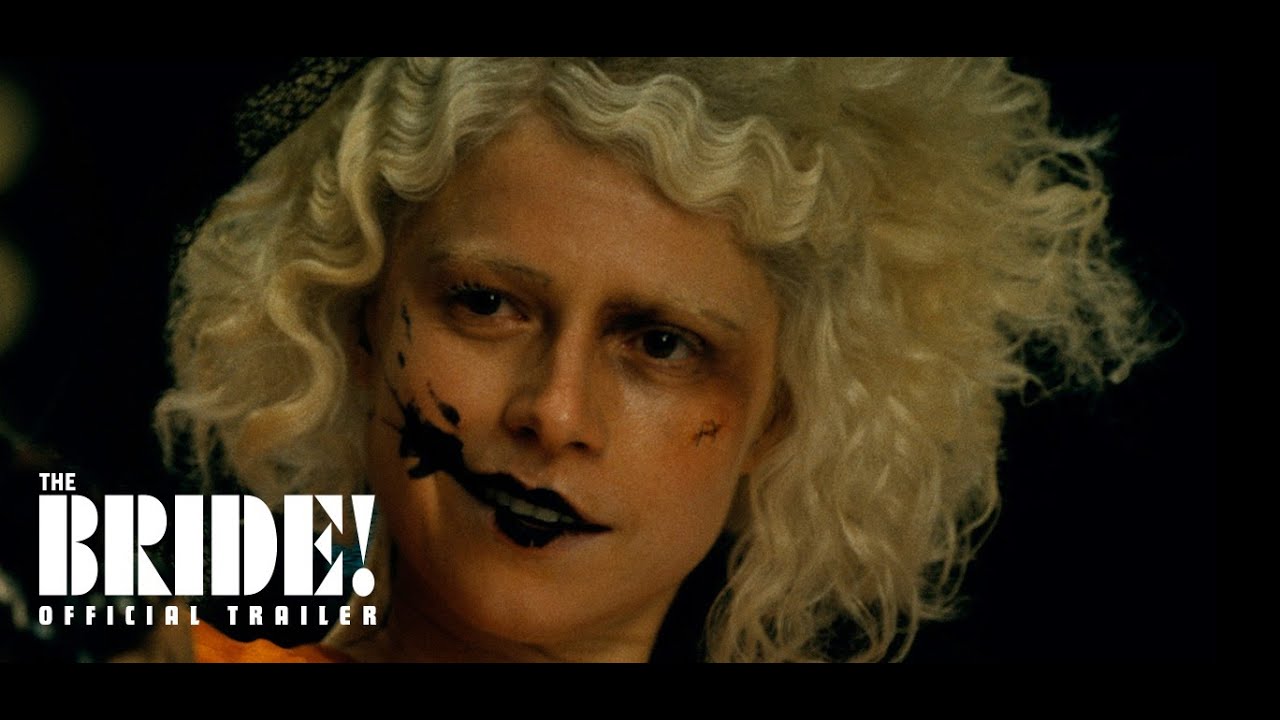
It’s initially a bit hard to grasp, but the actual ghost of Mary Shelley possesses Ida’s body to serve as an in-universe narrator of sorts. This leads to some fascinating, surrealist moments in which Jessie Buckley communicates with herself as the two characters on screen. That’s about as deep as this audacious creative decision goes, though. Maggie Gyllenhaal’s choice to frame Shelley as this ambivalent god, one who can exist both inside and outside the story as well as sway The Bride in her decision-making, is extremely exciting on paper. But in practice, it often feels downright bizarre and shallow. It doesn’t help that Shelley’s dialogue, specifically, is so on-the-nose that it starts to hurt Buckley’s screen presence.
Courtesy of Warner Bros.
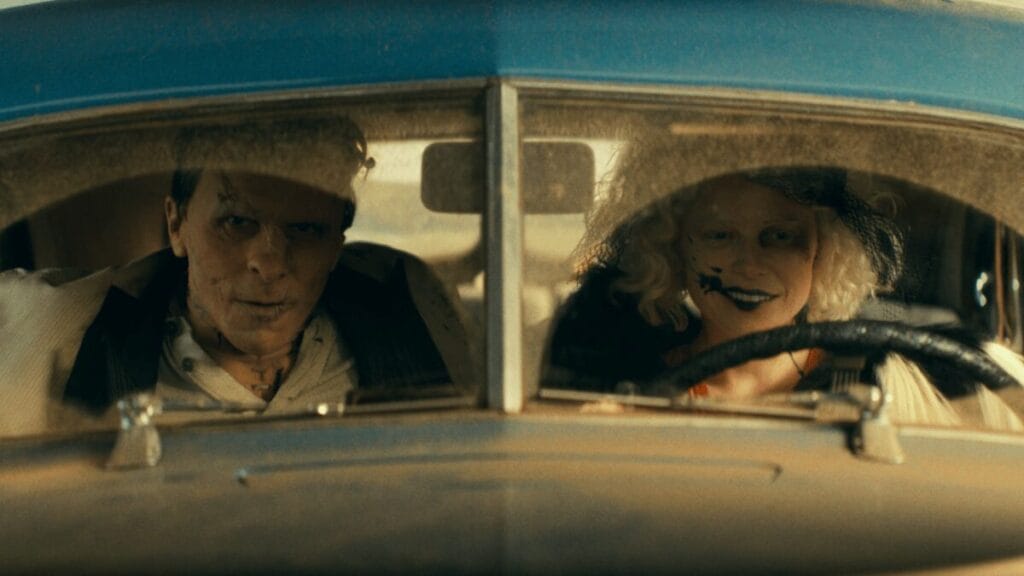
Throughout the film, The Bride has uncontrollable vocal outbursts in which she says absurd things with an early 19th-century British accent, as if Shelley’s spirit were literally trying to break free and spell things out for viewers. At best, this outlandish trait lets Buckley show off her acting chops as she expertly navigates between Shelley’s voice and Ida’s Chicago accent. At its worst, it can be very hard to sit through. Frank’s characterization as a sad and lonely lover boy doesn’t give Oscar-winner Christian Bale much to work with either. An undeniable chemistry can be occasionally felt between the two leads, but it’s buried under a one-note romance that leaves no lasting impression beyond the pre-existing Frankenstein iconography.
Having A Lot To Say Without Saying Anything At All
To say The Bride! is overstuffed with ideas would be an understatement. After her resurrection, The Bride tries to reintegrate herself into society, with the shy, soft-spoken Frank by her side. However, the duo quickly gets swept up in trouble, and the movie evolves into a Bonnie and Clyde-esque “criminals on the run” thriller as the pair learns to unleash their monstrous sides. From here, we pivot back to the mob subplot and are introduced to Det. Jake Wiles (Peter Sarsgaard) and his scrappy partner, Myrna Mallow (Oscar-winner Penélope Cruz). At the same time, the script attempts to flesh out Frank’s psyche by exploring his love of cinema, specifically the works of famous movie star Ronnie Reed (Jake Gyllenhaal).
Courtesy of Warner Bros.
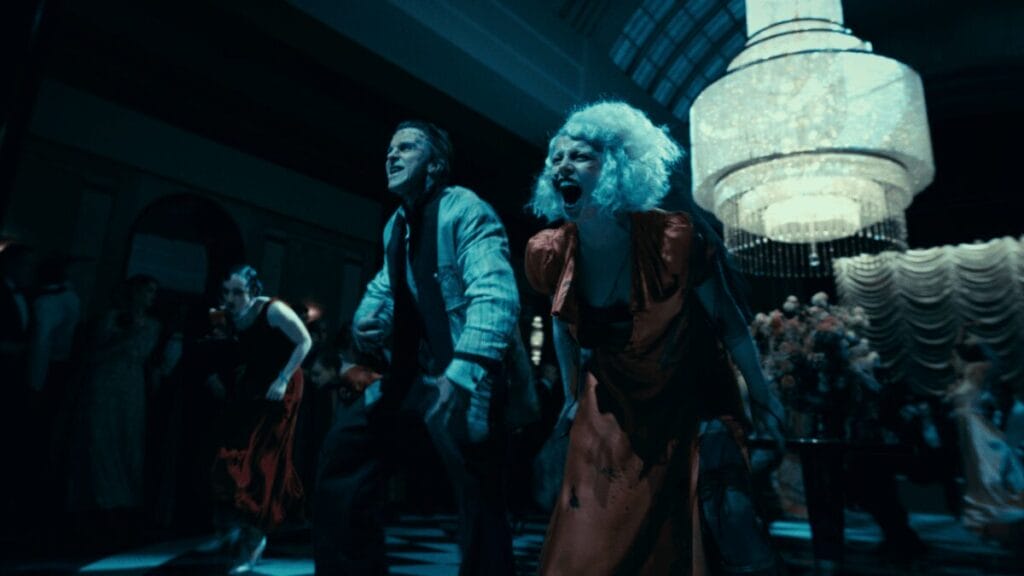
In juggling so many different ideas and characters, The Bride! ends up feeling far too bloated and sluggish for its 2-hour runtime. Jake Gyllenhaal and Cruz bring a much-needed, infectious energy to the proceedings. Through Jake’s small role, Maggie Gyllenhaal takes another surrealist swing by having Frank imagine himself in Ronnie Reed’s classic black-and-white films. It’s a form of escapism for the creature, the only way he’s managed to survive on his own for so long. This makes way for a suave Christian Bale to stun in elegant tuxedos while cheekily dancing in his Frankenstein make-up. Eventually, this escapism bleeds further into the movie’s dark reality in a stand-out dance number that, truthfully, looks gorgeous, especially in IMAX.
A Paper-Thin Feminist Message
Like the rest of the film, even having Frankenstein’s Monster and his Bride break out into dance feels derivative. It pains me to make this comparison, but The Bride! has plenty more in common with Todd Phillips’ Joker movies than it does with any prior interpretations of Mary Shelley’s Frankenstein. Not including the dance number, as The Bride! doesn’t attempt to pull off a stealth musical element like Joker: Folie à Deux (2024) did. Aside from this and the insane coincidence that they both share the same cinematographer (Lawrence Sher) and composer (Hildur Guðnadóttir), there are shockingly a handful of scenes and plotlines that can be directly compared between Maggie Gyllenhaal’s film and Phillips take on the Joker.
Without spoiling, the main takeaway is how The Bride! and Phillips’ Joker films share the same sense of empty, self-reverence. Gyllenhaal tries to honor Shelley’s legacy by framing The Bride as a punk, radical feminist icon. Yet she never touches upon the nuances of Shelley’s book, the many incarnations of the titular character, who was first seen in 1935’s Bride of Frankenstein, or even rich feminist themes, for that matter. Just in case they forgot, The Bride! simply reminds its female audience that misogyny exists and that women should revolt against the patriarchy.
There is certainly room for a straightforward yet abrasive, feminist story like The Bride! to exist in the mainstream, especially with the big-budget support of a studio like Warner Bros. (still high off the ongoing success of Sinners and One Battle After Another). But in the context of a bold project like this, it’s disappointing that it doesn’t seem interested in pursuing something deeper, if anything at all given that it constantly contradicts itself!
★ ★ ☆ ☆ ☆
The Bride! hits theaters on March 6!
Release Date: March 6, 2026.
Directed by Maggie Gyllenhaal.
Screenplay by Maggie Gyllenhaal.
Based on Frankenstein; or, The Modern Prometheus by Mary Shelley.
Produced by Maggie Gyllenhaal, Emma Tillinger Koskoff, Talia Kleinhendler, & Osnat Handelsman-Keren.
Executive Producers: Courtney Kivowitz, Carla Raij, & David Webb.
Main Cast: Jessie Buckley, Christian Bale, Peter Sarsgaard, Annette Bening, Jake Gyllenhaal, Penélope Cruz, Julianne Hough, John Magaro, Jeannie Berlin, Linda Emond, Louis Cancelmi, Matthew Maher, Zlatko Burić, & Karin Dreijer.
Cinematographer: Lawrence Sher.
Composer: Hildur Guðnadóttir.
Editor: Dylan Tichenor.
Production Companies: First Love Films & In the Current Company.
Distributor: Warner Bros. Pictures.
Runtime: 126 minutes.
Rated R.