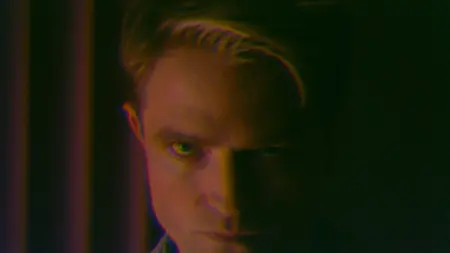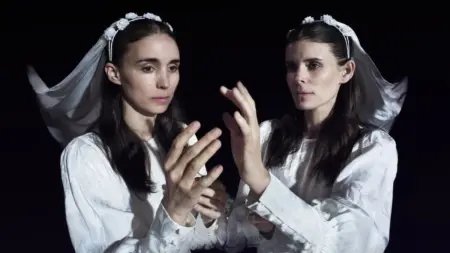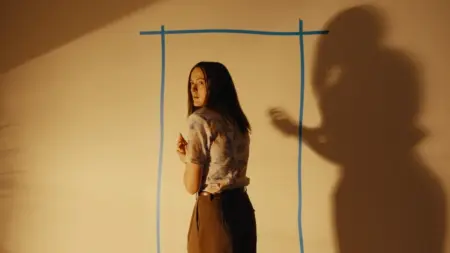


Shelby Oaks (2025) marks a pivotal point for online film criticism, though not for the reason one might think. In this extremely rare instance, the critic is behind the camera. Writer-director Chris Stuckmann is well known to a whole generation of online moviegoers as one of the most prominent film critics on YouTube. I would be remiss if I didn’t admit that a few of his film analysis videos were formative to me growing up. However, discussing films and making them are two different ball games.
Despite Mike Flanagan (The Life of Chuck, Midnight Mass) serving as an executive producer and the backing of prestigious indie distributor NEON, there was still some hesitance about whether Chris Stuckmann could make the leap into feature filmmaking. As it turns out, Shelby Oaks is one of the most idiosyncratic horror films in some time. The YouTuber-turned-filmmaker successfully conjures a pervasive evil that burrows deep into the skin. In the end, even if Shelby Oaks doesn’t work for everybody, it marks a new era for online filmmakers looking to break into the industry.
Shelby Oaks Undergoes An Exciting Aesthetic Shift
At first, Shelby Oaks feels like a traditional horror debut. It’s initially set up like a true crime documentary, with plenty of talking heads interspersed with “found footage” of the subjects. The concept goes as follows: in 2009, a team of four ghost-hunting YouTubers mysteriously vanished. While the bodies of three were recovered, Riley Brennan (Sarah Durn) could not be found. Chris Stuckmann and his wife/creative partner, Samantha Elizabeth, who developed the script together, establish a solid hook here. Meanwhile, cinematographer Andrew Scott Baird adeptly mimics an eerie home-video and docu-style aesthetic.
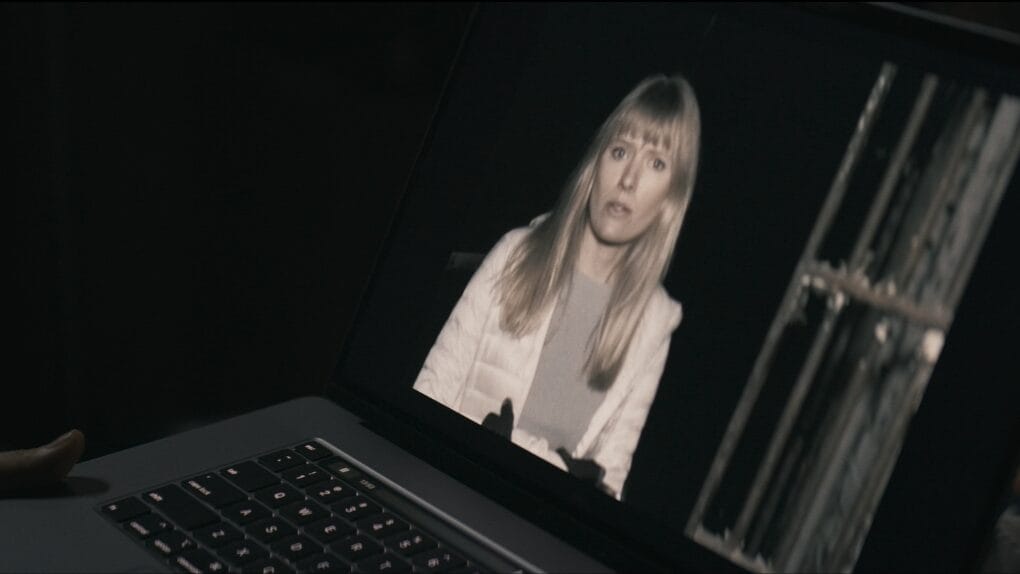
For the first stretch, Shelby Oaks is admirable enough as a directorial debut. Aesthetically, it feels like stumbling upon an unsettling YouTube video after going down a late-night rabbit hole. Furthermore, the storytelling fits with the creepypasta mold of internet folklore. That is, until something shocking happens that not only changes the story’s trajectory but also completely upends the film’s formal approach. As the opening credits roll fairly late in the game, the mockumentary approach is washed away by glossy, sharp cinematography that is untethered from any sense of a diegetic camera. In other words, a full-blown narrative feature emerges from the humble shell of a smaller, perhaps gimmick-based debut.
Chris Stuckmann Crafts Extremely Memorable Scares
Some might be disappointed by the shift to a traditional approach. Don’t be, because in this mode, Chris Stuckmann gets to really flex his filmmaking muscles. For one thing, having a clear protagonist in Riley’s older sister, Mia Brennan (Camille Sullivan), provides an anchor. In any horror movie worth its salt, a lead actor who can convincingly sell being scared witless is crucial, and Sullivan more than sells her part. Additionally, part of a horror protagonist’s job is to guide audiences towards the scares without sounding off the alarm bells of “Why are they going in there?” or “Why are they making this decision?” Mia, thanks to Sullivan’s performance and Stuckmann’s screenplay, requires little to no suspension of disbelief.
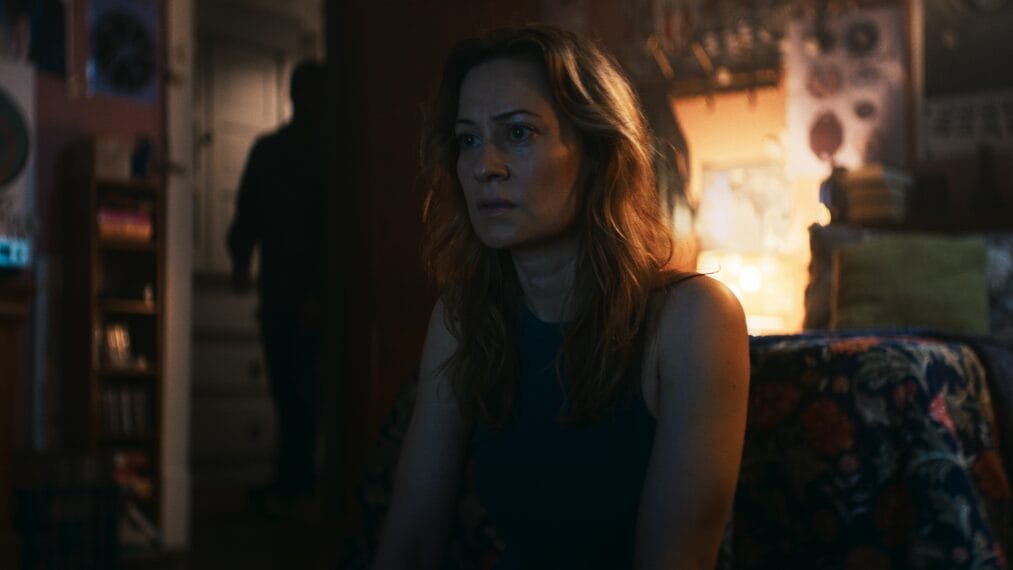
In her desperation to find her missing younger sister, Mia is a thoroughly compelling lead who guides viewers on a bleak journey that only grows more disturbing. Filled with moments that drown the audience in dread, as well as those that make them jump in their seats, the scares that Stuckmann crafts are nothing short of highly memorable. A simple crack in a window taking on ominous significance, figures that linger in reflections, glowing eyes, a cacophony of coyotes; Shelby Oaks bears the distinct mark of someone who understands how to push people’s buttons. A shot of a dog with a sharp musical sting, courtesy of The Newton Brothers, provides a sharp jolt that can’t be easily shaken off.
Lore to Die For
The lore at play in Shelby Oaks is superbly fleshed out. Stuckmann and Samantha Elizabeth’s ideas are uniquely ambitious without ever jumping the shark. Crucially, the mythology unspools at just the right pace, with the film’s central evil drawing the protagonist across various locales and even subgenres of horror. The slasher, supernatural, and hillbilly horror arenas are seamlessly explored through locations like an abandoned amusement park, an asylum, and, naturally, a creepy cabin in the woods. The story is told with such specificity, yet just enough left to the imagination, that the original concepts contained in Shelby Oaks begin to take on a life of their own.
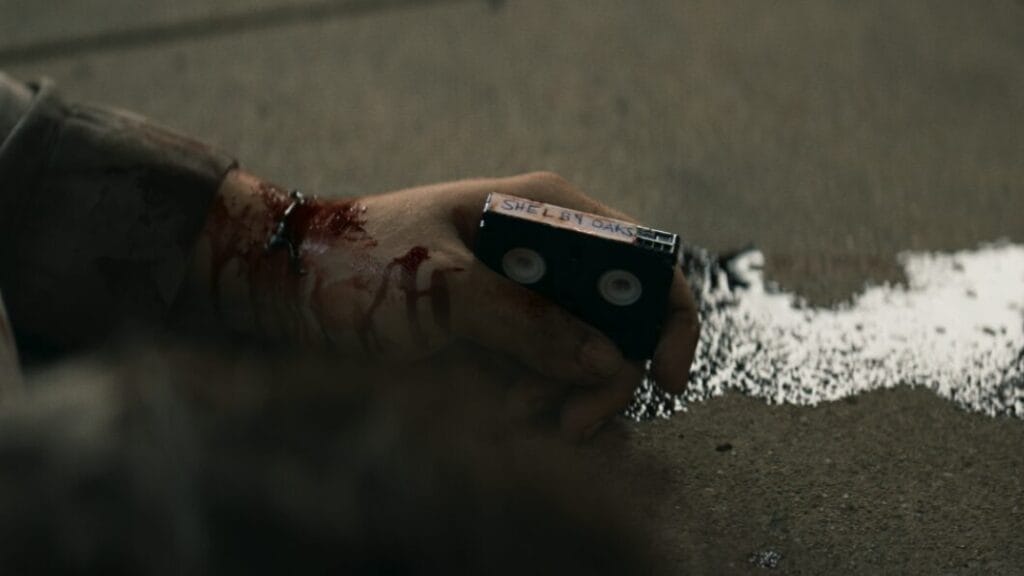
By the time the ending credits roll, it’s as if the danger presented in the film has latched itself onto the audience. Now, that’s high praise for any horror film, but it should be noted that Chris Stuckmann’s debut is a let-down in one key area. Aside from Camille Sullivan giving it her all, none of the other characters are particularly interesting as people. A harrowing turn from Sarah Durn as Riley Brenan in the found-footage segments stands out. However, Mia’s issues with her husband, Robert (Brendan Sexton III), about potential parenthood are seriously undercooked. The supporting cast themselves, including the Paranormal Paranoids who are at the center of the plot, don’t get much definition.
Horror Movies Like Shelby Oaks are Vital to the Genre
Finally, Derek Mears and Keith David coast on their status as genre icons in their brief appearances. Most of the cast are subservient to the mythology and scares. Concept is king; everything else is window dressing. The characters will undoubtedly underwhelm some, whereas others will be too busy soaking in the dark atmosphere and fascinating lore. Regardless of either, one thing is true. Like Eva Victor (Sorry, Baby) and the Phillipous (Talk to Me, Bring Her Back), Chris Stuckmann has made the jump from online notoriety to being a rising voice in cinema. With both industry and fan support at his side, as evidenced by the film’s record-breaking Kickstarter campaign, it’s likely that Stuckmann is here to stay.
Shelby Oaks is a humdinger of a horror movie, scarier than most of the genre this year. It pieces together its own tapestry of terror that’s not just good for a YouTube critic’s film; it’s outstanding regardless. Films like Shelby Oaks, which approach a timeless genre with vigor and a hunger to do something interesting within it, are vital to horror’s continued vitality. It’s a proud lineage that Stuckmann absolutely earns the distinction of being in.
Shelby Oaks hits theaters on October 24!

Release Date: October 24, 2025.
Directed by Chris Stuckmann.
Screenplay by Chris Stuckmann.
Story by Sam Liz & Chris Stuckmann.
Produced by Chris Stuckmann, Aaron B. Koontz, Ashleigh Snead, & Cameron Burns.
Executive Producers: Mike Flanagan, Mehki Bradley, David Brown, Anthony Buckner, Joel Cyr, Giles Daoust, Thomas Deasey, Sean E. DeMott, Angel Djambazov, Bryan Wayne Dull, Catherine Dumonceaux, Jeremy Dunham, The Feeshes, Michael Filsaime, Garfield, Mark Gogolewski, Adam F. Goldberg, Shant Hamassian, Paul Holbrook, Benjamin Peter Hughes, Christine Jacobs, Anthony Killough, Dino Kontos, Ky Lee, Chase Lehocky, Trevor Macy, Darren Marlar, Michael M. Murillo, Andy Minh Nguyen, Melinda Nishioka, Bob Portal, Tushar Rakheja, Ronald A. Reyes, Bryan Roley, Adam Schmidt, Arthur Sevalho, Inderpal Singh, Brent Starheim, Ravi Subasegaran, & Xspectre8.
Main Cast: Camille Sullivan, Brendan Sexton III, Michael Beach, Sarah Durn, Brenna Sherman, Sloane Burkett, Robin Bartlett, Keith David, Eric Francis Melaragni, Anthony Baldasare, Caisey Cole, Charlie Talbert, Emily Bennett, Rob Grant, Lauren Ashley Berry, & Derek Mears.
Cinematographer: Andrew Scott Baird.
Composers: James Burkholder & The Newton Brothers.
Production Companies: Paper Street Pictures & Intrepid Pictures.
Distributor: Neon.
Runtime: 119 minutes.
Rated R.