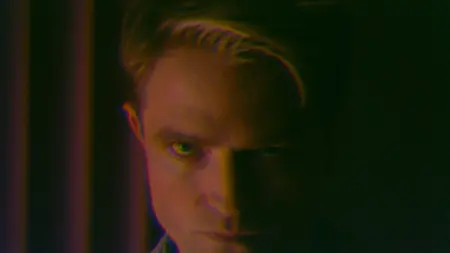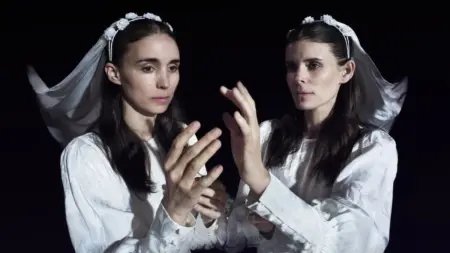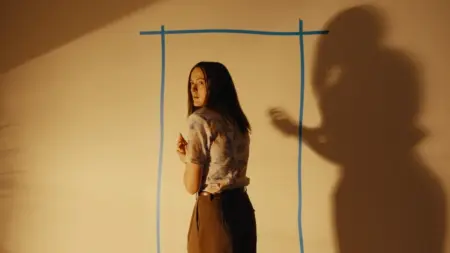


There’s a particular type of horror that doesn’t announce itself with only jump scares or gallons of blood, but instead settles into your bones and refuses to leave. Leviticus (2026) is that kind of horror movie — a slow, suffocating nightmare built from shame, repression, and the terror of being seen for who you truly are. Writer-director Adrian Chiarella’s haunting feature debut arrives as a deeply sensitive yet merciless piece of queer social horror, one that understands how desire itself can become weaponized when filtered through the cruelty of religious fanaticism and oppression.
Set in an isolated Australian town steeped in industrial rot — all smoke, rust, and spiritual decay — Leviticus introduces us to Naim (Joe Bird) and Ryan (Stacy Clausen), two teenage boys magnetically drawn to each other in a place that has no room for their love. Their connection is tender, hesitant, and achingly real, portrayed with astonishing layered vulnerability by Bird (Talk to Me) and Clausen (Crazy Fun Park). From the moment they share space on screen, there’s a palpable push and pull between longing and fear, intimacy and danger, masculinity and tenderness. Leviticus understands that for queer youth in hostile environments, love is never just love. It’s a risk.
An Extremely Cruel Supernatural Curse
That risk becomes literal through Leviticus’ central conceit: a violent, relentless entity that takes the form of the person you desire most. It’s an It Follows-style curse filtered through the language of conversion therapy and religious punishment, via Naim’s religious and homophonic mother Arlene (Mia Wasikowska, who also serves as a producer). Thus, attraction is transformed into something deadly. To love is to invite annihilation. To be loved is to be targeted. It’s a concept so elegantly cruel that it barely needs embellishment, and filmmaker Adrian Chiarella wisely lets it speak for itself for the most part.
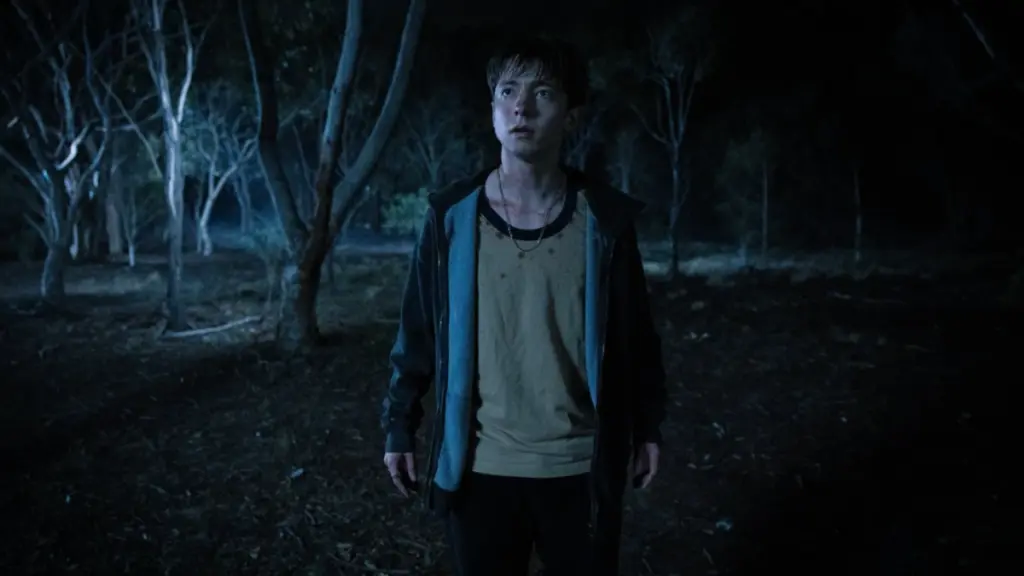
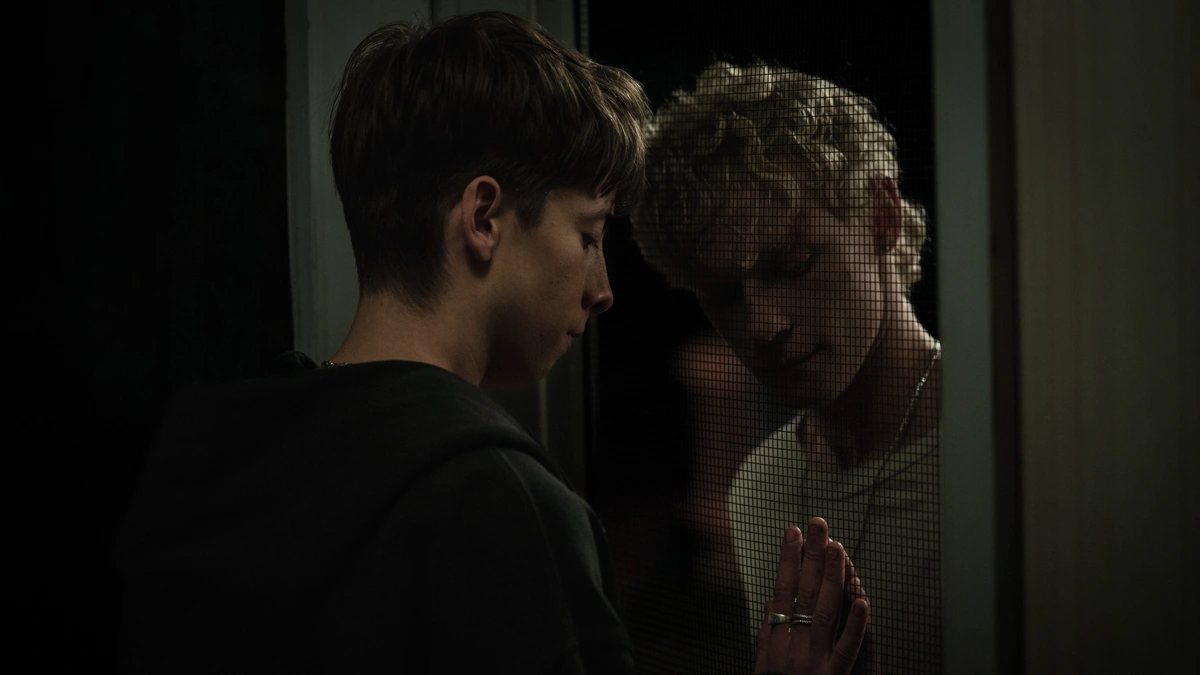
Visually and thematically, Leviticus is obsessed with entrapment. Cages appear everywhere, such as chain-link fences, wire barriers, and enclosures, both literal and emotional. The film’s most striking scenes place Naim and Ryan on opposite sides of a flimsy, cage-like screen door, close enough to touch yet permanently separated by forces beyond their control. It’s an image that says everything the movie needs to about the violence of enforced distance, about how institutions convince queer people that even proximity is dangerous.
The Fear of Touch
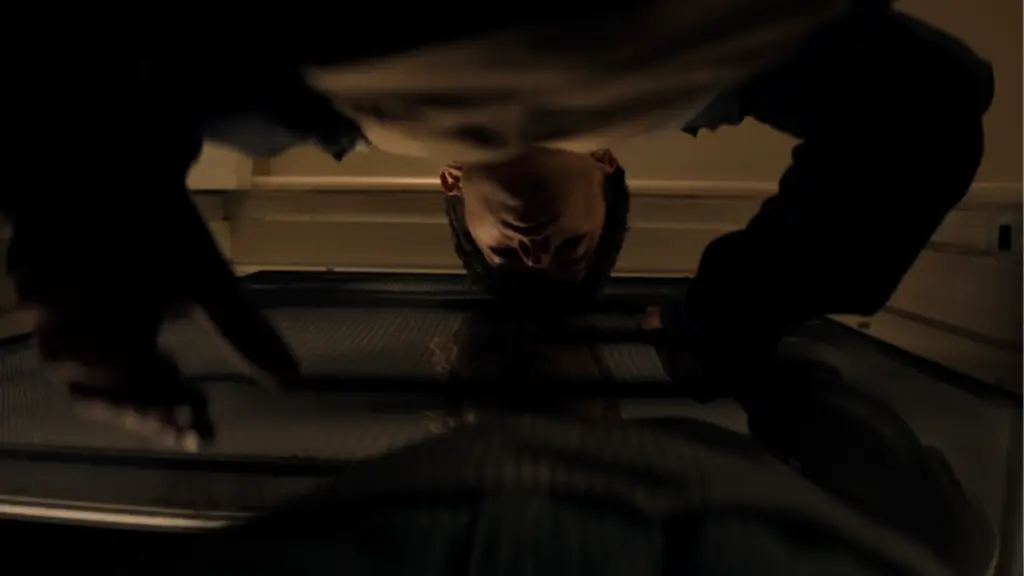
Australian horror often operates on a different wavelength: think Jennifer Kent’s The Babadook (2014), the Philippou’s Talk to Me (2022) and Bring Her Back (2025), or Natalie Erika James’ Relic (2020). Leviticus proudly continues that tradition. There’s a rawness to the filmmaking here; a willingness to sit in discomfort, to let certain moments stretch until they almost feel unbearable. Chiarella, cinematographer Tyson Perkins, and production designer Bethany Ryan lean heavily into atmosphere, crafting a world that feels near-claustrophobic despite its seemingly open spaces.
Courtesy of Neon
Electric machinery constantly hums in the background, overshadowed by smoky clouds, reinforcing the sense that even moments of calm feel poisoned. The sound design crafted by Emma Bortignon plays a crucial role in sustaining that unease. When violence erupts — suddenly and brutally — every hit, crash, and struggle lands with sickening force. The abrasiveness isn’t gratuitous; it’s experiential. You can practically feel the impact in your body, flinching along with the characters with each blow.
When Desire Becomes the Monster
What makes Leviticus truly horrifying isn’t just the monster but also what it represents. The entity’s ability to manifest as the object of your deepest desire turns intimacy into a trap. There’s something uniquely cruel about the idea of being killed while actively loving, while believing (even briefly) that you are safe and, more importantly, wanted. It’s a visceral metaphor for the way religion has historically taught queer people to fear each other, to associate closeness with punishment, and to live in a constant state of self-surveillance.
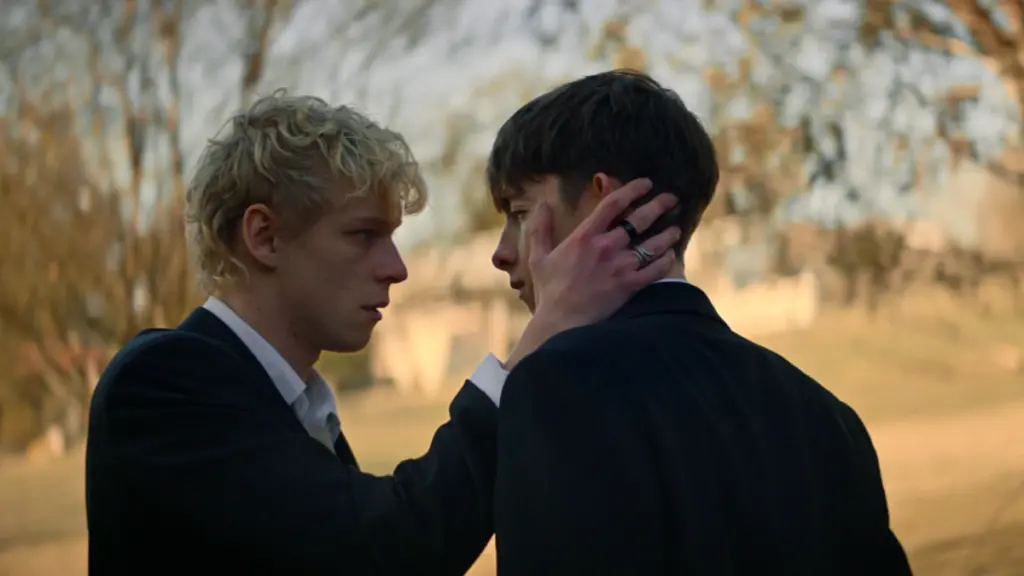
The film’s greatest strength lies in how authentically it captures that psychological torment. Naim and Ryan’s relationship is defined by uncertainty as much as passion, every moment of closeness shadowed by the knowledge that it could be fatal. Their chemistry is electric, though it’s never romanticized into something false or too comforting. Instead, Leviticus allows their love to exist as something fragile and dangerous, but still wholly worth fighting for.
Courtesy of Neon
As powerful as its first half is, which is genuinely paralyzing in its dread, Leviticus does begin to lose some momentum as it progresses. Certain beats repeat, and the narrative starts to feel slightly longer than it actually is at a mere 88 minutes. The central idea remains potent; however, the movie occasionally struggles to find new ways to escalate its horror without circling familiar ground.
A Queer Horror Film that Refuses to Let Go
Despite its imperfect pacing, the emotional impact never fully dissipates. Leviticus remains psychologically and emotionally affecting throughout, driven by performances that never falter and a thematic core that cuts painfully close to the bone. This is a film about survival in a world designed to break you, about loving who you love despite the dangers both within and without. It’s sensual, terrifying, and profoundly mournful. A Midnight movie that understands horror not as spectacle, but as lived experience.
Leviticus doesn’t only scare you; it stays with you. It lingers in the mind and the body. Long after the credits roll, you’re left thinking about cages, about unfounded shame, about the unbearable cost of being told that love is a sin. It’s an incredibly affecting debut that announces Adrian Chiarella as a filmmaker to watch, and a poignant new entry in the growing canon of queer horror that dares to confront the systems that create monsters in the first place. The kind of horror film you can’t stop thinking about, even when you desperately want to.
★ ★ ★ ★ ☆
‘Leviticus’ hits theaters on June 19!
Release Date: June 19, 2026.
Directed by Adrian Chiarella.
Written by Adrian Chiarella.
Produced by Samantha Jennings, Kristina Ceyton, & Hannah Ngo.
Executive Producers: Mia Wasikowska, Dale Roberts, Liz Kearney, Daniel Negret, Sam Frohman, Simmons Frazier, Robert Connolly, & Salman Al-Rashid.
Main Cast: Joe Bird, Stacy Clausen, Mia Wasikowska, Jeremy Blewitt, Ewen Leslie, Davida McKenzie, Nicholas Hope, & Zamira Newman.
Cinematography: Tyson Perkins.
Composer: Jed Kurzel.
Editor: Nick Fenton.
Production Company: Causeway Films.
Distributor: Neon (Worldwide) & Maslow Entertainment (Australia/New Zealand).
Runtime: 88 minutes.
Rated R.